
The French Alps are purpose-built for adventure, and the hiking here is next-level. From high-altitude ridgelines to deep alpine valleys, the trails take you through some of the most dramatic landscapes in Europe. Whether you’re after a quick-hit day hike or a multi-day trek that pushes your limits, this region delivers.
The Tour du Mont Blanc (TMB) is the ultimate long-distance circuit—170 km of raw alpine beauty winding through France, Italy, and Switzerland. Snow-capped peaks, glaciers, and classic mountain refuges make this a bucket-list challenge. Over in the Écrins National Park, the Tour des Écrins (GR54) serves up even more rugged terrain, with wild, untamed landscapes and serious elevation gains for those craving a test of endurance.
For a shorter but equally stunning hit, Lac Blanc in the Aiguilles Rouges Nature Reserve offers insane views of Mont Blanc mirrored in crystal-clear waters—an essential hike for any Chamonix trip. Meanwhile, the Col de la Vanoise and the Tour of the Vanoise cut through France’s oldest national park, leading you past glaciers, alpine meadows, and wildlife that roam the high-altitude passes.
It’s no secret that the French Alps offer some of the best hiking in France. This is where big-mountain terrain provides epic multi-day trekking opportunities, and the most remote refuges. It’s also a region that rewards you year-round. Many of the valleys and passes you’ll hike in summer transform into world-class skiing terrain in winter, and the lift-accessed trails double as some of Europe’s best mountain biking when the snow melts. But summer is when the Alps really open up on foot — the high cols clear from late June, the refuges swing open their doors, and you can walk for days through terrain that feels genuinely wild despite being a few hours from Chamonix.
TECHNICAL HIKING GEAR
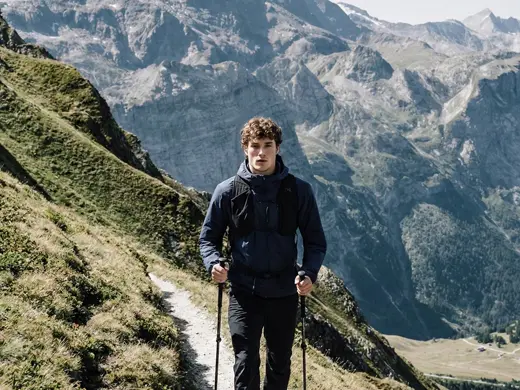
The best hiking trails in the French Alps
With countless trails weaving through this iconic mountain range, hiking in the French Alps is more than just a walk—it’s an adventure. Ready to hit the trails? Here are some of our favorites:
1. Tour du Mont Blanc
Distance: 170 km
Elevation gain: 10,000 m
Duration: 7-11 days
Level: Challenging
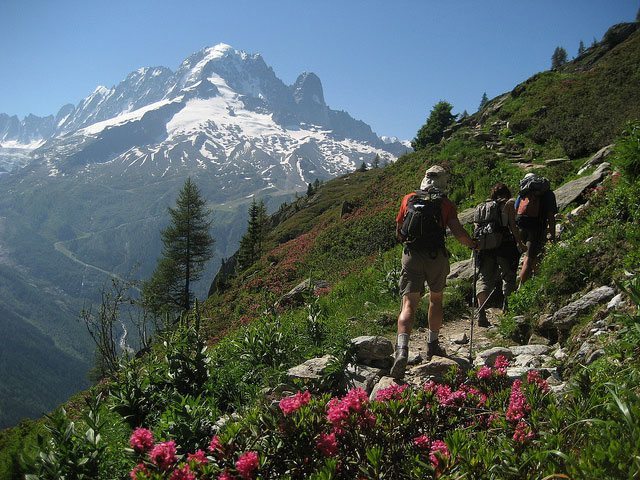
The Tour du Mont Blanc, or TMB for those in the know, is undoubtedly the most famous multi-day trek in the Alps. As the name implies, this is high altitude walking around Europe’s highest mountain. You hike a total distance of 170 km and cover more than 10,000 m of vertical drop. See the majestic Mont Blanc from every angle and be rewarded with an ever changing mountain landscape with stunning views over Alpine peaks, glaciers, valleys and meadows. The Tour du Mont Blanc should be on every serious walker’s hit list.
2. Haute Route – Chamonix to Zermatt
Distance: 213 km
Elevation gain: 13,000 m
Duration: 12-14 days
Level: Challenging
The Haute Route is a classic long distance Alpine trek and one that should be on every serious walker’s bucket list. Grab your crampons and ropes and spend a week crossing glaciers and high altitude cols from Chamonix to Zermatt. You’ll immerse yourself in big mountain terrain and hike from refuge to refuge, including the Bertol Hut which overlooks the Bertol Pass, south of Arolla. The Haute Route was pioneered in 1924 and you’ll trek among 4000 m peaks in the footsteps of the early Alpine explorers. This isn’t a technically difficult trek, but you do need to be physically fit and able to complete long days on steep terrain.
3. Hiking the Mer de Glace in Chamonix
Distance: 29 km
Elevation gain: 1,300 m
Duration: 3 days
Level: Moderate
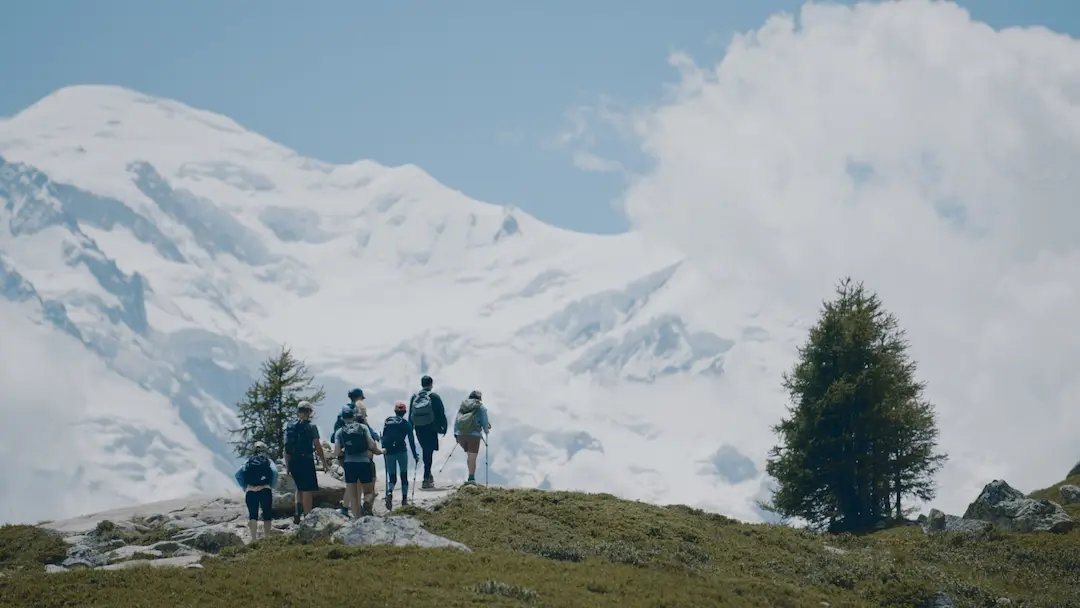
In the heart of the Mont Blanc Massif, the Mer de Glace stretches from Chamonix’s granite needles to the Aiguille Verte and the Grandes Jorasses range on the boundary between Haute-Savoie in France and Aosta Valley in Italy. This 3-day hut-to-hut hike is a great introduction to high Alpine trekking and you’ll find the terrain underfoot changing from rock to ice to snow. The physical geography of the glacier and the surrounding mountains is fascinating and a highlight is a stay in the Refuge du Couvercle which occupies one of the most spectacular locations in the Mont Blanc area.
4. Tour des Ecrins (GR54)
Distance: 176 km
Elevation gain: 12,800 m
Duration: 10 days
Level: Expert
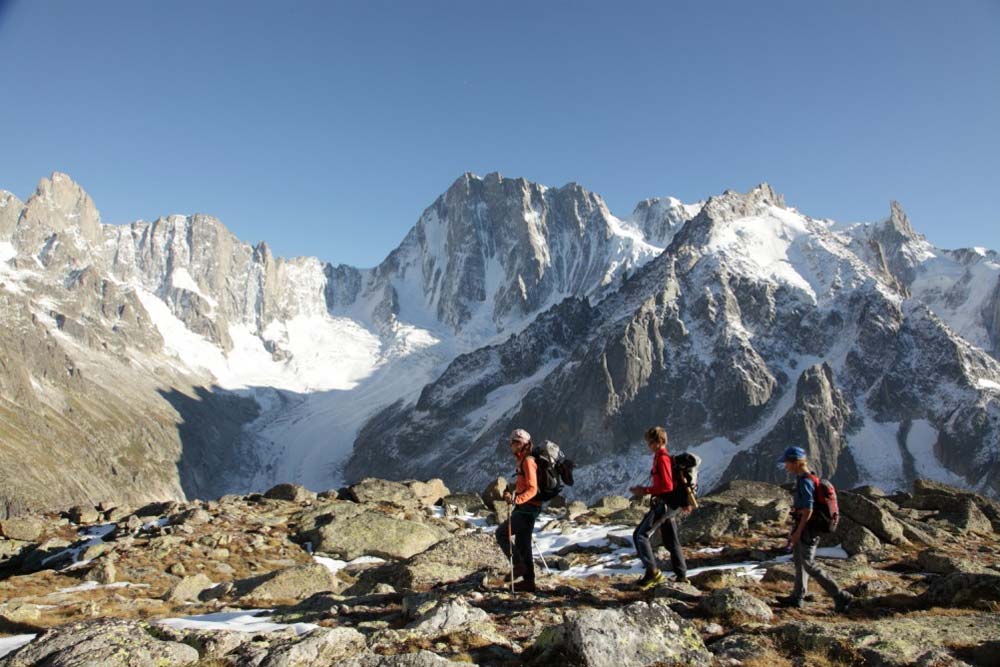
The Parc National des Ecrins is France’s largest and highest National Park. With jagged peaks, tumbling glaciers, cascading rivers and steep-sided valleys, the Massif des Ecrins is one of the most challenging of alpine environments for walkers. The GR54 long-distance trail carves a circular route through these mountains and is considered to be one of the toughest multi-day treks in Europe. This 176 km trek takes covers 12,800 m of vertical ascent over 14 cols. French Alps Trekking do the full circuit over 10 days, or they offer a shorter 6-day trek covering 100 km in the southern section of the National Park.
5. Tour du Queyras (GR58)
Distance: 130 km
Elevation gain: 7,900 m
Duration: 8 days
Level: Moderate
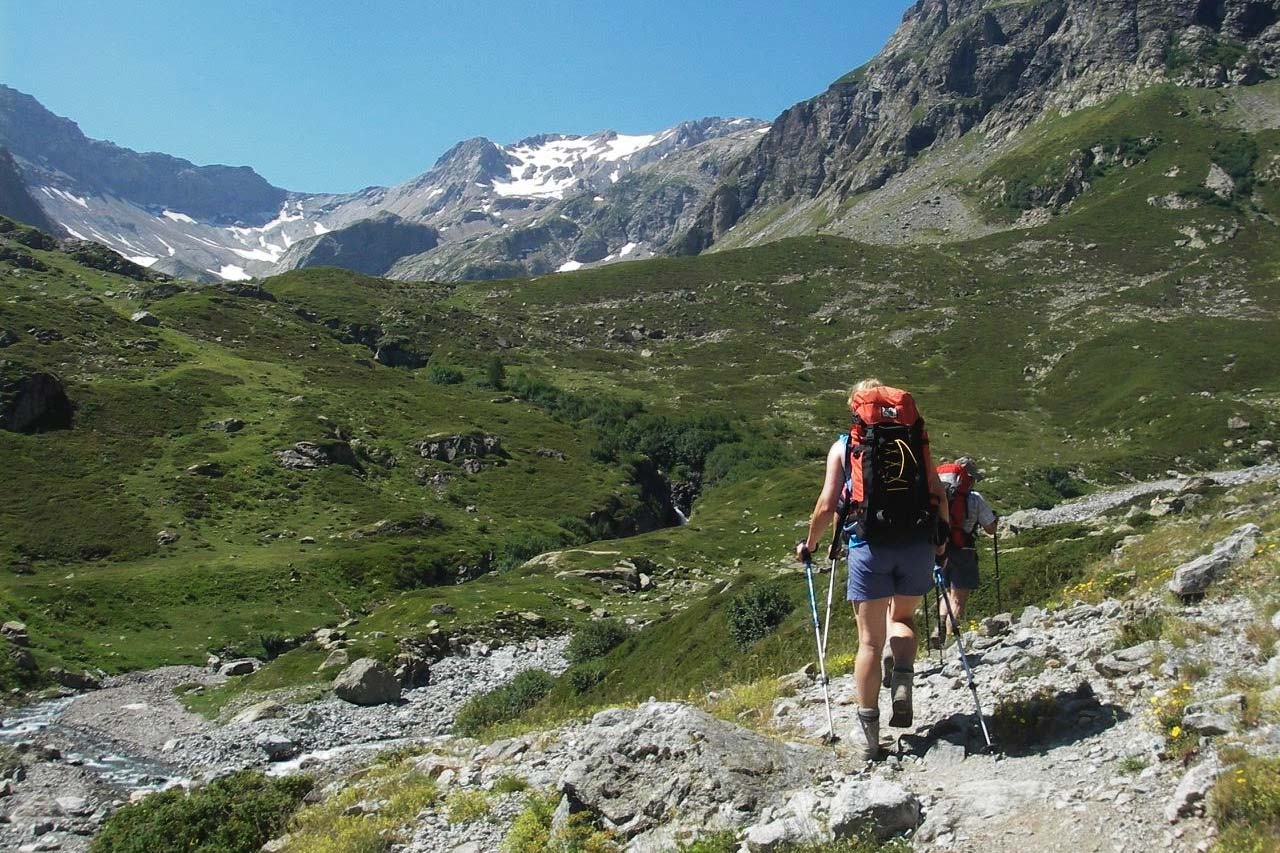
The Parc Naturel Régional du Queyras borders Italy in the Hautes-Alpes region. With 300 days of sunshine a year and Europe’s highest permanently inhabited village at Saint-Véran, the Queyras offers a different kind of Alpine experience. The GR58 circuit takes you through authentic mountain communities where sundials still mark the hours, past high passes like Col de Chamoussière at 2,884m, and alongside turquoise lakes reflecting the jagged peaks of Monte Viso. Expect clear signposting, welcoming gîtes, and the option to transfer your pack between villages. The full circuit typically takes 8 days, though some guides offer a shorter 6-day trek covering the wildest southern section.

6. Grande Traversée des Alpes
Distance: 200 km
Elevation gain: 830 m
Duration: 80
Level: Expert
Starting in the Ecrins National Park this trek covers 200 km taking in the best of the Ecrins, Queyras and Mercantour parks. This is a strenuous trek with many days covering over 20 km and with 1300 m ascents. Most people need at least 12 days to complete the walk. Setting off from La Grave, you head south through the Cerces, Queyras and Mercantour regional parks. The route follows a network of Grande Randonnée (GR) trails taking in some of the Alps most spectacular scenery. Finally, you’re treated to a magnificent view of the Med before dropping down to the Côte d’Azur for a well-earned swim.
Please leave a comment below if you need specific advice for your hiking trip to the French Alps, or if you have any recommendations to help us improve this guide. Happy holidays!
Can you tell me the spot where the main image is taken?
Hi Stephen, thanks for your comment!
It was taken from Bellevue Plateau above Les Houches along the southern stretch of the Tour du Mont Blanc.
Hope that helps!
Matt