FRENCH ALPS | SOUTH OF FRANCE | PYRENEES | ICONIC CLIMBS | WHEN TO GO | BIKE RENTAL & TRANSPORT | EVENTS | PLAN YOUR TRIP
France is the spiritual home of road cycling — the country that invented the Grand Tour, paved the climbs that define the sport, and built a culture where drivers actually give cyclists room and every village café doubles as a feed station.
The names alone are enough to raise a cyclist’s heart rate: Alpe d’Huez and its 21 numbered hairpins. Mont Ventoux, the bald giant of Provence. The Col du Tourmalet, crossed by the Tour de France more than any other mountain. The Col du Galibier, scraping 2,642 m between Savoie and the Hautes-Alpes. Since the first Tour rolled out of Paris in 1903, France has been where road cycling’s legends are made — and unlike most sporting arenas, this one is open to anyone with a bike and the legs to try.
The geography does the rest. Two great mountain ranges — the Alps and the Pyrenees — bookend a country laced with more than 25,000 km of waymarked cycling routes, from the sunflower flatlands of the Loire to the corniche roads of the Côte d’Azur. In the south you can climb 1,000 m cols in January. And the riding culture runs deep: French law requires drivers to leave 1.5 m when overtaking a cyclist outside town, club runs roll out of every village on Sunday mornings, and a lone rider grinding up a col will collect more allez allez! than odd looks.
This page is designed to help you plan the trip. Below you’ll find our guides to the three great road cycling regions — the French Alps, the South of France and the Pyrenees — plus the iconic Tour de France climbs, when to go, bike rental and transport, the events worth building a trip around, and the practical details that make the difference between a good cycling holiday and a great one.
Road Cycling in the French Alps
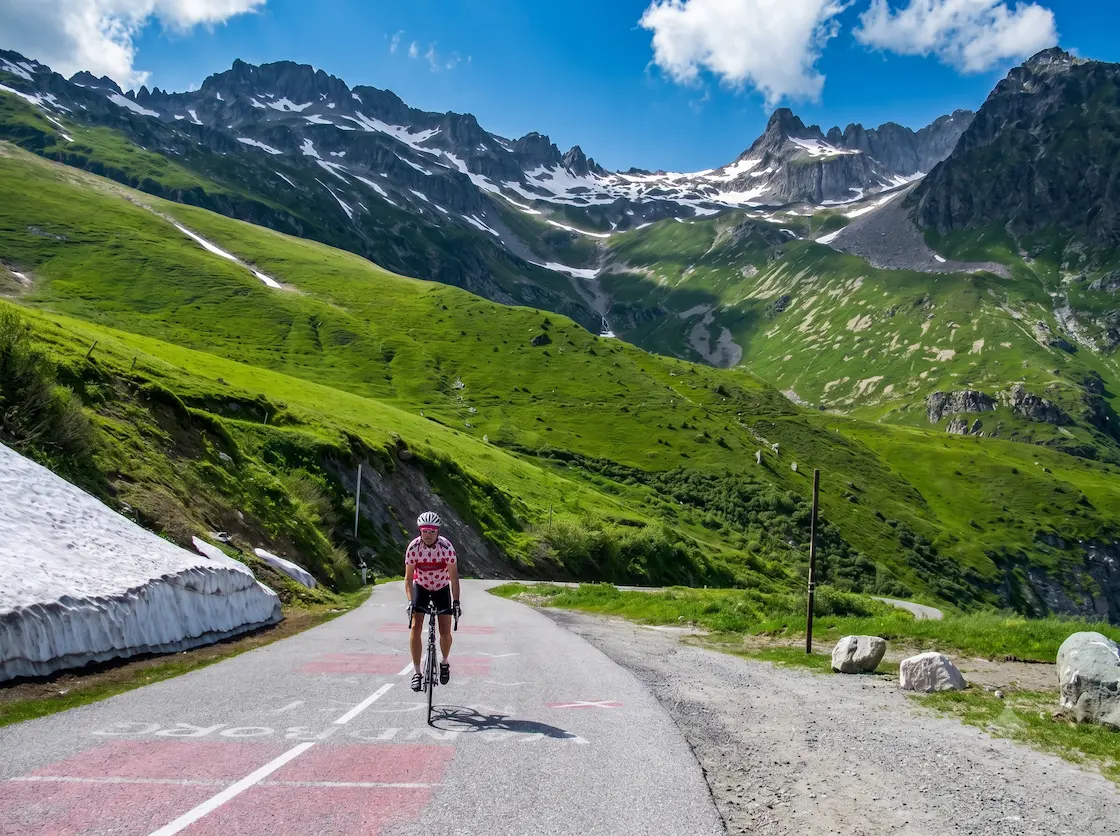
The French Alps are road cycling’s high temple. This is where the Tour de France is most often won and lost, and the roll call of climbs reads like the sport’s greatest hits: Alpe d’Huez, the Col du Galibier, the Col de la Madeleine, the Col de la Croix de Fer, the Col de Joux Plane. The Col de l’Iseran — at 2,764 m the highest paved pass in the Alps — crowns a network of roads that climb higher, longer and more spectacularly than anywhere else in Europe.
What makes the Alps work for a cycling trip is the density. Base yourself in Bourg d’Oisans and you have Alpe d’Huez, the Croix de Fer, the Glandon and the Galibier (via the Col du Lautaret) within riding distance of your front door. Base in the Maurienne valley — self-styled “the world’s largest cycling area” — and ten legendary cols radiate from the valley floor. The Tarentaise, the Beaufortain, the shores of Lake Annecy: every valley hides another climb you’ve seen on television in July.
For the ultimate multi-day challenge, the Route des Grandes Alpes runs roughly 700 km from Thonon-les-Bains on Lake Geneva to Menton on the Mediterranean, crossing 16 major cols and more than 15,000 m of climbing — most riders take six to eight days. And every July, La Marmotte lets amateurs race a full Alpine queen stage: 174 km over the Glandon, Télégraphe and Galibier before the final haul up Alpe d’Huez. The high cols are typically open from June to October — check before you travel either side of those months.
Alpe d’Huez
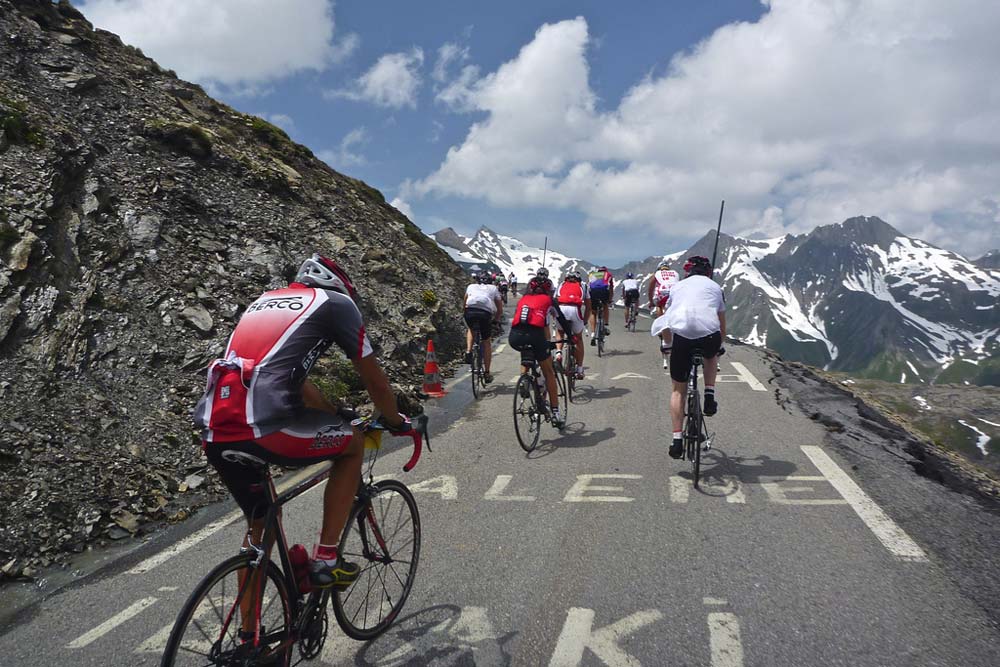
Col du Galibier
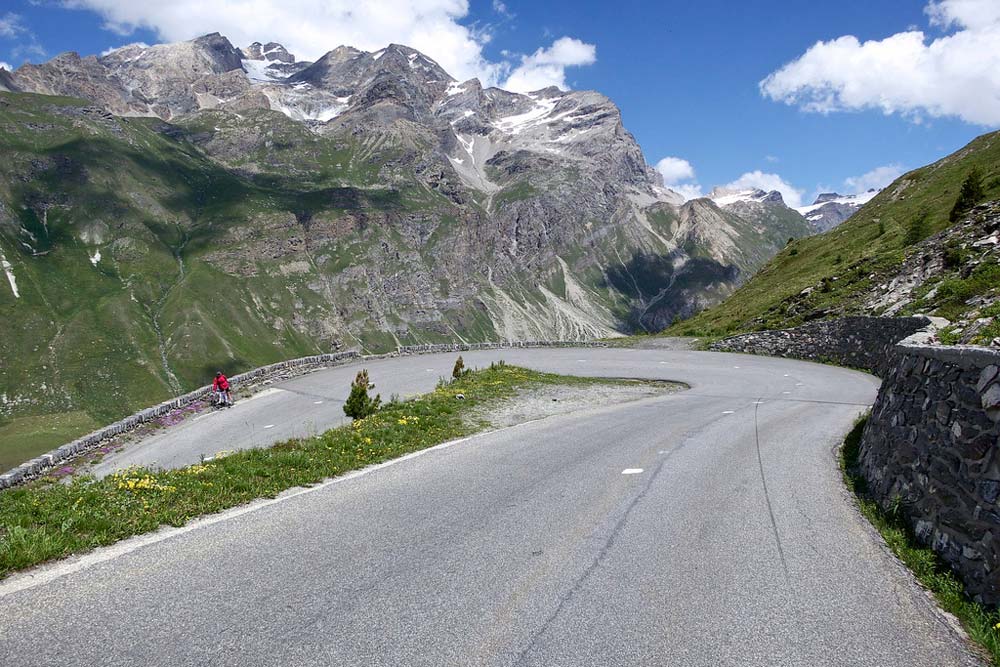
Col de l’Iseran
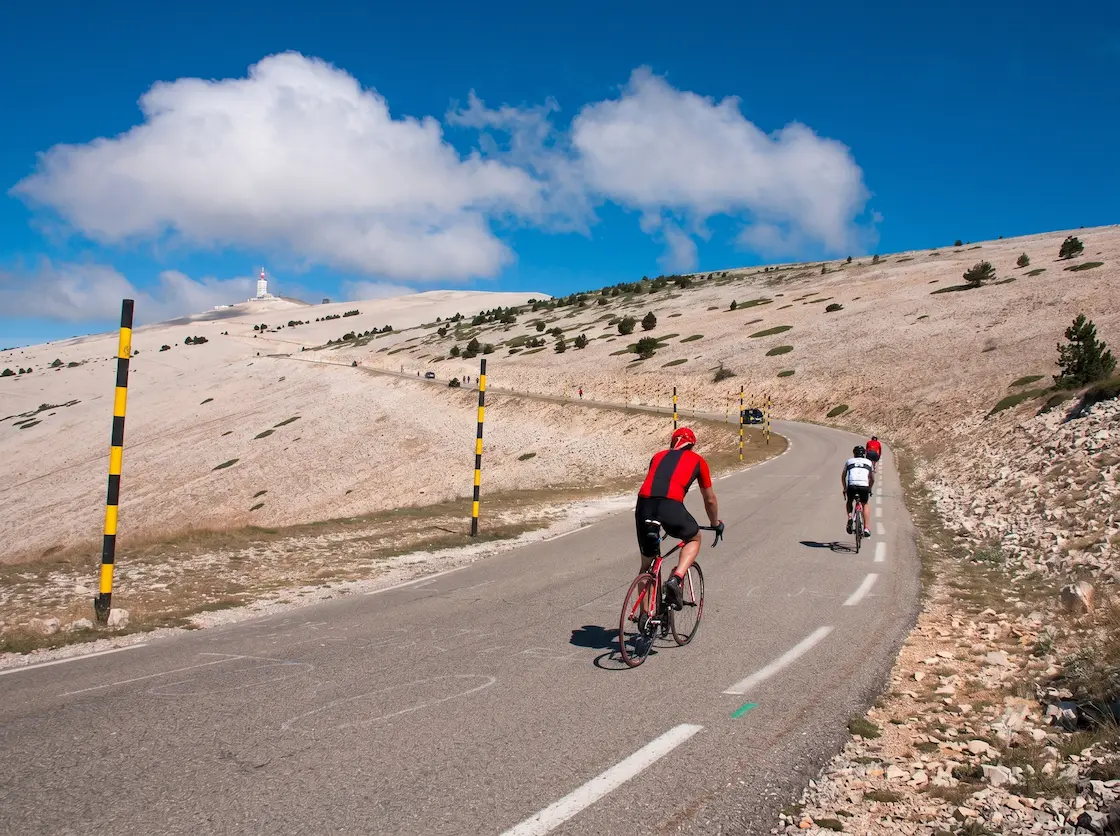
Road Cycling in the South of France
The South of France is where professional cyclists choose to live — and that tells you everything. The hills behind Nice and Monaco are the sport’s unofficial winter training headquarters, and the Col de la Madone above Menton is the test climb the pros use to measure their form. The reason is simple: this is the only place in Europe where world-class climbing, smooth tarmac and a rideable twelve-month season all meet the sea.
The terrain splits into two characters. In Provence, Mont Ventoux dominates everything — physically and mythologically. The 1,912 m “Giant of Provence” stands alone above the vineyards and lavender of the Vaucluse, and the climb from Bédoin is a rite of passage every serious cyclist eventually answers. Around it spread the quiet climbing roads of the Luberon, the Dentelles de Montmirail and the Gorges de la Nesque — arguably the most beautiful easy climb in France.
Behind the Côte d’Azur, the roads tilt upward fast. The Col de Turini, the Col de Braus and the Col de la Madone stack switchbacks above the Mediterranean, while further north the road over the Col de la Bonette tops out at 2,802 m — the highest paved through-road in France. You can swim before breakfast and summit a 2,000 m col by lunch. Winter riding here isn’t a compromise: December and January regularly serve up clear skies and 15°C on the coast.
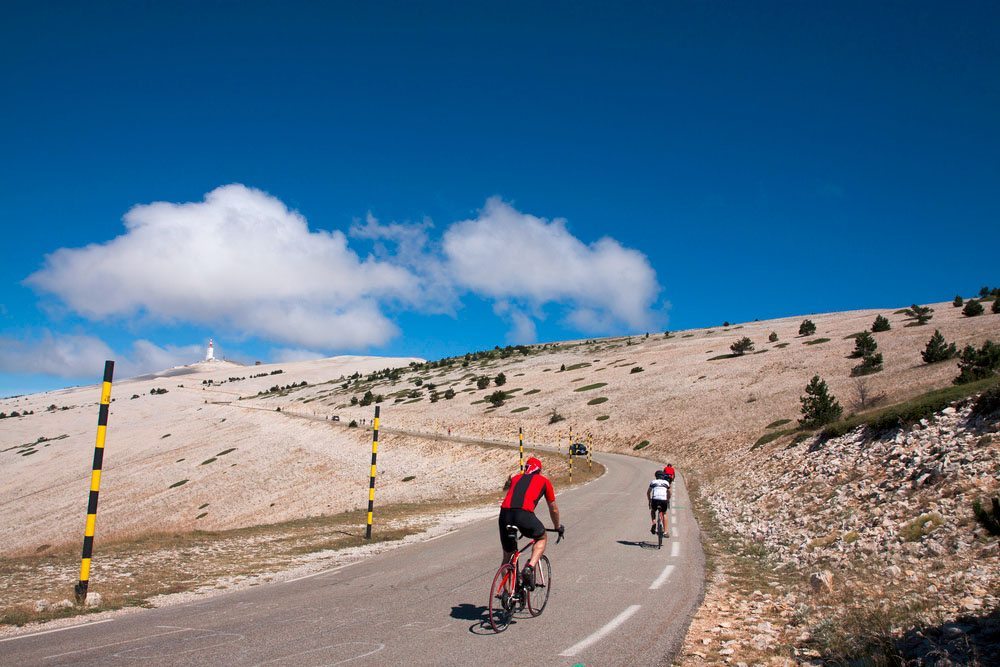
Mont Ventoux
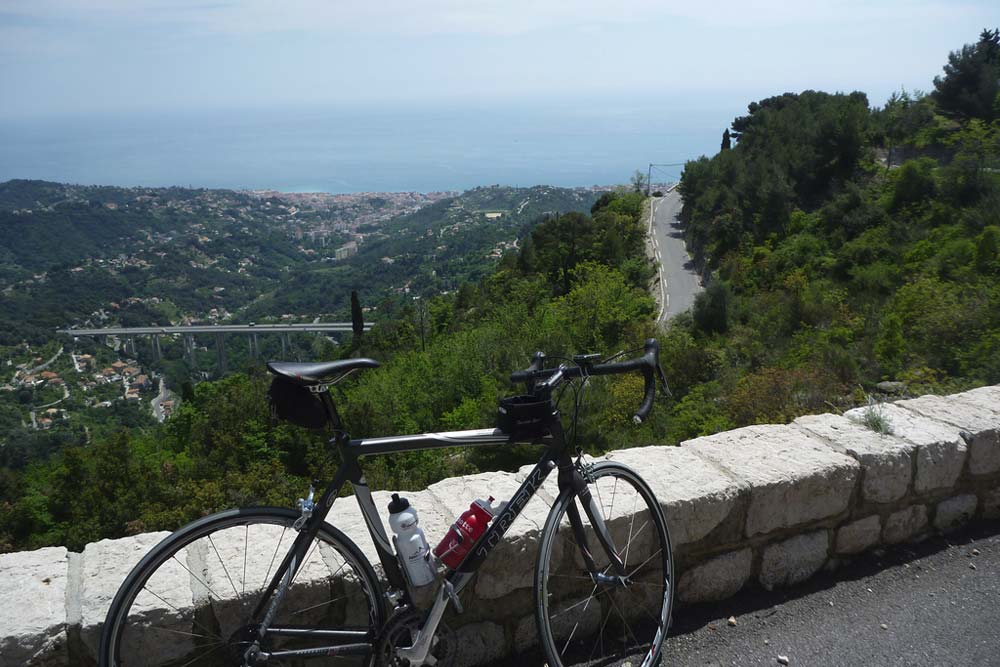
Col de la Madone
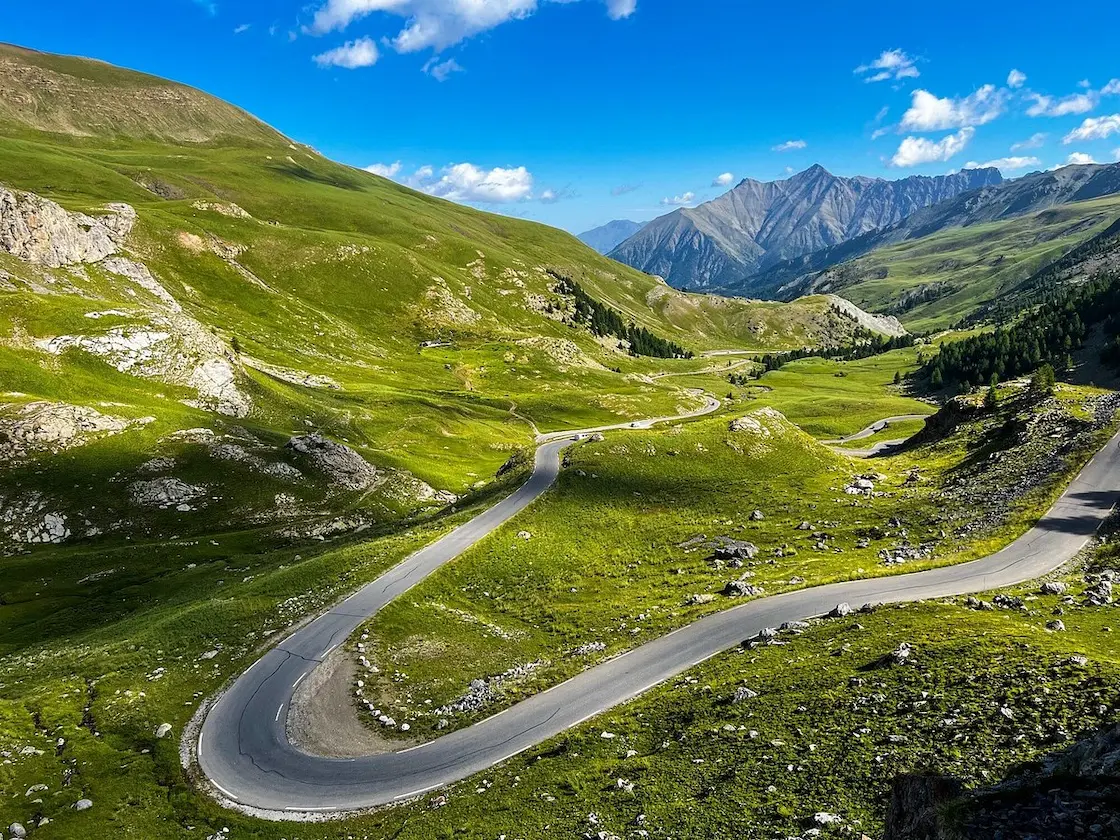
Col de la Bonette
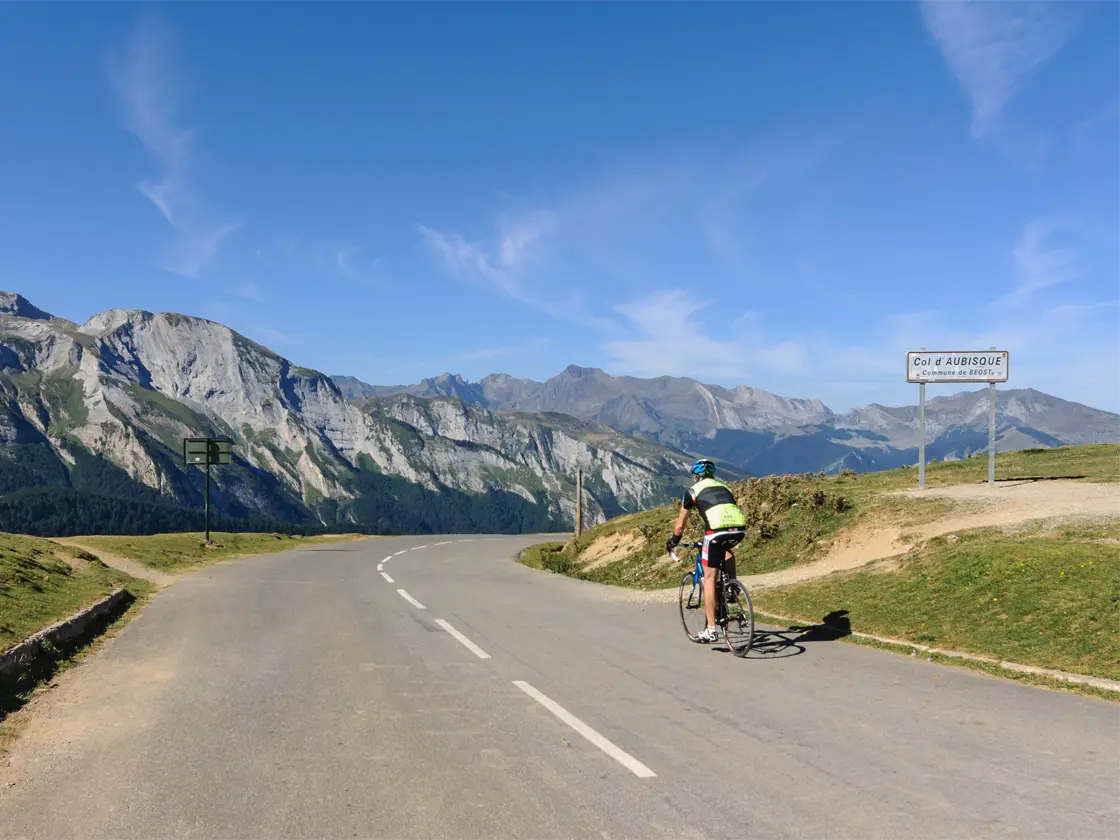
Road Cycling in the Pyrenees
The Pyrenees were the Tour de France’s first mountains — the race crossed the Tourmalet in 1910, a year before it dared the Alps — and for many cyclists they remain the purer experience. The climbs are narrower, steeper and less predictable than their Alpine rivals, the valleys greener, the traffic lighter, and a coffee at the summit costs what a coffee should. If the Alps are cycling’s cathedral, the Pyrenees are its village church — older, quieter, and somehow more moving.
The Col du Tourmalet is the heavyweight: 2,115 m, the most-climbed mountain in Tour de France history with nearly 90 appearances, and a genuinely hard ascent from either Luz-Saint-Sauveur or Sainte-Marie-de-Campan. Around it cluster the other names etched into the sport — the Col d’Aubisque and its vertiginous balcony road from the Col du Soulor, the Col de Peyresourde, the Col d’Aspin, Hautacam and Luz Ardiden. Most sit within an hour’s ride of one another, which is why the region rewards a single well-chosen base: Luz-Saint-Sauveur, Argelès-Gazost or Bagnères-de-Luchon put half a dozen legendary cols on your doorstep.
The classic end-to-end challenge is the Raid Pyrénéen — roughly 720 km from Hendaye on the Atlantic to Cerbère on the Mediterranean over 18 cols, traditionally ridden in under 100 hours. The season runs roughly May to October on the high cols, longer at lower altitude, and the Basque foothills in the west stay rideable most of the year. Read our full guide to road cycling in the Pyrenees.
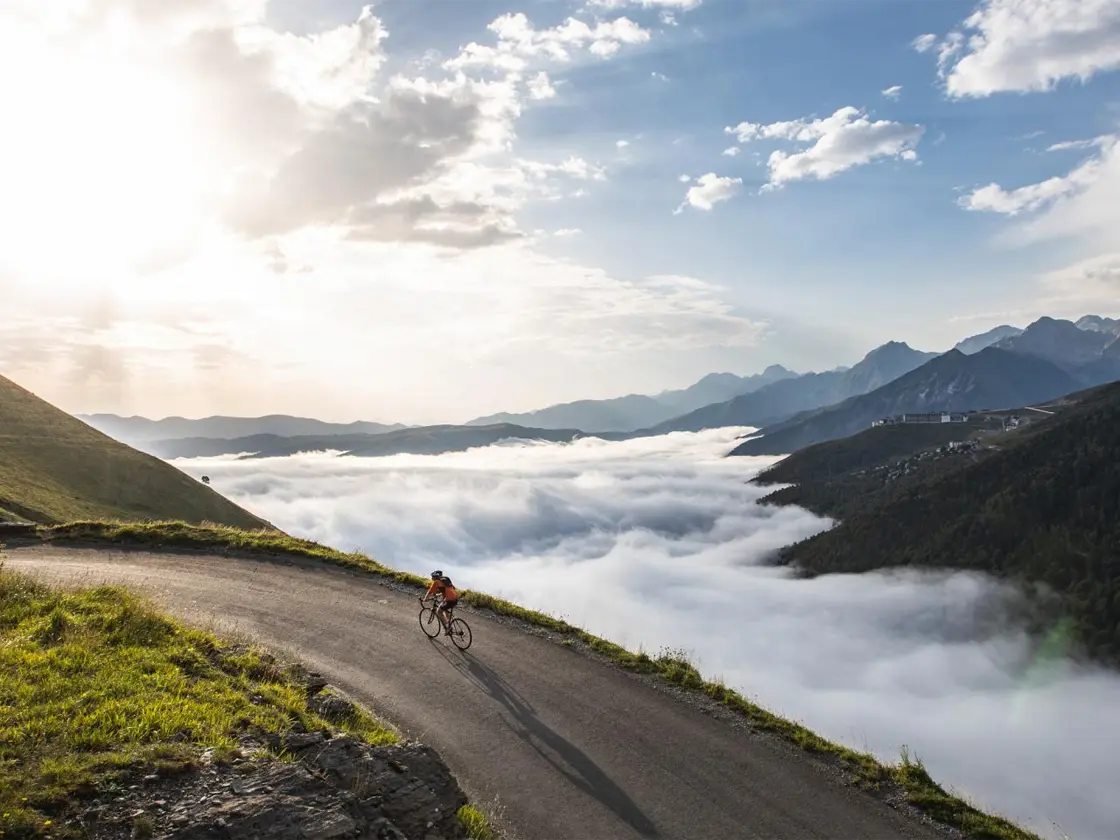
Iconic Tour de France Climbs
Every cyclist carries a mental list of the climbs they have to ride before they hang up the wheels — and most of that list is in France. These are the four that define it. All are open to anyone, free, year-round access permitting; the only entry requirement is a low gear and a degree of stubbornness.
Here are the four climbs every cyclist dreams about:
Alpe d’Huez
Length: 13.9 km
Summit: 1,815 m
Altitude gain: 1,119 m
Avg gradient: 8.1%
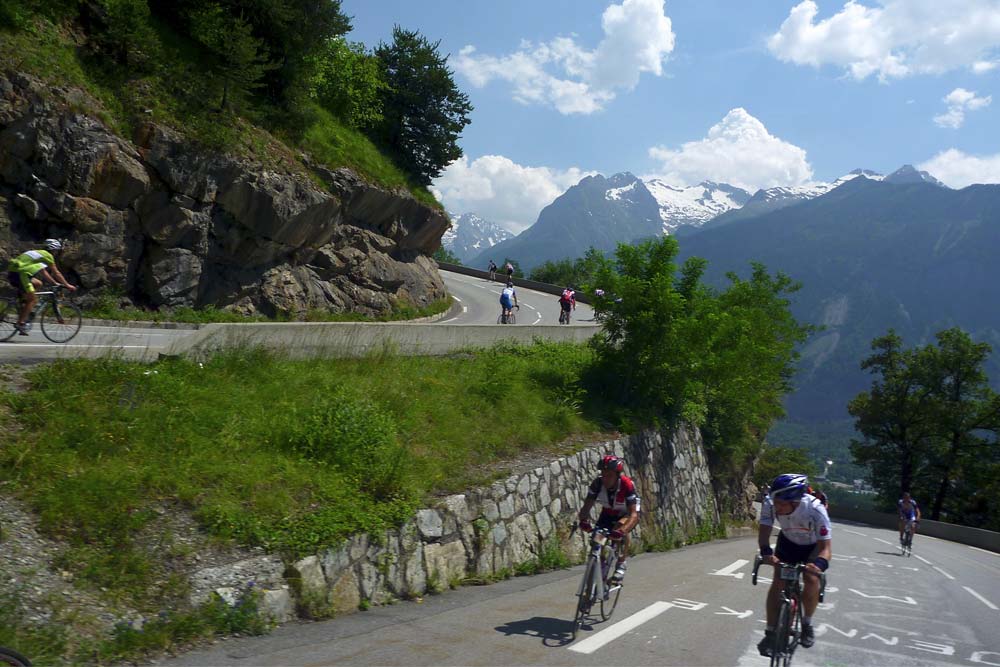
Cycling’s most famous climb, full stop. The 21 hairpins of Alpe d’Huez above Bourg d’Oisans have decided Tours since 1952, and each bend carries the name of a stage winner. As a physical test it’s honest rather than horrific — the key is not blowing up on the brutal opening 3 km at over 10%. On a clear June morning, with the Romanche valley dropping away beneath you, there’s nowhere better to understand why people fall in love with this sport.
Read More
Mont Ventoux
Length: 22.7 km from Bédoin
Summit: 1,912 m
Altitude gain: 1,622 m
Avg gradient: 7.2%
“The Ventoux isn’t a climb like any other” — and it isn’t. The Giant of Provence stands alone, exposed to the Mistral and the full Provençal sun, and the final kilometres across the bare white summit ridge are like riding on the moon. The classic route from Bédoin gives almost no respite once you enter the forest; the memorial to Tom Simpson near the top is a reminder to respect the mountain and the heat. Start early, carry two bidons, and savour it — this is cycling’s most mythologised mountain.
Read More
Col du Tourmalet
Length: 19 km from Luz
Summit: 2,115 m
Altitude gain: 1,404 m
Avg gradient: 7.4%
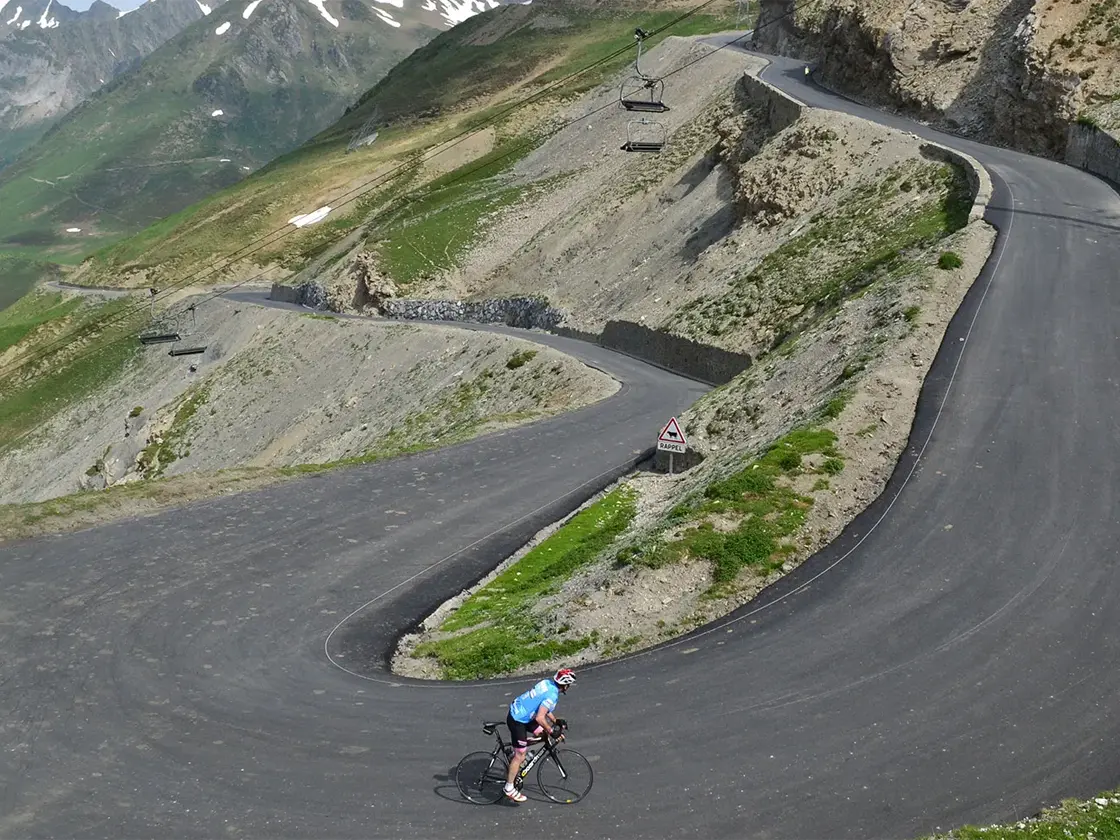
The soul of Pyrenean cycling and the Tour’s most-visited climb, with nearly 90 appearances since 1910. From Luz-Saint-Sauveur the Col du Tourmalet climbs 19 km at 7.4%, the hardest ramps saved for the final approach to the pass — watched over by the statue of Octave Lapize, who famously called the race organisers “assassins” as he crossed it on foot in the 1910 Tour. Wilder and lonelier than anything in the Alps, and all the better for it.
Col du Galibier
Length: 18.1 km from Valloire
Summit: 2,642 m
Altitude gain: 1,245 m
Avg gradient: 6.9%
The Tour’s great Alpine monument, usually paired with the Col du Télégraphe to make a 35 km, 2,100 m ascent from the Maurienne valley. The scenery turns lunar above Plan Lachat and the last 2 km kick savagely — but the summit, with the Écrins glaciers on one side and Mont Blanc on the other, is the finest viewpoint in French cycling.
Read More
Honourable mentions that would headline any other country: the Col d’Izoard and its Casse Déserte moonscape, the Col de la Croix de Fer, the Col d’Aubisque, the Col de la Madeleine, and the Col de Joux Plane — the climb that famously cracked Lance Armstrong. You’ll find them covered in our French Alps and South of France climbing guides.
When to Go Road Cycling in France
French Alps: June to September for the high cols. Snow clearance dictates the start of the season — the Galibier and Iseran typically open in early-to-mid June, and snowfall can close them again from late October. September is the connoisseur’s month: stable weather, empty roads, and the summer traffic gone. If you’re targeting a specific col in May or October, check it’s open before you travel.
South of France: Year-round — this is the region’s superpower. Coastal climbs like the Madone and the cols behind Nice are rideable in every month, with October to May the sweet spot for comfortable temperatures. Avoid Mont Ventoux on summer afternoons (the heat on the exposed upper slopes is genuinely dangerous) and note that the highest cols — the Bonette, the Cayolle, the Allos — hold snow until June.
Pyrenees: May to October on the big cols, with June and September the pick of the season. The western Pyrenees are wetter and greener — pack a rain jacket whatever the forecast — while the Mediterranean end stays drier and warmer for longer.
July and the Tour: riding the great cols during Tour de France month is a double-edged saddle. The atmosphere is unbeatable — ride a stage route the morning before the race and the crowds will cheer you up the mountain — but expect closed roads on race days, booked-out accommodation, and the busiest traffic of the year. Plan around the route, not against it.
Bike Rental & Transport
Renting a Road Bike in France
Every serious cycling base in France — Bourg d’Oisans, Bédoin, Nice, Annecy, Luz-Saint-Sauveur — has rental shops stocking proper road bikes, not just town hybrids. Expect to pay approximately €35–60 per day for a quality aluminium road bike with compact gearing, and €60–100 per day for a current-model carbon bike with electronic shifting. Multi-day and weekly rates are significantly cheaper. E-road bikes — increasingly popular for riding the big cols with company of mixed abilities — run approximately €70–110 per day. Book ahead for July and August, and ask for a compact or sub-compact chainset with a 30 or 32-tooth cassette if you’re heading for the high mountains — your knees will thank you.
Bringing Your Own Bike
If you’re driving from the UK, the Eurotunnel or a Channel ferry is the simplest option — bike inside the car or on a rack, no packing required. Flying, most airlines carry boxed or bagged bikes as oversized baggage for a surcharge of €50–100 each way; budget airlines are stricter on weight, so check before you book. The key airports: Geneva, Lyon and Grenoble for the Alps; Nice and Marseille for the south; Toulouse, Pau and Biarritz for the Pyrenees. Most airport transfer companies will carry a bike box — confirm capacity when booking.
Bikes on French Trains
Regional TER trains carry fully assembled bikes for free — space is limited but rarely a problem outside commuter hours. High-speed TGV services require a bike reservation (approximately €10) with the bike bagged or boxed, and the Eurostar accepts bagged bikes too. The combination of Eurostar to Paris and TGV to Grenoble, Avignon or Pau makes a surprisingly practical low-carbon route to all three cycling regions.
What to Pack for the Mountains
The golden rule of Alpine and Pyrenean cycling: the summit is a different climate from the valley. You can leave Bourg d’Oisans in 28°C sunshine and crest the Galibier in single digits with a wind chill — and a 20 km descent at 60 km/h will find every gap in your clothing. Pack a gilet and lightweight rain jacket on every mountain ride, plus arm warmers outside high summer. A good waterproof cycling jacket is the single most valuable item in your bag — see our tested recommendations.
In the south, the problem reverses: heat and sun. Carry two large bidons (refill at village fountains — most are potable and signposted), use proper sun cream, and start the big exposed climbs like Mont Ventoux early in the morning. Gearing matters more than any other equipment choice: a compact chainset with a 30+ tooth cassette turns a grim day on a 7% gradient into an enjoyable one.
Road Cycling Events in France
France’s sportive calendar is the richest in the world, and building a trip around an event is one of the best ways to experience the country’s cycling culture at full volume.
L’Étape du Tour — July. The big one: around 16,000 amateurs ride a full mountain stage of that year’s Tour de France on fully closed roads, a week or so before the pros. Entries open in the autumn and sell out fast.
La Marmotte Granfondo Alpes — Bourg d’Oisans, early July. The grandfather of European sportives: 174 km over the Glandon, Télégraphe and Galibier with a summit finish on Alpe d’Huez — over 5,000 m of climbing in a single day.
Haute Route Alps & Pyrenees — August/September. Multi-day timed stage races for amateurs with pro-level support — the closest most riders will come to living like a Grand Tour professional for a week.
Paris–Roubaix Challenge — April. Ride the cobbled sectors of the Hell of the North, including the Arenberg trench, the day before the pros hit them. A completely different kind of suffering from the mountains.
Watching the Tour de France — July. Free, and unforgettable. Pick a mountain stage, ride up the col hours before the race, plant yourself at a hairpin with the campervans and the costumes, and watch the world’s best climb past at a speed you now — having ridden it — properly understand.
Plan Your Trip
Choosing Your Base
Road cycling trips work best from a single base with climbs radiating in every direction. The classics: Bourg d’Oisans for Alpe d’Huez and the Oisans giants; Annecy for lakeside riding plus the Aravis cols; Bédoin for Mont Ventoux and the Vaucluse; Nice for year-round riding and the Côte d’Azur classics; Luz-Saint-Sauveur or Bagnères-de-Luchon for the central Pyrenees. Book accommodation early for June–September — cycling hotspots fill with riders, not just tourists.
Budget
France can be done on most budgets. Rough daily figures: rental road bike €35–100, mid-range hotel or B&B €80–150 for two, dinner with wine €25–40 per person. The riding itself is free — no permits, no tolls, no lift passes. Sportive entries run €60–120 for one-day events. The Pyrenees are noticeably cheaper than the Alps and Côte d’Azur for both accommodation and food.
Rules of the Road
Ride on the right, and ride single file when traffic approaches (riding two abreast is legal but yield to passing vehicles). Helmets are compulsory only for under-12s but strongly recommended. Drivers must give cyclists 1.5 m of clearance when overtaking outside built-up areas — and in our experience, most do. Carry ID and a phone; the European emergency number is 112. On the big cols, watch for motorbikes on summer weekends and check col status boards at the foot of high passes — they’re accurate.
Beyond the Bike
The best cycling trips to France aren’t only about cycling. Rest-day options are world-class everywhere you base yourself: hiking in the Alps and Pyrenees, the beaches and old towns of the Côte d’Azur, the hilltop villages and markets of Provence — and if anyone in your group prefers fat tyres, our mountain biking in France guide covers the same regions from a different angle.
Road Cycling in France — FAQ
It depends on the region. The high cols of the Alps and Pyrenees are open roughly June to October, with June and September the best balance of weather and quiet roads. The South of France rides well year-round — coastal climbs like the Col de la Madone are popular even in January. July brings the Tour de France: incredible atmosphere, but busy roads and booked-out accommodation.
Most high Alpine and Pyrenean passes are cleared of snow and open from late May or June until late October — the very highest, like the Col de l’Iseran (2,764 m) and Col de la Bonette (2,802 m), are usually the last to open, in mid-June. Opening dates vary year to year with snowfall, so check the col status before travelling in the shoulder seasons.
Yes — with the right gearing and pacing, any reasonably fit cyclist can ride the famous climbs. Fit a compact chainset with a 30 or 32-tooth cassette, start early to avoid heat and traffic, and settle into a sustainable rhythm from the first ramps. Most amateurs climb Alpe d’Huez in 1–2 hours and Mont Ventoux from Bédoin in 2–3 hours. There’s no time limit and no prize — the summit is the prize.
Yes — every major cycling base (Bourg d’Oisans, Bédoin, Nice, Annecy, Luz-Saint-Sauveur) has shops renting quality road bikes. Expect approximately €35–60 per day for aluminium, €60–100 for current carbon models, and €70–110 for e-road bikes, with much better weekly rates. Book ahead for July and August and request climbing gearing for the mountains.
L’Étape du Tour is an annual mass-participation event in which around 16,000 amateur riders tackle a full mountain stage of that year’s Tour de France route on completely closed roads, usually a week or so before the professionals race it. It’s the most sought-after sportive in the world — entries open the previous autumn and sell out quickly.
France is one of the most cyclist-friendly countries in the world. Drivers are legally required to give 1.5 m of clearance when overtaking outside towns, and cycling’s cultural status means riders are generally treated with patience and respect. Take normal precautions: ride single file in traffic, carry lights in changeable mountain weather, and watch for motorbikes on popular cols at summer weekends. The European emergency number is 112.
Regional TER trains carry fully assembled bikes for free. High-speed TGV services require a bike reservation (approximately €10) with the bike bagged or boxed, and Eurostar accepts bagged bikes. Flying, most airlines carry a boxed bike for €50–100 each way — or simply rent on arrival, since rental quality in French cycling towns is excellent.
The Alps have the bigger names, higher passes and better infrastructure — more bike shops, more cycling hotels, more rental options. The Pyrenees are quieter, cheaper and steeper, with a rawer, more intimate feel and the dense cluster of legendary cols around the Tourmalet. First trip chasing the famous climbs: the Alps. Returning for atmosphere and empty roads: the Pyrenees. The South of France beats both from October to May.
Please leave a comment below if you need specific advice for your road cycling trip to France, or if you have any recommendations to help us improve this page. Happy riding!