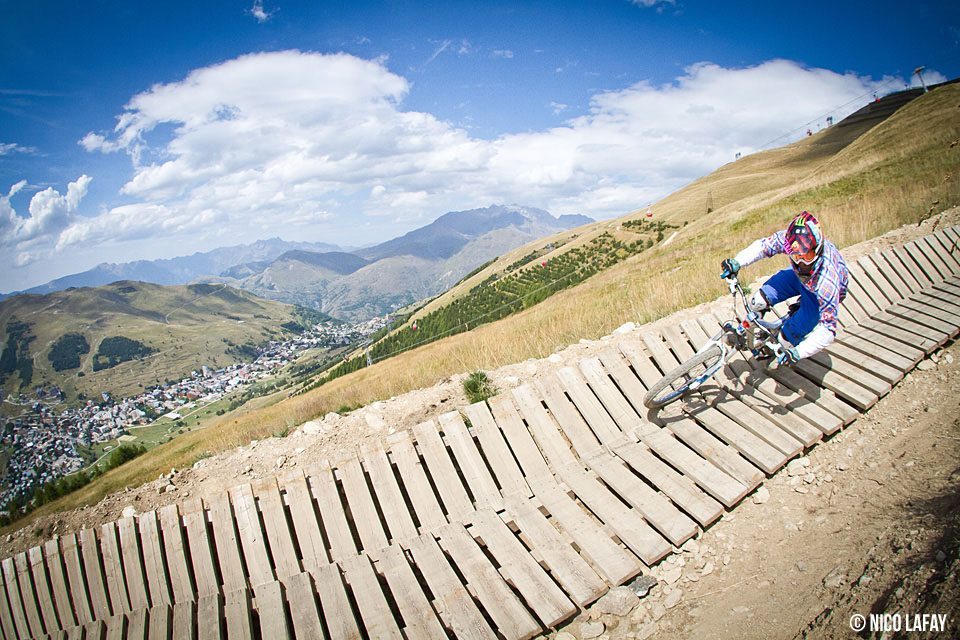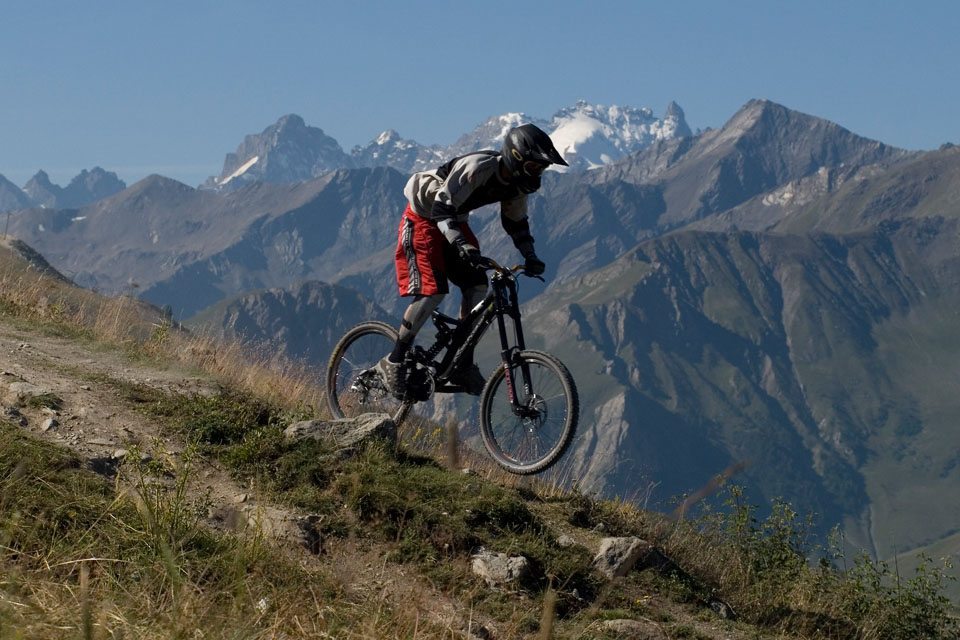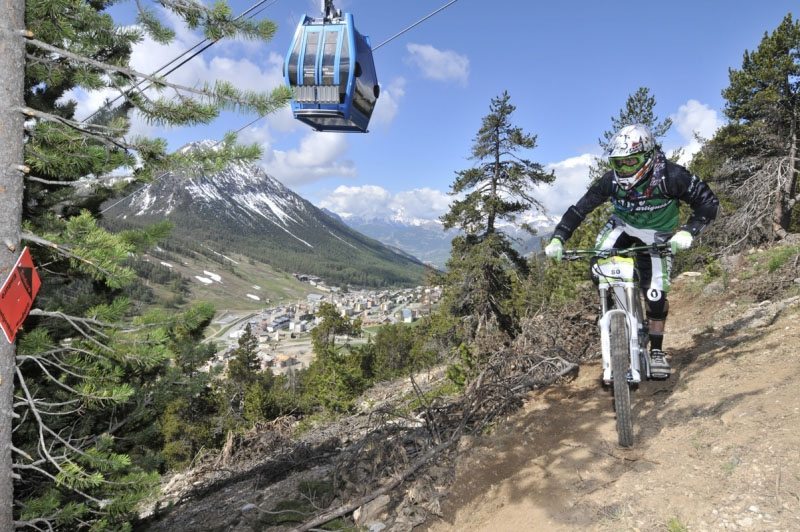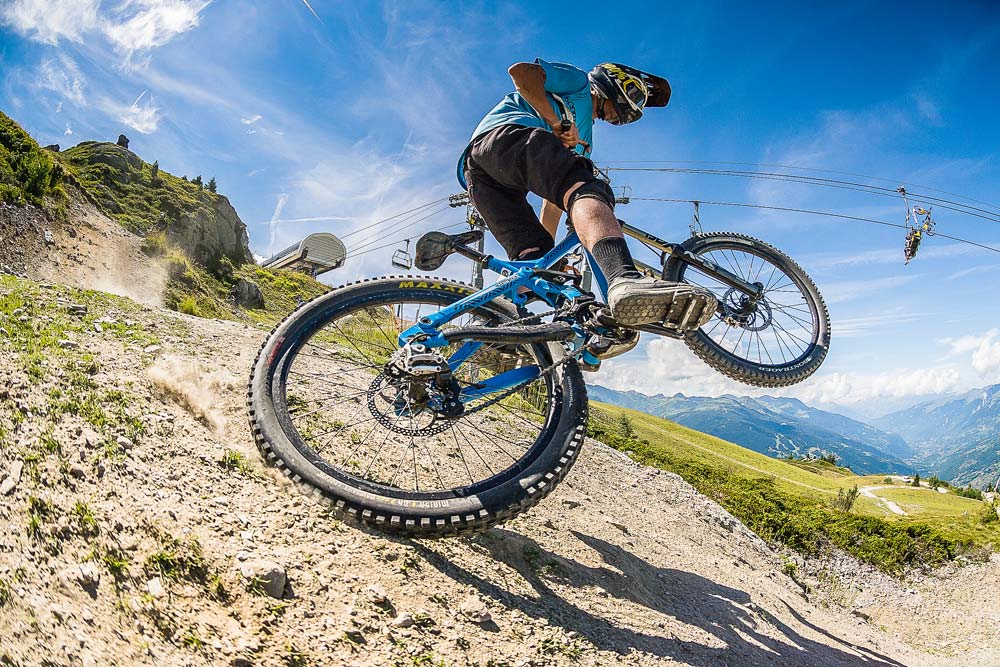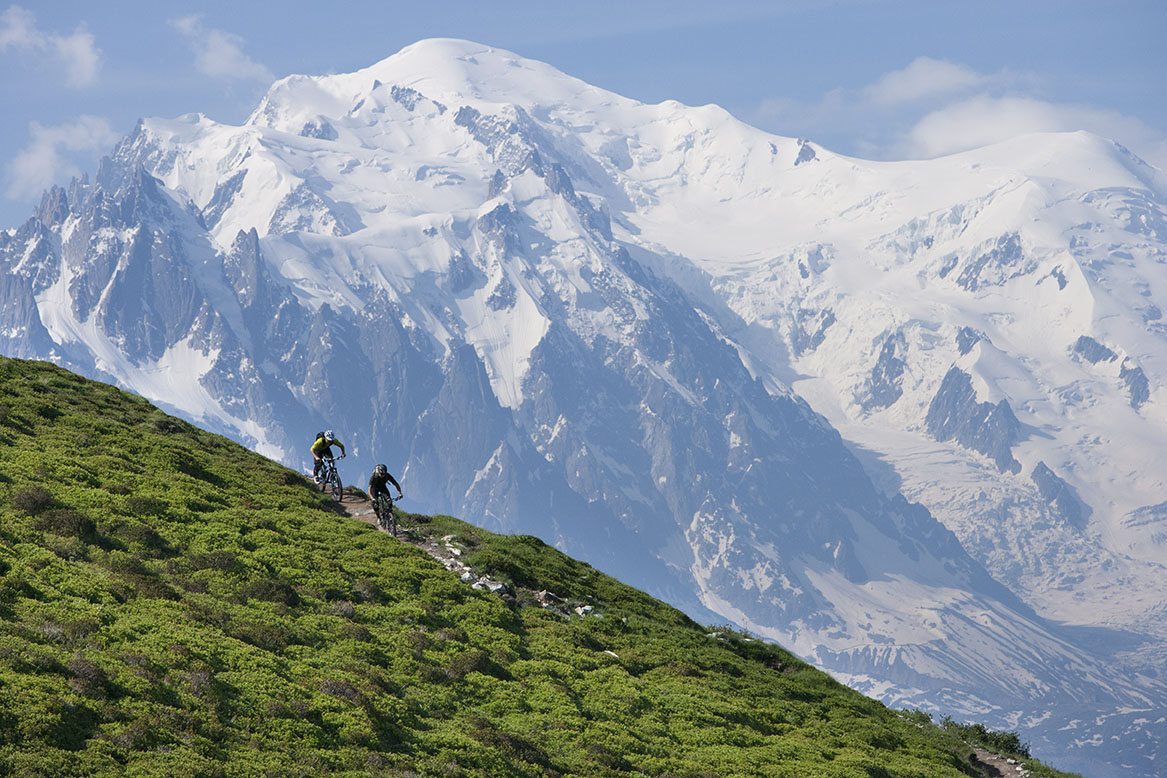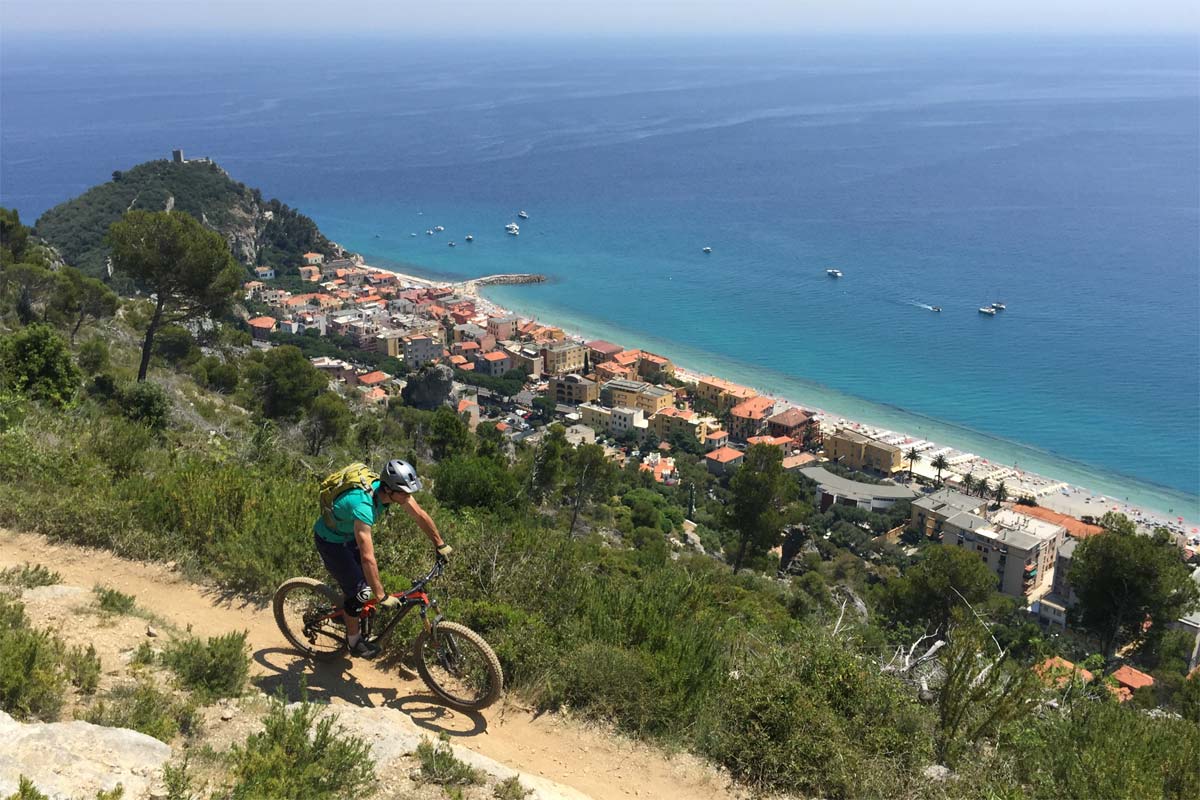

Alpe d’Huez has some of the best big mountain riding in the Alps and famously plays host to the mass-start enduro extravaganza, the Megavalanche. A huge vertical drop means you can ride high alpine rocky terrain right through to flowy singletrack through the trees.
By Matt W. · Last updated June 2026
Huge vertical drop in a big mountain setting.
High altitude reds and blacks are very rocky.
Elevation
Summit
Vertical Drop
Base
Lift
Total
Cable-Cars
Chairlifts
MTB Trail Highlights
XC
Downhill
eMTB
Total Riding
Bike Park
Bike Wash

Beginner Trails

Intermediate Trails

Advanced Trails

Expert Trails
Plan Your Trip
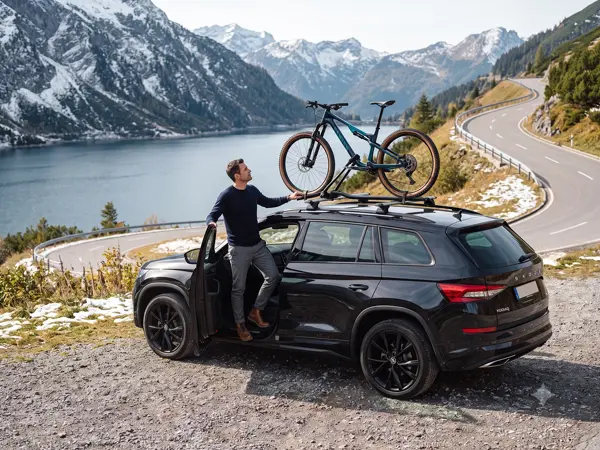
Everything you need to book your Alpe d’Huez mountain biking trip — bike-friendly accommodation, the gear to pack, how to get there, and activities to book.


Practical Information
Opening times
Resort prices
Nearest airport
Tourist Office
Alpe d’Huez Accommodation
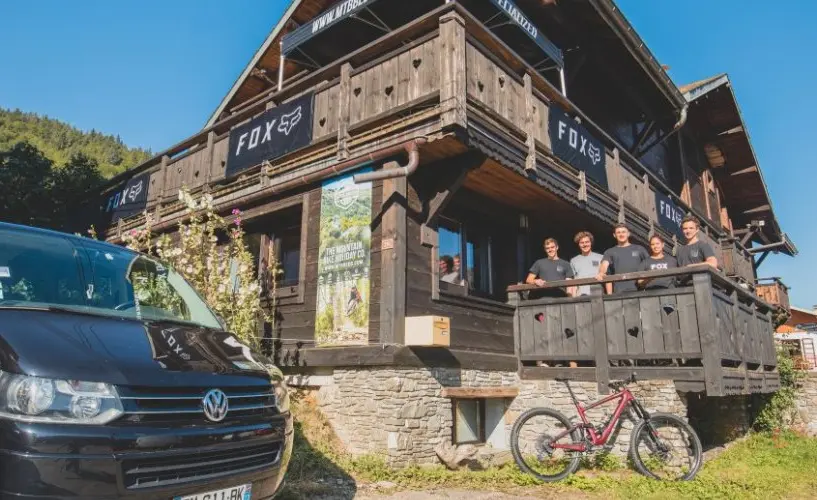
Where you base yourself matters more for a biking trip than a ski one, because you’ll wheel a heavy, muddy bike to and from the lifts twice a day. Alpe d’Huez is a big, sprawling resort, so aim for one thing above all: walking distance to the main lift stations. Land near the DMC and the lifts up out of the central resort, or down in the Les Bergers sector by the Romains chairlift, and you can ride to and from the mountain without a shuttle. The resort spreads uphill across several quartiers, and the wrong end of town means a daily slog with a downhill bike.
Prioritise places set up for bikes, not just skiers. The non-negotiables are secure, lockable bike storage, a jet wash or hose, and somewhere to do basic spannering after a dusty Sarenne run. Plenty of central apartments and chalets advertise summer biking now, and the ones near the lift bases are worth paying up for when you’re carrying expensive kit. A few central hotels add secure storage and a pool to soak legs after 2,600m of descent.
If you want quiet over convenience, the satellite villages of Oz-en-Oisans, Vaujany and Auris sit on the same lift network and trade resort buzz for calmer evenings — a strong call for e-bikers and anyone with a car, since they put you straight onto their own bike-park sectors. Families should anchor in Les Bergers, close to the gentle green slopes, the Rif Nel flow trail and the restaurants, so nobody’s stuck shuttling kids across the resort. Use the map below to compare what’s genuinely walkable to a lift before you book.
Use the live map below to compare prices and find places to stay in Alpe d’Huez, from hotels near the lifts to self-catered apartments and chalets.
Alpe d’Huez Guide
Alpe d’Huez sits at 1,860m on a south-facing balcony above the Oisans valley, and its bike park trades on one number: 2,600 vertical metres. The lifts climb to the Pic Blanc at 3,330m, where you stand on the edge of the Sarenne glacier with snow under your tyres, and from there the mountain falls away through scree, alpine meadow and forest all the way to the valley floor at 720m. No other resort in the Alps hands you that much continuous descent off a single peak. This is the home of the Megavalanche, the mass-start downhill that launches 1,500 riders off the Sarenne glacier at once and has defined the resort’s riding identity since 1995 — a ~22km race line dropping ~2,600m to the village of Allemond. The marked Sarenne descent off the same high ground is the long, raw big-mountain run that tells you everything about why people come here.
Whatever else you pack for Alpe d’Huez, make sure your travel insurance covers mountain biking — see our travel insurance guide for what to check before you go.
The wider domain links Alpe d’Huez with Auris, Oz-en-Oisans, Vaujany and the valley town of Allemond, so a single MTB pass opens a 260km network spread across 40 graded routes — downhill, enduro, cross-country and gentler discovery loops. Trails are graded like a ski map: green, blue, red and black. The honest picture is that Alpe d’Huez skews steep and long. The headline runs are big mountain descents, not lapped park flow, so plan your days around altitude and weather rather than ticking off short laps. Ride the high ground when the sky is clear, keep the forest trails lower down for the afternoon, and treat the Sarenne as the prize you build up to.
The Riding in Alpe d’Huez
Beginner
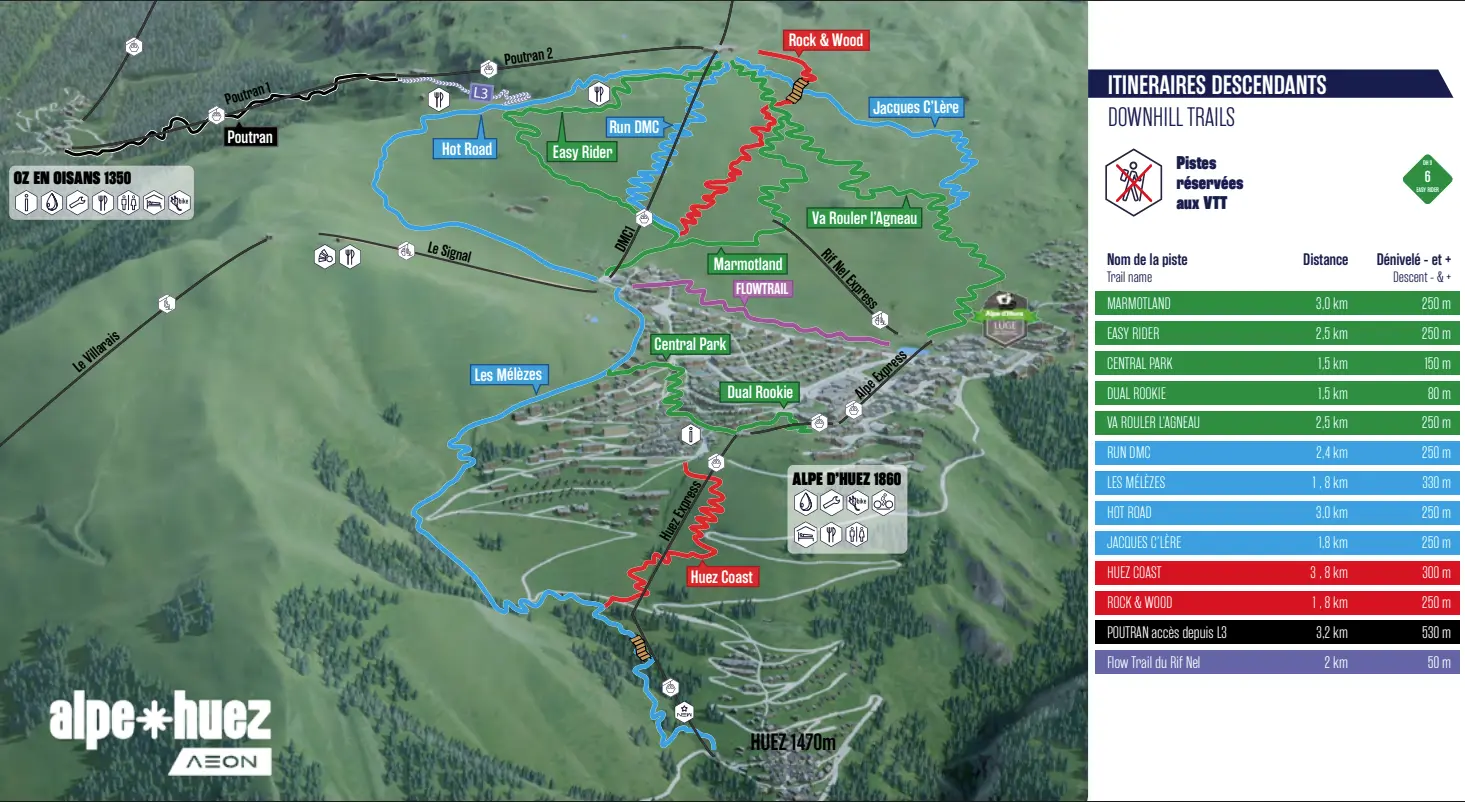
Start in the Les Bergers sector, not on the high lifts. The gentle green slopes here, reached by the Romains chairlift, are where genuine beginners find their feet: open, undulating ground with no exposure and nothing that bites. The resort has built its softest riding around the Rif Nel, where a green track sits alongside a flow trail of rollers, waves and progressive jump lines you roll until you’re ready to pop them. Combined with the pump tracks dotted around the resort, this is the safest place to drill cornering and braking before you commit to a lift-served descent. There’s also a green run dropping from around 2,100m back toward Les Bergers, an easy first proper descent that lets you carry speed without surprises.
Skip the Pic Blanc and the long blacks entirely for now. The mountain is generous with vertical, and that vertical is exactly what new riders don’t want underneath them on day one. Book a morning with a local school, lap the Rif Nel green and flow trail until the berms feel automatic, then step onto the lower blues. Alpe d’Huez rewards patience here more than most resorts, because the gap between its easiest and hardest trails is enormous.
Intermediate
This is where the resort starts to make sense. DH1 “Les Vaches” is the blue downhill to build on, dropping around 250m of woodland and open turns that teach you to trust the bike at speed without throwing black-grade consequences at you. From there, DH5 “Rock and Wood” (1.8km, around 250m descent) is the natural red step up — faster, rockier, jumpier, the trail where you stop braking into every corner. For distance over laps, the Forêt de l’Ours is the run to chase: a 6km trail that mixes fast singletrack under the trees with open alpine passages, the kind of descent that feels like a proper day out rather than a park lap.
If you’d rather pedal than lift, the Tour du Signal is a 17km loop with around 500m of climbing that strings together the resort’s higher ground and shows you the lay of the land. Intermediates get the best of Alpe d’Huez once they’re comfortable on the reds, because that grade unlocks the longer descents without the commitment of the glacier lines. Session Rock and Wood until it flows, then start linking the bigger trails together into full top-to-valley runs.
Advanced
The Pic Blanc is the point of the whole place. The Megavalanche line is the famous one: the race route that drops roughly 22km and 2,600m from the Sarenne glacier at 3,330m down to the village of Allemond, and the descent every serious rider books Alpe d’Huez to do. You start with snow under your wheels, drop through scree and moonscape rock, then thread alpine meadow and rooty forest before the trees swallow you near the bottom. It is long, committing and unlike anything in a conventional bike park, and you treat it with respect — go when the high mountain is clear, not in cloud. The marked Sarenne run is the other big-mountain line off the same high ground: a long, raw, off-piste-feeling descent that rewards the same fitness and nerve. For shorter, sharper hits, DH2 “Les Chamois” is the resort black at around 3.7km, a steep, technical woodland downhill that punishes hesitation.
The neighbouring sectors stack on more. DH3 at Oz-en-Oisans is a 3.5km black losing around 530m, and the EN7 “Crazy Mustang” enduro line off Vaujany drops a huge 1,500m over 8km — one of the biggest single descents on the whole pass. Earn these by sessioning the reds first, then build into the glacier lines once your legs and nerve are ready. The Megavalanche and Sarenne both reward fitness as much as skill, so come in shape.
eMTB
Alpe d’Huez is built for e-bikes, with eight dedicated MTB/e-MTB touring routes covering around 118km across the domain. An e-bike rewrites the geography here more than anywhere, because the climbs are long and the linking trails between Auris, Oz, Vaujany and the valley are real efforts on a pedal bike. On an e-MTB you self-shuttle between sectors, climb out to the quieter enduro singletrack that lift riders never see, and turn a network this spread out into a comfortable day rather than an epic. The Megavalanche even runs its own e-Mega category, which tells you the terrain takes e-bikes seriously. Resort hire shops stock current e-MTBs and downhill rigs, so you don’t need to bring your own — and Mondraker and Commençal e-bikes are on the rental wall at the lift base if you want to demo before you buy.
The Trails & Facilities for Mountain Bikers
Beyond the marked park lines, Alpe d’Huez and its linked Oisans sectors pack in a big spread of graded trails and rider facilities across a 2,600m vertical playground. Here’s what you’ll find on the mountain:
- Plug into a 260km network spread across 40 graded routes — downhill, enduro, cross-country and gentler discovery loops — on a single MTB pass.
- Ride the world’s longest continuous descent off a single peak: 2,600m from the Pic Blanc at 3,330m down to the valley floor at 720m.
- Link four sectors — Alpe d’Huez, Auris, Oz-en-Oisans and Vaujany — plus the valley town of Allemond, all on the same lift network.
- Tackle the marked Sarenne and the Megavalanche line off the glacier, or step down to the DH1 “Les Vaches” blue and DH5 “Rock and Wood” red closer to the resort.
The facilities back up the riding, from learner zones to bike washes:
- The Rif Nel green and flow trail plus pump tracks dotted around the resort, ideal for drilling skills and getting kids rolling.
- Eight dedicated MTB/e-MTB touring routes covering around 118km, with an e-bike-friendly network across the domain.
- A cluster of hire and repair shops at the lift bases, with body armour usually included and bikes serviced overnight.
- Bike washes for cleaning off after a dusty Sarenne run, and satellite-village bike parks at Oz, Vaujany and Auris on the same pass.
Bike Hire & Repairs
You don’t need to box up your own bike to ride Alpe d’Huez well. The resort and the valley below stock everything from hardtails to full downhill rigs and e-MTBs, with body armour usually included and bikes serviced overnight ahead of a glacier day.
- Altitude Sports (Rond Point des Pistes) — the slope-side pick at the lift base, renting Commençal downhill and enduro bikes plus Mondraker e-MTBs, with repairs and accessories on site. Best for grabbing a rig and rolling straight onto the lift. (Rond Point des Pistes, 38750 Alpe d’Huez.)
- Altitude Sports (Les Bergers) — the same operation’s second branch over in the family sector, handy if you’re based near the Romains chairlift. Best for hire close to the beginner green slopes. (179 avenue des Marmottes, 38750 Alpe d’Huez.)
- Sarenne Sports Bike — a resort-centre shop renting cross-country, enduro, kids’ and electric MTBs, open seven days through summer with online booking. Best for locking in a specific e-MTB or DH bike before you arrive. (33 rue du Pic Blanc, Immeuble le Karen, 38750 Alpe d’Huez.)
- Richard 3 Sports — a long-standing shop at the foot of the lifts, renting MTBs, e-MTBs and kids’ bikes with a full workshop for repairs and quick fixes. Best for in-resort servicing between riding days. (105 rue du Pic Blanc, 38750 Alpe d’Huez.)
- Cycle Huez — the road-cycling specialist at the top of the 21 bends, working with Wilier since 2013 but also renting e-MTBs and downhill bikes, with a fully equipped workshop. Best for servicing, spares and route advice in the centre. (Place Paganon, 38750 Alpe d’Huez.)
Food, Après & Events
You ride hard in Alpe d’Huez, so you eat well. The resort leans Savoyard, which is exactly what you want after 2,600m of descent on the brakes: molten cheese, cured meats and carbs with no apology — plus enough international cooking to break the fondue streak.
For the classic refuel, Au Montagnard on Avenue des Jeux does traditional Savoyard cooking with raclette, tartiflette and cheese fondues, plus hot-stone meat you cook at the table — and it runs lunch and dinner daily right through the summer bike season. L’Authentique, the old wooden chalet on Avenue des Jeux opposite the swimming pool, is the other safe summer table: generous fondue, Savoyard plates and the house Lasagne au Reblochon, open daily lunch and dinner across the season. Between the two you’ve got the full cheese experience covered without a winter-only gamble.
After a glacier descent the resort is quieter for après than it is in ski season — much of the bar scene is geared to winter — so don’t bank on a guaranteed slope-side party. The reliable move is to land at one of the Savoyard rooms above for a long dinner and cold beer, or check locally on arrival for which central bars are running summer hours that week.
Megavalanche 2026
The big date is the Megavalanche on 10–12 July 2026 — the resort’s flagship event and the most famous mass-start downhill in the world. Up to 1,500 riders launch together off the Sarenne glacier at 3,330m with their wheels in the snow, then race roughly 2,600m of descent down to the village of Allemond over a course of around 22km of snow, scree, technical trail and forest. The weekend stacks qualifiers and side races around the main event: the e-Megavalanche for e-bikes, Mega Kids for ages 7–16, a new family-oriented Mega DH for 2026, and novelties like the Vintage and No-Chain races. Book early — accommodation fills around it and entries are capped. For quieter, cheaper riding, aim for the back end of August once the Mega crowds have gone.
Alpe d’Huez MTB Video
Alpe d’Huez Mountain Biking FAQs
The Alpe d’Huez bike park is open from 06 July to 31 August. Dates shift each year, so check the resort’s official site before you book.
Lift pass prices at Alpe d’Huez are around Day pass: 24 €
Junior/Family pass: 20.50 €. They change each season, so confirm on the official resort site before you travel.
The nearest airport to Alpe d’Huez is Grenoble (1 hr 40 min), Lyon (2 hr 00 min). Shared and private transfers run from the airport, and most will carry your bike for a small fee.
Alpe d’Huez rides from a base around 720 m up to 3330 m, giving roughly 2610 m of vertical drop.
Alpe d’Huez has 10 bike-carrying lifts, so you can lap the descents without the climb back up.
Yes — Alpe d’Huez has a lift-served bike park, so you can session the jumps and berms and lap the descents all day.
Alpe d’Huez has 5 dedicated beginner trails plus easier blue runs, so newcomers can find their feet — but a lot of the riding suits confident intermediates and above, so build up gradually.
Bring a capable bike: a 150mm-travel enduro bike is a sensible minimum for Alpe d’Huez’s descents, ideally on tough dual-ply tyres, with full downhill bikes at home in the bike park. The long, rough descents are hard on brakes and tyres, so arrive with everything in good order.
Alpe d’Huez is a summer-only bike destination, open across roughly 06 July to 31 August. Late June and late August into early September are usually quieter and better value than the mid-July to mid-August peak.
Yes — check your policy explicitly covers mountain biking and downhill riding, as many standard travel policies exclude them. It is cheap protection against an expensive mountain rescue.
Please leave a comment below if you need specific advice for your mountain biking holiday to Alpe d’Huez, or if you have any recommendations to help us improve this guide. Happy holidays!