FRENCH ALPS | SOUTH OF FRANCE | PYRENEES | REFUGES | GEAR GUIDE | PLAN YOUR HIKE
France is criss-crossed by over 120,000 km of waymarked hiking trails — sentiers balisés — covering every type of terrain in every region of the country, from limestone gorges in Provence to glacier-ringed passes in the Écrins, from Atlantic dunes in the Basque Country to the cloud-scraping ridgelines of the Pyrenees.
Whether you’re after a morning coastal walk with a swim at the end or a 10-day hut-to-hut traverse of the Mont Blanc massif, France has a trail for it — and it’s almost certainly clearly signed, well maintained, and within two hours of a good restaurant.
The backbone of the network is the sentier de Grande Randonnée system — the famous GR routes, marked with red-and-white striped waymarks on trees, rocks and signposts, managed by the Fédération Française de la Randonnée Pédestre (FFRandonnée). These long-distance trails range from the epic GR5 (Lake Geneva to Nice via the heart of the Alps) to the punishing GR20 across Corsica. Below them sit the GRP routes (regional circular trails, marked yellow-and-red, typically a week of hiking in one area) and the PR Petites Randonnées (local day routes, marked in yellow) — the workhorses of the system. Whichever trail type you’re on, the waymarking in France is genuinely excellent. Getting lost requires real effort.
Hiking in the French Alps
The French Alps are France’s high-altitude hiking heartland. From late June through September, roughly 3,000 km of signed trails open up across the massifs — including three of the world’s great long-distance mountain circuits. Glaciers, 4,000m peaks, high cols with views into Switzerland and Italy, and a refuge culture that lets you walk hut-to-hut for days without carrying a tent. The Alps reward ambition — but they also have exceptional day hiking around bases like Chamonix, Briançon and Molines-en-Queyras if you’d rather not haul a full pack all week.
Here are some of our favourite hikes in the French Alps:
Tour du Mont Blanc
Distance: 170 km
Duration: 10–12 days
Difficulty: Challenging
Best months: Late June–September
The Tour du Mont Blanc is the definitive Alpine long-distance hike — a full circuit of the Mont Blanc massif crossing into Italy and Switzerland and back, with over 10,000m of accumulated ascent. The route passes through some of the most dramatic high mountain terrain in Europe: the Aiguilles Rouges above Chamonix, the Val Ferret in Italy, the Col de la Seigne at 2,516m and the Grand Col Ferret at 2,537m. Refuges are available throughout, but July and August demand far outstrips supply — book months in advance.
Read More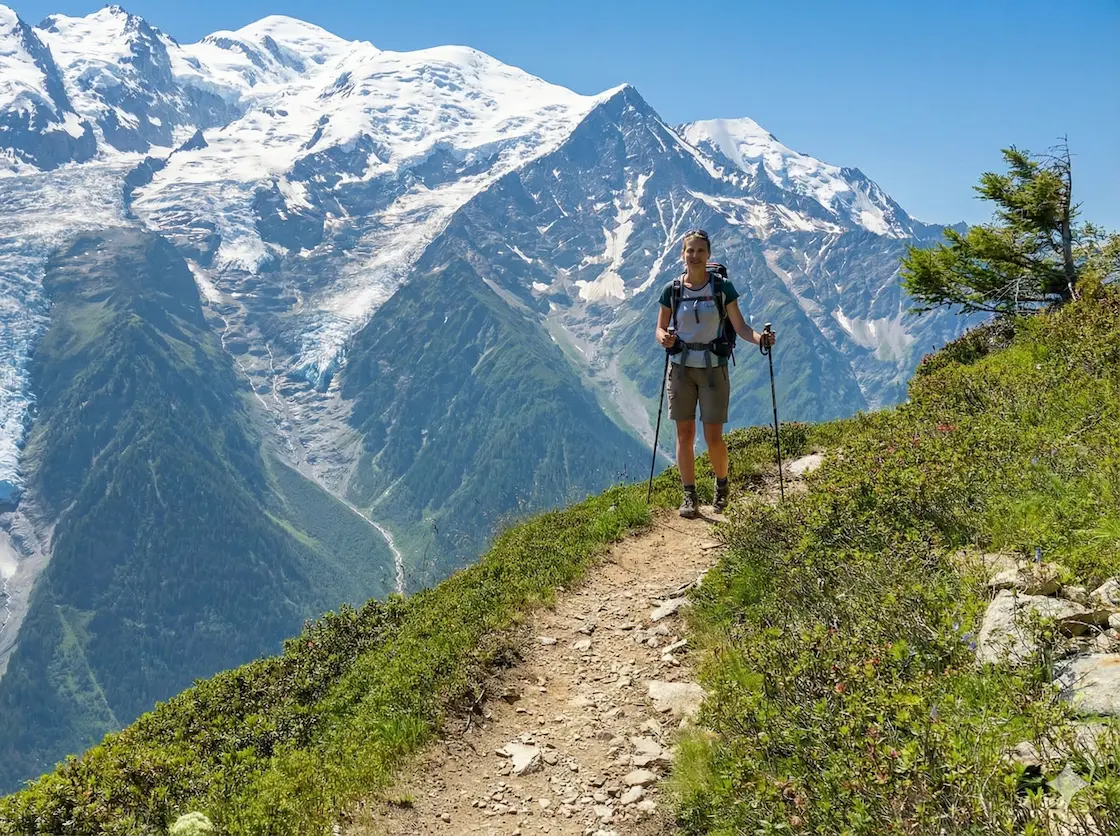
Tour des Écrins — GR54
Distance: 165 km
Duration: 10 days
Difficulty: Challenging
Best months: Late June–September
The GR54 circles the Écrins massif — the highest Alpine peaks entirely within France, with over 100 summits above 3,000m — through the Oisans, the Valgaudemar and the Champsaur. It’s quieter than the TMB, harder to find information on, and rewards you for it: remote valleys, half-empty refuges, and the feeling that you’ve actually earned the views. The route passes through La Bérarde, Vallouise and Ailefroide, and accumulates over 12,000m of ascent across ten days.
Read More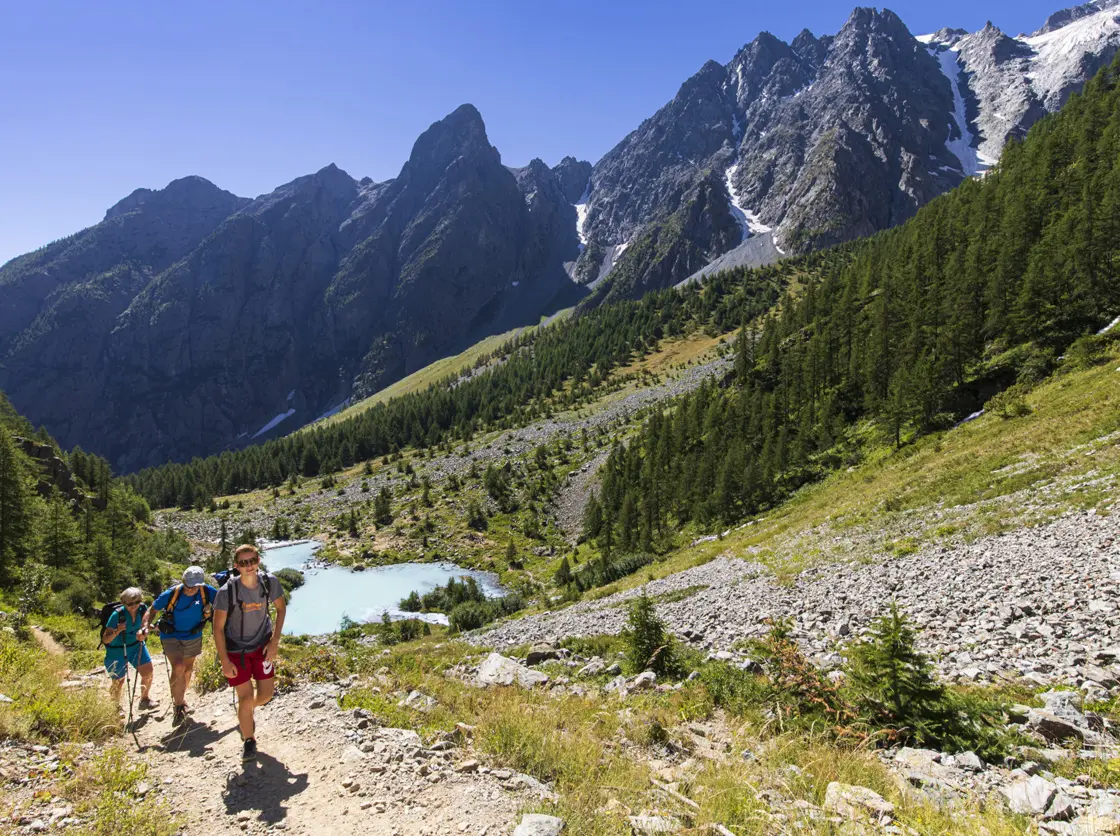
Tour du Queyras — GR58
Distance: 180 km
Duration: 10–12 days
Difficulty: Moderate–Challenging
Best months: June–September
The Tour du Queyras circuits the Queyras Natural Regional Park in the southern Alps — a sun-baked, larch-forested corner of France that most hikers haven’t discovered and should. Lower average altitude than the TMB or GR54, longer seasons, warmer days, and some of the most beautiful high-Alpine villages in France: Molines-en-Queyras, Ceillac, Abriès. The trail has genuine passes — Col Agnel at 2,744m straddles the French-Italian border — but is overall more accessible than its northern counterparts.
Read More
Hiking in the South of France
The South of France is a year-round hiking destination — and it’s at its best when the Alps and Pyrenees are buried under snow. October to May is the sweet spot: the summer heat has broken, the trails are quiet, and the light over limestone has that particular quality that makes you stop every ten minutes for no reason. In summer, most trails above 800m become genuinely unpleasant before 9am. The coastal trails of the Calanques and Côte d’Azur are accessible in any season, though summer access restrictions apply in the Calanques.
Here are some of our favourite hikes in the South of France:
Gorges du Verdon
Distance: 26 km (Sentier de l’Imbut circuit)
Duration: 2–3 days
Difficulty: Moderate
Best months: April–June, September–November
Europe’s largest canyon delivers some of the most dramatic walking in southern France — vertiginous limestone cliffs, turquoise river views and narrow ledge paths carved into the canyon walls. Trail sections run along the river itself, through tunnels blasted into the cliff face, and along drops that put the gorge directly beneath your feet. The Sentier Martel is the classic rim-to-river route; the Sentier de l’Imbut pushes further in and requires more route-finding. Expect crowds in July and August — this is one of the most-visited natural sites in the South of France.
Read More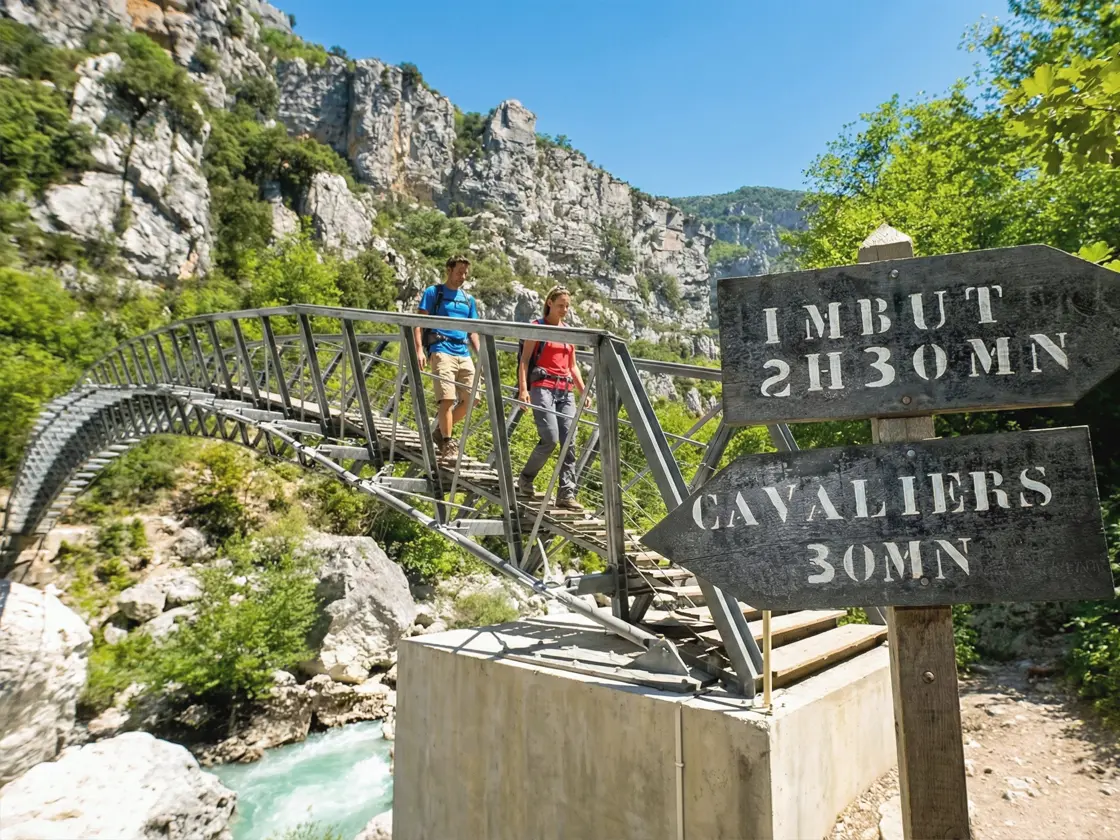
Calanques National Park
Distance: 25 km (Port-Miou to Morgiou)
Duration: 2 days
Difficulty: Moderate
Best months: October–May (summer access restrictions apply)
The Calanques are a 20km stretch of limestone cliffs, deep inlets and turquoise Mediterranean water between Marseille and Cassis. The trail connecting Port-Miou, Port-Pin, En-Vau, Sugiton and Morgiou is exposed, rocky and spectacular — with vertical drops to clear water and the city of Marseille on the horizon. Summer access is restricted and sometimes banned entirely during high fire-risk periods. Go in spring or autumn: the light is better, the paths are quieter, and you can actually swim without it feeling like a tourist performance.
Read More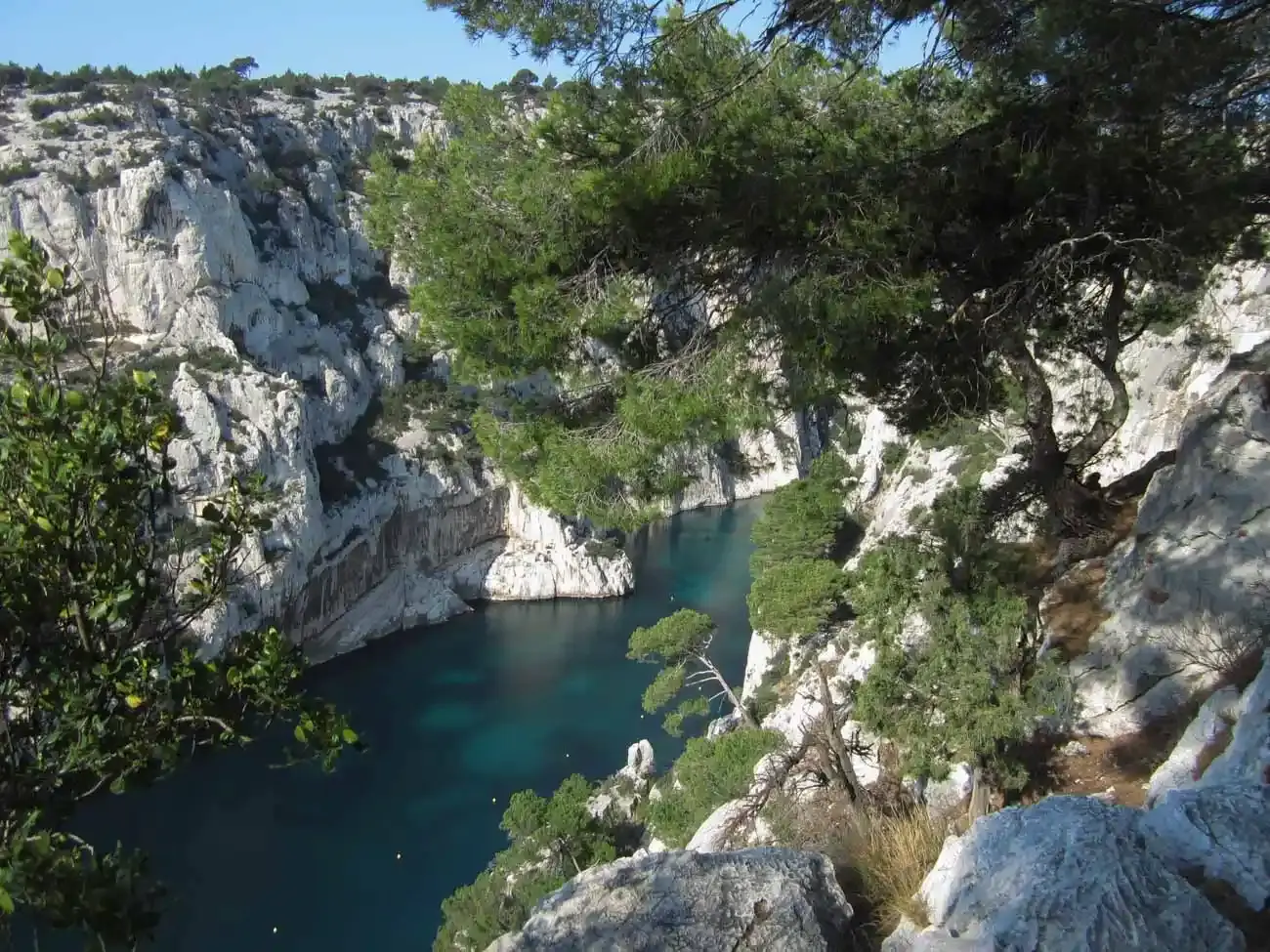
Vallée des Merveilles — Mercantour
Distance: 14 km (day circuit)
Duration: Full day
Difficulty: Moderate
Best months: July–September
High in the Mercantour National Park, above 2,000m in the mountains behind Nice, the Vallée des Merveilles is one of the best hiking destinations in France. The valley floor is scattered with over 40,000 Bronze Age rock engravings — carved between 1800 and 1500 BCE into polished orange-brown schist — and the hike through alpine meadows and glacially scoured rockscapes to reach them is itself exceptional. A guide is required to enter the restricted engraving zones. Allow a full day from the trailhead at Lac des Mesches (1,380m).
Read More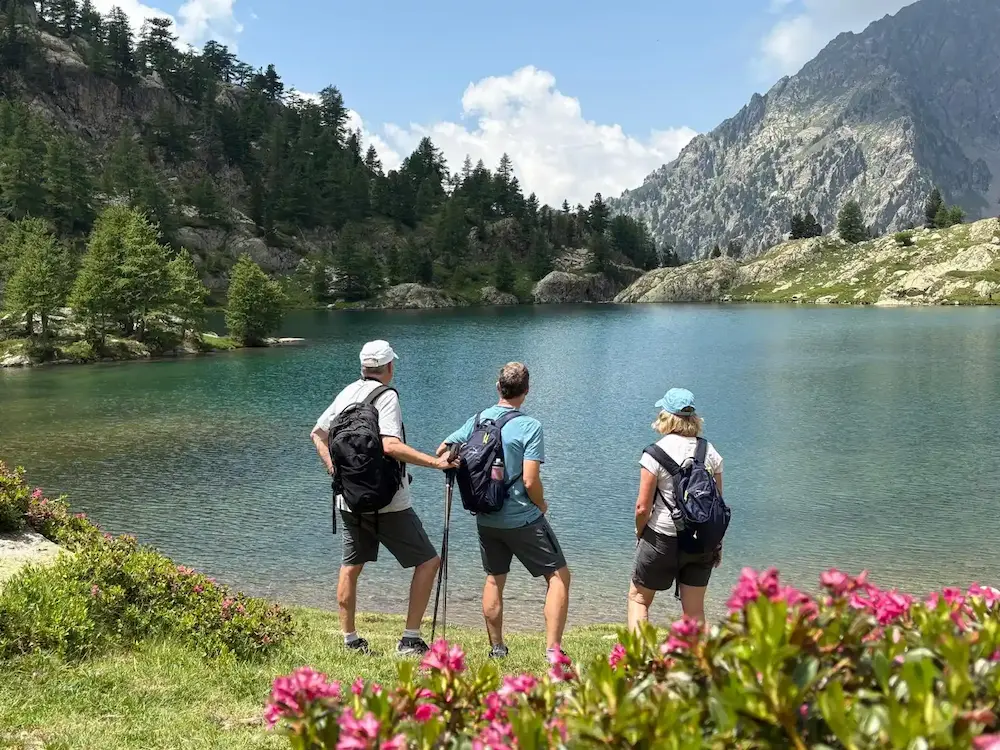
Hiking in the Pyrenees
The Pyrenees are the wilder, quieter alternative to the Alps. Lower overall elevation, warmer temperatures, fewer crowds, more wildlife — and a character that’s more Spanish than French, even on the French side. The mountain towns here — Luz-Saint-Sauveur, Cauterets, Saint-Lary-Soulan — are proper places, not purpose-built stations. The hiking runs June through October, with lower routes accessible earlier. The defining long-distance route is the GR10, but the Pyrenees reward exploration beyond the obvious.
Here’s a pick of our favourite hikes in the French Pyrenees:
GR10 — Pyrenean Traverse
Distance: ~800 km
Duration: 45–60 days (full traverse)
Difficulty: Strenuous
Best months: June–October
The GR10 runs the entire length of the Pyrenees along the French side of the border, from Hendaye on the Atlantic to Banyuls-sur-Mer on the Mediterranean — a continuous traverse of mountain landscapes that takes most people six to eight weeks and accumulates around 50,000m of ascent. You don’t have to walk the whole thing: the GR10 works perfectly in weekly sections, using the valleys as entry and exit points. The stretch between Gavarnie and Cauterets is among the finest mountain walking in France.
Read More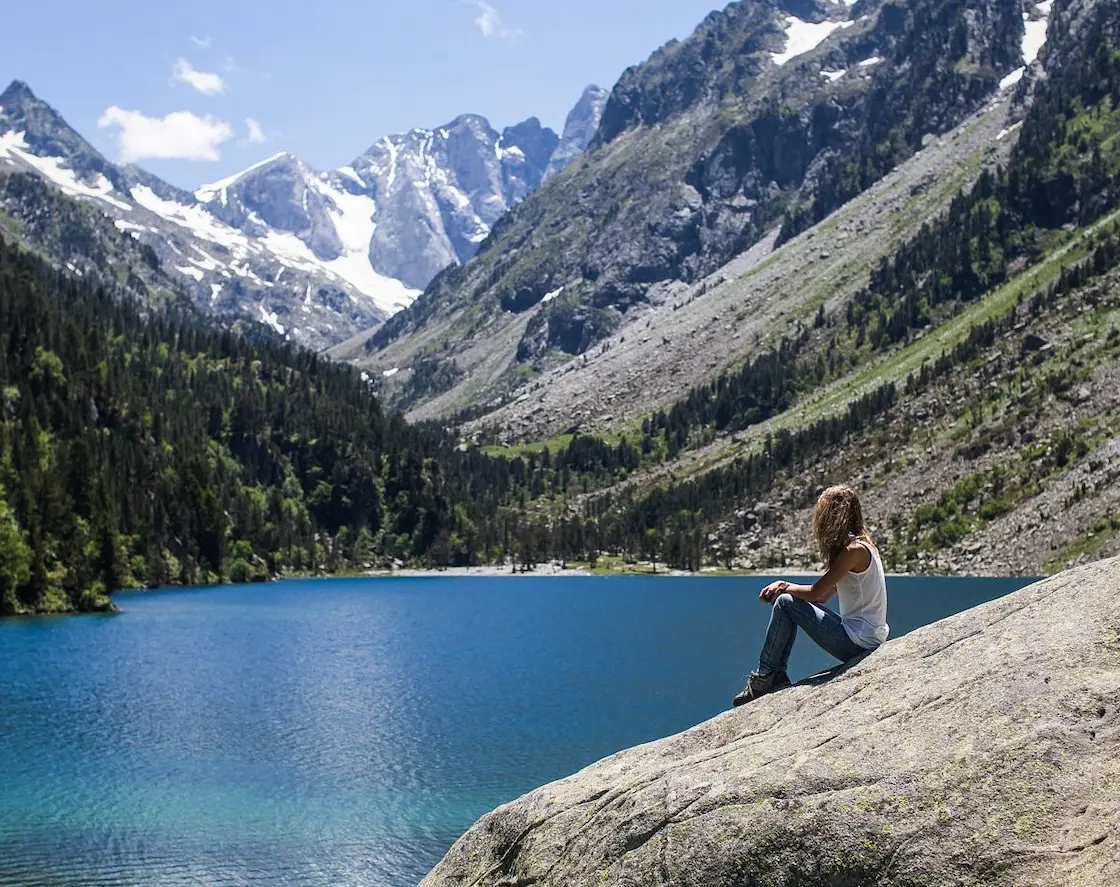
Cirque de Gavarnie
Distance: 18 km return
Duration: Full day
Difficulty: Easy–Moderate
Best months: May–October
Gavarnie is one of those places you have to see to believe — a vast natural amphitheatre of rock, ice and waterfall that rises 1,500m from the valley floor to the rim. The walk from the village to the base of the cirque is easy and well-signed, with the Grande Cascade (423m — one of the tallest waterfalls in Europe) as the dramatic payoff. The further you push into the cirque, the quieter it gets. Above the rim lies the Port de Gavarnie leading to Spain and the Brèche de Roland — one of the Pyrenees’ most iconic high-mountain objectives.
Read More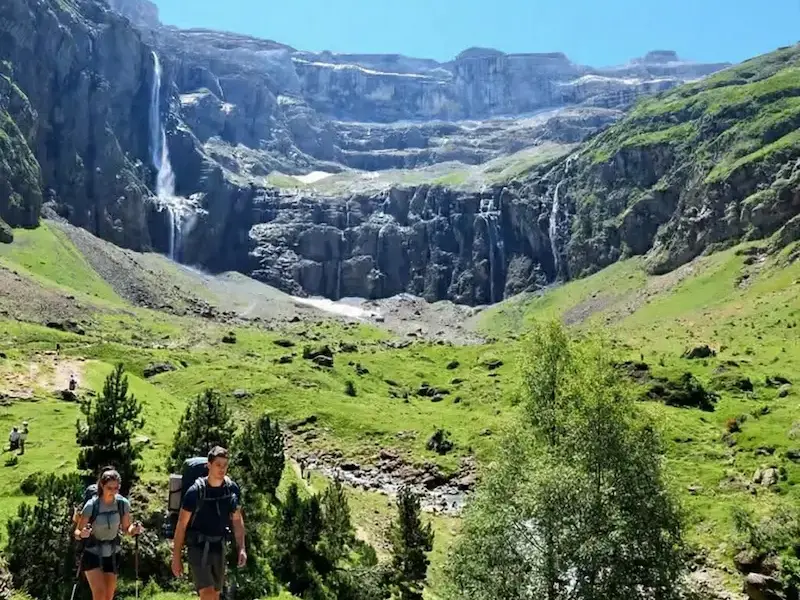
Néouvielle Natural Reserve
Distance: 15 km (day circuits)
Duration: Full day
Difficulty: Moderate
Best months: July–September
One of the least-known great hiking areas in France. The Néouvielle reserve sits above Saint-Lary-Soulan in the Hautes-Pyrénées — a high plateau strewn with glacial lakes, ancient pine forests and granite peaks. The Lac d’Aubert and Lac d’Aumar circuits are the classics, threading through some of the most beautiful landscape in the western Pyrenees. Access is restricted in high season — upper car parks close to private vehicles; use the shuttle from Saint-Lary and plan to arrive early.
Read More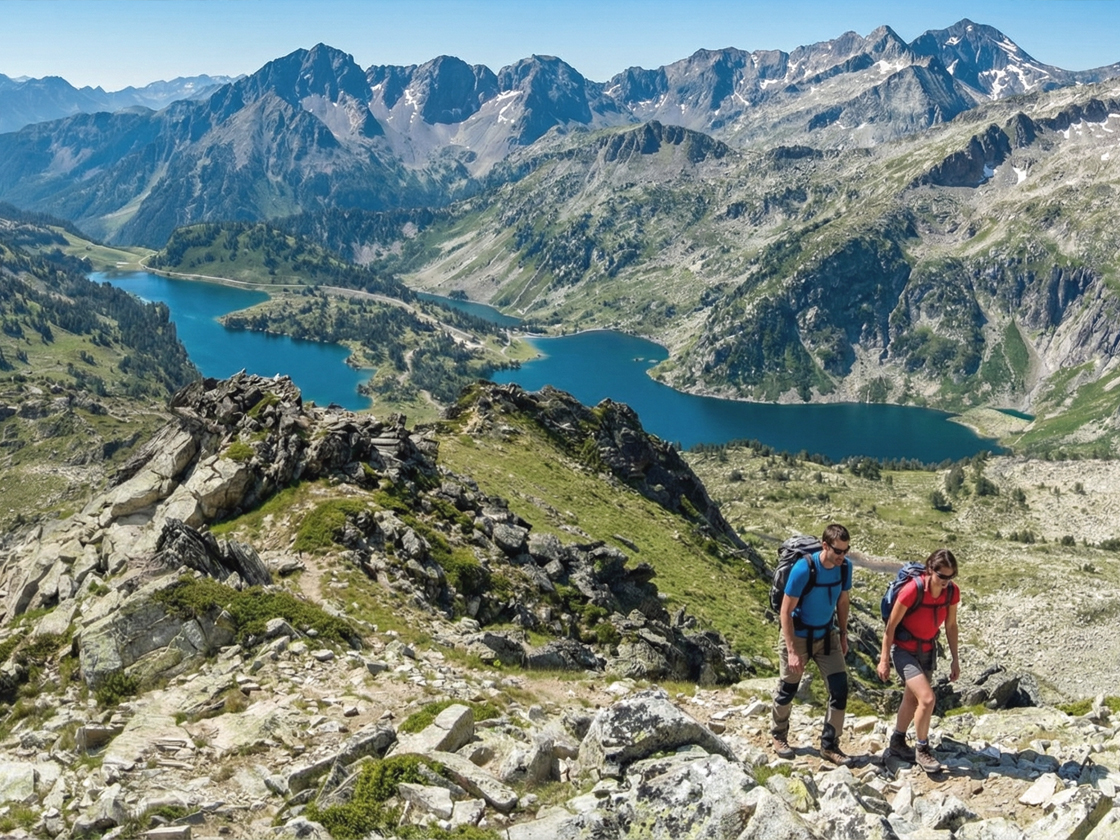
Staying in Mountain Refuges
A night in a mountain refuge — refuge de montagne — is one of the defining experiences of hiking in France. You arrive as the afternoon clouds build, boots off at the door, to the smell of dinner on the stove and the murmur of a dozen languages from people who’ve been walking all day the same as you. The dortoir might hold thirty people in bunks. The food is invariably better than it has any right to be at 2,500m. The gardien will tell you tomorrow’s weather from experience, not from a phone. Go once and you’ll plan every subsequent Alpine trip around it.
What to expect
France has around 600 mountain huts and refuges, including approximately 120 managed by the Club Alpin Français (FFCAM). The guarded refuges (refuges gardés) operate from approximately late June to mid-September, offering dormitory beds, dinner and breakfast — the standard demi-pension package. Outside the guarded season, an unguarded emergency shelter (local hors saison) remains open with basic cooking facilities, blankets and a honesty box. Quality varies enormously: TMB refuges can be genuinely comfortable and well-run; remote huts in the Écrins or southern Alps are austere and magnificent for it.
What it costs
Half-board (dinner, bed, breakfast) at a guarded FFCAM refuge runs approximately €55–65 per adult. Nuitée only is typically €28–35. Members of the Club Alpin Français (annual membership ~€75 for an adult) receive approximately 50% off the nuitée price — the membership pays for itself after two nights and includes rescue insurance. Hikers under 25 also receive discounts. In the unguarded season, the standard tariff is €5–8 per person in the honesty box. Payment is almost always cash or cheques — card machines are rare and unreliable in the remote mountains.
How to book
For FFCAM-managed refuges, book through the FFCAM refuge portal. For private and independent refuges, contact directly by phone or email — listings on the FFCAM site include contact details. Book four to six weeks ahead for the Tour du Mont Blanc in July and August; GR54 and GR58 refuges fill quickly in peak season too. Pyrenean refuges are generally available at shorter notice. The free MonGR app is excellent for identifying refuges along your planned route.
What to bring
A sleeping bag liner is required at most gardé refuges — they don’t provide sleeping bags. Beyond that: earplugs (essential in shared dortoirs), a headtorch, cash in small denominations, and hiking poles left in the rack by the door. For long routes, carry enough blister supplies and medication for the full stretch rather than assuming you can resupply in each valley.
Hiking Gear guide
Plan Your Hike
Best Time to Hike in France
French Alps: Mid-June to mid-September is the core season. High passes clear of snow from late June in most years; September is often the finest month — crowds thin after the first week, weather frequently improves, and the larch forests are turning gold. Anything before mid-June risks snow-covered passes and unguarded refuges.
Pyrenees: June through October. Lower average altitude than the Alps means the season opens and closes a few weeks earlier and later. October can be outstanding — warm days, no crowds, autumn colour in the valley beech forests — but storm risk increases as the month progresses.
South of France: October to May is optimal for the interior — the Verdon, Mercantour pre-Alps, Provence hills. Summer hiking in the South is uncomfortable above 800m unless you’re on trail at dawn. Coastal trails (Calanques, Côte d’Azur sentier littoral) are accessible year-round, though summer entry restrictions apply in the Calanques from July to mid-September.
Trail Types Explained
France’s waymarked trail network uses a clear colour-coded system. GR (Grande Randonnée) routes are long-distance paths marked with red-and-white horizontal stripes — from a few days to a few months of walking. GRP (Grande Randonnée de Pays) are regional circular routes marked with yellow-and-red stripes — typically one week exploring a specific area in depth. PR (Petite Randonnée) are local day routes marked in yellow, covering everything from an afternoon forest walk to a serious summit day. A double diagonal waymark stripe means you’ve taken a wrong turn; an X means stop immediately. Learn these and you’ll never get lost on a marked French trail.
Wild Camping in France
Wild camping (camping sauvage) is technically illegal in France on most land, but bivouac — pitching after 7pm and leaving before 9am with no trace — is widely tolerated in remote areas outside protected zones and largely ignored by the authorities in high mountain terrain. The exceptions matter: national parks have their own rules. In the Vanoise, bivouac is permitted above 2,500m in designated zones. In the Écrins, it’s permitted in the mountain zone but banned near lakes and sensitive areas. In the Mercantour, bivouac is restricted to designated sites only. Check the specific national park regulations before assuming you can pitch wherever you stop.
What To Pack
The basics are obvious. What people get wrong: sun protection at altitude (UV radiation increases roughly 10% per 1,000m gain — a clear day at 2,500m burns faster than a beach in July); cash for refuges (carry €100 in small denominations for any multi-day Alpine route — card machines are theoretical at altitude); water purification (reliable on busy routes, essential on remote Écrins or Queyras circuits); a paper map (phone batteries die — the IGN 1:25,000 sheet for your area weighs nothing and works in rain and cold); waterproofs, always (Alpine afternoon thunderstorms are fast and violent, even in July). The IGN topoguide for your route — available from the FFRandonnée online shop — contains the official route description, waypoints and emergency contacts.
Maps
The IGN (Institut Géographique National) 1:25,000 TOP 25 and Série Bleue maps are the definitive hiking maps for France and cover the entire country. Buy paper sheets from the IGN website, local maisons de la presse, or outdoor shops in any mountain town. For digital navigation, the IGN Rando app gives access to all 1:25,000 sheets on your phone. The MonGR app at mongr.fr covers all GR routes with GPS tracks. The FFRandonnée publishes official topoguides for all major GR routes — essential reference for any multi-day trip.
Hiking in France — FAQ
It depends on where you’re going. For the French Alps, mid-June to mid-September is the window, with September often the finest month. The Pyrenees run June to October. The South of France is best hiked October to May — summer heat makes inland trails unpleasant. Coastal routes in the Calanques and Côte d’Azur can be walked year-round, though summer access restrictions apply in the Calanques from July to mid-September.
No permit is needed for hiking on marked trails in France, including in national parks. Some areas require booking for overnight bivouac or specific campsites. The Calanques National Park restricts access during high fire-risk periods (typically July to mid-September) and may require a free reservation for certain trail entrances — check the park website before visiting in summer.
Wild camping is technically illegal in France but bivouac — pitching after 7pm and leaving before 9am with no trace — is widely tolerated in remote areas outside national parks. Each national park has its own rules: in the Vanoise, bivouac is permitted above 2,500m in designated zones; in the Mercantour, it’s restricted to designated sites. Always check national park regulations specifically before assuming you can bivouac freely.
Yes — the French waymarking system is among the best in Europe. GR routes (red-and-white stripes), GRP routes (yellow-and-red) and PR day routes (yellow) are consistently maintained by the FFRandonnée and local volunteers. A double diagonal stripe means wrong direction; an X means stop. If you’re lost on a marked French trail, you’ve almost certainly stopped paying attention.
Half-board (dinner, bed, breakfast) at a guarded FFCAM refuge costs approximately €55–65 per adult. Bed only is around €28–35. FFCAM/CAF membership (approximately €75 per year) reduces the nuitée price by around 50% and pays for itself after two nights. In the unguarded season, the honesty-box tariff is typically €5–8. Payment is almost always cash or cheques — carry cash on multi-day Alpine routes.
Not for the standard GR long-distance routes (TMB, GR54, GR58) or most marked day hikes. A guide adds significant value — and is strongly advisable — for any route crossing glaciers, technical Alpine terrain or serious off-piste conditions. The Vallée des Merveilles in Mercantour requires a guide to enter the restricted Bronze Age engraving zones.
No. The GR10 crosses 800km of serious mountain terrain with accumulated elevation gains well in excess of 50,000m. It requires sustained fitness, navigation confidence and experience with mountain weather. That said, individual stages and weekly sections can be walked by fit, experienced hikers who don’t need to complete the whole route. The section between Cauterets and Gavarnie is among the most spectacular and manageable as a 3–4 day standalone trip.
The IGN 1:25,000 TOP 25 and Série Bleue maps are the gold standard for hiking in France. Buy paper sheets from the IGN website or local outdoor shops. For digital navigation, the IGN Rando app covers all 1:25,000 sheets. The MonGR app (mongr.fr) covers all GR routes with GPS tracks. The FFRandonnée publishes official topoguides for all major GR routes — essential for multi-day trips.
Please leave a comment below if you need specific advice for your hiking trip to France, or if you have any recommendations to help us improve this page. Happy holidays!