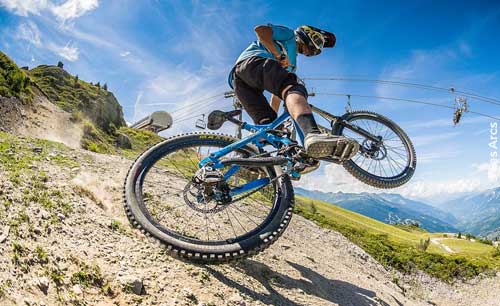
The French Alps have more via ferrata routes than anywhere else in France — from gentle, family-friendly courses a cable car ride from the resort, to full-day high-mountain epics that demand serious fitness and a head for heights. What sets the French routes apart is their emphasis on fun: expect monkey bridges, Tyrolean ziplines, suspended walkways and metal rungs bolted onto improbable overhangs, all with the kind of scenery that makes you forget you’re clipped to a steel cable 300 m above the valley floor.
France saw its first via ferrata in 1988 at Freissinières in the Écrins, and there are now over 200 routes across the country — the densest concentration in the Alps. The season runs from late April to early November depending on altitude, and you can go independently with rented gear or hire a qualified guide who’ll tailor the route to your level. This page covers 12 of the best via ferrata routes in the French Alps, organised from north to south, with difficulty grades, stats, access information and where to park.
GRADING | MAP | ROUTES | BOOK A GUIDE | PLANNING YOUR TRIP | FAQ
How Via Ferrata Routes Are Graded in France
Via ferrata in France use their own difficulty scale, separate from the Italian and Austrian Klettersteig systems you may have seen in the Dolomites. French grades run from F (Facile) to ED (Extrêmement Difficile) and factor in steepness, exposure, physical effort and route length. Many routes carry a range — for example AD/D — meaning the difficulty increases as you progress, often with an escape route partway through so you can bail if it gets too much.
F (Facile) — Easy. Short, well-protected paths with minimal exposure. Good for absolute first-timers and young children (usually 1.20 m height minimum).
PD (Peu Difficile) — Not Very Difficult. Some short steep sections and a bit more exposure, but manageable for reasonably fit beginners. A good starting point if you have a head for heights.
AD (Assez Difficile) — Moderately Difficult. Sustained routes with real exposure. You’ll need decent arm strength for the steeper sections and some confidence with heights. Most of the “classic” Alpine routes fall into this bracket.
D (Difficile) — Difficult. Long, steep sections with significant exposure. Prior via ferrata experience is recommended, as is a good level of fitness. Expect 2–4 hours on the route.
TD (Très Difficile) — Very Difficult. Athletic routes demanding upper body strength, endurance and a solid head for heights. Often 3+ hours with limited rest points. Not for beginners.
ED (Extrêmement Difficile) — Extremely Difficult. Overhanging sections that require genuine climbing strength. These are rare and reserved for experienced ferratists in peak physical condition.
Map of Via Ferrata Routes in the French Alps
Explore the via ferrata routes featured on this page using the interactive map below. Click each pin for the route name, difficulty grade and parking location.
The Best Via Ferrata Routes in the French Alps
The routes below are organised geographically from north to south, covering the main Alpine massifs from the Chablais and Mont Blanc down to the Écrins and Maurienne. Each entry includes the French difficulty grade, key stats, and practical access and parking information.
Via Ferrata des Évettes — Chamonix
Difficulty: AD
Duration: 2h
Altitude gain: +200 m
Season: June – October
Max altitude: 1,960 m
Route length: 400 m
The Évettes is the go-to via ferrata in the Chamonix valley and one of the most accessible high-mountain routes in the northern Alps. You take the La Flégère cable car from Les Praz to cut out most of the elevation, then it’s a short walk to the start. The route follows a south-facing rock band with suspended bridges and a couple of genuinely airy traverses, all with the Mont Blanc massif filling the skyline. The first section is gentle enough for confident older children; the second section ups the ante with steeper walls and more exposure.
Access & parking: Take the La Flégère cable car from Les Praz de Chamonix. Park at the La Flégère cable car car park (free). The via ferrata start is a 10–15 minute walk from the top station.
Via Ferrata de Curalla — Passy (near Chamonix)
Difficulty: AD/D
Duration: 2h
Altitude gain: +180 m
Season: May – October
Max altitude: 1,420 m
Route length: 490 m
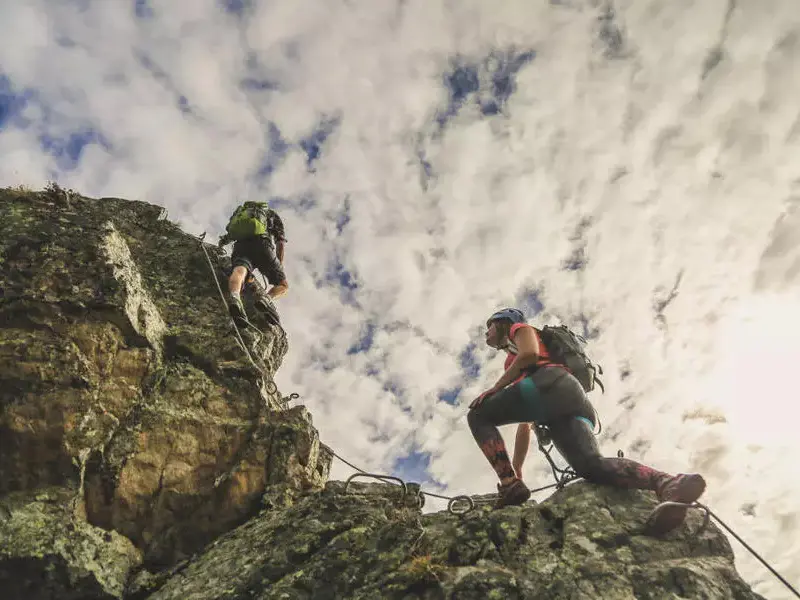
Curalla sits on a south-facing limestone ridge on the Plateau d’Assy, high above the Arve valley with a commanding panorama over the entire Mont Blanc range. The 490 m course is nicely varied — a succession of short vertical ladders interspersed with cable bridges and exposed wooden beams — and the rock is warm and dry for most of the season. It’s a great choice if you want a proper via ferrata experience without a huge time commitment.
Access & parking: From Passy, follow signs to the Plateau d’Assy. Park at the designated via ferrata car park near the Chemin de Curalla. The approach walk is around 15 minutes.
Via Ferrata du Mont — Sixt-Fer-à-Cheval
Difficulty: AD/D
Duration: 2.5h
Altitude gain: +250 m
Season: May – October
Max altitude: ~1,400 m
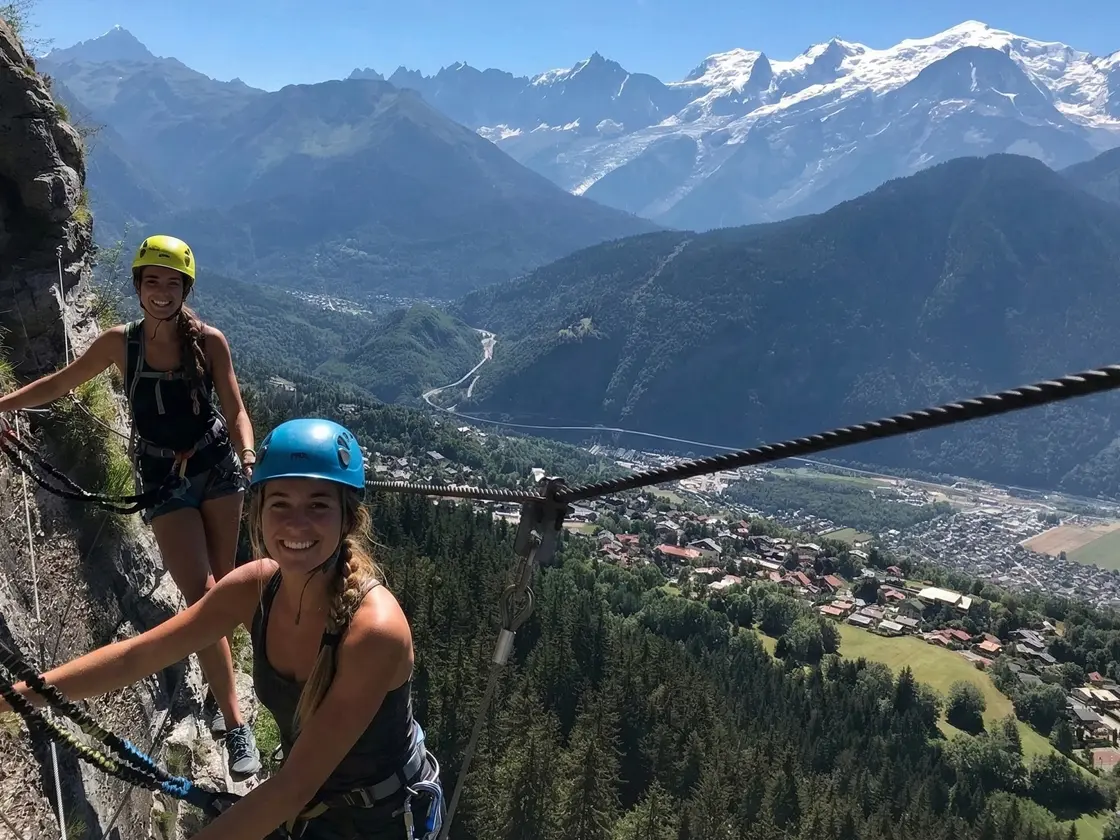
This is one for people who want a wilder, less-touristy setting. The Via Ferrata du Mont overlooks the Gorges des Tines on the right bank of the Haut Giffre valley — a remote spot that sees far fewer visitors than the Chamonix routes. The route follows the gorge rim with some genuinely exposed sections and a dramatic sense of isolation. It’s graded AD/D, so previous via ferrata experience is recommended. Rent gear from Pellissier Sports, 47 Grande Rue, 74340 Samoëns.
Access & parking: Park at the Parking Gorges des Tines car park at Sixt-Fer-à-Cheval. The approach walk is 20 minutes along the gorge path.
Via Ferrata Yves Pollet-Villard — La Clusaz
Difficulty: D/TD
Duration: 3h
Altitude gain: +300 m
Season: Mid-May – Mid-Nov
Max altitude: 1,830 m
Route length: 700 m
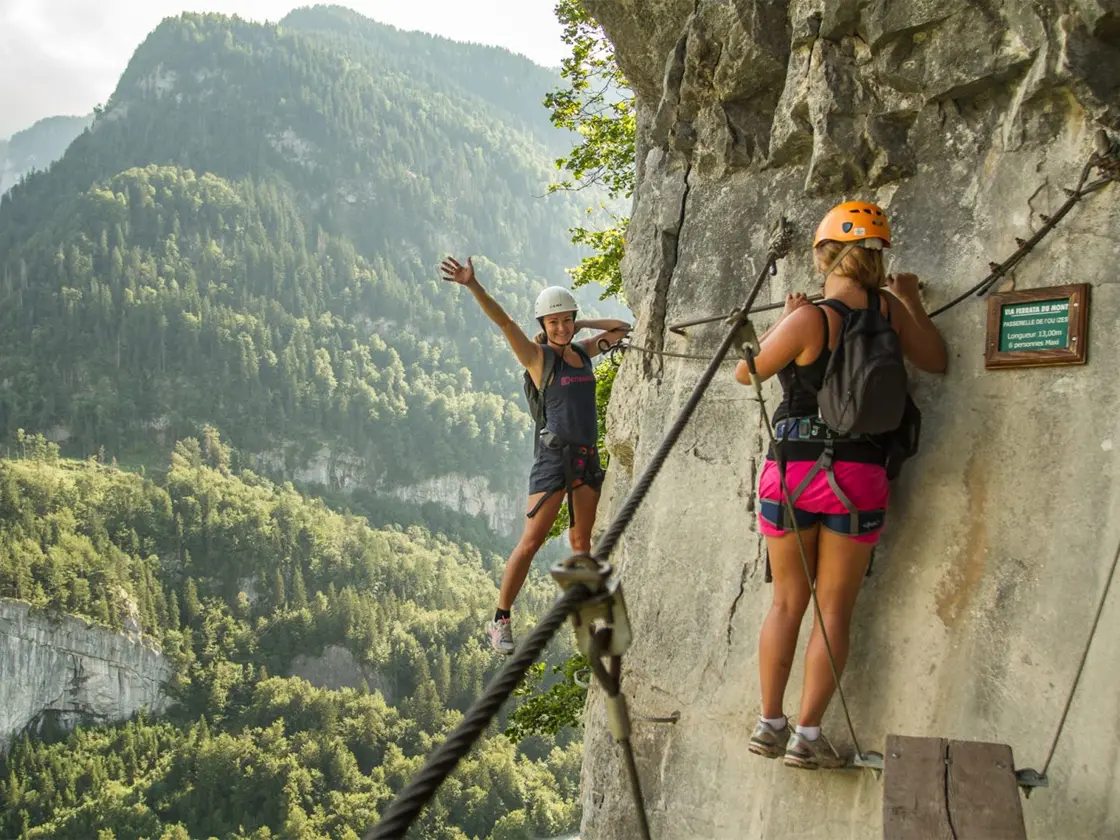
This is a gem. The Yves Pollet-Villard route has a distinctly Dolomite feel — it’s a long, sustained traverse rather than a vertical climb, and it makes superb use of the natural features in the rock. The first half is a flowing horizontal traverse with wonderful views over the Aravis range. The second half gets steeper with some serious walls and more exposure. There are two escape points if you’ve had enough. It’s a 20-minute walk in and a 45-minute trek back out, but it’s fully worth the effort.
Access & parking: From La Clusaz, take the Route du Col des Aravis. Park at the signed trailhead car park. The walk in is about 20 minutes; allow 45 minutes for the return.
Via Ferrata du Roc du Vent — Arêches-Beaufort
Difficulty: AD/D
Duration: 4–5h
Altitude gain: +450 m
Season: June – October
Max altitude: 2,326 m
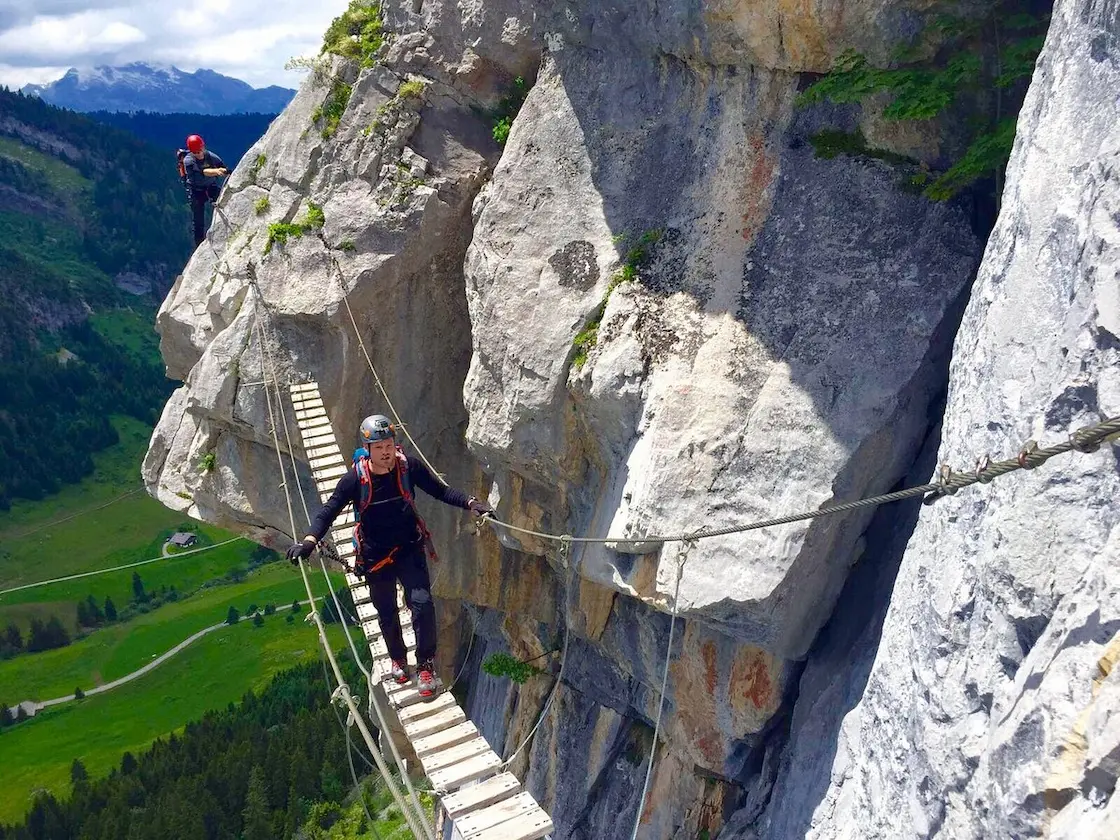
The Roc du Vent is a full-loop route that mixes via ferrata with scrambling, canyon sections and ridge walking for a genuinely varied mountain day. You summit at 2,326 m with views over the Roselend and La Gittaz dams, the Vanoise, Grand Paradis and Mont Blanc. The descent includes a Nepalese bridge, a tunnel through the rock and a narrow chimney section. The 45-minute approach walk is the only real downside — but it gets you warmed up. A Beaufort cheese tasting afterwards is practically compulsory.
Access & parking: From Arêches, follow signs to the via ferrata. Park at the trailhead car park (free). Allow 45 minutes for the approach walk.
Via Ferrata de la Dent de Burgin (Croix des Verdons) — Méribel / Courchevel
Difficulty: AD/D
Duration: 3.5h
Altitude gain: +889 m
Season: Mid-Jun – Mid-Oct
Max altitude: 2,739 m
Route length: 800 m
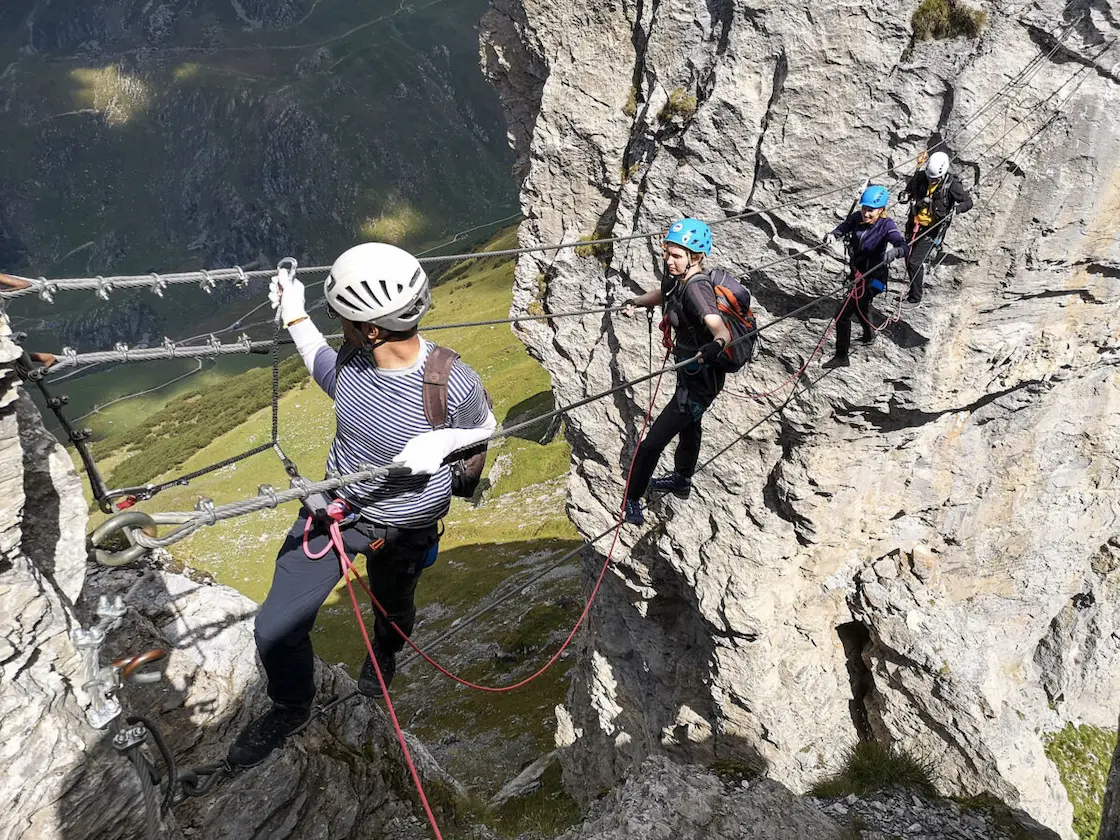
The highest via ferrata in France, topping out at 2,739 m on the ridge between Méribel and Courchevel in the Three Valleys. Access is via the La Saulire cable cars from either resort, which means you can be on the route within minutes of leaving town. The ridgeline traverse offers alternating sections of easy walking and steeper climbing, with rest points where you can take in a 360° panorama of Mont Blanc, the Vanoise glaciers and the Écrins. The high altitude means it’s only open for a short summer window, and weather can change fast up here — check the forecast and start early.
Access & parking: Take the La Saulire cable car from either Méribel or Courchevel 1850. Park at the resort cable car stations (paid in summer).
Via Ferrata du Roc de la Tovière — Val d’Isère
Difficulty: PD to AD
Duration: 1.5–3.5h
Altitude gain: +300 m
Season: June – September
Max altitude: ~2,350 m
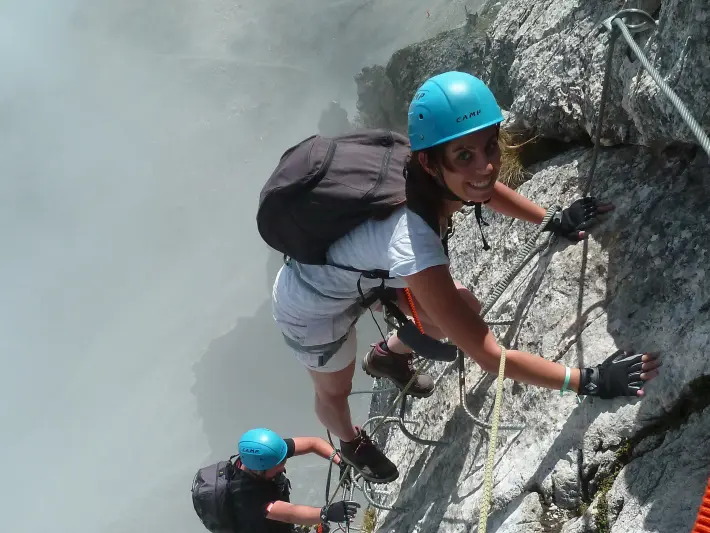
The Tovière is split into three distinct sections, each harder than the last, which makes it one of the most versatile routes in the Alps. The first section is a genuine initiation route — a short wall, a long ascending traverse and a footbridge, all suitable for families with older children. The second section gets more athletic with an aerial traverse and a 40 m suspension bridge. The optional third section adds the exposed Dalle du Lézard pillar and exits via the Jardin Suspendu. You can quit after any section, making this ideal for mixed-ability groups.
Access & parking: Start behind the La Daille residences at the base of Val d’Isère. Free car park at La Daille. Allow 20 minutes for the walk in.
Via Ferrata Pierre Ronde — Alpe d’Huez
Difficulty: AD/D
Duration: 2.5h
Altitude gain: +250 m
Season: June – September
Max altitude: ~2,450 m
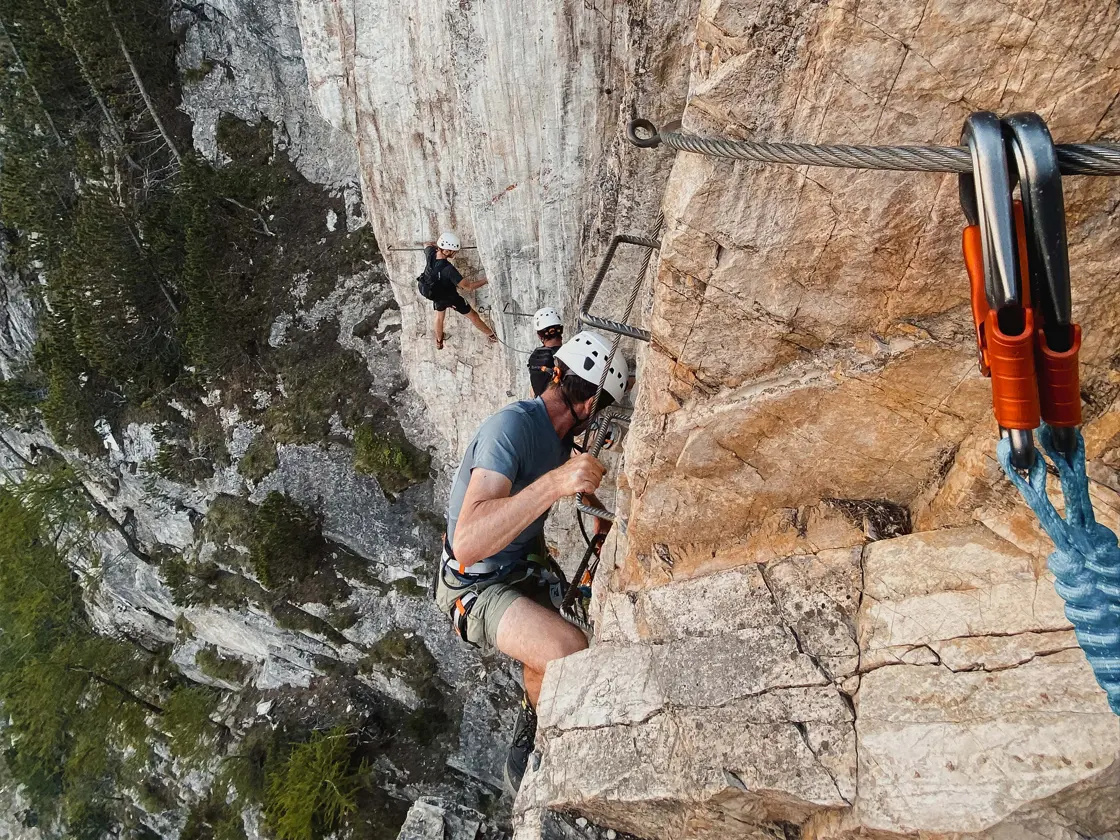
Pierre Ronde sits in the impressive high-altitude terrain above Alpe d’Huez, accessible via the resort’s summer lift system. The route offers a good mix of vertical ladder sections, traverses and cable bridges with big views over the Grandes Rousses massif and down towards the Romanche valley. The resort setting means you can combine the via ferrata with mountain biking or hiking in the same trip — though the village itself, as with most purpose-built resorts, is functional rather than charming.
Access & parking: Take the summer lifts from Alpe d’Huez 1860. Park at the resort car parks (check summer opening).
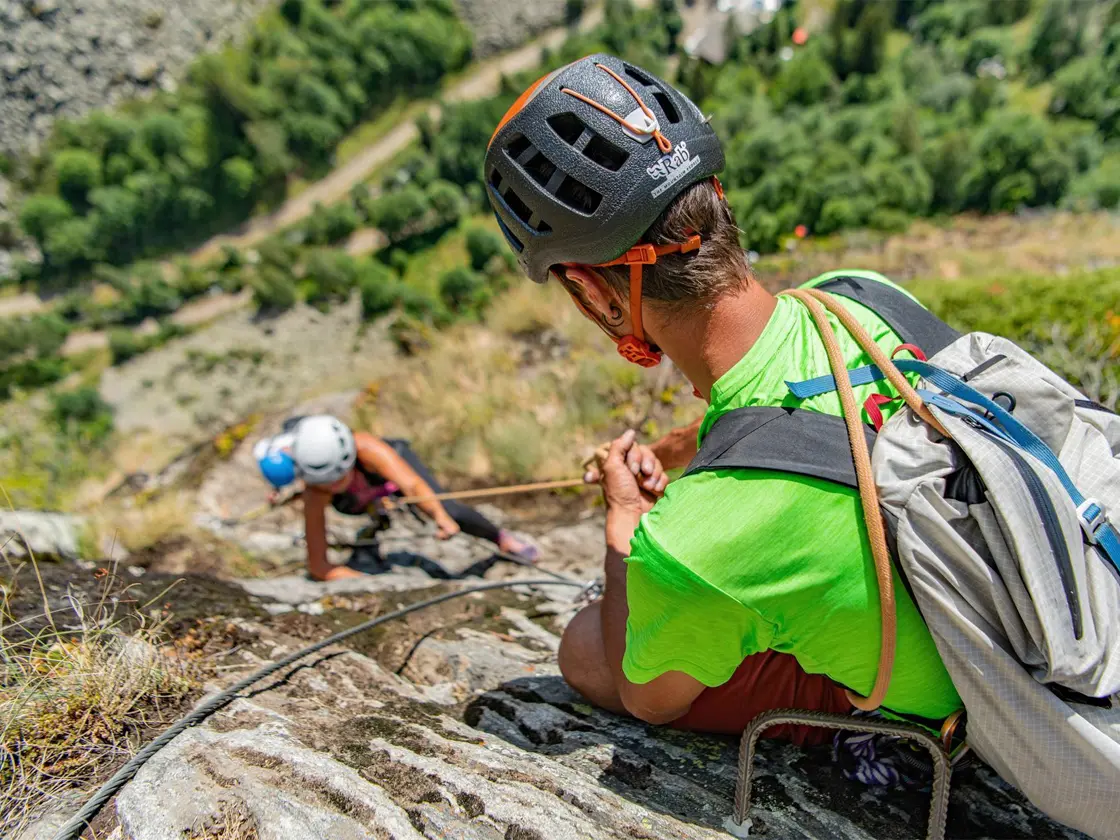
Via Ferrata Les Mines du Grand Clôt — La Grave
Difficulty: D
Duration: 4h + 2h descent
Altitude gain: +750 m
Season: May – October
Max altitude: 2,150 m
This is unlike any other via ferrata in the Alps. The route climbs a sheer cliff through the remains of a 19th-century lead mine that operated — with little success — between 1807 and 1925. The setting is wild and remote, and the route itself is long and physical with 750 m of altitude gain. The descent takes 1.5 to 2 hours via the GR54 trail and the village of Le Chazelet. This is serious mountain territory — not one for beginners — but the combination of history, exposure and pure remoteness makes it one of the most memorable days out in the Écrins.
Access & parking: Park at the lieu-dit Le Grand Clôt, 3.5 km before La Grave when approaching from Grenoble. The via ferrata sign and path are 50 m before Le Grand Clôt on the left. Allow 15 minutes for the approach.
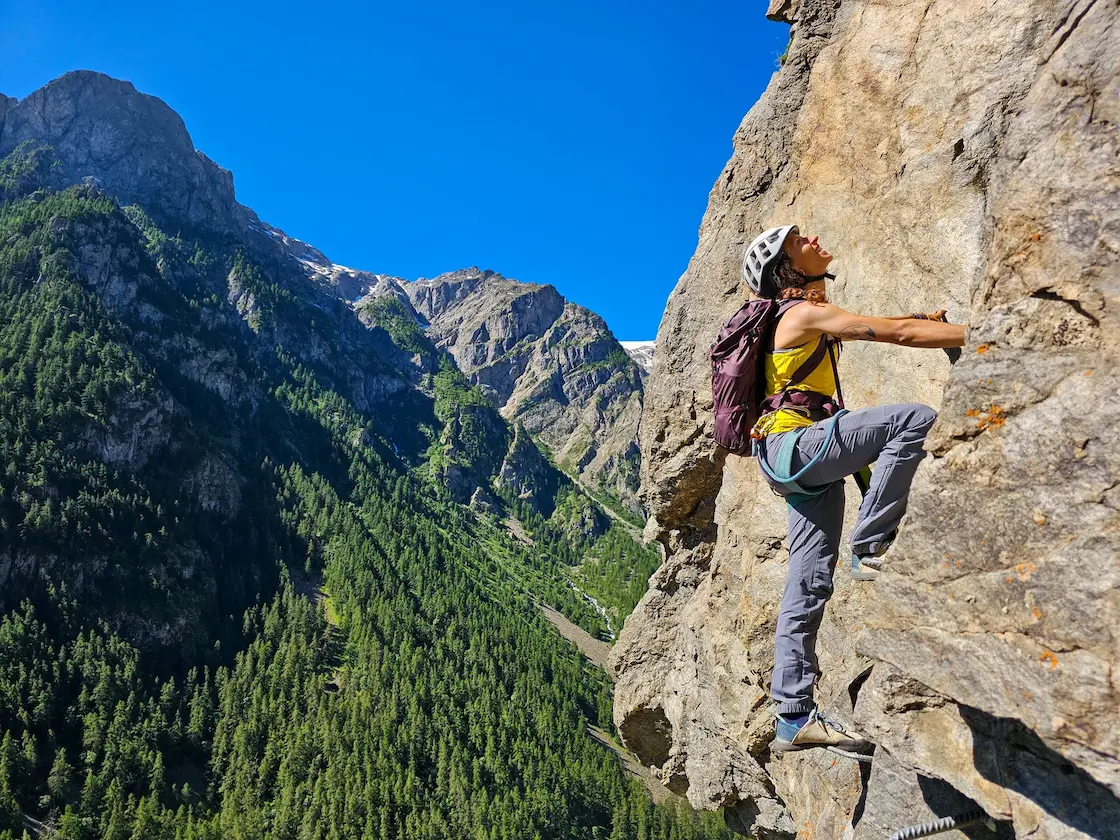
Via Ferrata La Grande Falaise — Freissinières
Difficulty: PD+
Duration: 1.5–2h
Altitude gain: +680 m
Season: May – October
Max altitude: 1,967 m
This is where it all started. Built in 1988, La Grande Falaise was the first via ferrata in France, and it still draws around 15,000 climbers a year. The route is a relatively straightforward traverse above the Freissinières climbing crags, with beautiful views up into the deep-cut Freissinières valley. It’s a good option for intermediate ferratists — not technically extreme, but with enough exposure and length to feel like a proper mountain outing. The approach takes about 35 minutes.
Access & parking: From L’Argentière-la-Bessée, take the D38 into the Freissinières valley. Park at the signed trailhead. Allow 35 minutes for the approach walk and 45 minutes for the descent.
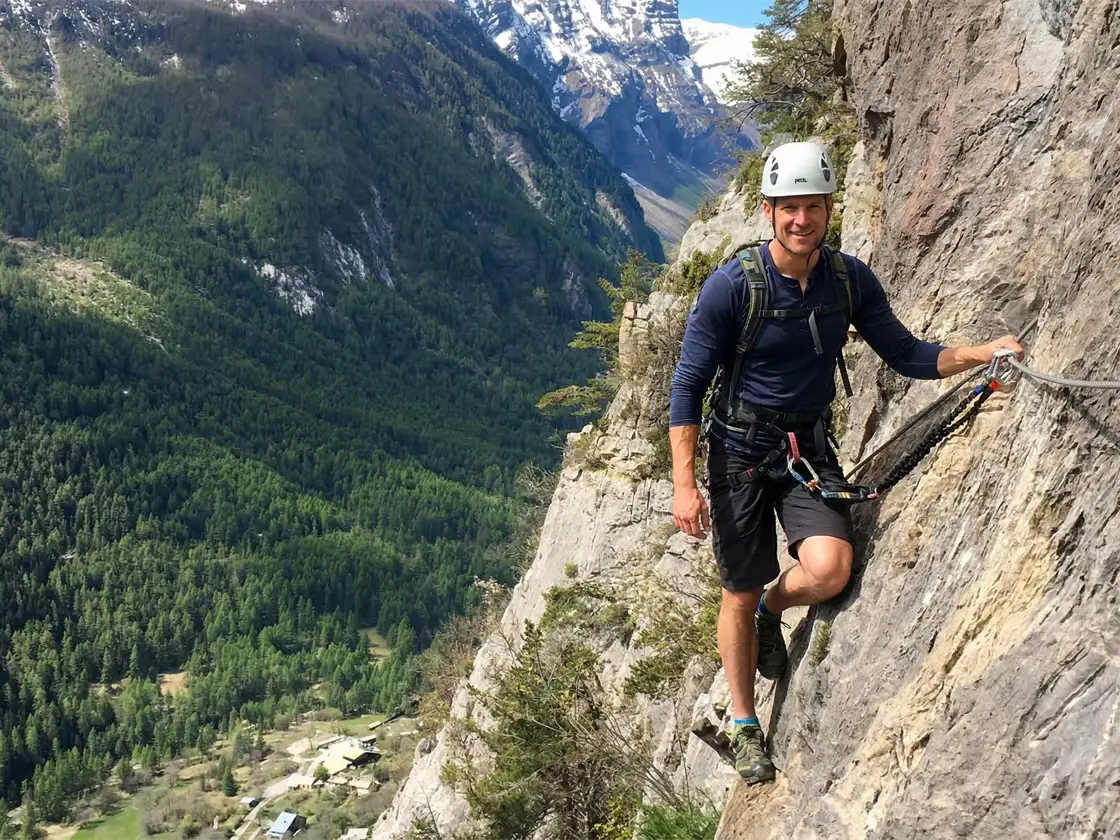
Via Ferrata des Gorges d’Ailefroide — Pelvoux
Difficulty: PD to D
Duration: 1–3h
Altitude gain: varies
Season: May – October
Ailefroide is a three-in-one deal and probably the best family via ferrata in the French Alps. The green route is an easy introduction suitable for children from age 6 — walkways and ladders following the gorge of the Gyr river. The red route is a proper steep via ferrata with a big wall section and great views. And the full gorge route adds aerial walkways, Tyrolean bridges and a spectacular gorge setting. The three routes share a car park and you can mix and match depending on your group’s ability. Kids love it here.
Access & parking: From Vallouise, continue through Pelvoux towards Ailefroide. Park at the short tunnel (Claux tunnel) car park — the via ferrata signs are right there on the Vallouise side.
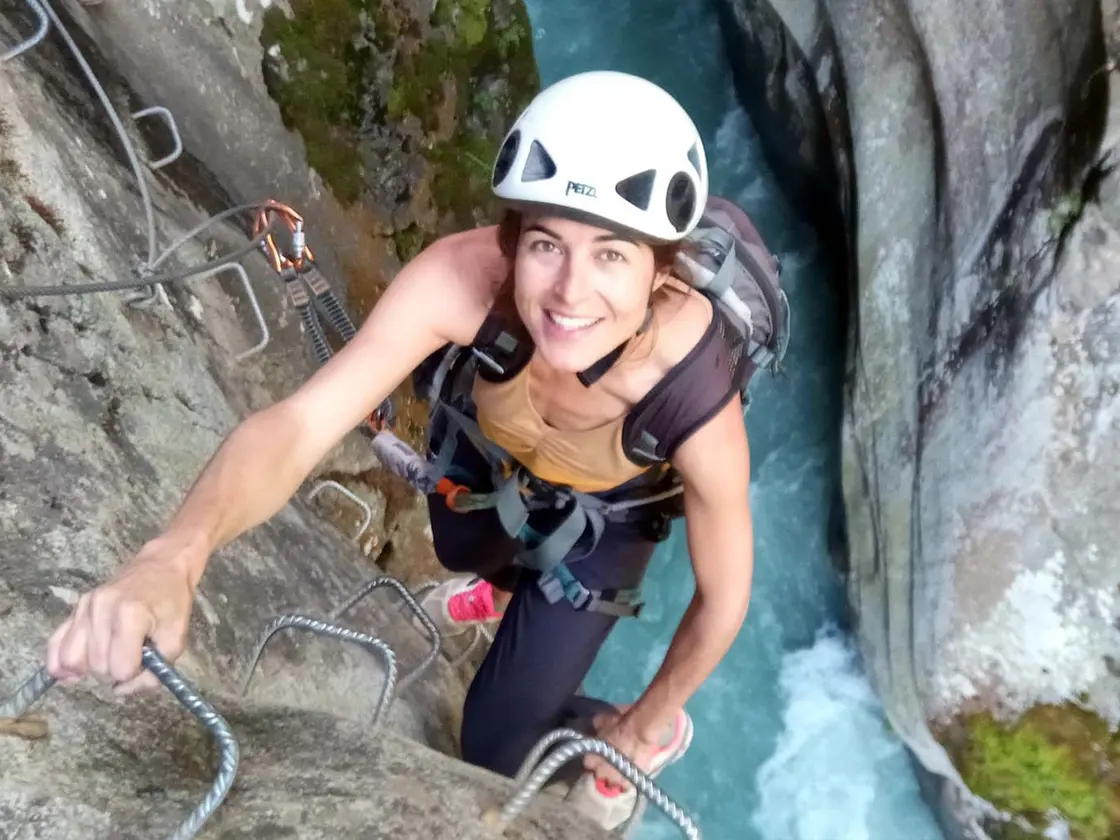
Via Ferrata du Diable — Aussois
Difficulty: PD to TD
Duration: 2–12h
Altitude gain: —
Season: June – October
Route length: 3,730 m
The longest via ferrata in France — and one of the longest in Europe — at 3,730 m spread across seven sections between the Fort Victor-Emmanuel and the Redoute Marie-Thérèse, facing the Vanoise National Park. You can tackle individual sections in a couple of hours or commit to the full loop for an 8–12 hour epic. The difficulty progresses from PD in the early sections to TD by the end, and the historic fort setting gives the route a unique character you won’t find anywhere else. This is a proper day out and you’ll need to be fit, well-equipped and committed if you’re going for the full traverse.
Access & parking: From Aussois in the Maurienne valley, follow signs to the Fort Victor-Emmanuel. Free car park at the fort. The via ferrata starts directly from the fort.
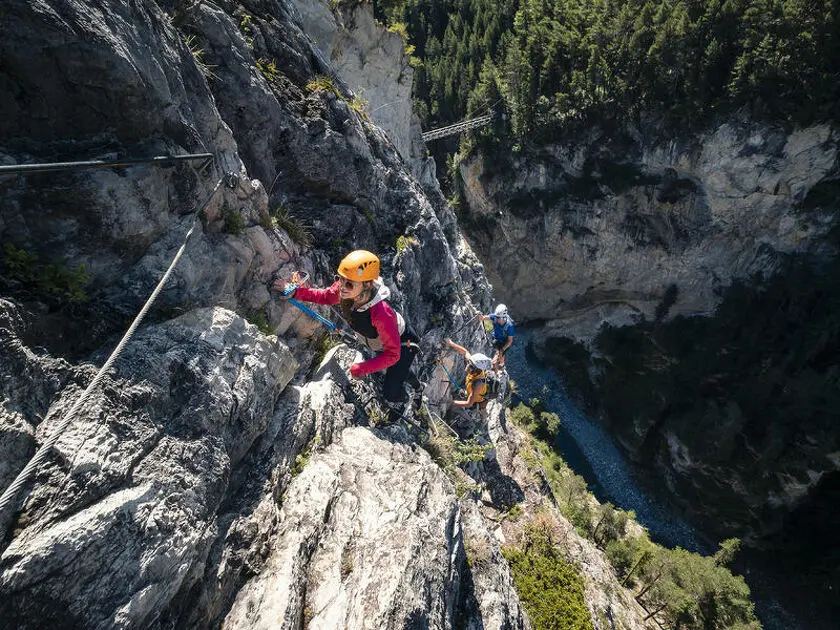
Book a Via Ferrata Trip in the French Alps
Our via ferrata partners in the French Alps employ experienced, fully qualified guides who’ll match the route to your ability and make sure you have fun while staying safe. If it’s your first time, or you’re with kids, a guide is the way to go — you’ll learn faster, see more, and spend less time worrying about the gear.
Guided Via Ferrata
Discover the thrill of via ferrata in the stunning French Alps! Your qualified guide will provide all the gear, select the perfect route for your level, and ensure you get the most out of your day on the rock. Whether you’re a first-timer looking for a safe introduction or an experienced ferratist after the big exposed routes, a guide makes the experience safer and a lot more fun.
Book a via ferrata trip in partnership with Explore-Share.
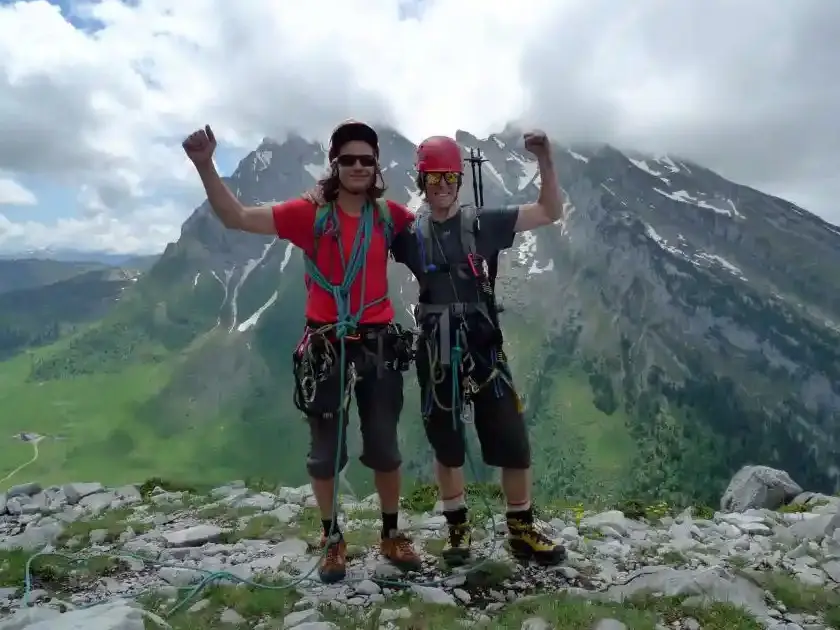
Planning Your Via Ferrata Trip
When to Go
The via ferrata season in the French Alps generally runs from late April to early November, but altitude makes a big difference. Low and mid-altitude routes (below 1,500 m) open earliest and close latest. High-altitude routes like the Dent de Burgin at 2,739 m have a narrow window from mid-June to mid-October. The best months across the board are June to September, when conditions are most reliable and daylight hours are longest. Summer afternoons in the Alps often bring thunderstorms — you do not want to be clipped to a steel cable during a lightning storm — so start early and aim to be off the route by early afternoon.
What Gear Do You Need?
You need a helmet, a climbing harness, and a via ferrata lanyard (energy absorber with two locking carabiners). This is not the same as a standard climbing sling — the energy absorber is designed to limit the impact force in a fall on a steel cable and is essential for safety. You’ll also want sturdy shoes with a stiff sole (approach shoes or hiking boots — not trainers), lightweight gloves to protect your hands on the cables, and a small backpack with water, a snack and a waterproof layer.
You can rent a complete via ferrata kit (harness, helmet and lanyard) from guide bureaux and outdoor shops in most Alpine resort towns. Expect to pay around €15–25 for a half-day rental. If you’re booking a guided trip, gear is usually included.
Do You Need a Guide?
You don’t legally need a guide for via ferrata in France — the routes are public and freely accessible — but we’d strongly recommend one if it’s your first time, if you’re with children, or if you’re attempting a route rated D or above. A qualified guide will provide all the gear, explain the technique, choose the right route for your level, and handle safety so you can focus on enjoying the experience. A half-day guided trip typically costs €50–90 per person in a group, or from €250/day for a private guide.
Via Ferrata With Kids
Via ferrata is a brilliant family activity and several routes on this page have dedicated family-friendly sections — the Gorges d’Ailefroide (green route, from age 6), the Roc de Tovière (section 1), and the Évettes at Chamonix all work well with older children. The standard minimum height is 1.20 m (some routes require 1.30 m). Always take a guide when going with young children — they’ll keep the pace fun and safe, and kids gain confidence much faster with a professional alongside them.
Frequently Asked Questions
It depends on what you’re after. For jaw-dropping views, the Dent de Burgin above Courchevel tops out at 2,739 m. For character and variety, the Yves Pollet-Villard at La Clusaz has a distinctly Dolomite feel. For families, the Gorges d’Ailefroide near Pelvoux offers three routes from easy to difficult. For a full-day epic, the Via Ferrata du Diable at Aussois is the longest in France at 3,730 m.
French via ferrata use a six-point scale: F (Easy), PD (Not Very Difficult), AD (Moderately Difficult), D (Difficult), TD (Very Difficult) and ED (Extremely Difficult). Many routes carry a range such as AD/D, meaning difficulty increases as you progress.
Not legally — the routes are public and freely accessible. But a guide is strongly recommended for first-timers, families with children, and anyone attempting routes rated D or above. Expect to pay €50–90 per person for a half-day group trip.
Yes — many routes have family-friendly sections. The minimum height is 1.20 m (some routes require 1.30 m). The Gorges d’Ailefroide green route accepts children from age 6, and the first section of the Roc de Tovière at Val d’Isère is designed as an initiation route. Always take a guide with young children.
June to September offers the most reliable conditions. Lower routes may open late April. High-altitude routes like the Dent de Burgin only open mid-June to mid-October. Start early in summer to avoid afternoon thunderstorms.
A half-day guided trip typically costs €50–90 per person in a small group. Private guiding starts from around €250 per day. Gear rental without a guide costs €15–25 for a half-day kit.
Have you done a via ferrata in the French Alps? We’d love to hear about it. Please leave a comment below if you need advice on choosing a route, or if you have a recommendation we should add to this page. Bonnes vacances!
You May Also Like
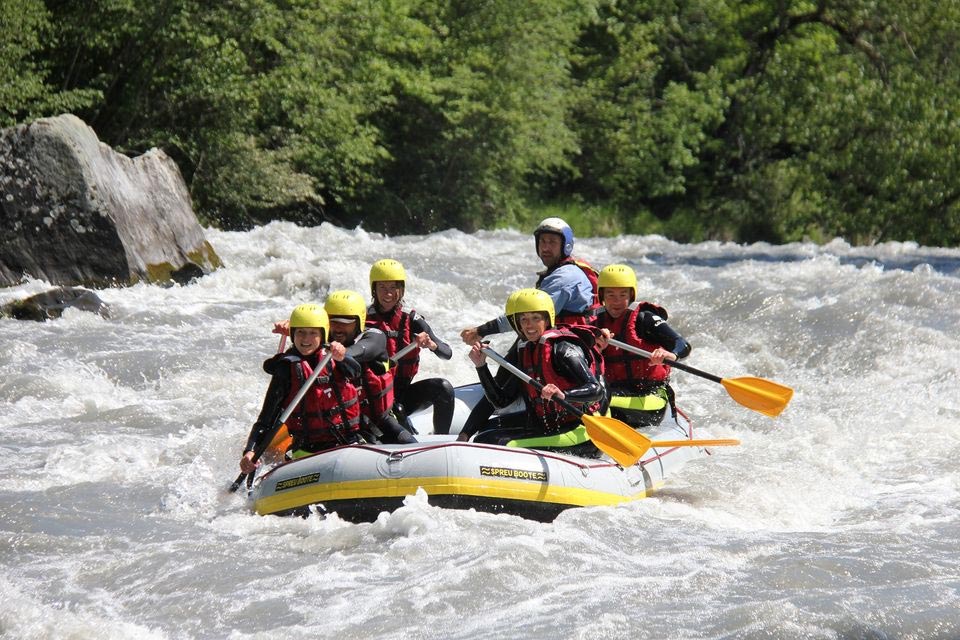
Rafting French Alps

Canyoning
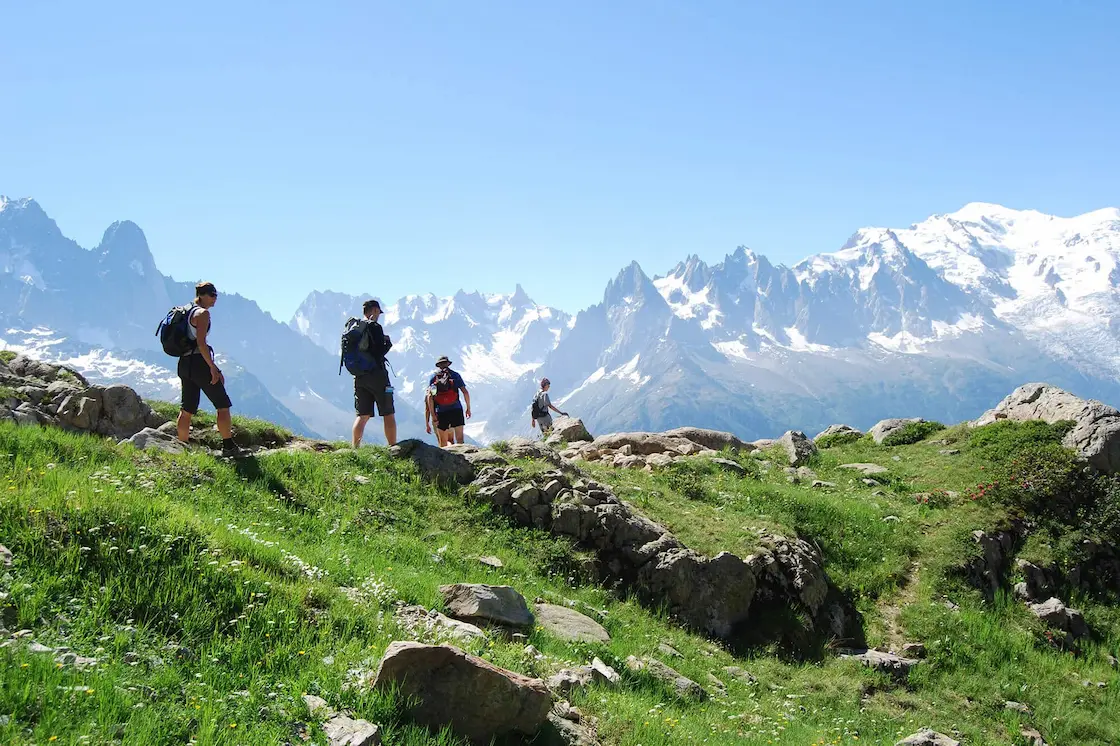
HIKING FRENCH ALPS

MOUNTAINEERING

Annecy Guide