SAVOIE & MAURIENNE | HAUTE-SAVOIE | ISÈRE & ALPE D’HUEZ | MULTI-DAY RIDES | WHEN TO GO | PLAN YOUR TRIP | FAQ
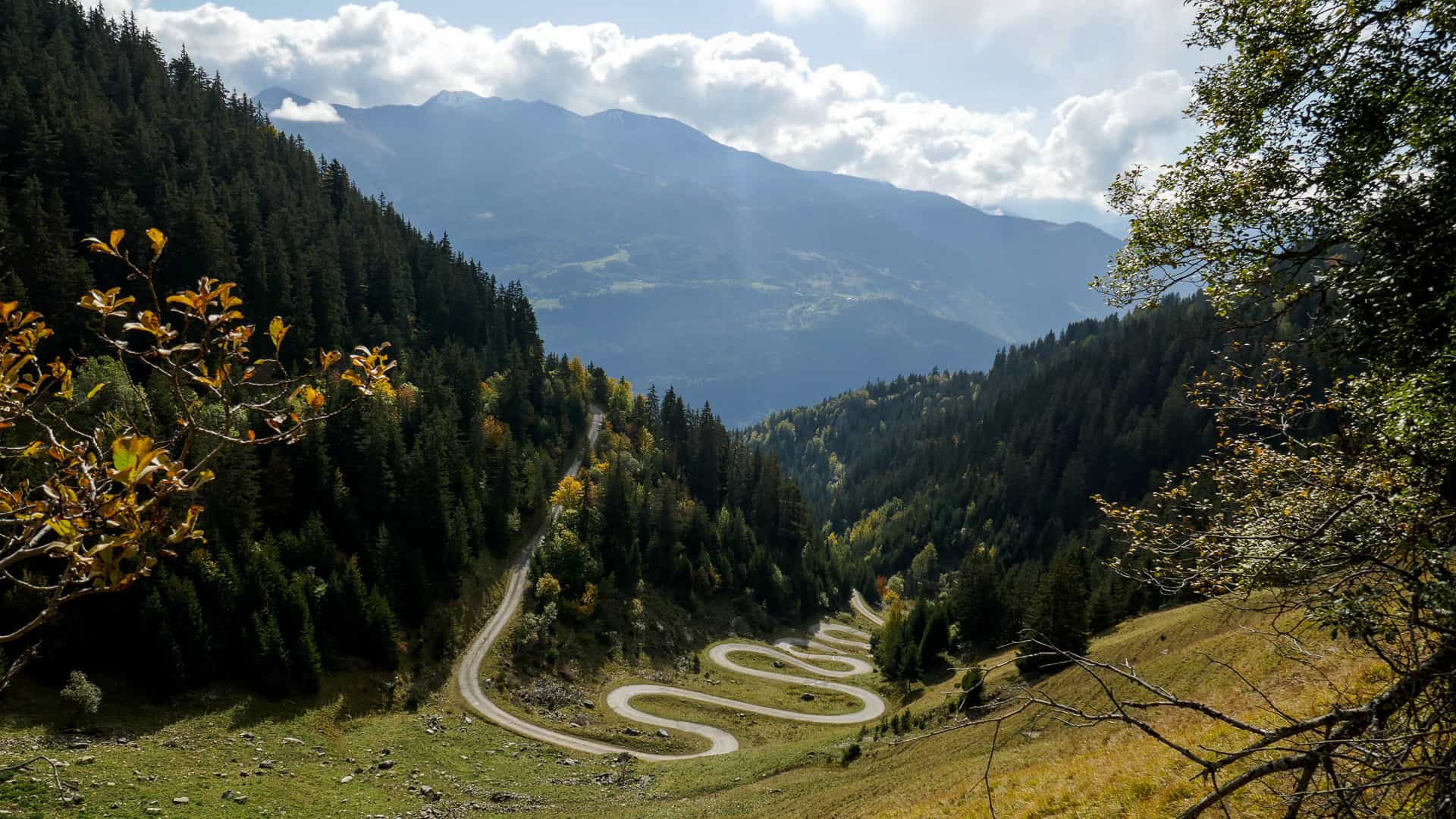
Road cycling in the French Alps is the sport at its most elemental: the longest climbs, the highest paved passes in Europe, and a century of Tour de France history painted onto every hairpin.
Nowhere else packs so many legendary cols into so little space. The Maurienne valley alone — self-styled “the world’s largest cycling area” — has ten major climbs radiating from its floor, including the Galibier, the Croix de Fer and the Madeleine. One valley north, the Tarentaise serves up the Col de l’Iseran, the highest paved pass in the Alps at 2,764 m, and the Col de la Loze, widely rated the hardest climb in France. And in the Oisans, a small town called Bourg d’Oisans sits at the foot of the most famous 13.9 km in cycling: Alpe d’Huez.
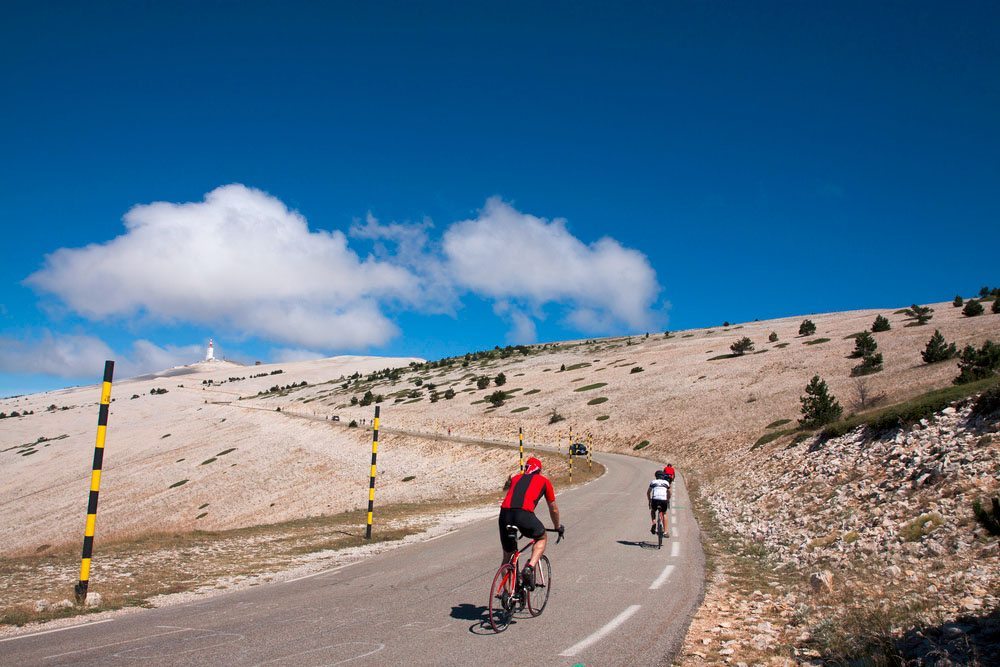
You don’t need a pro’s legs to ride any of it. With sensible gearing, an early start and a respect for the weather, every climb on this page is achievable by a reasonably fit amateur — and the infrastructure that grew up around the Tour makes the logistics easy: cycling-friendly hotels, quality rental bikes, marked km-posts on every col giving distance and gradient to the summit.
This guide covers our pick of the 13 best road cycling climbs in the French Alps, organised by department — Savoie, Haute-Savoie and Isère — plus the multi-day rides and sportives worth building a trip around, when to go, and where to base yourself. For the wider picture, see our guide to road cycling in France; for year-round riding, head to the South of France climbs.
Savoie Cycling Climbs — Maurienne & Tarentaise
Savoie is the engine room of Alpine cycling. The Maurienne and Tarentaise valleys between them hold more legendary Tour de France climbs than most countries, from the relentless ramps of the Madeleine to the lunar heights of the Galibier and the Iseran. Base yourself in Saint-Jean-de-Maurienne, Saint-Michel-de-Maurienne or Bourg-Saint-Maurice and you can ride a different giant every day for a week. Nearest airports: Chambéry, Geneva, Lyon and Grenoble.
Here are the Savoie climbs that belong on every cyclist’s list:
Col du Galibier
Length: 18.1 km from Valloire
Summit: 2,642 m
Altitude gain: 1,245 m
Avg gradient: 6.9% (max 10.5%)
The Tour’s great Alpine monument. You leave Valloire straight into an 8% ramp, get two merciful flat kilometres around Bonnenuit, and then the switchbacks above Plan Lachat tilt the road skyward — the final 2 km are the hardest of the climb. The summit panorama is the best in the Alps: the Écrins glaciers on one side, Mont Blanc on the other. Most riders take it on as the second act of the classic Télégraphe–Galibier double from the Maurienne floor: 35 km of climbing and 2,100 m of gain.
Col du Télégraphe
Length: 11.8 km from Saint-Michel
Summit: 1,566 m
Altitude gain: 856 m
Avg gradient: 7.3% (max 9.7%)
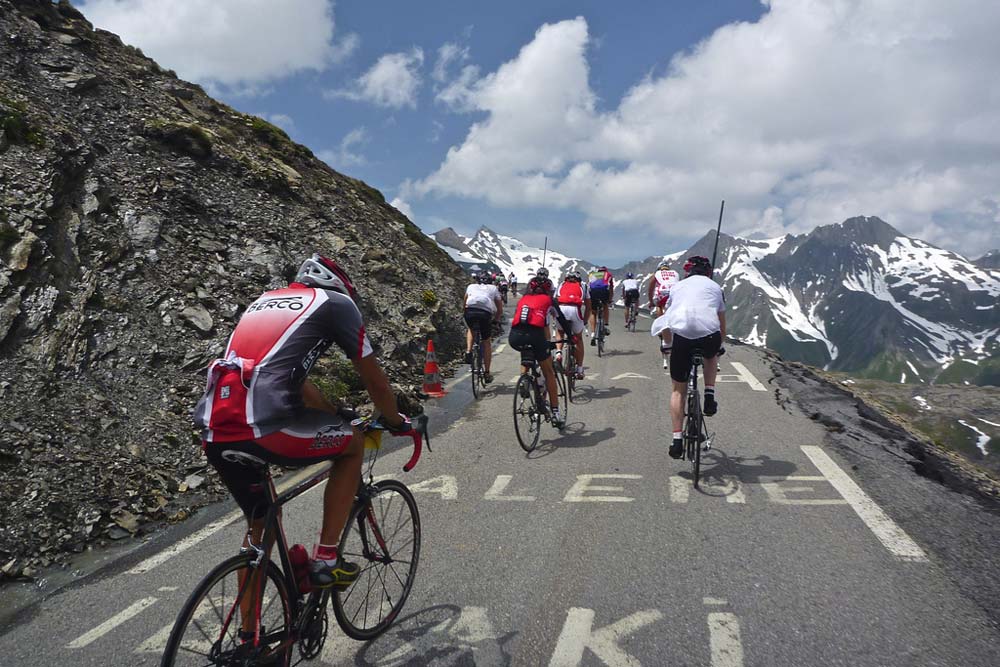
The gateway drug to the Galibier — 14 hairpins winding up through forest from the Maurienne floor at a steep but beautifully steady gradient that lets you find a rhythm and hold it. The road is wide and well surfaced, which is just as well given summer traffic; start early for a quiet ascent. From the top it’s a 5 km roll down into Valloire, where the serious business begins. As a standalone climb it’s a satisfying morning; as a warm-up act, it has no equal.
Col de l’Iseran
Length: 48 km from Bourg-Saint-Maurice
Summit: 2,764 m
Altitude gain: 1,955 m
Avg gradient: 4.1% (max 6.9%)
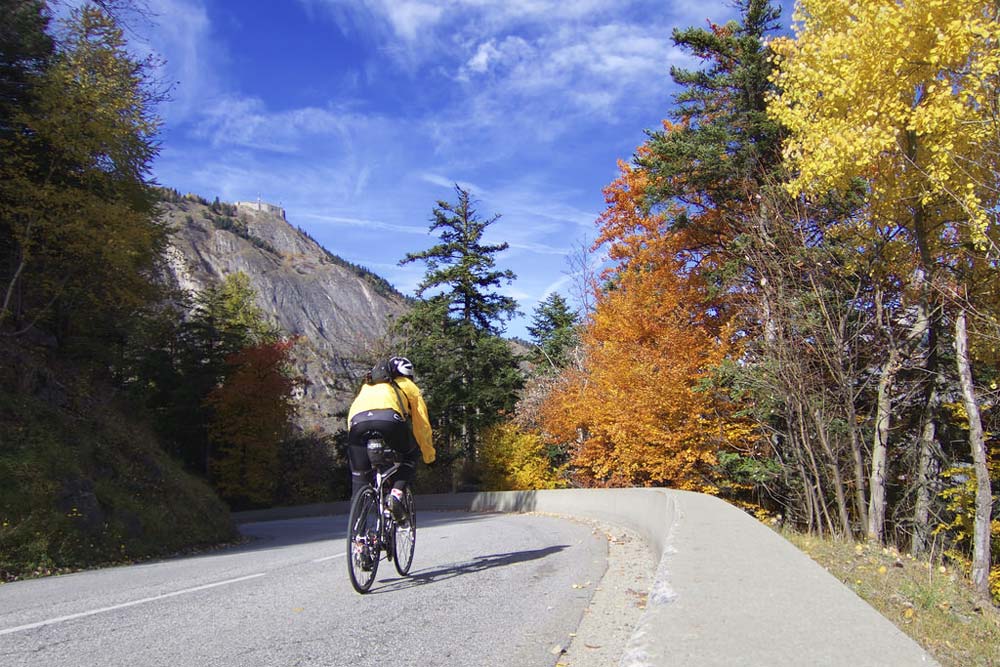
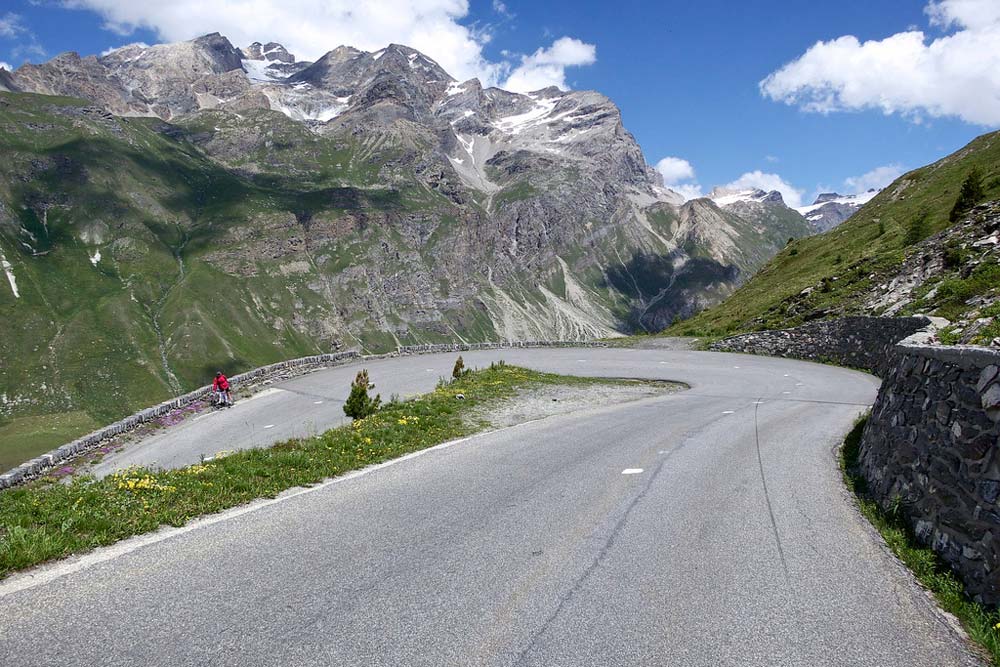
The highest paved pass in the Alps — and, unusually for a giant, a forgiving one. The full 48 km ascent from Bourg-Saint-Maurice climbs gently through Tignes and Val d’Isère before the road narrows, the traffic thins and the final kilometres carry you into a genuinely high-mountain world of scree, snow patches and silence. Refuel at the summit restaurant and pack every layer you own for the descent — even in August it can be close to freezing on top. Open roughly mid-June to October.
Col de la Madeleine
Length: 24.5 km from Feissons
Summit: 1,993 m
Altitude gain: 1,543 m
Avg gradient: 6.3% (max 12%)
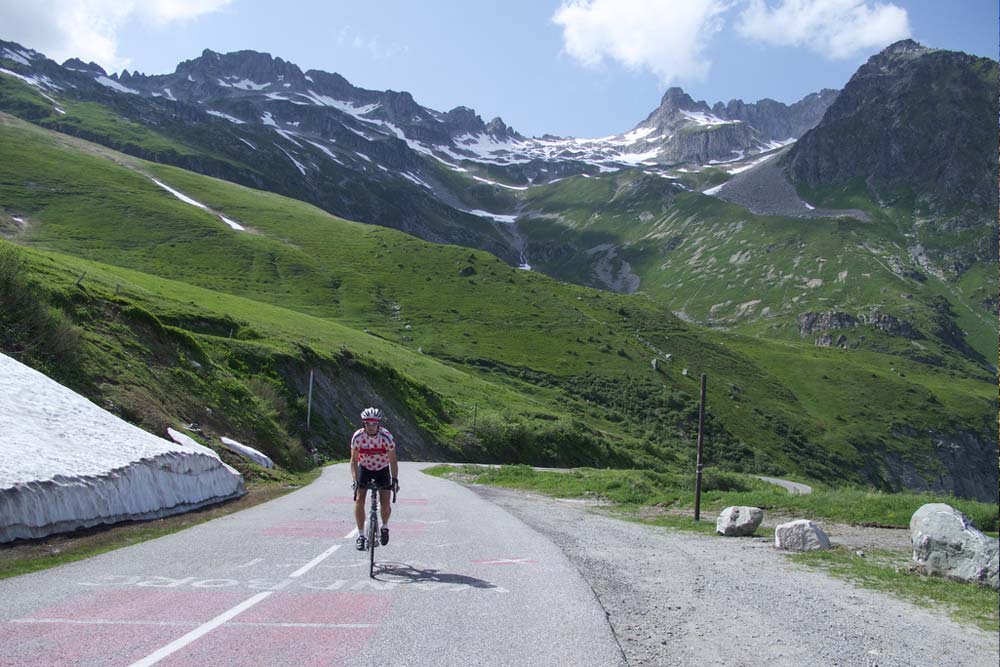
A Tour regular since 1969 with over 25 appearances, the Madeleine is one of the longest and toughest single climbs in the Alps — and one of the most beautiful, with the Mont Blanc and the Lauzière range filling the horizon as you climb. The gradient is deceptive: a manageable first 16 km, then 2 km at 10% after Celliers that send your heart rate into the red, a brief levelling, and a final lung-busting 5 km to the col. Grab a drink at La Banquise 2000 before the long, often freezing descent.
Col de la Croix de Fer
Length: 22.8 km from Saint-Étienne-de-Cuines
Summit: 2,067 m
Altitude gain: 1,582 m
Avg gradient: 6.9% (max 13%)
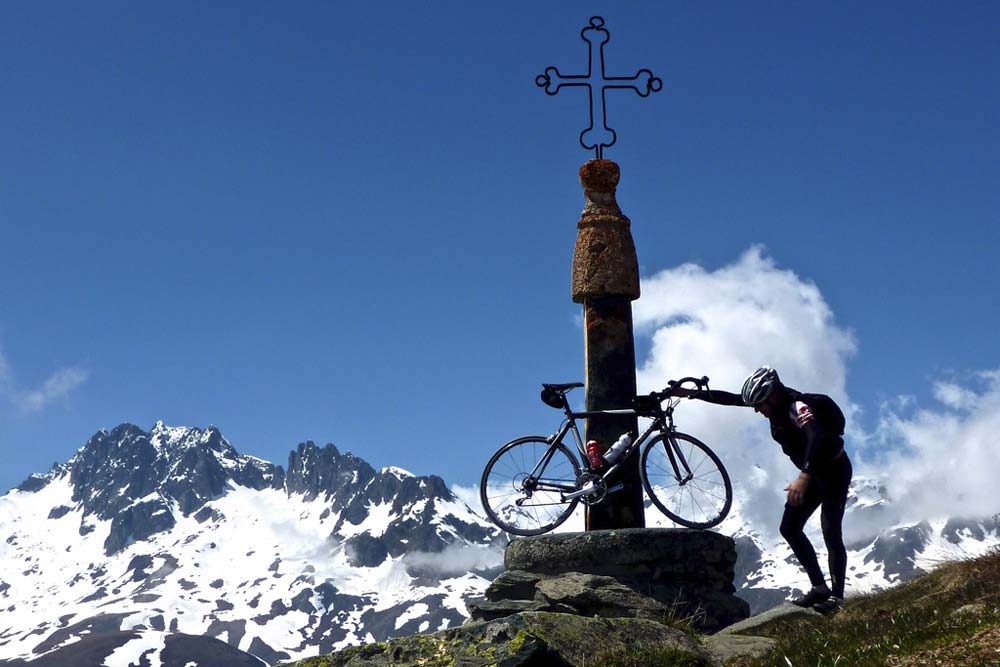
Hard on the legs, easy on the eyes. The Croix de Fer follows the Glandon river through classic Alpine postcard scenery, climbing steadily for 10 km before the gradient bites after Saint-Colomban — from there it’s a thigh-burner with ramps to 13%, so hold something back. The iron cross at the summit looks across to the spiky Aiguilles d’Arves, one of the most photographed views in the Tour. Combine it with the neighbouring Glandon — the two cols are barely 2.5 km apart.
Col du Glandon
Length: 21.3 km from La Chambre
Summit: 1,924 m
Altitude gain: 1,472 m
Avg gradient: 6.9% (max 11%)
The Croix de Fer’s wilder twin. From La Chambre the first half climbs steadily through shaded forest — pleasant, deceptive — before the switchbacks above Saint-Colomban-des-Villards ramp to 11%, and the final 2 km are some of the steepest sustained road in the Maurienne. Pace the first 15 km, stock the pockets with energy bars, and let the Glandon river and the high pasture scenery pull you up the rest. A Tour favourite that often plays support act to bigger names — and is harder than most of them.
Col de la Loze
Length: 21.5 km from Brides-les-Bains
Summit: 2,304 m
Altitude gain: 1,670 m
Avg gradient: 7.8% (ramps over 20%)
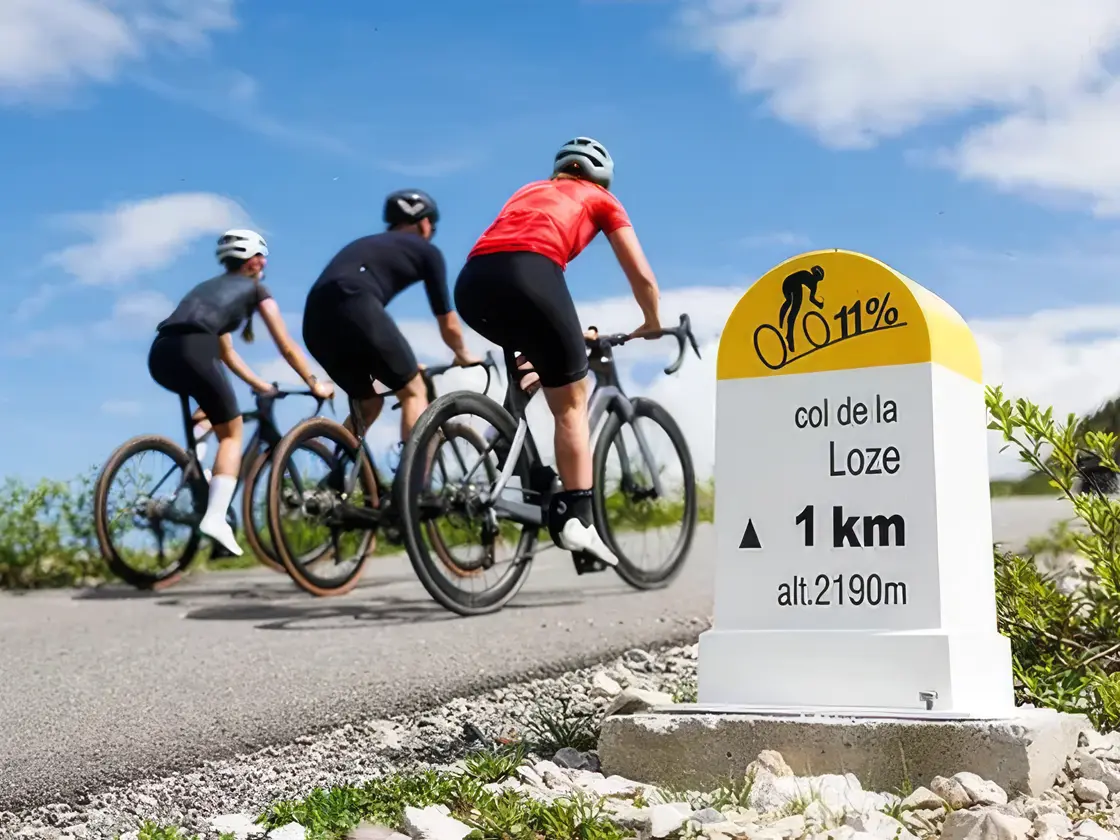
The modern monster. Since its Tour debut in 2020, the Loze has built a reputation as the hardest climb in France — not for the road through Méribel, but for what comes after it: the final 6 km follow a bike-only cycle path over a ski mountain, with violent gradient changes and ramps beyond 20% that break rhythm, legs and morale in that order. This is where Pogačar famously cracked in the 2023 Tour. Ride it with your lowest gearing and your highest humility — and enjoy a summit road no car can follow you up.
Col du Mont Cenis
Length: 9.8 km from Lanslebourg
Summit: 2,081 m
Altitude gain: 682 m
Avg gradient: 7.0% (max 10.6%)
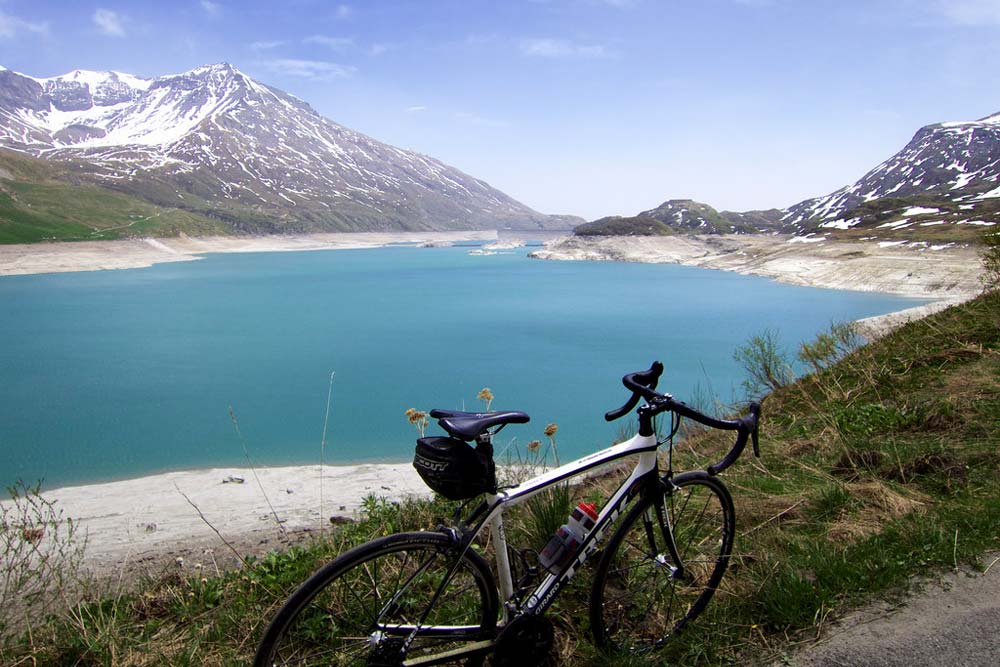
Short, steep and absurdly photogenic. From Lanslebourg in the upper Maurienne the climb dispatches 682 m in under 10 km of good, wide tarmac — allow around an hour and a half up, twenty minutes down. The reward at the top is the fluorescent blue of Lac du Mont Cenis against the peaks of the Italian border, a view that has stopped more rides than any puncture. Decent climbing-geared road bikes can be hired in nearby Lanslevillard. The French side opens mid-May to the end of October.
Haute-Savoie Cycling Climbs
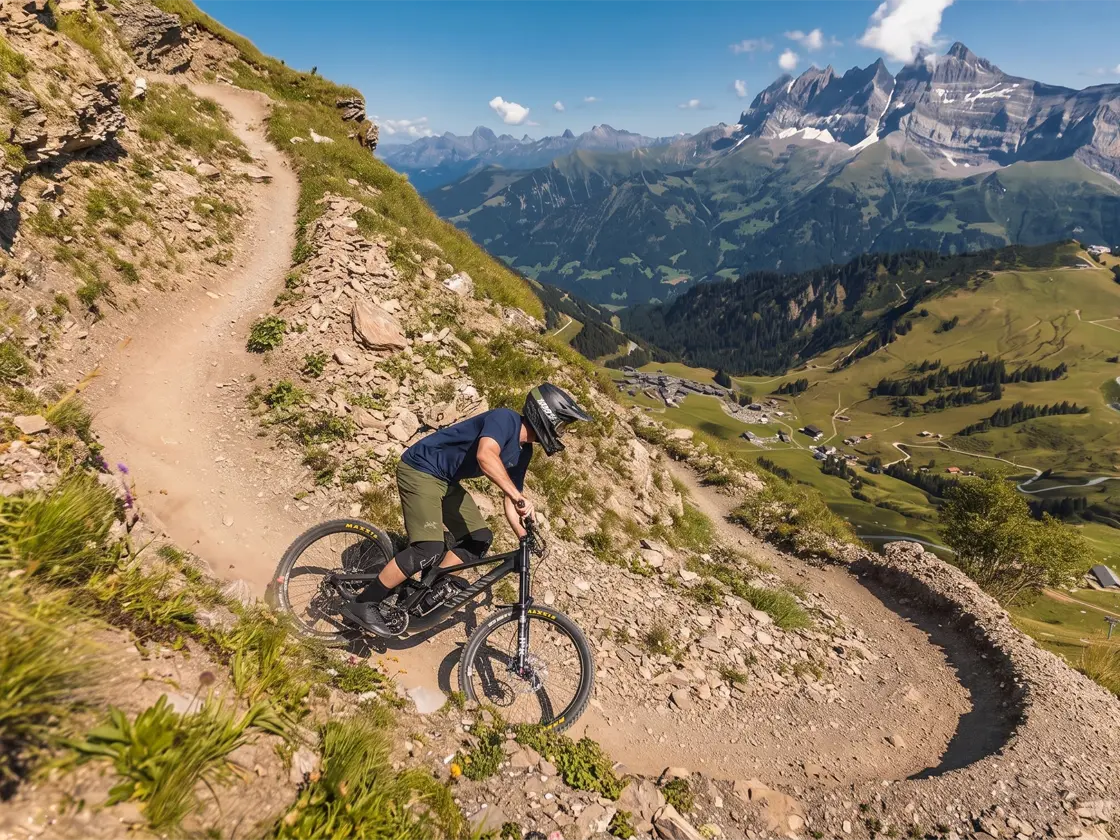
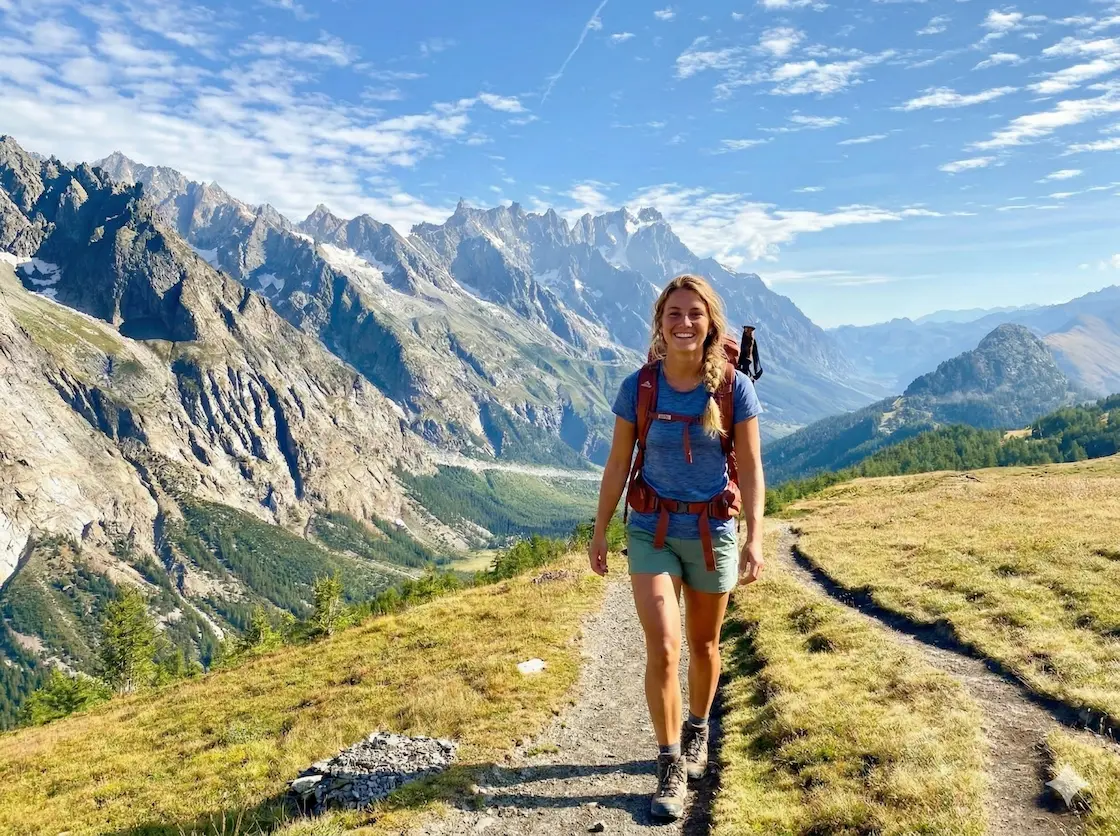
Haute-Savoie is the most accessible corner of the high Alps — under an hour from Geneva airport — and its climbs have a different character: shorter and punchier than the Maurienne giants, threading the Aravis chain and the Chablais between Lake Annecy, Lake Geneva and Mont Blanc. It’s also prime cross-training country: Morzine is Europe’s mountain biking capital, and the hiking is world-class when the legs need a different kind of day.
Col de Joux Plane
Length: 10.9 km from Morzine
Summit: 1,691 m
Altitude gain: 711 m
Avg gradient: 6.5% (max 11.1%)
The climb that humbled Lance Armstrong in 2000 — and from Morzine it pulls the same trick on everyone: 3 km of brutal climbing straight out of town, a deceptive forest lull, then a hard ramp to the Col du Ranfolly before the final drag to the top. The Samoëns side is even tougher. The summit lake and the Mont Blanc view make a fine reward, and the descent back into Morzine is a joy. Note for the stats-minded: the Tour has crossed it more than a dozen times, and it has never once been climbed easily.
Col de la Colombière
Length: 11.7 km from Le Grand-Bornand
Summit: 1,613 m
Altitude gain: 670 m
Avg gradient: 5.8% (final 3 km ~10%)
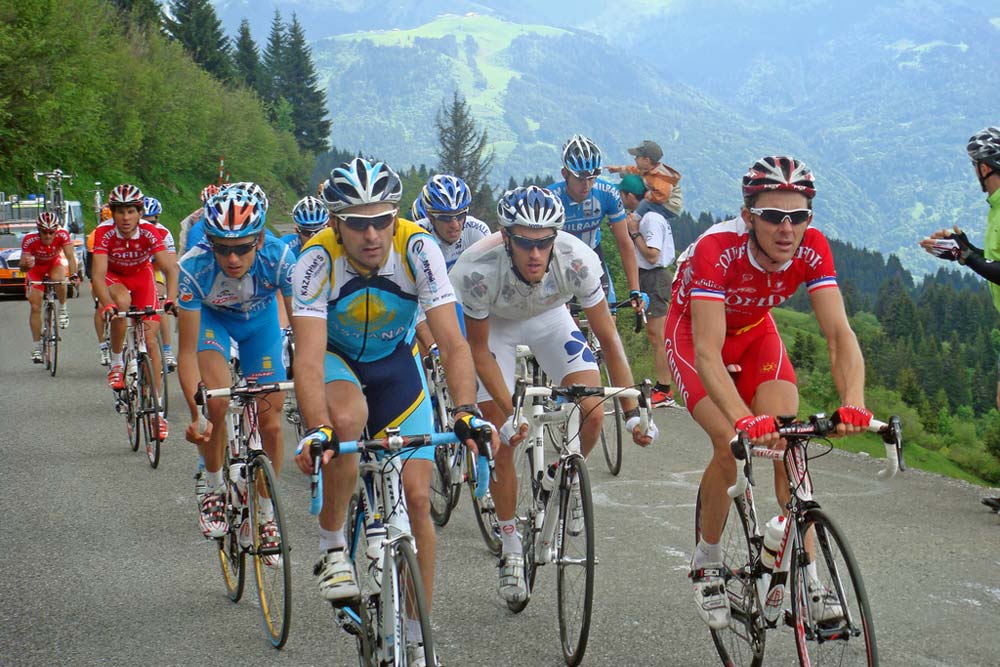
The classic col of the Aravis and a Tour fixture since 1960. From Le Grand-Bornand the early kilometres roll gently through alpine pasture — all cowbells and reblochon farms — before the road rears up for a final 3 km at close to 10% beneath the limestone wall of the Jallouvre. It’s the perfect introduction to Alpine climbing: serious enough to count, short enough to recover from, and easily combined with the neighbouring Col des Aravis or Col de Romme for a proper Aravis day out from an Annecy base.
Plateau des Saix
Length: 10.0 km from Samoëns
Summit: 1,626 m
Altitude gain: 924 m
Avg gradient: 9.2% (max 11.4%)
The steepest sustained climb on this page. At 9.2% average for 10 km the Plateau des Saix never lets up — find your lowest gear at the Moulin du Bathieu and stay in it to the top. Compensations: quiet roads, smooth tarmac, and an eagle’s-eye view over Samoëns and the Giffre valley. If you’re training for the high cols, or for an event like the Étape, this is the perfect honest test — no false flats, no hiding, just gradient.
Isère Cycling Climbs — Alpe d’Huez & the Oisans
Isère stretches from the gates of Lyon to the 4,000 m summits of the Écrins, and at its heart sits the most famous valley town in cycling: Bourg d’Oisans. Stay a week and you can ride Alpe d’Huez, the Col de Sarenne, the balcony road to Villard-Notre-Dame, Les 2 Alpes, and reach the Galibier via the Col du Lautaret — all from one bed. To the north, the Chartreuse massif above Grenoble offers a quieter, greener kind of climbing.
Alpe d’Huez
Length: 13.9 km from Bourg d’Oisans
Summit: 1,815 m
Altitude gain: 1,119 m
Avg gradient: 8.1% (max 13%)
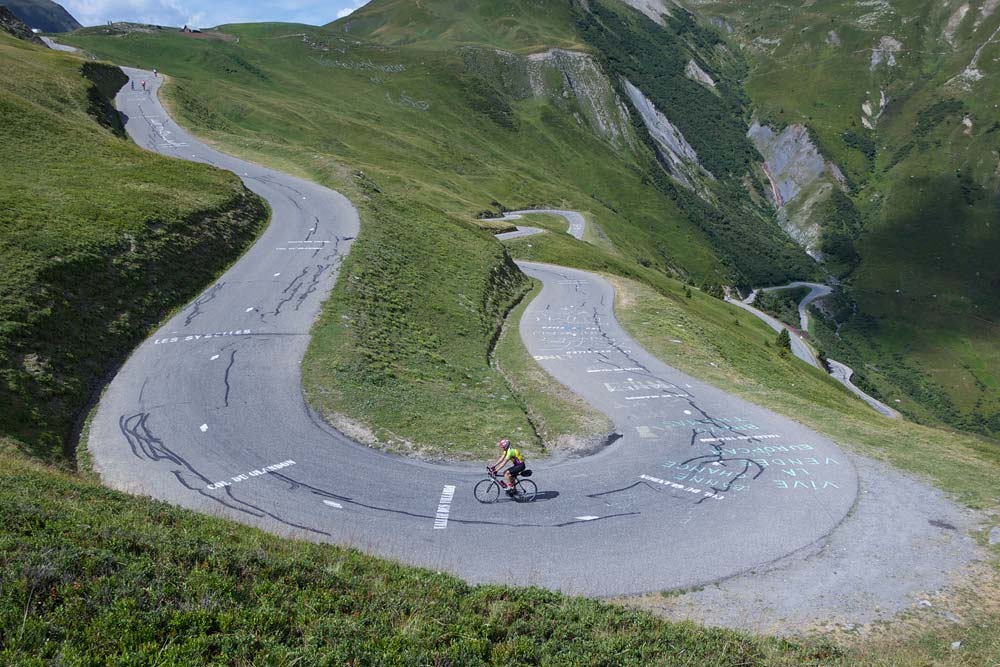
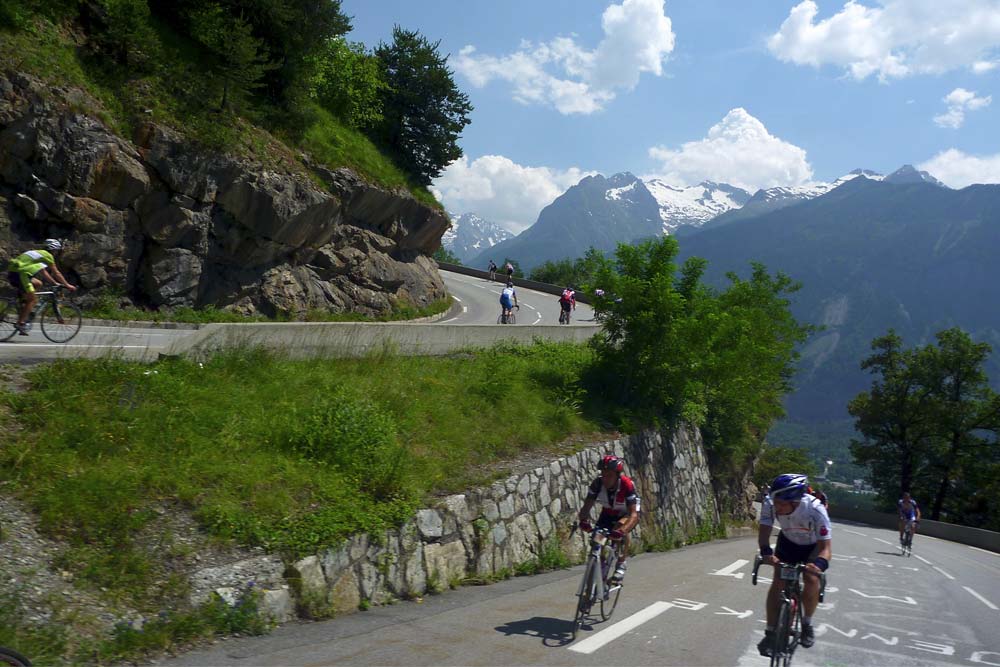
In the world of cycling, Alpe d’Huez needs no introduction: 21 numbered hairpins, each carrying the name of a Tour stage winner, climbing 13.9 km from Bourg d’Oisans to the resort. The opening 3 km are the steepest — over 10% — so resist the urge to chase anyone. Ride early to beat traffic and heat, touch the famous bend signs as you pass, and don’t let anyone tell you the urban finish is an anticlimax: the legs know what they’ve done. In winter, the same resort is one of France’s best ski areas.
Col de Porte
Length: 17.7 km from Grenoble
Summit: 1,326 m
Altitude gain: 1,116 m
Avg gradient: 6.3% (max 10.1%)
The Chartreuse’s signature climb, rising straight out of Grenoble into 10% gradient with no warm-up whatsoever. Once the opening ramps relent around kilometre 9, the second half is steady and almost meditative, winding through forest beneath the limestone towers of Chamechaude. Summer tourist traffic can be a nuisance — go early. Fit legs can tack on the extra 5 km to the Chalet du Charmant Som for one of the best viewpoints in the massif, with the whole Belledonne chain across the valley.

Multi-Day Rides & Sportives
One col is a ride; a week of them is a pilgrimage. These are the multi-day routes and events that turn the French Alps’ greatest climbs into a single story.
Route des Grandes Alpes — roughly 700 km from Thonon-les-Bains on Lake Geneva to Menton on the Mediterranean, crossing 16 major cols including the Iseran and the Galibier, with more than 15,000 m of climbing. Most riders take six to eight days; the gîte and hotel network along the route makes it easy to ride unsupported.
La Marmotte Granfondo Alpes — Bourg d’Oisans, early July. The grandfather of European sportives: 174 km over the Glandon, Télégraphe and Galibier before the final ascent of Alpe d’Huez — over 5,000 m of climbing in one day. Entries open in autumn and sell fast.
L’Étape du Tour — July. Around 16,000 amateurs ride a full mountain stage of that year’s Tour de France on closed roads — and the Alpine editions regularly feature the very climbs on this page. The single best way to ride the giants traffic-free.
Haute Route Alps — late August. A seven-day timed amateur stage race through the highest cols with pro-level support, timing and feed stations. The closest most of us will get to riding a Grand Tour week.
When to Ride the Alpine Cols
The high cols are seasonal: snow clearance dictates everything. The Galibier and Iseran typically open in early-to-mid June and close with the first heavy snowfall, usually late October. Lower passes — Télégraphe, Colombière, Joux Plane, Col de Porte — open earlier and stay rideable from roughly May to November. Check col status before travelling in the shoulder months; the live road-condition boards at valley junctions are reliable.
June brings long days, fresh legs and snow walls lining the high passes — magical, but pack for cold summits. July and August are peak season: everything is open, the weather is most stable, and the roads are busiest, especially around the Tour de France’s visit. September is the connoisseur’s month — empty cols, golden light, stable weather and shoulder-season prices. Whatever the month, mountain rules apply: afternoon storms build fast, and a 1,500 m descent can be 15°C colder at the top than the valley. A gilet and a good waterproof jacket live in your back pocket all season.
Plan Your Trip
Where to Base Yourself
Bourg d’Oisans is the classic first-trip base — Alpe d’Huez from the doorstep, the Glandon, Croix de Fer and Galibier (via the Lautaret) within riding distance, and a town economy that runs on cyclists. Saint-Jean-de-Maurienne or Saint-Michel-de-Maurienne put the entire Maurienne tenfold within reach. Annecy trades a little proximity for a lot of lifestyle — lake swims, the Aravis cols, and the famous lakeside cycle path for recovery days. Morzine suits a mixed group: Joux Plane and the Chablais cols for the roadies, Europe’s best mountain biking for everyone else. Book accommodation well ahead for July and August.
Getting There
By air: Geneva serves Haute-Savoie and the northern valleys; Lyon, Grenoble and Chambéry cover the Maurienne, Tarentaise and Oisans. Airport transfer companies will carry bike boxes — confirm when booking. By train: TGV runs to Chambéry, Saint-Jean-de-Maurienne and Bourg-Saint-Maurice (bagged bike, ~€10 reservation); regional TER trains carry assembled bikes free. By car: the most flexible option for col-hopping between valleys — roughly 9–10 hours from Calais to the Oisans.
Bike Rental & Gearing
Bourg d’Oisans, Annecy, Morzine and the Maurienne towns all have quality road bike rental: approximately €35–60 per day for aluminium, €60–100 for carbon with electronic shifting, €70–110 for e-road bikes, with much better weekly rates. Whatever you ride, gearing is the trip-maker: a compact chainset with a 30 or 32-tooth cassette turns the Madeleine from an ordeal into a long, beautiful morning. If you’re bringing your own bike, fit new brake pads before you travel — Alpine descents eat them.
Road Cycling in the French Alps — FAQ
By most measures, the Col de la Loze from Brides-les-Bains — 21.5 km at 7.8% average, with a final 6 km on a bike-only path whose constant gradient changes and 20%+ ramps make it harder than the numbers suggest. Of the classics, the Madeleine and the Galibier (via the Télégraphe) are the biggest single days.
The highest passes — the Col de l’Iseran and Col du Galibier — are usually cleared of snow and open from early-to-mid June until late October. Lower cols like the Télégraphe, Colombière and Joux Plane open around May and stay rideable into November. Opening dates shift with the snowpack, so check col status before a shoulder-season trip.
Bourg d’Oisans. Alpe d’Huez starts at the edge of town, the Glandon, Croix de Fer and Galibier are within riding distance, and the town is built around cyclists — bike shops, rental, cyclist-friendly hotels and cafés that expect lycra. Annecy is the best choice if you’re travelling with non-cyclists.
Yes. With a compact chainset, a 30+ tooth cassette and sensible pacing, any reasonably fit rider can get up Alpe d’Huez — most amateurs take 1–2 hours. The key is surviving the opening 3 km at over 10% without going into the red. Start early in the morning to avoid heat and traffic.
Geneva for Haute-Savoie (Morzine, the Aravis, Annecy); Lyon, Grenoble or Chambéry for the Maurienne, Tarentaise and Bourg d’Oisans. All are 1–2.5 hours from the major cycling bases, and most transfer companies carry bike boxes if you confirm in advance.
A compact (50/34) chainset with at least a 30-tooth largest sprocket — a 32 or 34 is better for the steeper climbs like the Loze or Plateau des Saix. There is no prize for grinding a big gear up a 10% ramp at 50 rpm; the pros ride lower gearing than ever, and so should you.
Yes — once. The roadside atmosphere on a Tour col is unlike anything else in sport, and riding a stage route in the morning before the race passes is unforgettable. But expect road closures on race days, fully booked accommodation and the year’s heaviest traffic. If you simply want the best riding, come in September.
Please leave a comment below if you need specific advice for your French Alps cycling trip, or if you have any recommendations to help us improve this page. Happy climbing!