PROVENCE | CÔTE D’AZUR | SOUTHERN ALPS | WHEN TO GO | PLAN YOUR TRIP | FAQ
Road cycling in the South of France is the sport’s best-kept worst-kept secret: world-class climbing, empty winter roads, and a Mediterranean climate that lets you ride a 1,000 m col in January in shorts.
The professionals figured this out decades ago. The hills behind Nice and Monaco are home to more WorldTour riders than anywhere on earth, and the Col de la Madone above Menton is the test climb they use to measure form before the season’s big targets. The reason is geography: nowhere else in Europe do genuine mountains — the Maritime Alps run to over 3,000 m — drop so directly into a coastline this warm.
And then there’s the Giant. Mont Ventoux rises alone out of Provence, visible from half the region, and its bare limestone summit is the most mythologised place in cycling. Within a day’s ride you’ll find the gentlest beautiful climb in France (the Gorges de la Nesque) and some of the hardest (the 2,802 m Col de la Bonette, the highest paved through-road in the country).
This guide covers the best road cycling in the South of France across three zones — Provence, the Côte d’Azur and the Southern Alps — plus when to come and where to base yourself. For the Tour’s northern giants, see our French Alps climbs guide; for the full national picture, start with road cycling in France.
Cycling in Provence — Mont Ventoux & the Vaucluse
Provence is cycling on a different rhythm: quiet D-roads through vineyards and lavender, hilltop villages for coffee stops, and one enormous exception to all that gentleness filling the horizon. Base yourself in Bédoin or Sault for the Ventoux, with the Luberon, the Dentelles de Montmirail and the Nesque gorge within easy reach. Nearest airports: Marseille and Avignon (TGV from Paris in under 3 hours).
Mont Ventoux
Length: 22.7 km from Bédoin
Summit: 1,912 m
Altitude gain: 1,622 m
Avg gradient: 7.2% (max 10.8%)
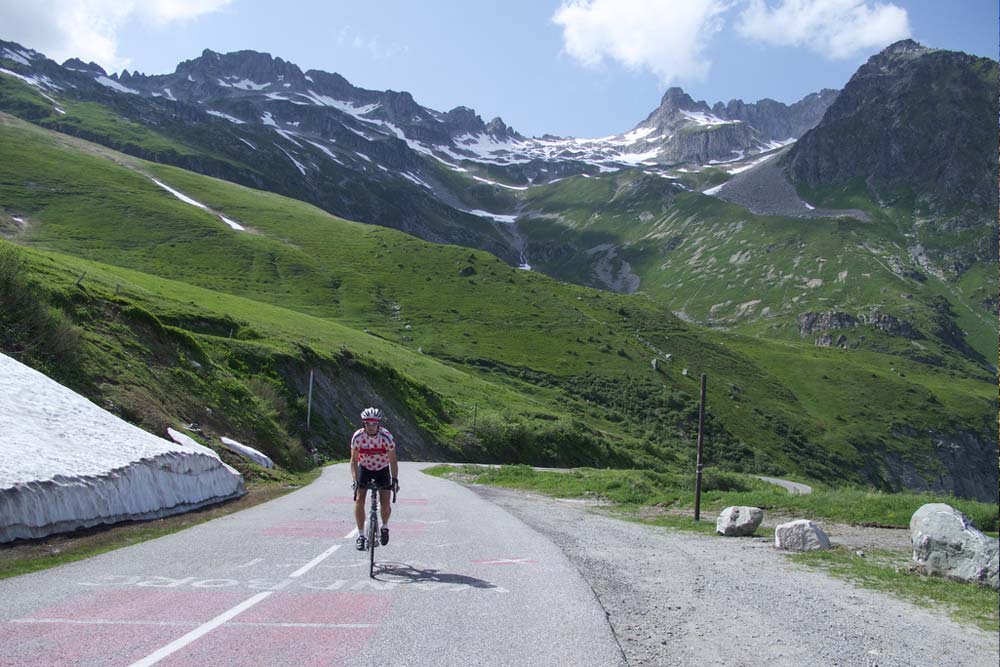
“The Ventoux isn’t a climb like any other,” Raphaël Géminiani warned a team-mate in 1955 — and seventy years on, nothing has changed. From Bédoin the road gives almost no respite once it enters the forest, and the final 6 km across the bare white summit ridge are pure exposure: wind, heat, and the weight of every Tour legend who suffered here before you. Start at dawn in summer, carry two bidons, and pay your respects at the Tom Simpson memorial near the top.
Read More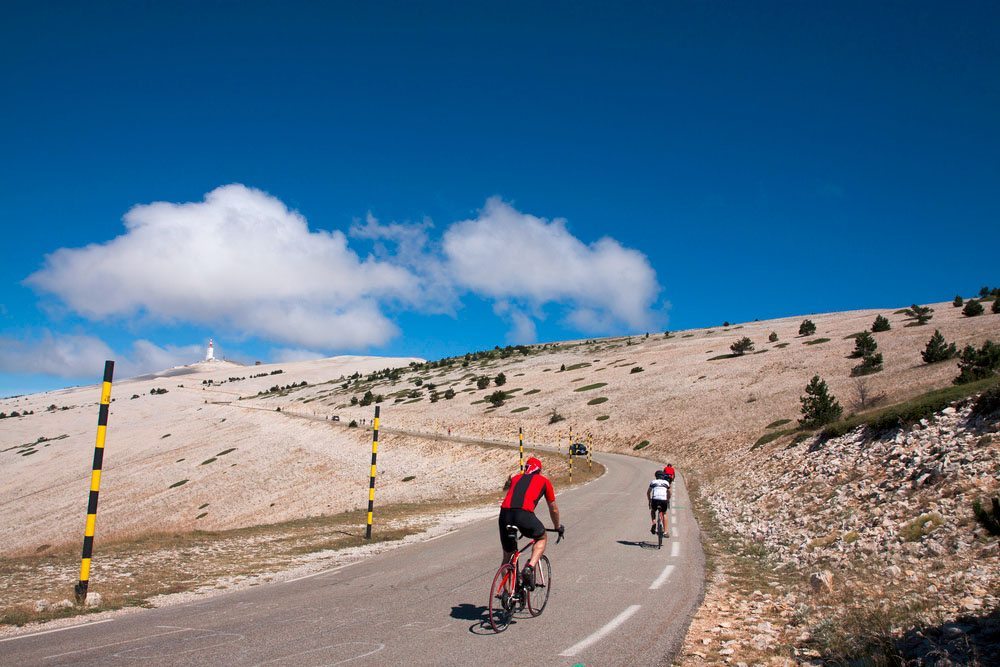
Gorges de la Nesque
Length: 18.2 km from Villes-sur-Auzon
Summit: 734 m
Altitude gain: 423 m
Avg gradient: 2.3% (max 3.8%)
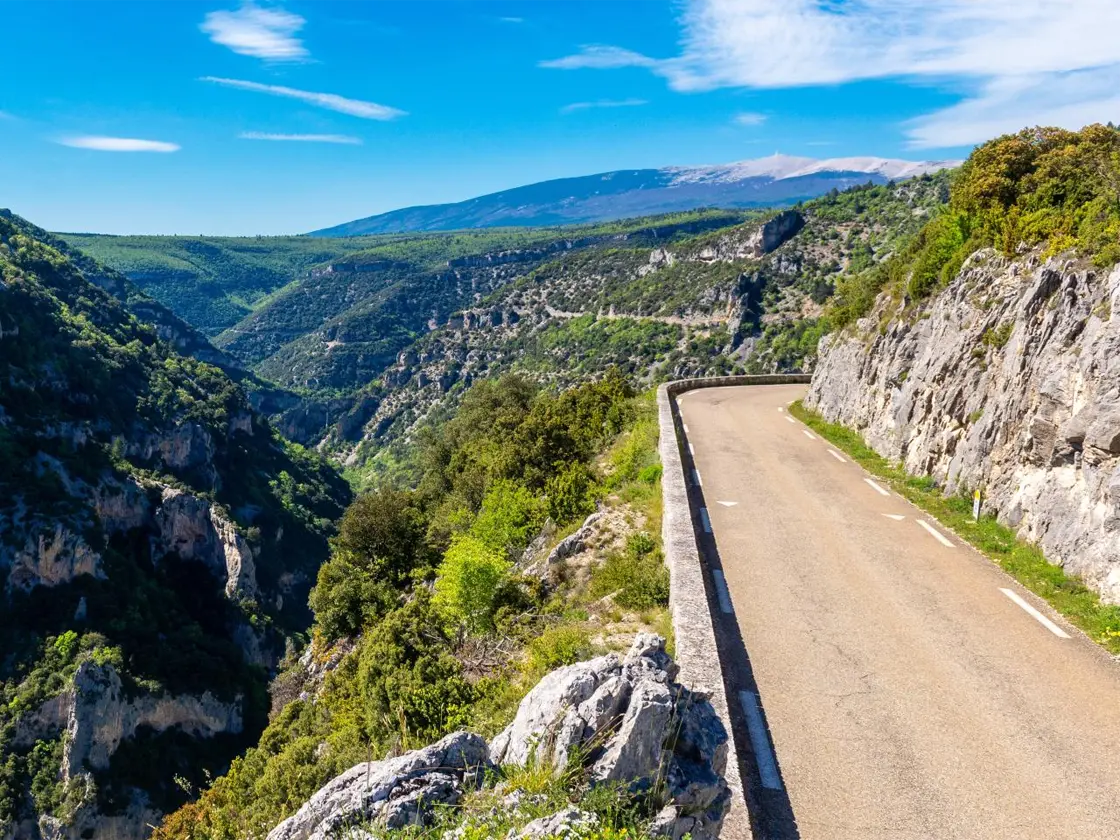
Possibly the most beautiful easy climb in France. The road through the Nesque gorge rises so gently you barely notice the work, carving along cliff ledges and through rock tunnels above a 400 m limestone canyon — with the Ventoux looming across the valley as a reminder of what you’re not suffering. Perfect as a recovery ride, a first taste of Provençal climbing, or the warm-up day before the Giant. Combine with lunch in Sault among the lavender fields and roll home grinning.
Cycling the Côte d’Azur — the Pros’ Backyard
The hills behind the Côte d’Azur are the densest concentration of professional cyclists on the planet — and twenty minutes of climbing out of any coastal town shows you why. The roads are quiet, the tarmac is good, the gradients are honest, and the Mediterranean fills the view behind you on every ascent. Base in Nice or Menton and you can ride year-round; the corniches and lower cols don’t see snow even in January. Nearest airport: Nice, often with bike-box-friendly transfers under 30 minutes.
Col de la Madone
Length: 14.7 km from Menton
Summit: 925 m
Altitude gain: 920 m
Avg gradient: 7.2% (max 12%)
The most famous test climb in professional cycling. The Madone climbs out of Menton at a steady 7%, the Mediterranean expanding behind you with every switchback, past the perched village of Sainte-Agnès to a quiet, anticlimactic summit that has decided more contract negotiations than most race finishes. Regular roadside markers give gradient and altitude, the traffic is light, and the descent back to the coast is a reward in itself. If it’s good enough for the pros’ form tests, it’s good enough for yours.
Read More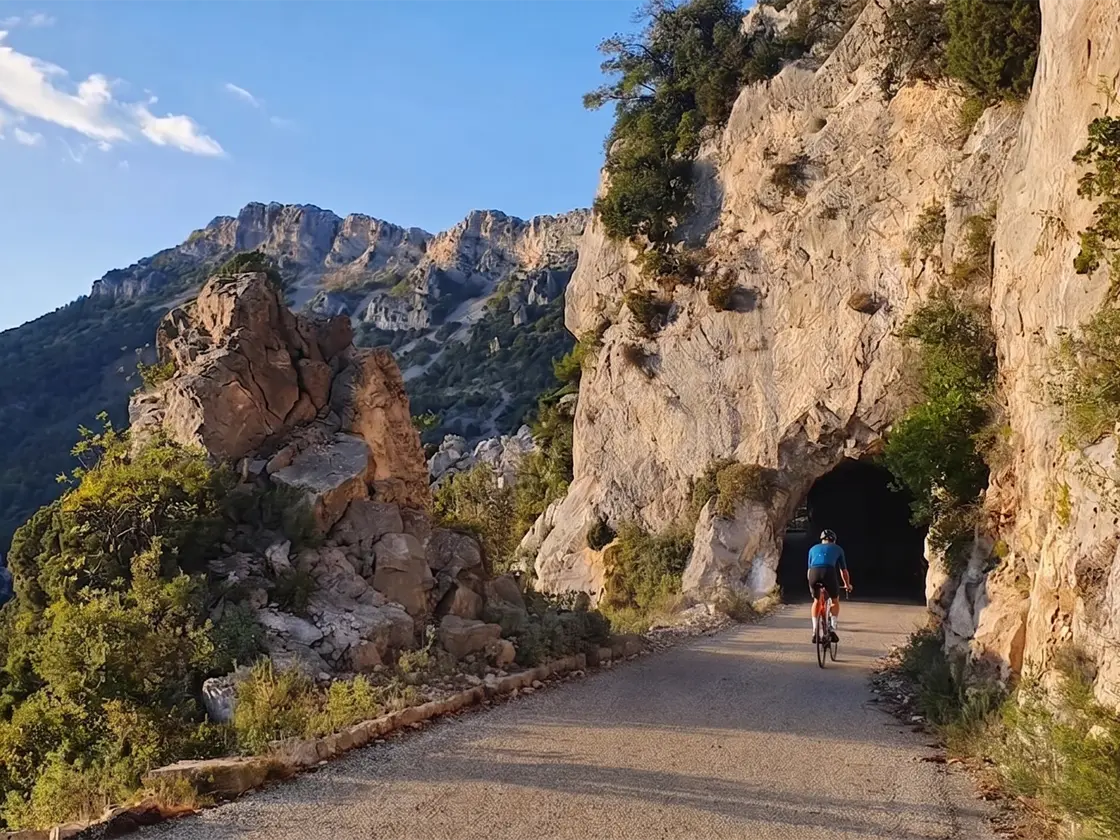
Col de Turini
Length: 24.1 km from Sospel
Summit: 1,607 m
Altitude gain: 1,244 m
Avg gradient: 5.2% (max 11.4%)
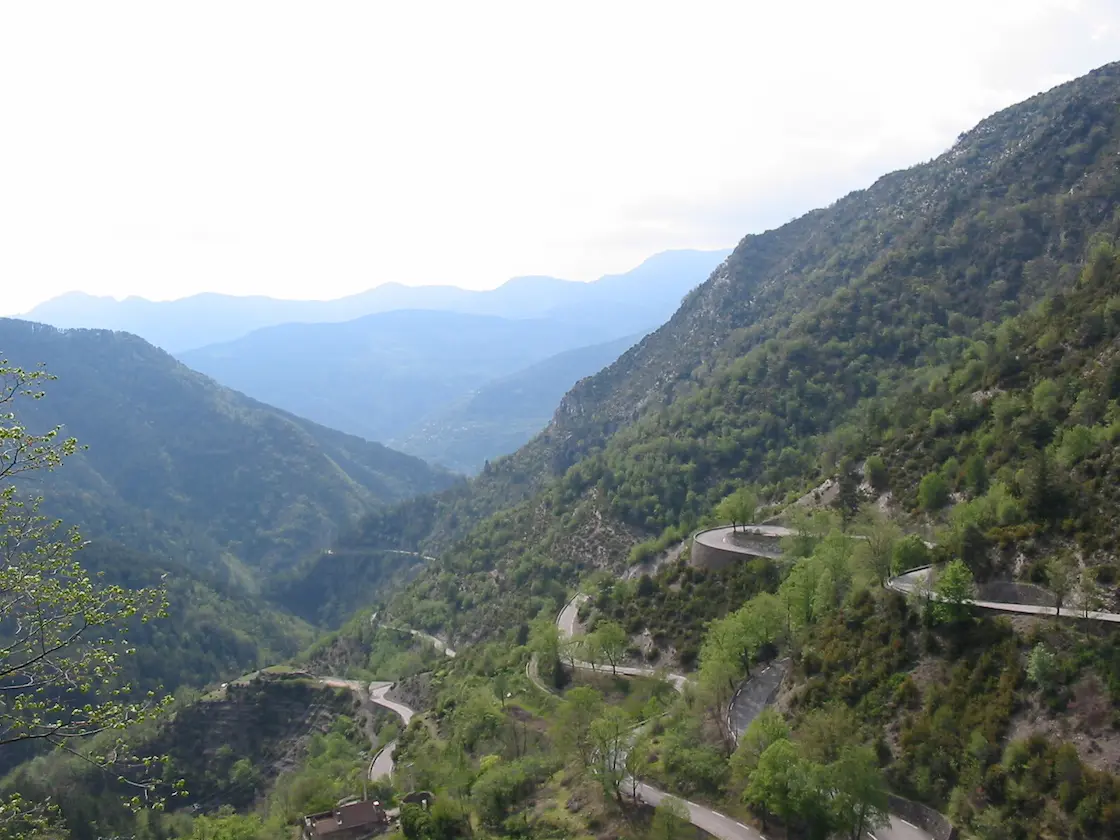
Rally drivers made the Turini famous; cyclists keep it that way. The long ascent from Sospel winds through the Maritime Alps on one of the great engineered roads of France — used by the Tour as recently as 2020 and by the Monte Carlo Rally every January. The average gradient flatters it: the road constantly shifts between easy ramps and 10% kicks, which makes it more interesting than punishing. The forested summit has two restaurants, and the descent through the Vésubie valley is sublime.
Col de Braus
Length: 11.1 km from Sospel
Summit: 1,002 m
Altitude gain: ~640 m
Avg gradient: 5.7% (max 9.9%)
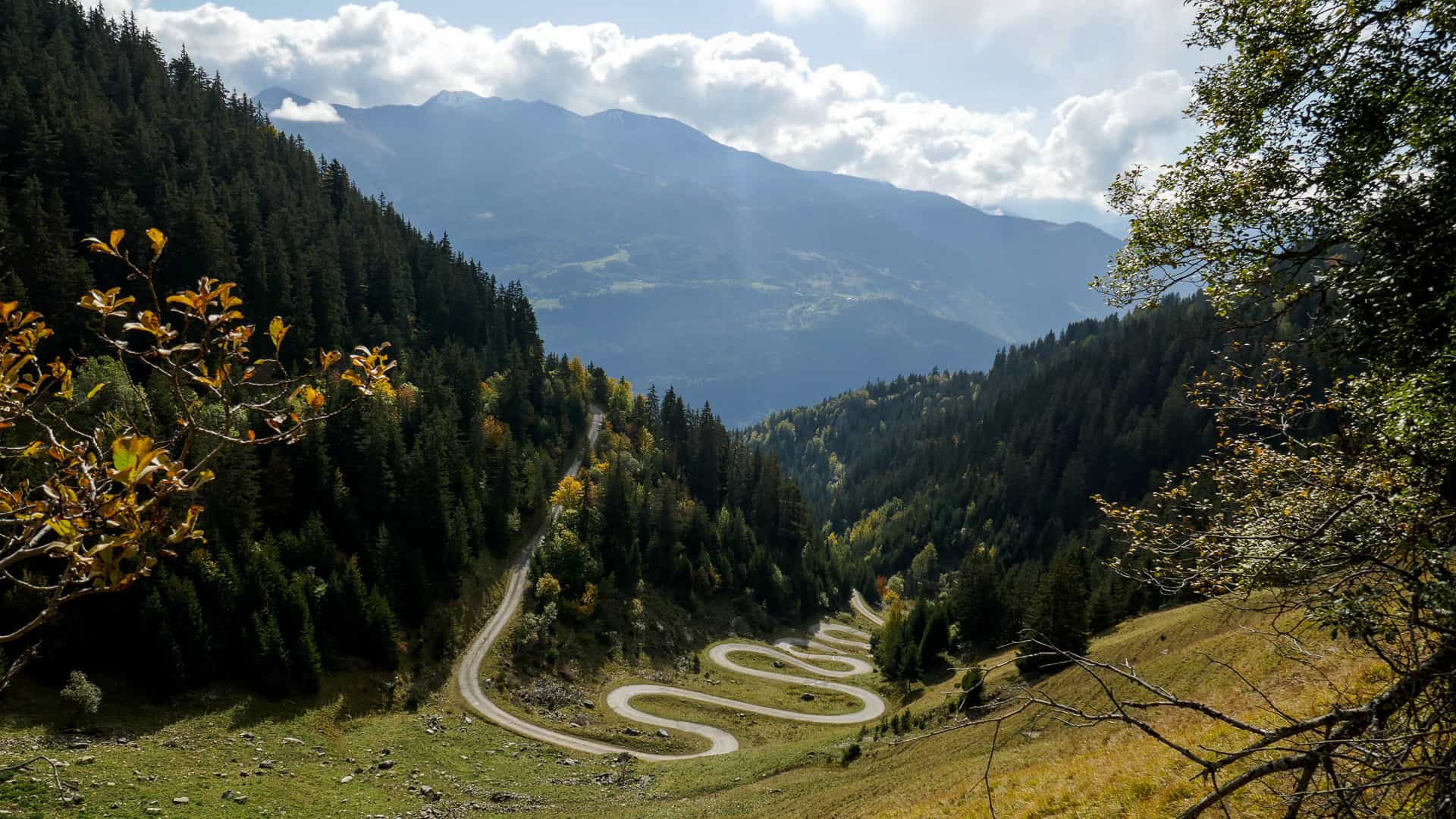
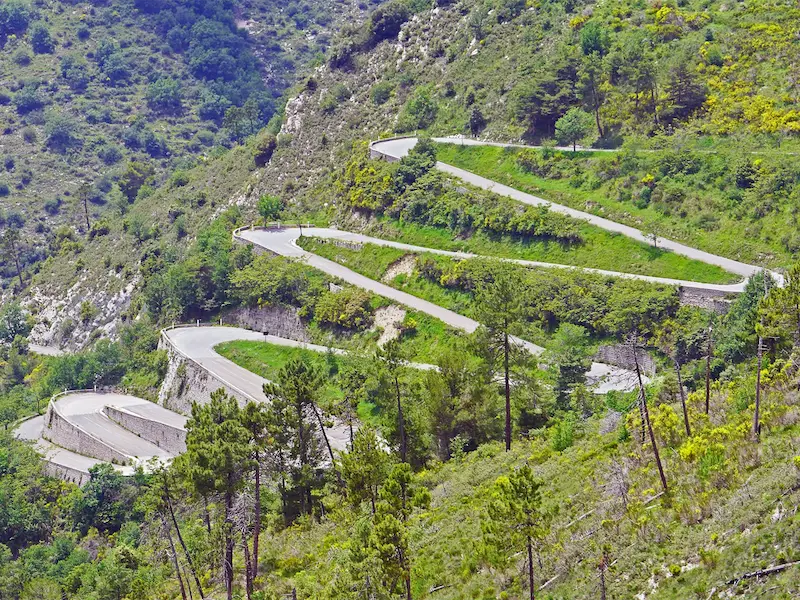
If you’ve seen one photo of cycling on the Côte d’Azur, it’s probably the Braus: a staircase of perfectly stacked hairpins climbing the hillside above L’Escarène like something drawn by Escher. Both approaches are excellent — Sospel is slightly gentler, L’Escarène gives you the famous switchback view — and at just over an hour of climbing it slots perfectly into a loop with the Turini or the Madone. At the col, the Café du Col de Braus does a roaring trade in cyclist espresso.
Southern Alps Cycling Climbs — Mercantour & Queyras
North of the coast, the roads climb into a different world: the high, wild passes of the Mercantour and the Queyras, where the Route des Grandes Alpes plays its final acts. The climbs here match anything in the northern Alps for scale — the Bonette is the highest paved through-road in France — but with a fraction of the traffic and a season stretched by the southern sun. Base in Barcelonnette, Jausiers or Saint-Étienne-de-Tinée for the Bonette group; Briançon or Guillestre for the Izoard.
Col de la Bonette
Length: 25.8 km from Saint-Étienne-de-Tinée
Summit: 2,802 m (Cime loop)
Altitude gain: 1,652 m
Avg gradient: 6.4% (max 15%)
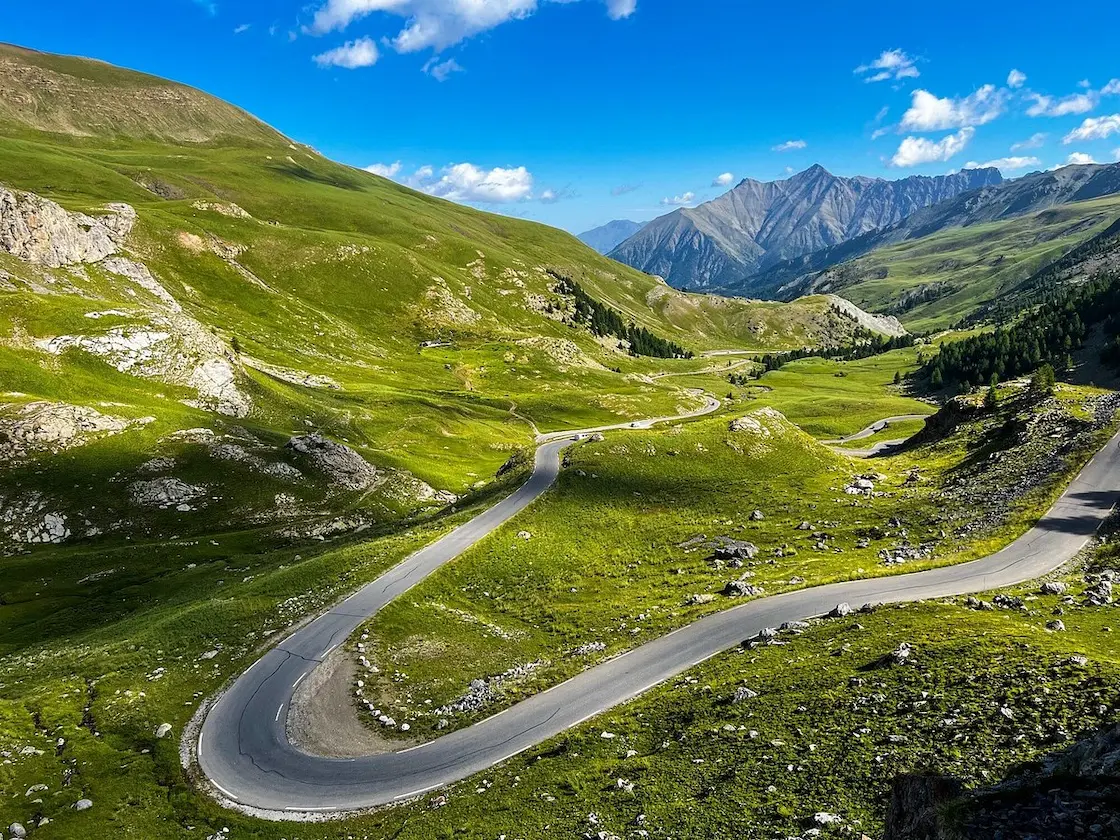
The roof of French cycling. From Saint-Étienne-de-Tinée the road climbs for 26 km through the empty Mercantour — marmots, old military barracks, and barely a car — before the famous loop around the Cime touches 2,802 m, the highest stretch of paved through-road in France. The final ramp around the summit cone kicks to 15% in the thinnest air of your trip. Less celebrated than Ventoux, arguably more beautiful, and unforgettable in September light. Open roughly mid-June to mid-October.
Col d’Izoard
Length: 19 km from Briançon
Summit: 2,360 m
Altitude gain: 1,105 m
Avg gradient: 5.8% (max 9.4%)
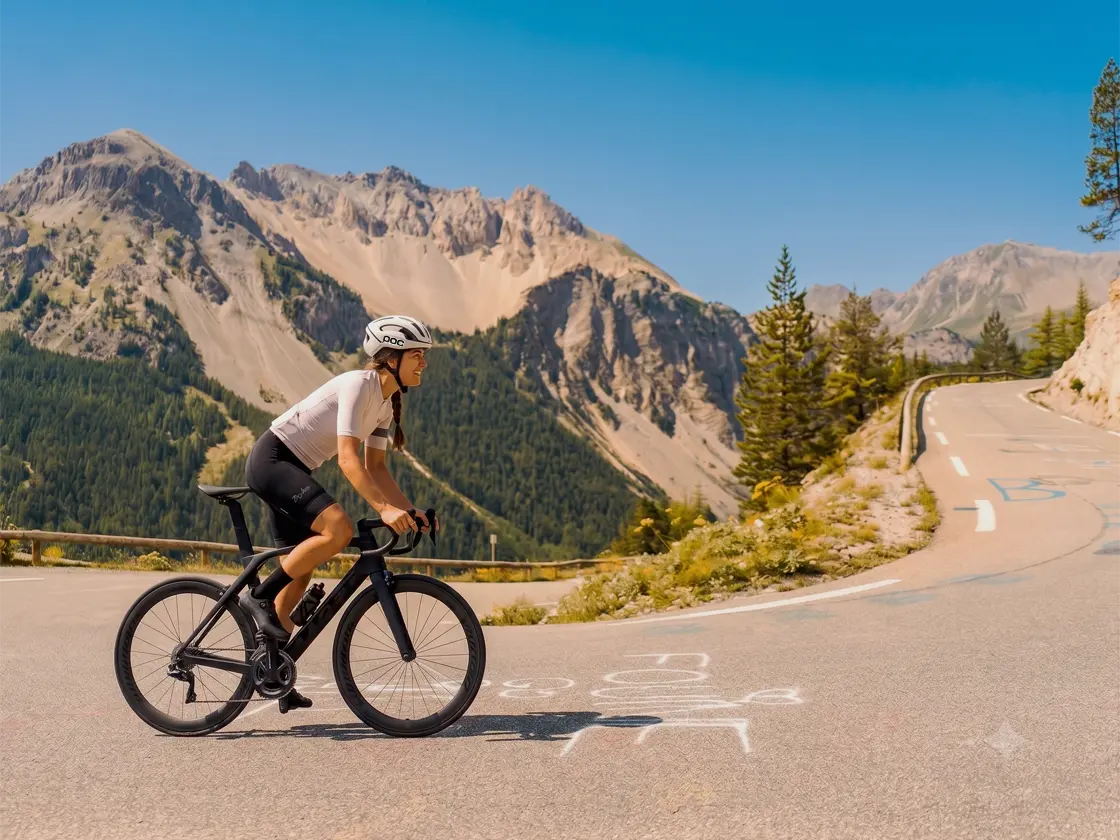
The col of Coppi and Bobet, and home to the strangest landscape in French cycling: the Casse Déserte, a moonscape of scree and rock pinnacles just below the southern side of the summit. From Briançon the climb rises steadily through larch forest before the open final kilometres; the descent south through the Casse Déserte towards the Queyras is one of the most dramatic stretches of road in the Alps. A Tour legend since 1922, and a must if you’re riding the Route des Grandes Alpes.
And the bench runs deep. The Col de la Cayolle, Col d’Allos and Col de Vars circle the Ubaye valley with three more 2,000 m-plus crossings; the Col de la Couillole and Col Saint-Martin serve the Tinée and Vésubie valleys behind Nice; and the Col d’Èze — finish climb of Paris–Nice — packs the whole Riviera into a 25-minute effort above Monaco. We’ll be adding detailed guides to more southern climbs over time.
When to Go — the Year-Round Advantage
This is the South of France’s trump card: there is no off-season. The coastal climbs — the Madone, the Braus, the corniches — are rideable in every month, and a clear January day on the Côte d’Azur regularly serves up 15°C and empty roads. It’s why the pros winter here, and why a February training camp in Nice beats anything Mallorca can offer for climbing variety.
Spring and autumn are the sweet spots everywhere: October to May for the coast and Provence, with wildflowers or vendange colours thrown in. Summer opens the high passes — the Bonette, Izoard, Cayolle and Allos are typically clear from mid-June to mid-October — but demands caution lower down: ride Mont Ventoux and the inland Provençal climbs at dawn in July and August, as afternoon heat on exposed slopes is genuinely dangerous. The Mistral is the other local factor — when it blows hard, the Ventoux summit is no place to be, and the sheltered Nesque gorge suddenly becomes the smart choice.
Plan Your Trip
Where to Base Yourself
Nice is the obvious all-rounder — an international airport 20 minutes from the climbs, year-round riding, and the whole Madone–Braus–Turini playground inland. Bédoin or Sault for a Ventoux-centred Provence trip with the Nesque and the Luberon on rest days. Sospel for a quieter Maritime Alps base at the foot of the Braus and Turini. Barcelonnette / Jausiers for the high-mountain week: Bonette, Cayolle, Allos and Vars all start from the Ubaye valley. Book accommodation ahead for May–September; the coast fills fast.
Getting There & Around
By air: Nice for the Côte d’Azur and Mercantour; Marseille or Avignon for Provence. Airport transfers carry bike boxes — confirm when booking. By train: TGV reaches Avignon, Aix and Nice direct from Paris (bagged bike, ~€10 reservation); the scenic Nice–Sospel line carries assembled bikes free and turns a Maritime Alps loop into a one-way ride. Rental: Nice, Menton and Bédoin all have excellent road bike rental at approximately €35–100 per day depending on spec — Bédoin alone has several shops dedicated almost entirely to Ventoux pilgrims.
Beyond the Bike
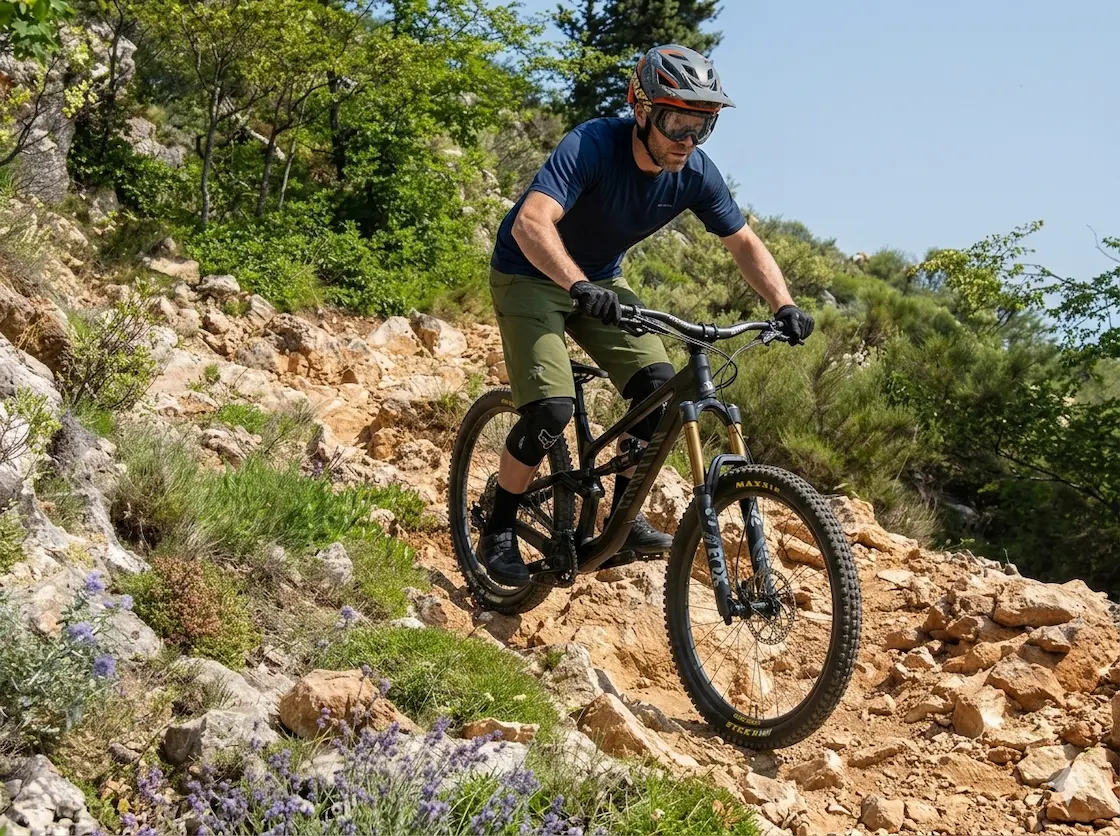
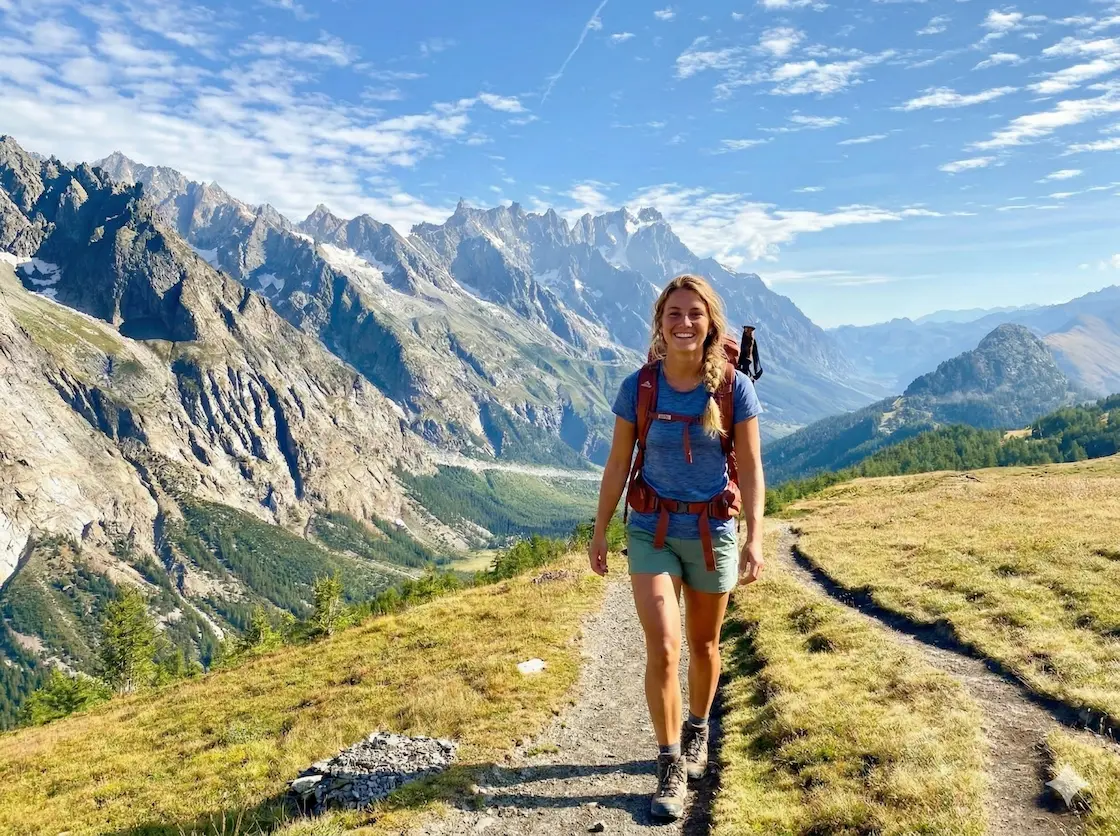
The South of France is the easiest place in the country to mix riding with everything else: hiking in the Verdon and Mercantour, kitesurfing on the coast, mountain biking on the same hills you’ve been climbing on tarmac, and the food and beach culture of the Côte d’Azur for the non-riders in your party.
Road Cycling in the South of France — FAQ
On the coast, yes. The climbs behind Nice, Menton and Monaco — including the Col de la Madone and Col de Braus — stay snow-free and rideable in every month, with clear winter days often reaching 15°C. Inland Provence rides well from February to November, while the high passes like the Bonette and Izoard are open roughly mid-June to mid-October.
May, June, September and early October are ideal — warm enough at the summit, without the dangerous mid-afternoon heat of high summer. In July and August, start from Bédoin at dawn and aim to summit before 11am. Check the Mistral forecast: when it blows hard the exposed summit ridge is unrideable, and the road is sometimes closed.
Mont Ventoux from Bédoin is the most feared — 1,622 m of gain with no respite and brutal heat exposure. The Col de la Bonette is the biggest — 25.8 km to 2,802 m, the highest paved through-road in France, with a 15% final ramp at altitude. Ride both and decide for yourself; the arguments are half the fun.
The roads between Nice, Menton and the Col de Turini. The Col de la Madone above Menton is the classic form-test climb, while the Col d’Èze, Col de Braus and the corniche roads make up the daily training menu. Ride there on a winter weekday and you’ll likely share the road with WorldTour riders.
Nice for the Côte d’Azur climbs and year-round riding — the airport is 20 minutes from the hills. Bédoin or Sault for a Mont Ventoux and Provence trip. Barcelonnette or Jausiers for a high-mountain week on the Bonette, Cayolle, Allos and Vars. All have quality bike rental and cyclist-friendly accommodation.
Yes — it’s one of the few serious climbing regions with genuinely great easy riding. The Gorges de la Nesque climbs 423 m over 18 km at 2.3%, the Luberon and Lake Annecy-style coastal paths offer flat options, and e-road bike rental (approximately €70–110 per day) puts even the Madone within reach of mixed-ability groups.
Please leave a comment below if you need specific advice for your South of France cycling trip, or if you have any recommendations to help us improve this page. Happy riding!