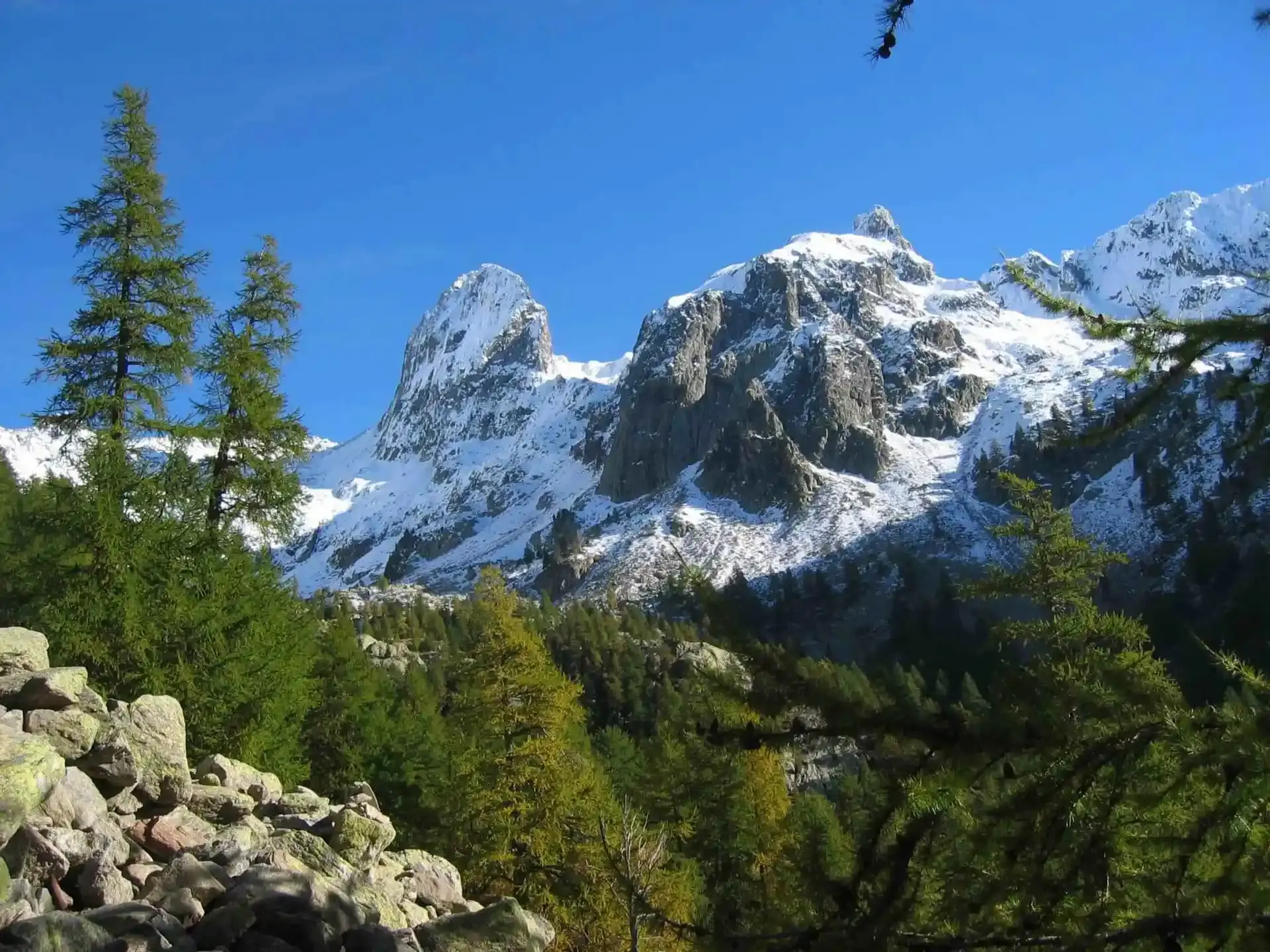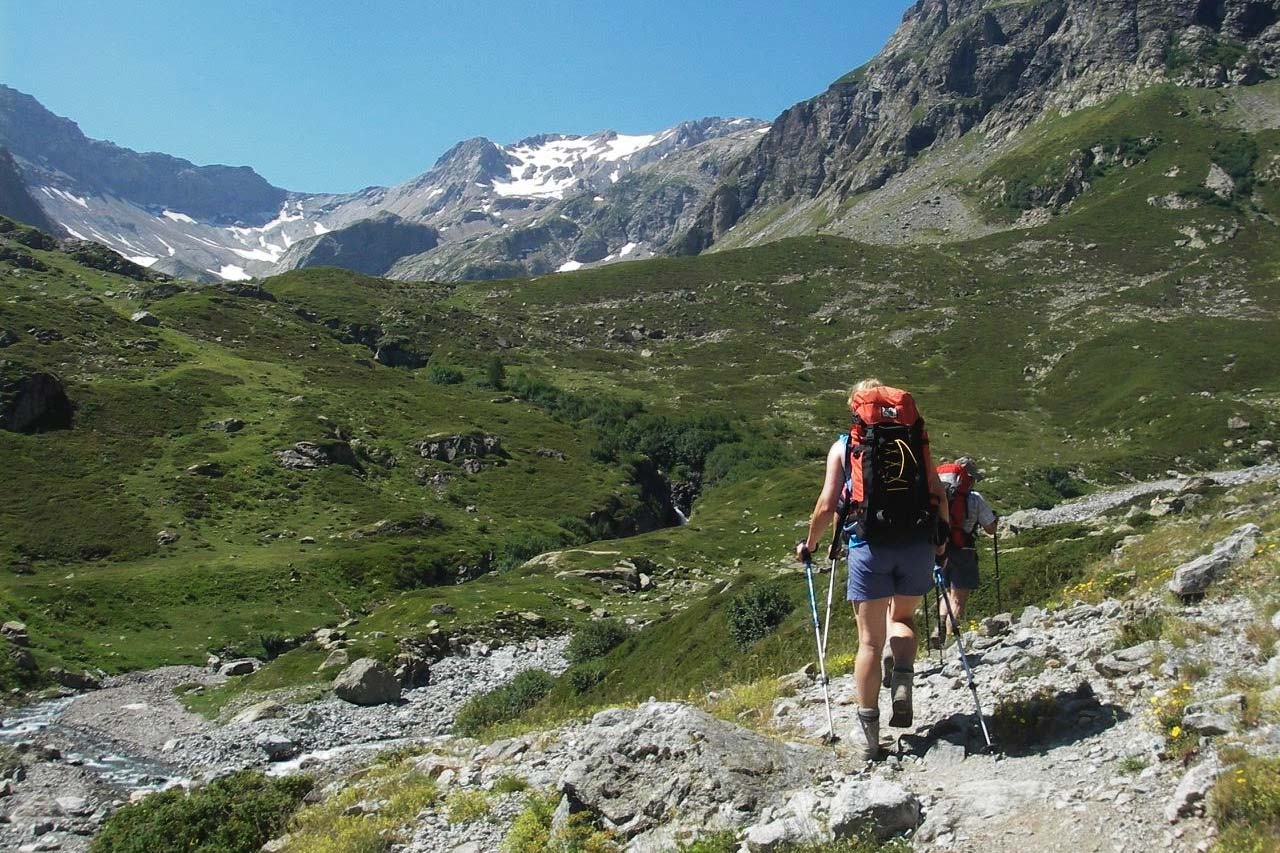
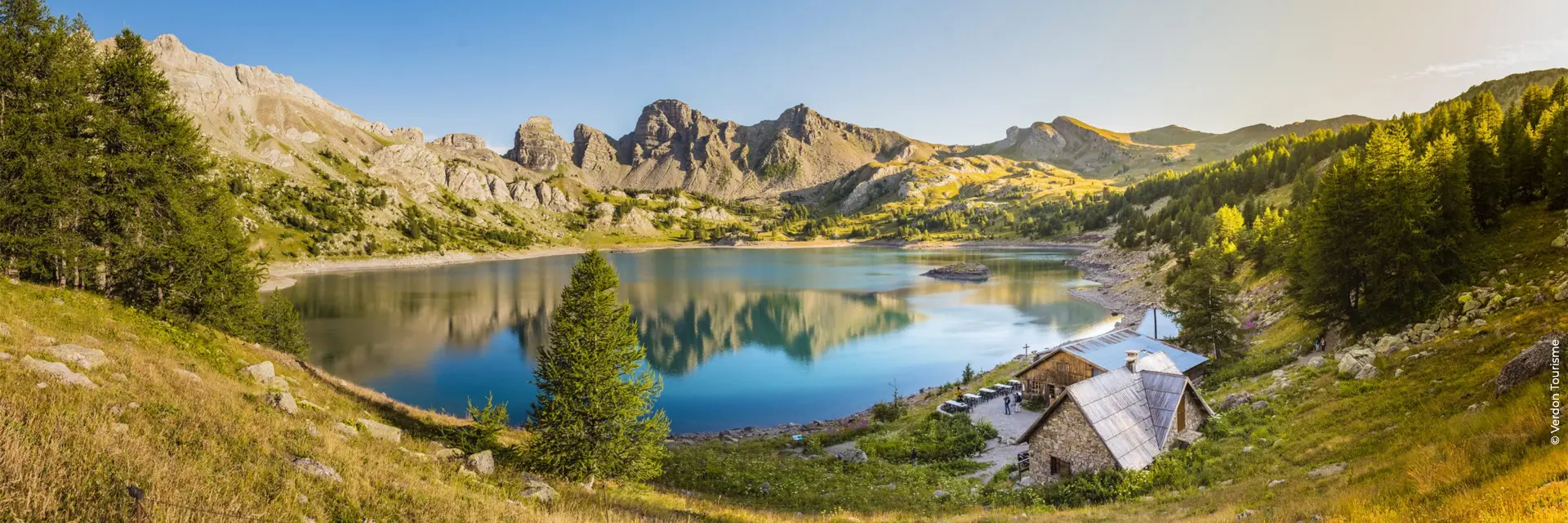
Tucked inside a dramatic glacial cirque at 2,228 metres in the Mercantour National Park, the Lac d’Allos is Europe’s largest natural high-altitude lake — 54 hectares of deep blue-green water ringed by jagged rock towers and watched over by marmots, chamois and ibex.
HIKING | EXTENDED HIKES | BOOK A GUIDE | ACCOMMODATION | PRACTICAL INFO | FAQ
The lake sits in the Haut-Verdon valley in the Alpes-de-Haute-Provence, less than three hours’ drive from Nice and just an hour from the lavender fields of Provence. It’s a place that feels genuinely remote — no mobile signal, no road access, no swimming — yet the main trail from the Parking du Laus takes under an hour and is manageable for families with young children. That accessibility is both the lake’s gift and its challenge: in July and August, expect company.
Come in June or September, though, and the experience transforms. In early summer the snowmelt feeds cascading streams across the plateau and wildflowers carpet the alpine meadows. In autumn, the vast larch forests turn copper-gold and the lake reflects them like a mirror. Either way, this hike rewards you with one of the most striking mountain landscapes in the Southern Alps.
For those with more energy, the Lac d’Allos is also the launchpad for some serious hiking. Why not tackle a circuit of four glacial lakes, the Col de l’Encombrette, or an ascent of Mont Pelat (3,051 m), the highest summit in the Haut-Verdon and one of the most accessible 3,000-metre peaks in the French Alps.
This guide covers the classic lake trail, three extended hiking options, and all the practical information you need to plan your trip.
The Route – Sentier du Lac d’Allos
The most popular route to the Lac d’Allos follows the sentier d’interprétation — an easy walking trail from the Parking du Laus to the lake and back, with an optional loop around the shoreline. It’s well-marked, well-graded, and one of the finest easy mountain walks in the Southern Alps.
Distance: 7.3 km (return, including lake loop). Duration: 2h30. Elevation gain: +197 m. Difficulty: Easy. Start/Finish: Parking du Laus (2,108 m). Lake altitude: 2,228 m. IGN map: 3540ET.
What to Expect on the Trail
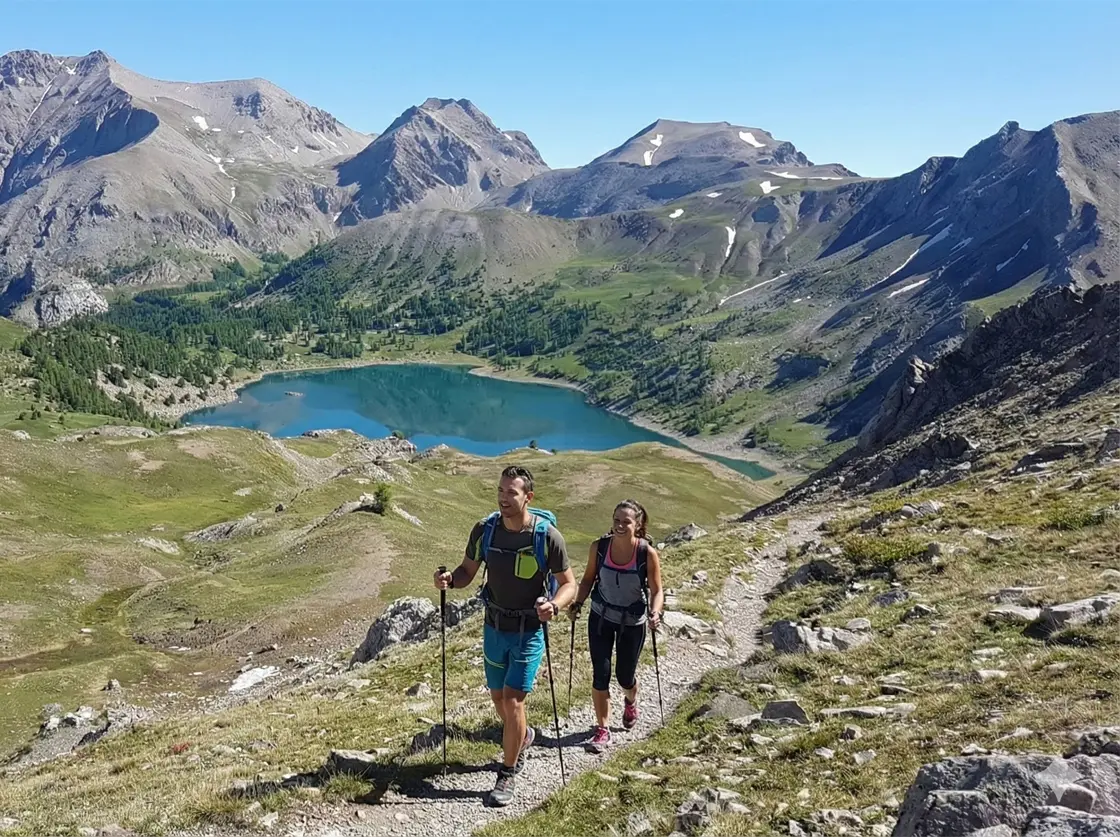
From the back of the Parking du Laus, the trail begins with three short flights of stone steps cut into sandstone – the steepest section of the entire walk. At the top, the landscape opens onto the Plateau du Laus, a broad, grassy expanse that was once a lake itself. The plateau is now one of the finest peat bogs in the Mercantour, and the winding stream that crosses it – La Serpentine – catches the light beautifully on a clear morning. This is a good spot for a picnic on the way back, with welcome shade on a hot summer’s day thanks to the larch trees.
The trail follows a wide forest track through larch woodland, climbing gently alongside the Serpentine. Interpretive panels along the route explain the geology, flora and fauna – useful for aspirational geography teachers. After roughly 40 minutes, the trees thin and the lake appears below you, framed by the distinctive rock spires known as the Tours du Lac. It’s a jaw-dropping view that deserves a pause for a photograph.
Descend to the Refuge du Lac d’Allos, perched on the northern shore with a terrace overlooking the water. Just above the refuge sits the tiny Chapelle Notre-Dame des Monts — and around it, some of the most brazen marmots in the Mercantour. They’re accustomed to hikers and will pose shamelessly for photographs.
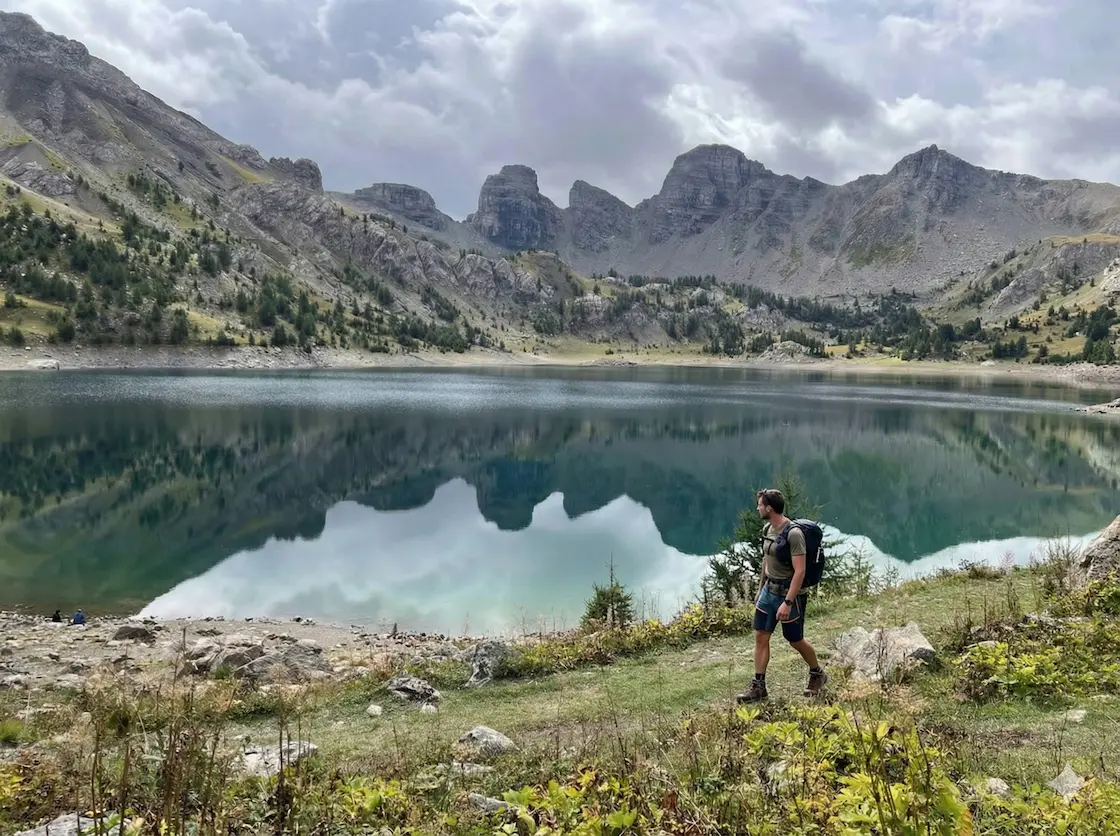
From the refuge, take the loop trail counter-clockwise around the lake (about an hour). The southern shore passes beneath the Col de l’Encombrette with views across the full width of the cirque. The water changes colour constantly — turquoise, deep blue, almost black — depending on the light and your angle. The lake is 48 metres deep and fed almost entirely by snowmelt, which explains why swimming is forbidden (and, frankly, why you wouldn’t want to).
Return to the Parking du Laus by the same trail you came in on.
When to Go
The access road to the Parking du Laus is typically open from mid-June to mid-October, depending on snow conditions.
June: The snowmelt is still feeding streams and waterfalls across the plateau. Wildflowers are at their best. The trail can be muddy in places and some higher extensions may still have snow. Fewer visitors — one of the best months to come.
July–August: The busiest period. The car park is regulated and paid (€12/car), and fills quickly. Arrive before 7 am or reserve your space online at valdallos.com. The lake is at its most photogenic, but so are the crowds.
September: The larch forests begin their autumn transformation — golden, then copper, then bare. The light is warm and low, the trails quieten, and the lake’s surface stills to a mirror. Our favourite time to visit.
October: Possible but conditions are unpredictable. The road can close early with the first snowfalls. Check with the Val d’Allos tourist office before setting out.
Go Further – Extended Hikes from the Lake
The Lac d’Allos is spectacular on its own, but if you have the legs and the weather, the surrounding terrain offers some of the best high-altitude hiking in the Southern Alps.
Sentier des Lacs (Circuit of Four Lakes)
This is the standout day loop for experienced hikers — a circuit linking four glacial lakes through exposed, wild terrain with constant panoramic views.
Distance: 12.6 km. Duration: 5h20. Elevation gain: +598 m. Highest point: Col de la Petite Cayolle (2,639 m). Difficulty: Difficult. Start/Finish: Parking du Laus.
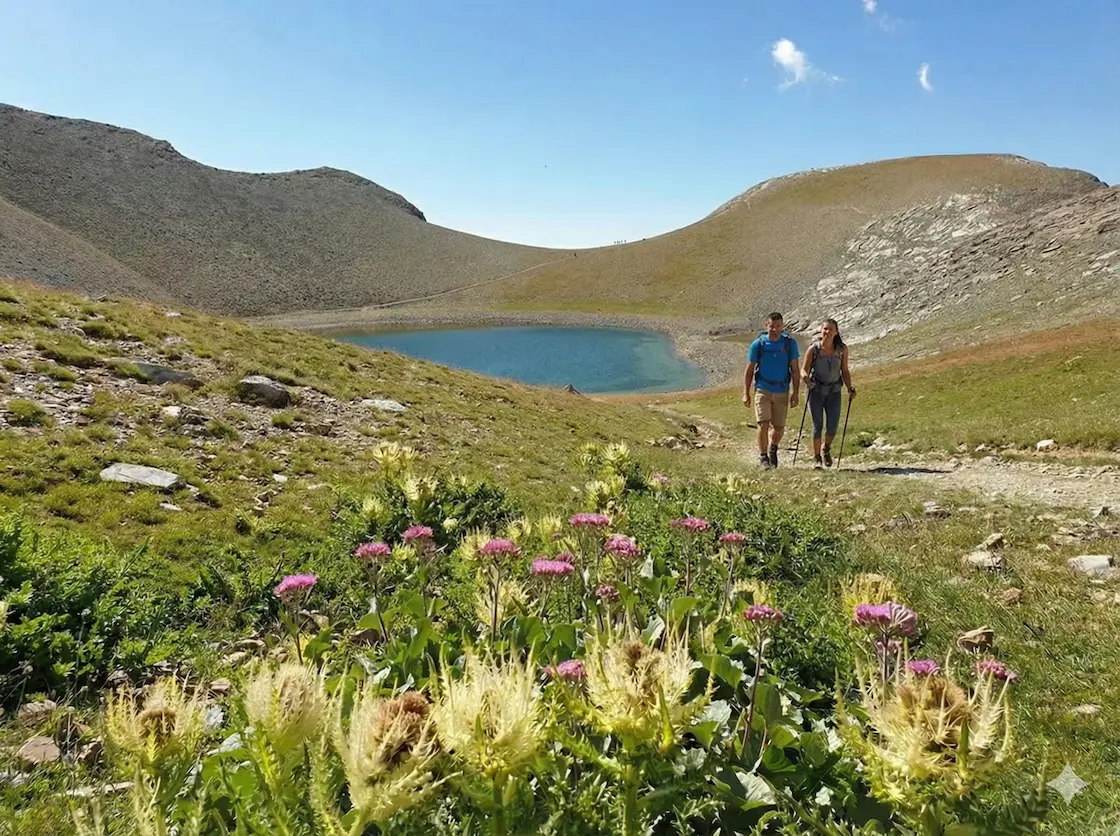
From the Parking du Laus, follow the GR56B towards the Col de la Petite Cayolle. The trail climbs steadily through alpine meadows — the grassy terrain giving way to rockier, more mineral landscape as you gain altitude. At the first junction, leave the Pas du Lausson path on your right (that’s your return route) and continue left.
The Lac de la Petite Cayolle appears first, sitting in a bare rocky bowl just below the col. From the Col de la Petite Cayolle at 2,639 m, follow the ridge south to the Lac des Garrets, a stunning lake set beneath the jagged dragon-back ridge of the Crête de la Taillante. The trail continues along the ridgeline to the Pas du Lausson (2,602 m), where the 360° panorama is breathtaking — the Lac d’Allos spreads below you to the south, the Lac du Lausson (often dry in late summer) sits in the col, and the peaks of the Mercantour stretch to every horizon.
From the Pas du Lausson, descend to the Lac d’Allos and return to the car park via the main trail.
This circuit is exposed above 2,400 m. Even in July, bring a windproof layer and warm fleece — the wind at the Pas du Lausson can be fierce. Bouquetins (ibex) and chamois are commonly spotted on the higher sections, and marmots are everywhere.
Col de l’Encombrette
If you want a longer day without committing to the full Sentier des Lacs, the Col de l’Encombrette (2,527 m) is an excellent extension from the lake.
From the refuge, follow the GRP “Tours du Haut-Verdon” south-west. The trail climbs through open meadow — marmot territory — before reaching the col in about an hour. From the top, you look down on the Lacs de l’Encombrette and across to the imposing north face of Mont Pelat (3,051 m). It’s a rewarding viewpoint for relatively modest effort. Allow 2 hours return from the refuge.
Mont Pelat (3,051 m)
The Mont Pelat is the highest summit in the Haut-Verdon and widely regarded as the easiest 3,000-metre peak in the Southern Alps. It’s not technical — no ropes, no scrambling — but it is demanding, with nearly 1,000 metres of ascent from the Parking du Laus.
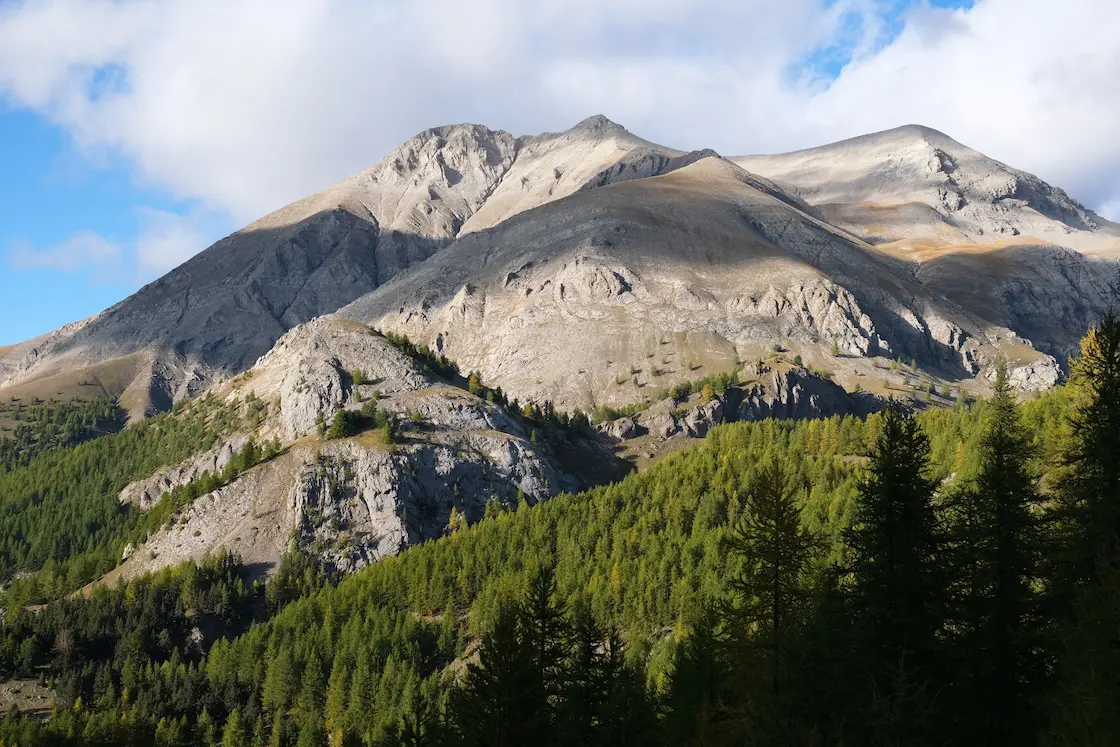
Distance: 13.6 km (loop via the lake). Duration: 6h45. Elevation gain: +1,011 m. Difficulty: Difficult. Start/Finish: Parking du Laus.
From the car park, take the main trail towards the lake but branch left after 15 minutes onto the path signed for the Col de la Petite Cayolle. Cross the Plateau de Méouilles — a beautiful, remote grassy basin popular with bivouackers — then bear left again when the path splits. The vegetation thins rapidly as you climb into the mineral landscape of the Pelat’s southern combe. The final section follows wide switchbacks up a rocky slope to the summit ridge, where the last 120 metres of ascent are steep and airy but never exposed.
The summit panorama is extraordinary: the Écrins glaciers to the north, the Ubaye valley, the jagged peaks of the Mercantour in every direction, the Lac d’Allos directly below — and on exceptionally clear days, the mountains of Corsica on the southern horizon.
Descend via the same route, or take the variant that drops to the Lac d’Allos and returns to the car park along the main trail. Start early — afternoon thunderstorms are common in summer above 2,500 m, and you don’t want to be on an exposed ridge when they arrive.
Book a Lac d’Allos Hiking Trip
Explore the wild heart of the Southern French Alps on foot with expertly guided day hikes and multi-day trekking adventures in Mercantour National Park. From high-alpine valleys and remote mountain passes to ancient pathways leading to the legendary Vallée des Merveilles, these guided trips are designed for travellers who want to go deeper, further, and safely off the beaten track.
Hiking with a local guide unlocks hidden routes, deeper insight into the park’s landscapes and wildlife, and access to areas that are difficult to navigate independently — all while letting you focus on the experience rather than the logistics.
Guided Hiking Trips
Explore the Mercantour National Park, including the Lac d’Allos with a certified local mountain guide and discover one of France’s most spectacular mountain regions.
Book a guided hiking trip in the Mercantour National Park with Explore-Share and choose from a range of experiences tailored to different abilities — from scenic day hikes to immersive multi-day treks deep inside the park.
Accommodation
Here are our recommendations for places to stay near the Lac d’Allos.
At the lake, the Refuge du Lac d’Allos is one of the most beautifully located mountain refuges in the Southern Alps — right on the northern shore with a terrace overlooking the water at sunset. Staffed from June to September with 40 beds and a restaurant serving regional cooking (the blueberry tart is legendary). No mobile signal, no internet, no water refills. An unmanned shelter room stays open year-round. Tel: +33 (0)4 92 83 00 24.
In Allos village, the Hôtel Plein Soleil is a welcoming 3-star hotel in the centre of the village with a restaurant, terrace and mountain views — a solid base for a few days of hiking, with the Parking du Laus just 11 km up the D226. Les Gentianes is another good option, with a restaurant, bar and terrace, and a warm family-friendly atmosphere ideal for combining the lake hike with other activities in the Haut-Verdon valley.
Planning Your Hike
Maps
The best map for hiking in the Lac d’Allos area is the IGN 3540ET (Haute Vallée du Verdon / Col d’Allos) at 1:25,000. It covers all the trails described in this guide, including the Sentier des Lacs circuit and the Mont Pelat ascent. Available in paper format from IGN stockists and many local bookshops, or digitally through the IGN Rando app.
The trails are well-waymarked with GR (red/white) and PR (yellow) blazes. The main lake trail also has numbered interpretive panels. For the extended hikes — particularly the Sentier des Lacs and Mont Pelat — carrying a paper map is strongly recommended as a backup, even if you’re using GPS.
Getting There & Parking
The Lac d’Allos is accessed from the village of Allos via the D226, a narrow mountain road that climbs 11 km to the trailhead. Three parking areas serve the lake, each progressively closer:
Parking de la Chaup — The lowest car park. The only option for campervans and vehicles over 2.10 m in height. Free. Adds significant walking time.
Parking de la Cluite (1,800 m) — Free overflow car park. From here, allow 5 hours return to the lake (12 km round trip, +550 m elevation gain). This is the fallback if the Parking du Laus is full.
Parking du Laus (2,108 m) — The closest car park to the lake and the trailhead for all routes described in this guide. During high season (late June weekends, July–August daily, early September weekends), access is regulated between 7 am and 5 pm and costs €12 per car and €6 for motorbikes. The car park holds roughly 120 vehicles. Outside regulated hours, access is free.
Tip: Reserve your parking space in advance at valdallos.com – especially at weekends and in August. Arrive before 7 am if you haven’t reserved, or you may be turned back to the Parking de la Cluite. Cyclists can access the Parking du Laus for free and there’s dedicated place to lock your bike.
Getting to Allos Without a Car
It’s possible to reach Allos by public transport, though services are limited and seasonal. Plan carefully.
ZOU! regional buses connect Allos to Digne-les-Bains and Nice via the Haut-Verdon valley. In summer, a daily service runs between Nice and Allos (around 3h30), with stops at Digne-les-Bains and Thorame. Check routes and timetables at zou.maregionsud.fr.
From Digne-les-Bains: The ZOU! bus follows the N202 and D908 through the Haut-Verdon valley to Allos (around 1h30). Digne-les-Bains is served by the Chemins de Fer de Provence railway (the Train des Pignes) from Nice, making a Nice–Digne–Allos connection possible in a single day.
Free summer shuttle: During July and August, a free navette operates within the Val d’Allos, connecting the village with key activity areas. Check with the Val d’Allos tourist office for current schedules.
From the village to the trailhead: The 11 km road from Allos to the Parking du Laus is not served by public transport. If you’re arriving car-free, you’ll need to arrange a taxi or hitch a ride — ask your accommodation for advice. Some hotels offer a drop-off service.
What to Pack
Even the easy lake trail is a mountain hike at over 2,000 m. Bring:
- Hiking boots — the trail is rocky in places, even on the main route. Trainers won’t cut it.
- Sun protection — you’re above 2,200 m and the UV is intense.
- Windproof layer and warm fleece — temperatures can drop sharply, especially at the Pas du Lausson or on Mont Pelat.
- Plenty of water — there are no refill points on the trail or at the refuge.
- Binoculars — for marmots, chamois and bouquetins on the higher trails.
- Walking poles — useful for the Sentier des Lacs and Mont Pelat descents.
For the extended hikes, add a headtorch (just in case) and energy food.
Mercantour National Park Rules
The Lac d’Allos lies in the core zone of the Mercantour National Park. The regulations are strict and taken seriously:
- Dogs are forbidden — even on a leash. No exceptions.
- No swimming in the lake.
- No camping — bivouacking is permitted between 7 pm and 9 am only, at least one hour’s walk from the park boundary. No fires; bring a stove.
- No flower picking, no drones, no loud music.
- Stay on marked trails — the alpine environment is fragile and slow to recover.
- No litter — carry everything out.
Sheepdogs (patous) guard flocks in the surrounding alpine pastures. If you encounter one, stop, give the flock a wide berth, and wait for the dog to identify you before moving on.
Frequently Asked Questions
Yes — from the Parking du Laus, the main trail to the lake takes about 45 minutes and is manageable for children who are comfortable walking on uneven ground. The elevation gain is modest (+197 m) and the trail is well-maintained. Pushchairs are not practical — use a baby carrier instead. A joëlette (off-road wheelchair) is available free of charge at the Mercantour park information point on the Parking du Laus.
No. Swimming, paddling and bathing are prohibited to protect the lake’s fragile ecosystem. The water is also extremely cold — fed almost entirely by snowmelt.
No. Dogs and all domestic animals are strictly forbidden within the core zone of the Mercantour National Park, even on a leash or carried. This is to protect the park’s wildlife — chamois, ibex and marmots are easily disturbed.
Yes, but only under strict conditions. Bivouacking is permitted between 7 pm and 9 am, and only outside the core zone boundary (roughly one hour’s walk from the lake). No fires — bring a lightweight stove. Leave no trace.
Reserve online at <a href=”https://www.valdallos.com/parking-du-laus.html” target=”_blank” rel=”noreferrer noopener”>valdallos.com</a>. Around 40 of the 120 spaces can be reserved in advance. The fee is €12 per car (€6 for motorbikes). Booking is recommended for weekends and throughout July–August.
June and September. June brings wildflowers, snowmelt waterfalls and quieter trails. September offers golden larch forests, still-warm days, and mirror-calm water for reflections. July and August are warmest but very busy.
You can cycle on the D226 to the Parking du Laus for free — bike racks are available. From there, the trail to the lake must be done on foot. Mountain bikes and e-bikes are not permitted on the hiking trails within the national park.
Park at the Parking de la Cluite (free) and walk from there. This adds roughly 2h30 of extra walking time (round trip). Alternatively, arrive before 7 am — before regulated hours, access to the Parking du Laus is free and unrestricted.
Please leave a comment below if you need specific advice for your hiking trip to Lac d’Allos, or if you have any recommendations to help us improve this page. Bonnes vacances!