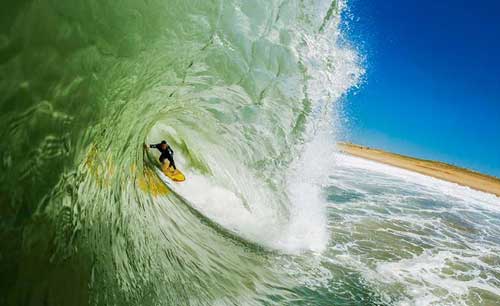
The Pyrénées stretch 450 km as the crow flies from the Atlantic at Hendaye to the Mediterranean at Banyuls-sur-Mer. But, the GR10, which traces every valley and ridge along the way, covers closer to 1,100 km. That gap between the straight line and the reality tells you everything you need to know about what hiking in the Pyrenees means: wild, unhurried, and at a pace set entirely by the ups and downs of the mountains.
TRAILS | BOOK A GUIDE | ACCOMMODATION | PRACTICAL INFO | GEAR GUIDE
France’s other great hiking range lives partly in the shadow of the Alps, which is a gift to anyone who walks here. The infrastructure is more modest, the crowds thinner, the sense of remoteness more persistent. What the Pyrénées offer instead is a different kind of grandeur — an unbroken chain with a single dramatic spine, glacially carved cirques of a scale that stops you mid-step, and a coast-to-coast walking narrative that has no real equivalent in Europe.
There’s a route for every kind of hiker. The GR10 is the flagship: a fully waymarked trail with gîtes and refuges at manageable intervals for most of its length. The HRP (Haute Route Pyrénéenne) follows the watershed ridge itself — technically harder, largely unmarked, but for experienced mountain walkers the most rewarding traverse on the chain. Shorter options open the mountains to hikers with less than six weeks to spare. For instance, the GR108 through the Vallée d’Ossau puts you face-to-face with the Pic du Midi d’Ossau on a compact 3–5 day route. And, the Cauterets section of the GR10 covers the highest and most dramatic stages of the entire trail in under a week, whilst the GR107 from Foix into Catalonia threads Cathar history through genuine high mountain terrain.
Pyrenees Gear Guide
Map of Hiking Routes in the Pyrénées
Explore the best hiking routes in the Pyrénées on the interactive map below to plan your trip.
The Best Hiking Routes in the French Pyrénées
The routes below are organised loosely west to east along the chain, from the Atlantic foothills of the Pays Basque to the Ariège and the approaches to Catalonia. Each covers very different terrain and demands a different level of experience — read the route descriptions carefully before committing to anything in the central or eastern Pyrénées, where the mountains are bigger, the waymarking sparser, and the consequences of a wrong call more serious than anywhere in the Pyrénées Occidentales.
The GR10 is the thread that ties everything together. The routes below either follow it, cross it, or make sense as companion itineraries for specific sections of the main trail.
GR10 — La Grande Traversée des Pyrénées
Distance: ~1,100 km. Duration: 45–60 days full traverse; 8–18 days per section. Total elevation gain: ~55,000 m. Highest point: Hourquette d’Ossoue, 2,734 m. Difficulty: Demanding. Trailheads: Hendaye (Atlantic) → Banyuls-sur-Mer (Mediterranean). Best season: Mid-June to end of September.
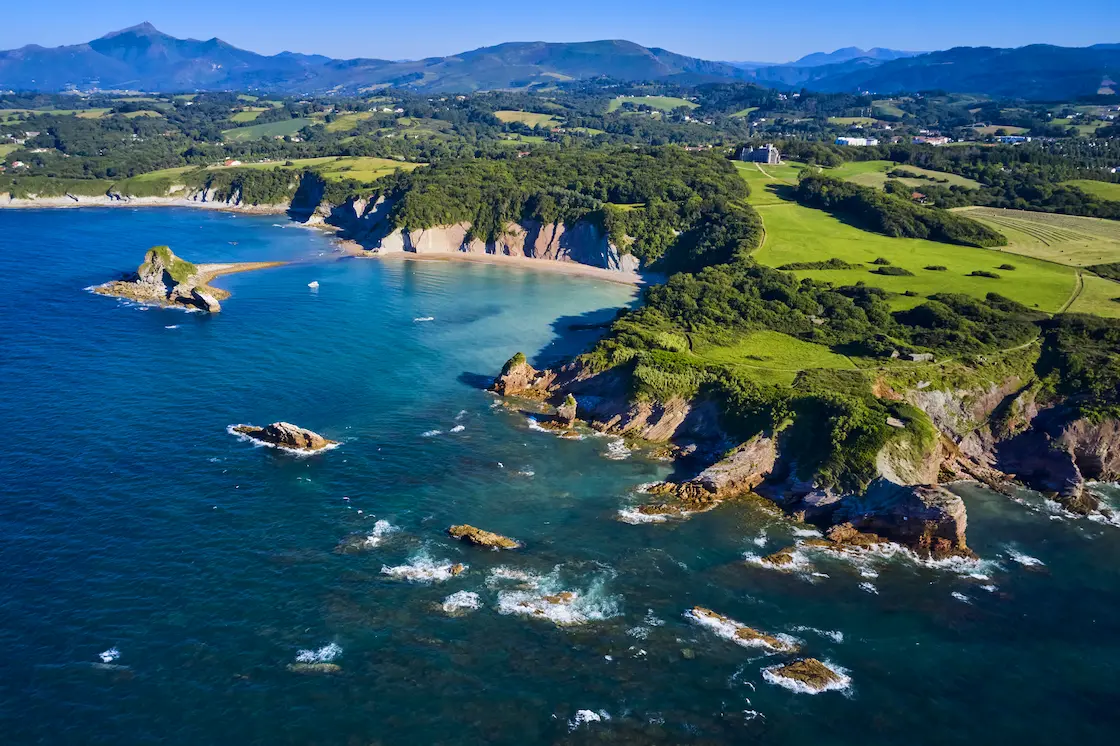
The GR10 is one of the great long-distance walks in Europe. It crosses every valley in the French Pyrénées — from the rolling green hills of the Pays Basque, with their white-walled villages and soft Atlantic light, through the dramatic granite cirques of the Hautes-Pyrénées, and on to the scrubland and vineyards of Roussillon on the Mediterranean shore. You start at sea level at Hendaye and arrive, 45 to 60 days later, at sea level again at Banyuls-sur-Mer. In between, you climb and descend some 55,000 metres spread across roughly 50 stages.
The route is well waymarked throughout in the white-and-red balise of the French GR network, and gîtes d’étape and mountain refuges appear at manageable intervals — with the exception of the Ariège section, where hikers should carry food for two or more days and plan ahead. Most people walk it in stages over several trips: the Pyrénées Occidentales (10–16 days), Centrales (8–12), Ariégeoises (12–18) and Orientales (8–12) each work well as independent itineraries with reasonable public transport connections. The highest point on the entire route is the Hourquette d’Ossoue at 2,734 m, typically snow-covered until around mid-June.
GR10 — The Cauterets Section
Distance: ~80 km (Arrens-Marsous to Bagnères-de-Luchon). Duration: 5–7 days. Highest point: Hourquette d’Ossoue, 2,734 m. Difficulty: Demanding. Best season: Late June to September.
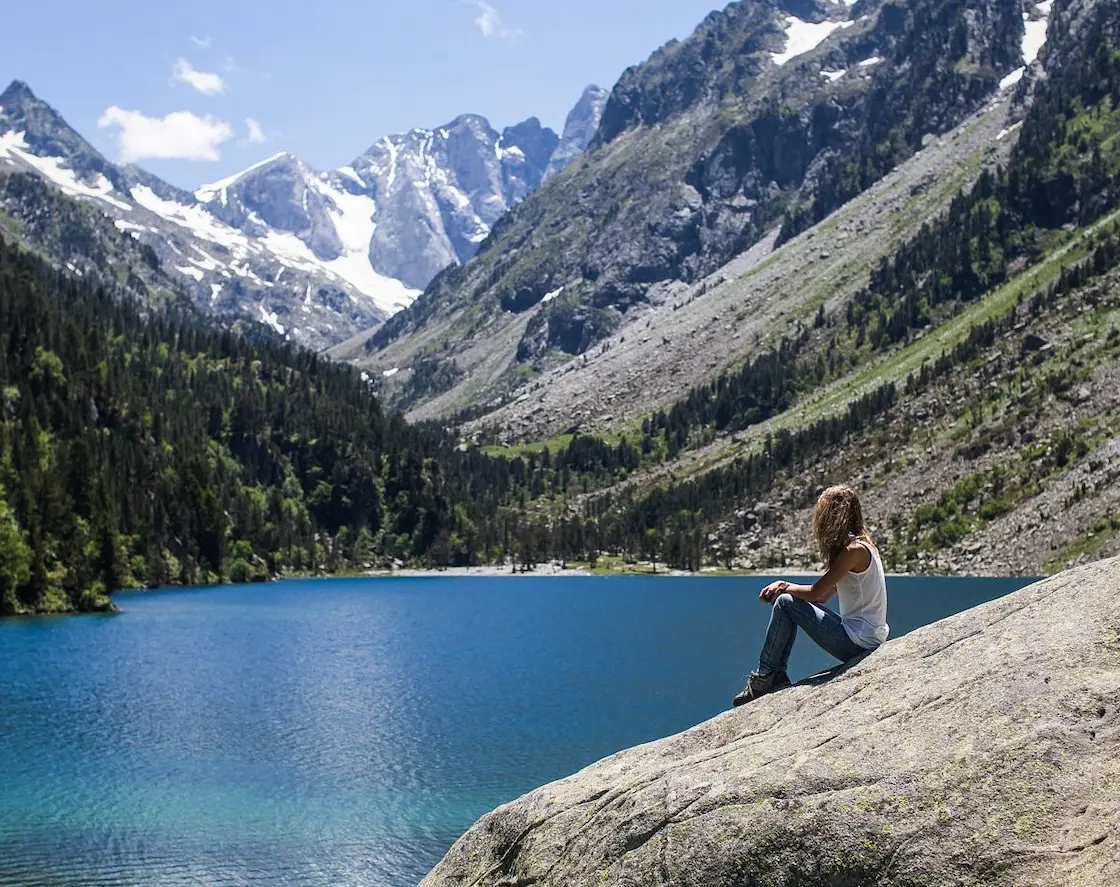
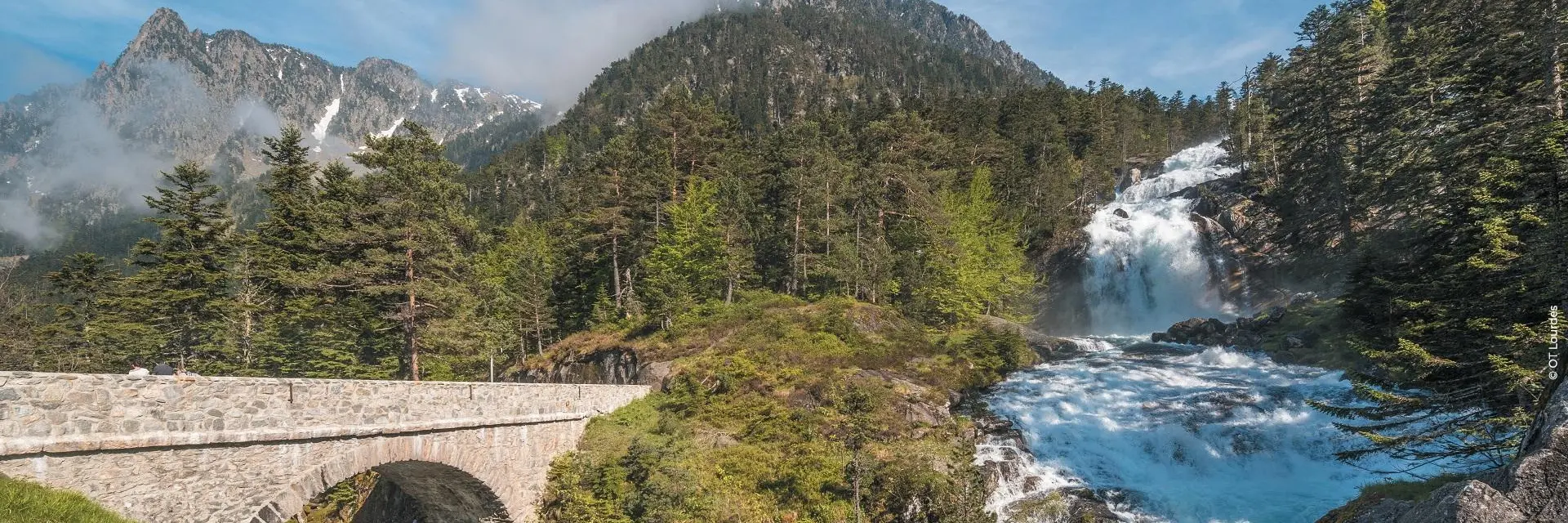
If you have one week and want the very best the Pyrénées can offer, this is the section to walk. From Cauterets — a belle époque spa town accessible by bus directly from Lourdes — the trail climbs through the waterfalls of Pont d’Espagne and reaches the Lac de Gaube before ascending to the Refuge des Oulettes de Gaube at 2,151 m, sitting directly beneath the north face of the Vignemale (3,298 m), the highest point on the French–Spanish border in the Pyrénées. The crossing of the Hourquette d’Ossoue at 2,734 m the following day is the highest point on the entire GR10.
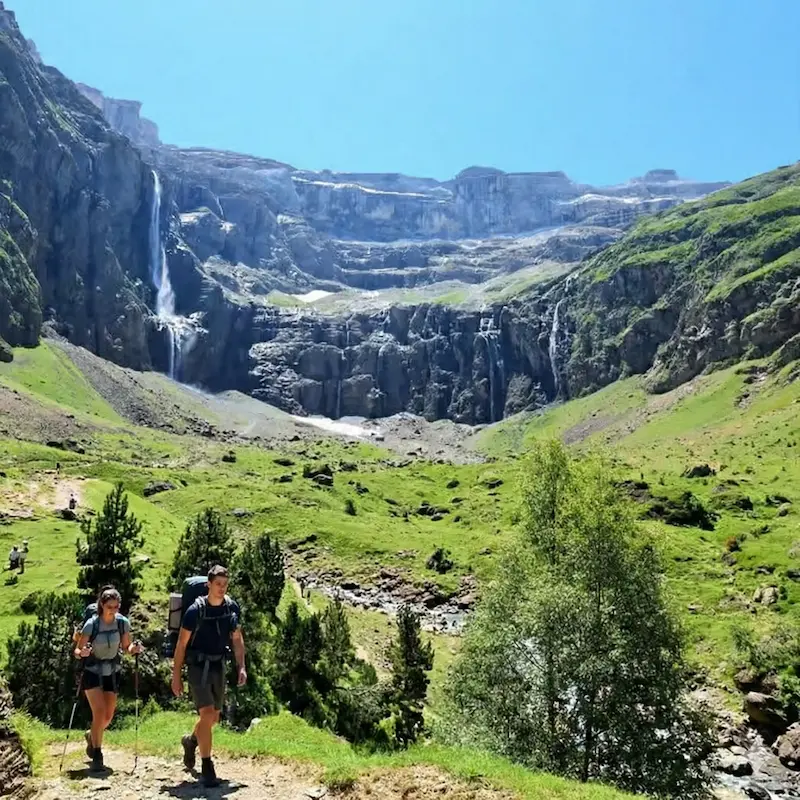
From there, the route passes through the Hautes-Pyrénées’ most celebrated landscapes: the cirque de Gavarnie, part of the Pyrénées-Mont Perdu UNESCO World Heritage Site, and the lakes and wild moorland of the Réserve Naturelle de Néouvielle, before dropping to Bagnères-de-Luchon. If you’re combining this with a mountain biking trip to Cauterets or Luchon, this is the natural hiking companion for the same base.
Tour du Néouvielle — 3-Day Circuit from Barèges
Distance: 36 km. Duration: 3 days. Total elevation gain: +2,387 m. Difficulty: Demanding. Start/finish: Tournaboup, Barèges. Refuges: Aygues-Cluses (2,135 m), Bastan (2,248 m), Orédon (1,850 m). Best season: Late June to end of September.
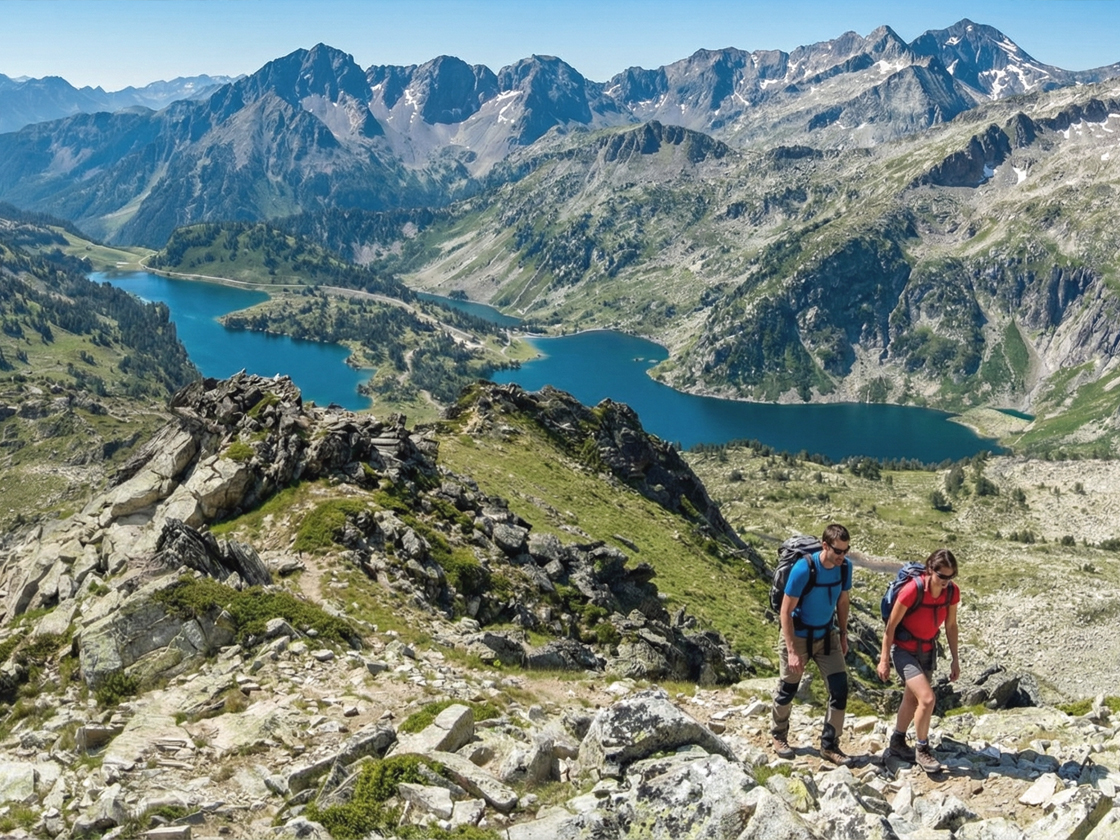
The Néouvielle massif is unlike anything else in the Pyrénées – a granite kingdom of over 70 mountain lakes set among ancient forests of pin à crochets, the distinctive hooked pines that grow higher here than almost anywhere else in Europe, reaching altitudes above 2,600 m. Protected as a nature reserve since 1936 – decades before the Parc National des Pyrénées existed – the massif benefits from a south-facing aspect and an unusually warm microclimate that gives the vegetation an almost Mediterranean character despite the altitude.
This 3-day hiking circuit from Barèges is perfect for getting a full flavour of the Reserve. Expect a demanding first day of 13.7 km and 1,280 m of climbing through high pastures to the Refuge de Bastan at 2,248 m. A shorter second stage through the heart of the lake district to the Refuge d’Orédon at 1,850 m. And, a final day crossing the high plateaux back to the Barèges valley with views across the entire massif.
Note that the Col de Barèges section on Day 1 is unmarked (although there are cairns along the route), long and steep, so you’ll need to allow plenty of time. Also be aware that the Réserve Naturelle du Néouvielle has some strict rules. For instance, dogs are prohibited, swimming is banned in all lakes, and bivouacking is only permitted in two designated zones (Lac d’Orédon and Lac d’Aubert, 7pm–9am).
It’s a good idea to check conditions with the Barèges tourist office before setting out, particularly regarding late snow on the higher cols. The trailhead at the Parking du Tournaboup is 3 km above Barèges on the Route du Tourmalet (D918) towards the Col du Tourmalet. Bus LiO line 965 runs from Lourdes to Barèges year-round, with a summer shuttle connecting the village to the Parking du Tournaboup during school holidays and weekends in June and September.
HRP — Haute Route Pyrénéenne
Distance: ~800 km (Cicerone guide); ~500 km (FFRP direct line). Duration: 41–45 days; 25 days for strong hikers. Total elevation gain: ~42,000 m. Difficulty: High mountain / expert. Waymarking: Minimal — navigation skills essential. Trailheads: Hendaye (Atlantic) → Banyuls-sur-Mer (Mediterranean). Best season: Late June to mid-September.
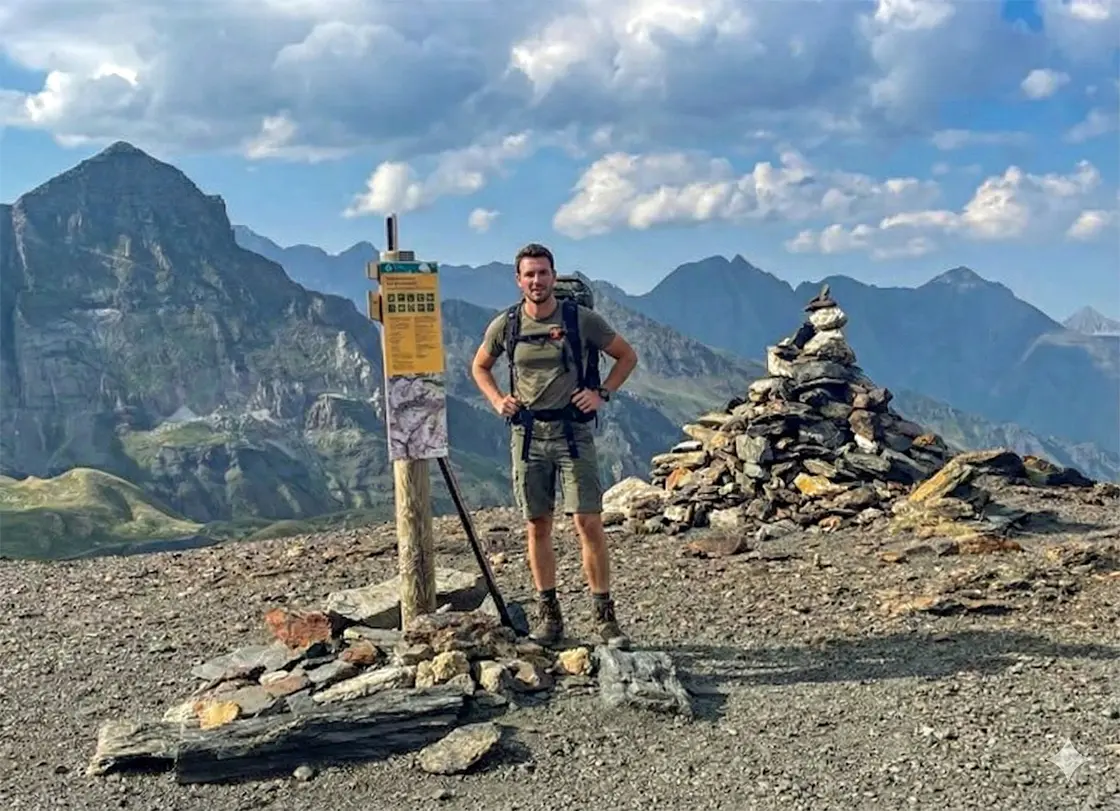
The HRP is not a marked trail in the conventional sense — it’s an itinerary, first described by Georges Véron in 1968, that follows the watershed between France and Spain as closely as the terrain allows. Where the GR10 stays on the French side and descends to the valleys for accommodation and resupply, the HRP holds the high ground throughout, regularly crossing the border into Spain and Andorra, and traversing cols above 2,500 m on most stages. In the central section, genuinely alpine terrain requires crampons and ice axe before mid-June, and a tent is strongly recommended through much of the Ariège where refuges can be a full day’s walk apart.
The reward for that commitment is enormous. You’re rarely near a road, rarely in a village, and often completely alone in some of the most extraordinary mountain country in western Europe — high lakes scattered across exposed plateaux, granite walls rising on three sides, the silence that only real altitude brings. Think of the GR10 as the well-supported main route and the HRP as its serious, high-altitude alternative for experienced mountain walkers who want to go higher and harder.
GR108 — Voie d’Ossau
Distance: ~55 km. Duration: 3–5 days. Difficulty: Moderate to demanding. Key highlight: Lacs d’Ayous (1,947 m) with view of Pic du Midi d’Ossau (2,884 m). Start/finish: Sainte-Colome → Col des Moines. Best season: June to October.
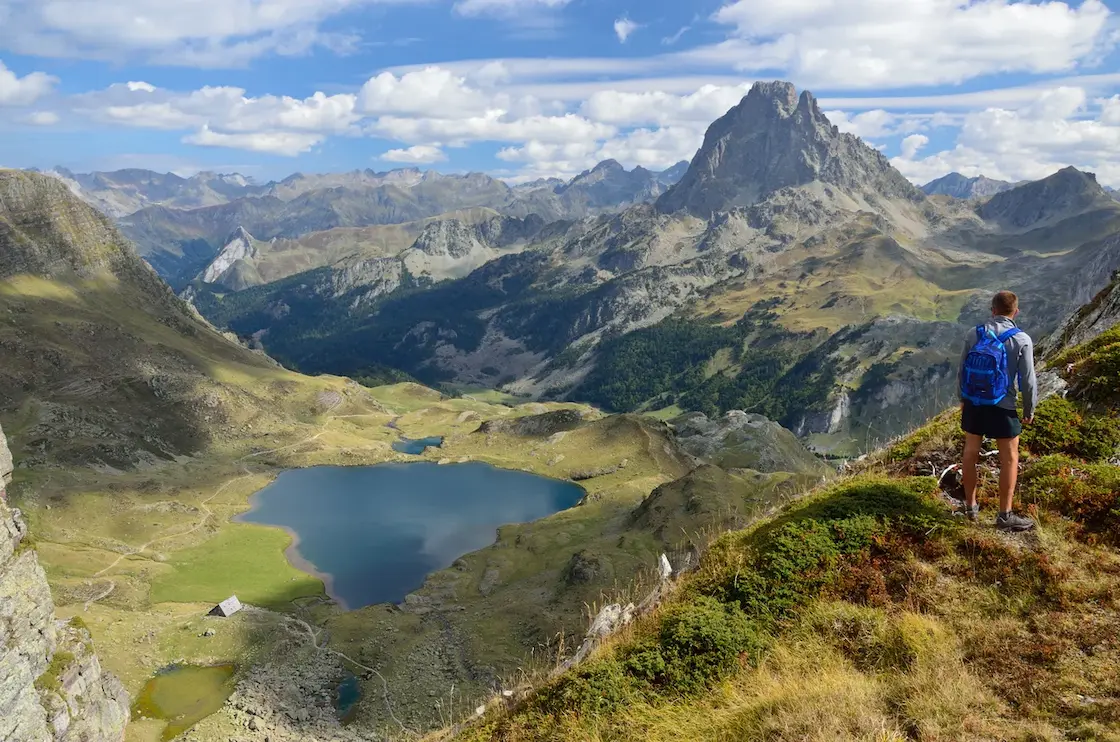
The GR108 is the route for hikers who can’t give the Pyrénées six weeks but want more than a day walk. Starting from Sainte-Colome in the Béarn, it traces the Vallée d’Ossau southward through Laruns and into the Parc National des Pyrénées, climbing steadily to one of the great viewpoints in the entire range: the Lacs d’Ayous at 1,947 m, where the Pic du Midi d’Ossau (2,884 m) — the great volcanic plug that serves as the symbol of the Béarn — fills the southern skyline above a series of glacier-carved lakes. It’s the kind of view that makes you sit down and stare for ten minutes longer than you planned.
The route continues to link with the GR10 near Gabas, or follows variants to the Spanish border at the Col des Moines or Col du Somport. The stages are well-paced, the waymarking clear, and the mountain refuge and valley gîte network solid throughout. It’s an ideal first Pyrenean trek for hikers who want real mountain terrain without the logistics of a multi-week traverse.
GR107 — Chemin des Bonshommes
Distance: ~120 km (Foix to Berga, Spain); French section ~70 km. Duration: 5–7 days to the Spanish border. Highest point: ~2,500 m at the Pyrenean watershed crossing. Difficulty: Moderate to demanding. Start: Foix, Ariège. Best season: June to October. Note: Passport required — route crosses into Spain.
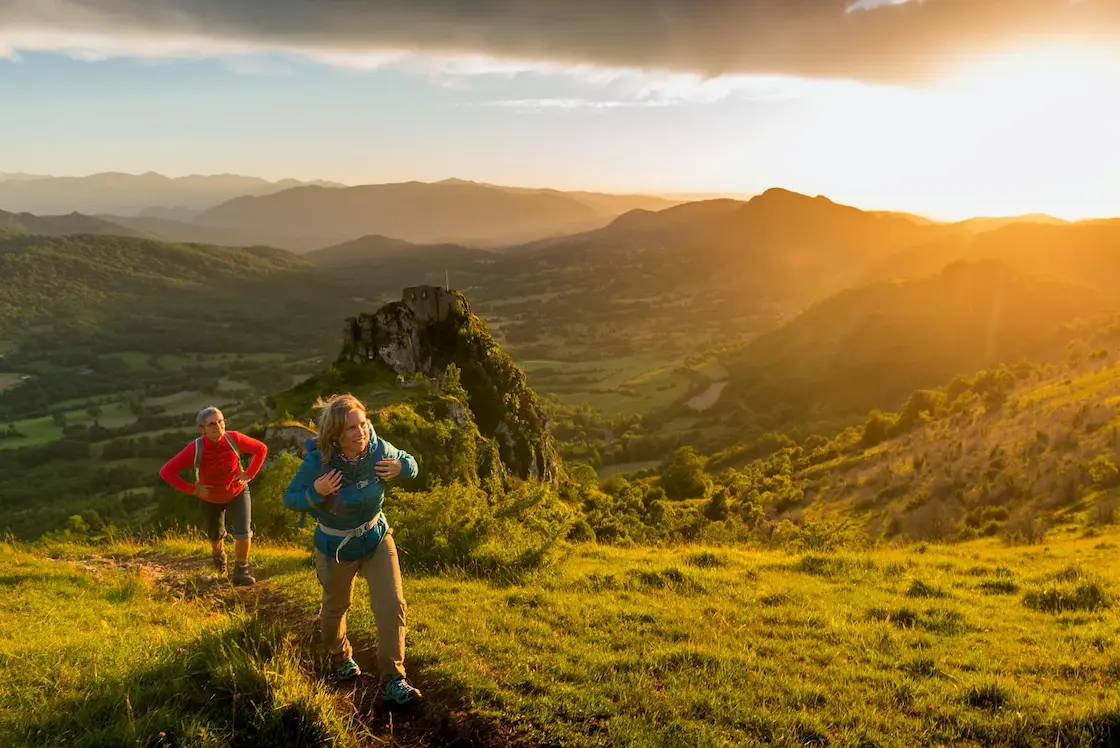
The GR107 follows the escape route of the last Cathars — the bonshommes who fled religious persecution across the Pyrénées into Catalonia in the 13th century. It begins in Foix, below the stark medieval castle that has overlooked the Ariège valley since the 10th century, and climbs through the remote forests and high valleys of the Couserans before crossing the main Pyrenean ridge at around 2,500 m into Spain. Most walkers treat the French section as their objective and finish at or near the border, though the full route continues to Berga in Catalonia.
The lower Ariège stages are genuinely Pyrenean in character — quiet paths through pastoral hamlets, the sense of a landscape that hasn’t changed much in centuries — before the terrain becomes harder and more alpine in the upper section. The combination of Cathar history and serious mountain walking makes the GR107 unusual among Pyrenean trails, and popular with hikers who want cultural depth alongside the physical challenge. You’ll need a passport to complete the route as marked.
GR101 — Bigorre Section
Distance: ~250 km (Nogaro, Gers to Col de Saucède). Duration: 10–15 days. Difficulty: Easy to moderate. Start/finish: Nogaro (Gers) → Col de Saucède (1,525 m). Best season: April to October.
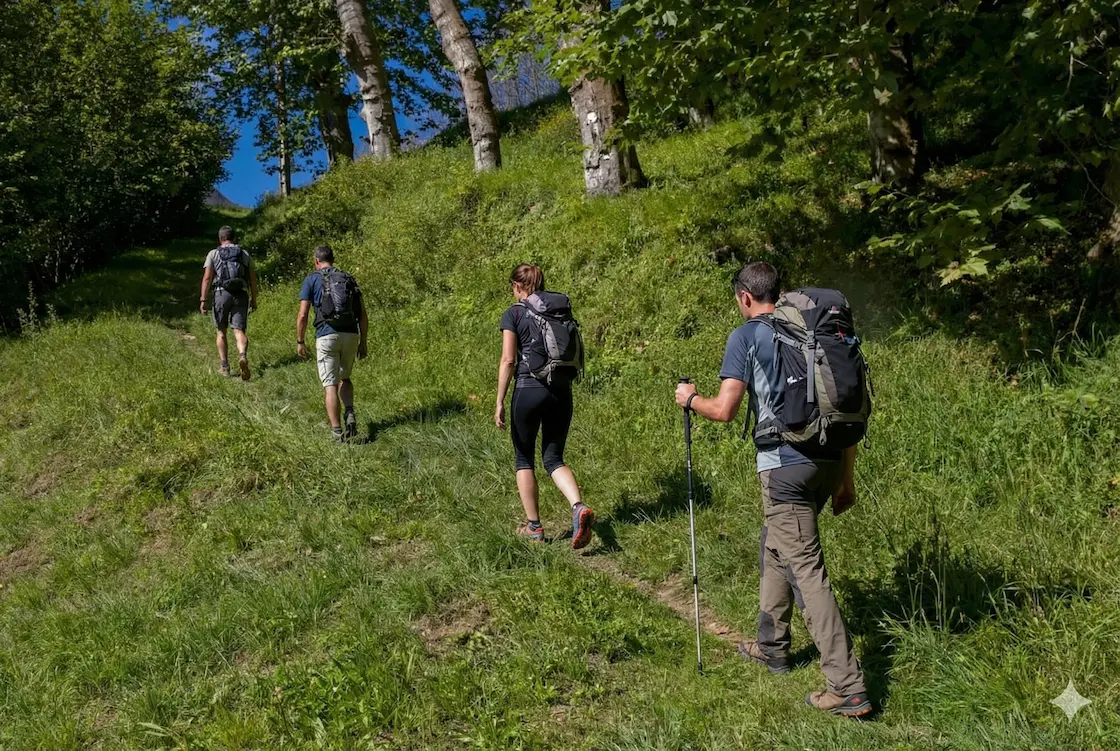
The GR101 offers the most accessible entry point of any route on this page. Starting from the flat Gascon plains at Nogaro, it crosses the rolling foothills of Bigorre — farmland and riverside paths at first, the Pyrénées gradually building on the southern horizon — before reaching the Col de Saucède at 1,525 m, where it meets the GR10. The route passes through or near Lourdes and crosses several Camino de Compostelle pilgrimage routes, giving it a layered cultural quality that the pure mountain trails lack.
The accommodation network of gîtes and chambres d’hôte is well developed throughout the foothills, and the relatively modest daily elevation gains make it accessible to a wider range of walkers. Pair this with a stay in the Saint-Lary area if you’re building a longer Pyrénées trip that mixes activities.
Book a Hiking Guide in the Pyrénées
Our hiking guide partners offer day and multi-day guided treks in the Pyrénées — from the central GR10 stages and the Cauterets–Gavarnie corridor to tailored itineraries anywhere in the Parc National des Pyrénées. A qualified local guide will know the current conditions, the shortcuts, and the off-trail viewpoints you won’t find in any guidebook. If you’re tackling the HRP or any route in early season when snow conditions are unpredictable, this is not a luxury — it’s the sensible call.
Pont d’Espagne Day Trip
From Lourdes, explore the Hautes Pyrénées with a guide who knows every trail and viewpoint. Visit the spectacular Cirque de Gavarnie and the waterfalls of Pont d’Espagne — two of the region’s most iconic landscapes — without the hassle of planning or transport.
Book your guided Pyrenees day trip in partnership with GetYourGuide and enjoy a seamless, unforgettable mountain adventure.
When to Hike in the Pyrénées
The main season runs from mid-June to the end of September. The window is slightly more compressed than in the Alps — the Pyrénées sit directly in the path of Atlantic weather systems, and afternoon storms can arrive with less warning and more intensity than anywhere else in France.
June opens the season cautiously. Wildflowers are extraordinary and the trails are nearly empty, but the high passes carry snow well into the month. The Hourquette d’Arre on the GR10 (2,465 m) is typically snow-covered until around 14 June; the HRP requires crampons and ice axe across the central section before mid-June. Don’t begin the high-altitude sections earlier unless you’re equipped for it and comfortable with snow travel.
July and August are peak season. The refuges and gîtes on the popular Cauterets–Gavarnie corridor fill early — book well in advance, particularly between 14 July and 15 August. Afternoon thunderstorms are a daily feature on many stretches; the standard rule is to be off exposed ridges and high passes before 2pm. Temperatures can drop 15°C in minutes when a storm builds. This is serious mountain weather, not just bad luck.
September is many experienced Pyrenean walkers’ favourite month. The August crowds have gone, the weather is generally stable, the autumn colours are starting in the lower valleys, and the refuges have space. Plan your trip around September whenever you can.
October works for the lower routes and the Pays Basque section of the GR10, but high-altitude passes above 2,000 m face early snowfall and shortening days. Plan carefully if you’re hiking late in the season.
Accommodation
The gîte d’étape network along the GR10 is well established on most sections — for the Pays Basque, Hautes-Pyrénées and Pyrénées Orientales stages, you’ll typically find a bed at the end of each stage without needing a tent. The exception is the Ariège section, which covers more remote country with fewer villages, where two-day food carries are sometimes necessary. For the HRP, carry a tent throughout.
Mountain refuges within the Parc National des Pyrénées charge around €20–25 per night for a dortoir bunk, with half board adding roughly €25–30. Book ahead for July and August — the Refuge des Oulettes de Gaube and the Refuge Baysselance in the Vignemale area fill days in advance at peak season.
Valley towns make excellent bases for section hiking: Cauterets (bus-connected to Lourdes, excellent gîtes and hotels, good services), Bagnères-de-Luchon (main town of the Haute-Garonne Pyrénées, thermal spa, reasonable transport links), Saint-Jean-Pied-de-Port (historic Camino gateway, outstanding accommodation network, TGV-accessible via Bayonne) and Foix (Ariège capital, good range of accommodation, direct TER from Toulouse in around 1.5 hours).
Planning Your Hike
Maps
The IGN 1:25,000 TOP 25 series is the standard for Pyrénées hiking and covers the entire GR10 in a series of sheets listed in each FFRP topo-guide. The four official topo-guides for the GR10 — Pyrénées Occidentales (ref. 1086), Centrales (ref. 1091), Ariégeoises (ref. 1090) and Orientales (ref. 1092) — include refuge and gîte listings, variant routes, and public transport notes that don’t appear on commercial GPS tracks. They’re essential, not optional. Digital maps work well in the valleys via the IGN Géoportail app; assume you’ll lose mobile signal in any secluded valley or high pass.
Getting There & Parking
For the western trailhead at Hendaye, the TGV from Paris Montparnasse takes approximately 5 hours; Bayonne is the main regional hub for the western section. For the Cauterets central section, take the train to Lourdes or Tarbes (from Paris Montparnasse via Bordeaux), then bus. The eastern trailhead at Banyuls-sur-Mer is reached by TGV from Paris Gare de Lyon to Perpignan (around 5 hours), then regional train south.
If driving to Cauterets, the Pont d’Espagne car park at the head of the valley operates a paid navette (shuttle bus) in high season — private vehicles are banned from the upper valley road from late June to early September. Park at the Péguère car park at 1,520 m and take the shuttle.
Getting There Without a Car
The GR10 is unusually well-served by public transport at most of its main entry and exit points:
- Cauterets: Bus LiO line 965 from Lourdes SNCF (direct, approximately 1 hour)
- Luz-Saint-Sauveur / Gavarnie: Bus LiO line 965 from Lourdes
- Arrens-Marsous: Transport à la demande — call 0 800 65 65 00 (book by 4pm the day before; flat fare €2; does not run on public holidays)
- Bagnères-de-Luchon: TER train from Toulouse via Montréjeau
- Foix: TER train from Toulouse (approximately 1.5 hours)
What to Pack
For gîte-to-gîte walking on the GR10 or GR108, a pack weight of 8–10 kg is realistic — a sleeping bag liner is sufficient in most staffed refuges, and you won’t need a tent. For the HRP or any tent-based route, expect 12–15 kg.
Essentials for any route above 2,000 m:
- Waterproof jacket and over-trousers (afternoon storms build fast)
- Warm mid-layer (temperatures at refuge altitude can approach zero even in July)
- Headtorch, first aid kit, trekking poles
- IGN 1:25,000 map and compass
- Minimum 2 litres of water per person (water sources on high routes can be scarce)
- Before mid-June on the high GR10 sections, and throughout the season on the HRP: crampons and ice axe
Dogs are prohibited in the Parc National des Pyrénées and the Réserve Naturelle du Néouvielle, even on a lead. This covers a significant stretch of the central GR10.
Park Rules — Parc National des Pyrénées
The national park covers the central Pyrénées from the Pays Basque border into the Haute-Garonne. Within the core zone: camping is permitted only within 1 hour of a refuge or lake, between 7pm and 9am; campfires are strictly prohibited; dogs are banned even on a lead; flowers, minerals and wildlife must not be disturbed. The Réserve Naturelle du Néouvielle — which the central GR10 passes through between Gavarnie and Luchon — has additional restrictions updated annually, including a ban on swimming in the reserve’s lakes. Check current regulations before you visit at pyrenees-national-park.fr.
Tourist Offices
- Hautes-Pyrénées: tourisme-hautes-pyrenees.com
- Pyrénées-Atlantiques (western section): tourisme64.com
- Ariège Pyrénées: ariegepyrenees.com
- Barège: valleesdegavarnie.com
Frequently Asked Questions
The GR10 covers approximately 1,100 km from Hendaye on the Atlantic coast to Banyuls-sur-Mer on the Mediterranean, and takes 45–60 days for most hikers. The majority of people complete it in stages over several trips — the four sections (Occidentales, Centrales, Ariégeoises and Orientales) take between 8 and 18 days each and connect reasonably well by public transport.
Individual sections vary significantly. The western Pays Basque stages are the most accessible — lower altitudes, good gîte infrastructure, gentle gradients — and are manageable for hikers with solid day-walking experience. The central Hautes-Pyrénées section is a different matter: sustained daily climbs, high passes above 2,500 m, and serious terrain in poor weather. Anyone planning the central stages needs previous multi-day mountain walking experience and should not attempt the high passes before mid-June.
The GR10 is a fully waymarked trail staying on the French side, descending to valleys for accommodation and resupply. The HRP (Haute Route Pyrénéenne) follows the watershed ridge between France and Spain — largely unmarked, consistently high, requiring navigation skills and often a tent. The HRP is significantly harder and more remote. Think of the GR10 as the well-supported main route and the HRP as its serious, high-altitude alternative for experienced mountain walkers.
Mid-June to the end of September is the main window. September is many hikers’ favourite month — stable weather, empty trails, no booking pressure. Avoid the high passes before mid-June due to snow risk, and plan carefully after mid-October when early snowfall is possible at altitude. July and August are popular on the central section; book accommodation well in advance.
For the GR10 and GR108, no — both routes are well marked and documented in the official FFRP topo-guides. For the HRP or any off-trail walking above 2,500 m, a qualified mountain guide (guide de haute montagne) is strongly recommended, particularly before mid-June when snow conditions are unpredictable.
Dogs are prohibited throughout the core zone of the Parc National des Pyrénées and the Réserve Naturelle du Néouvielle — even on a lead. These restrictions cover a significant portion of the central GR10 through the Hautes-Pyrénées and into the Haute-Garonne. On sections outside national park territory, dogs are permitted on a lead.
Please leave a comment below if you need specific advice about hiking in the Pyrénées — whether you’re planning the full GR10, a section walk, or your first time in the mountains. We’re happy to help with route planning, gear questions and accommodation.