Join us on

Hiking in Chamonix

Day hikes, classic routes & guided treks in the shadow of Mont Blanc

Book a Trip

The Chamonix valley offers 350 km of marked hiking trails, a lift network that can shortcut up to 1,000 m of climbing, and the most dramatically scaled mountain backdrop in western Europe — but it also sits at the base of a 4,808 m peak surrounded by active glaciers, and the weather here turns faster, and more violently, than almost anywhere else in the Alps.

Most of the best hikes in Chamonix take place on one of two flanks of the valley: the Aiguilles Rouges massif to the north — granite ridges, high lakes, and the iconic Lac Blanc — and the Mont Blanc massif to the south, where the Grand Balcon trails track parallel to the glaciers at 1,900–2,300 m. The valley floor itself offers well-maintained riverside paths, while the cable cars and the rack railway to Montenvers unlock terrain that would otherwise demand serious fitness and a full day of climbing from the valley floor.

What sets Chamonix apart from most hiking destinations is that the experience scales from very easy to genuinely serious within the same valley. You can walk from the town centre to the edge of the Mer de Glace in under three hours. The following day you can spend eight hours on the Grand Balcon Nord at 2,300 m. Both are valid — but they require very different preparation. The ten routes below cover that full range, from a family gorge walk near Servoz to the five-day Tour des Aiguilles Rouges circuit through three nature reserves. For the wider French Alps hiking network, including multi-day routes like the Tour du Mont Blanc, see our full Alpine hiking guide.

TRAILS | BOOK A GUIDE | ACCOMMODATION | HIKING GEAR | PRACTICAL INFO

Map of Hiking Routes in Chamonix

Explore the best hiking routes in the Chamonix valley on the interactive map below to plan your trip.

View the full map on Google Maps →

The Best Hikes in Chamonix

The ten routes below run from easy valley-floor walks to a demanding five-day circuit above 2,900 m. The first three require nothing more than decent footwear. From Route 4 onwards, the Chamonix lift network becomes a genuine asset — several routes only make sense with a cable car start or finish, and knowing which lifts are running (mid-June to mid-October for most) changes the planning entirely. For anything above 2,000 m, check the Office de Haute Montagne daily conditions bulletin before you leave — afternoon storms build fast, and the high cols are no place to be caught without waterproof gear.

1. Gorges de la Diosaz

Distance: 4 km return

Duration: 1h30

Elevation gain: ~150 m

Difficulty: Easy

Eight kilometres west of Chamonix, near the village of Servoz, the Gorges de la Diosaz cut a narrow limestone channel above a succession of waterfalls — the longest dropping around 40 m into a series of pools. Wooden walkways and footbridges guide the route above the torrent, making it accessible for families and hikers of any fitness level. It’s a paying attraction (~€8 adults / €5 children), which keeps the path impeccably maintained and the flow of water well-explained. The gorge opens mid-June and closes in October; visit early in the day to have the narrowest sections to yourself.
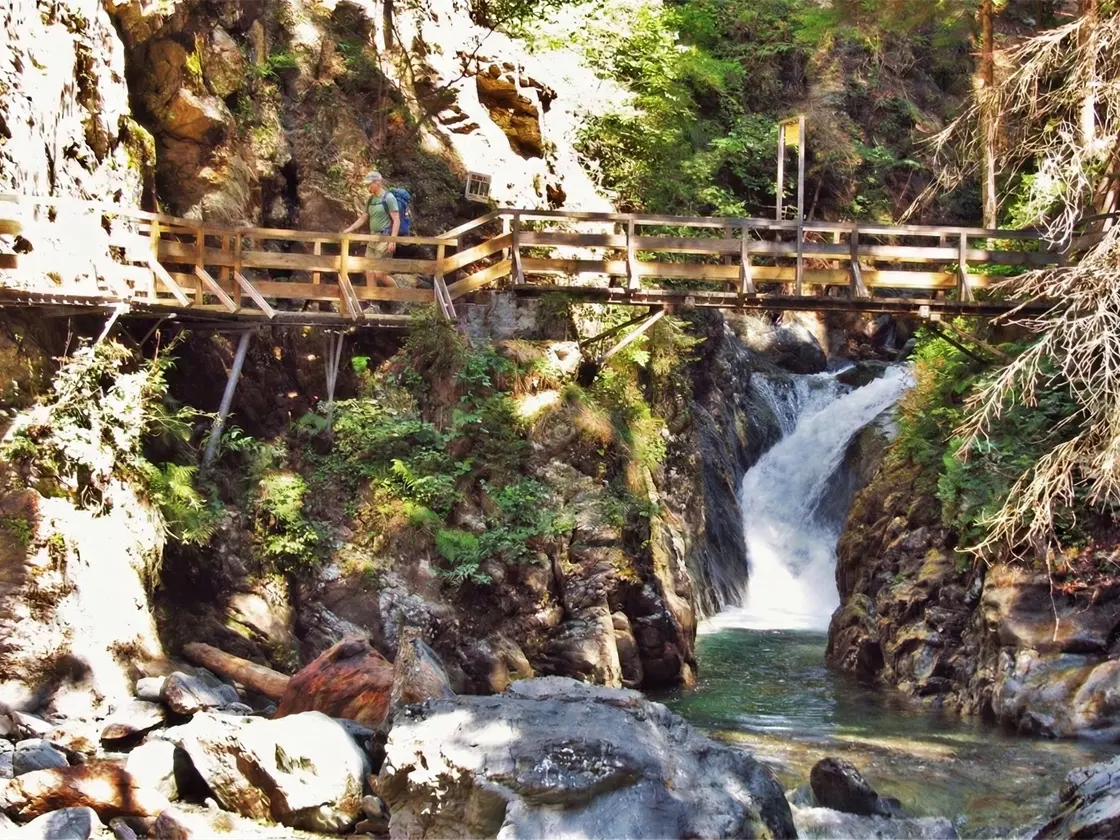
The Gorges de la Diosaz near Servoz and Chamonix
Gorges de la Diosaz near Chamonix © chamonix.com

2. Mer de Glace — Montenvers Descent

Distance: 6.6 km (one-way descent)

Duration: 2h30

Elevation: +218 m / −924 m

Difficulty: Easy–Moderate

Take the Montenvers rack railway (built 1909; ~€40 return) from Chamonix station up 870 m to the historic hotel and viewing terrace at 1,913 m, then walk back down through old-growth spruce and larch forest on a well-marked trail. The route descends ~500 steps at the glacier access point — a number that has grown dramatically as the Mer de Glace retreats, falling around 150 m lower at the access point than it stood in the 1990s. That retreat is visible and sobering, and it makes this route worth doing at least once. The descent takes about 2h30; alternatively, take the train both ways and allow an hour at the top to absorb the scale of the glacier below.
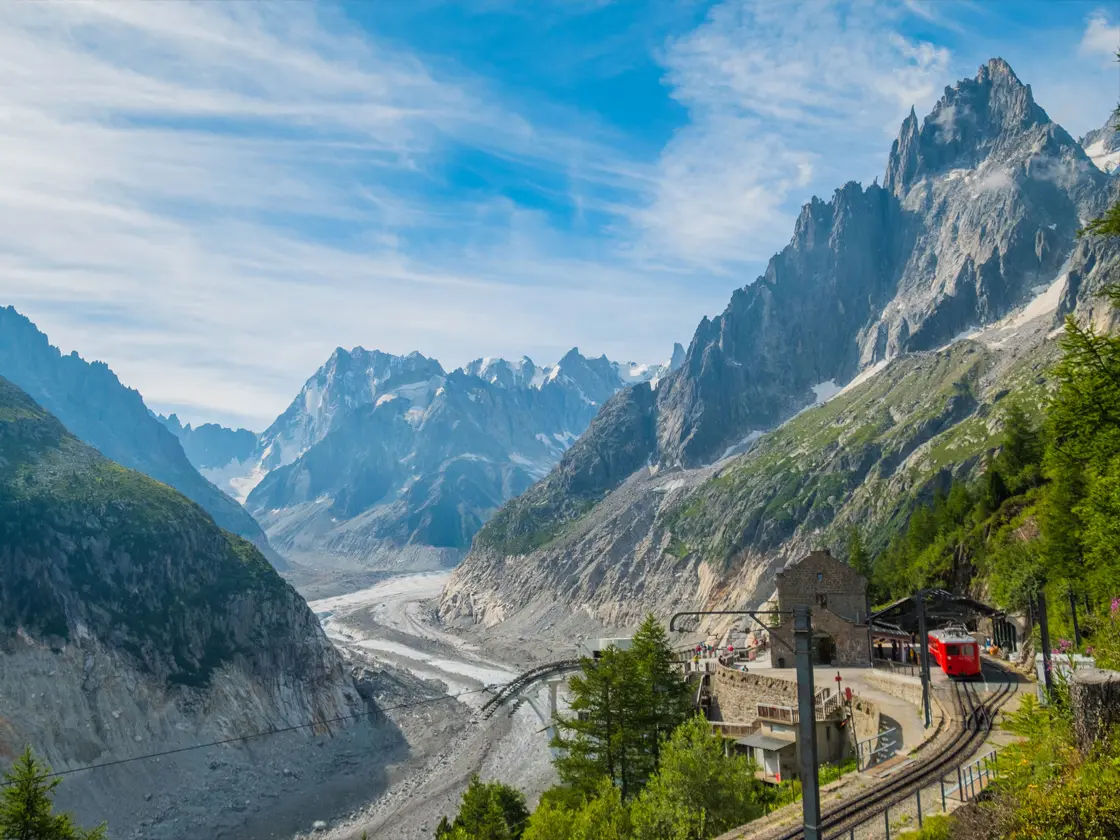
The Mer de Glace glacier seen from Montenvers, Chamonix

3. Vallon de Bérard & Cascade du Bérard

Distance: 9 km return

Duration: 3h

Elevation gain: ~450 m

Difficulty: Moderate

Starting at the Col des Montets (1,461 m) — reached by bus from Chamonix in about 20 minutes — this valley walk follows the river Bérard south through the Réserve Naturelle du Vallon de Bérard, climbing gently through open woodland before opening into the wider alpine valley. The cascade at the upper end drops around 30 m into a rocky basin and makes a natural turning point. The terrain is benign and the path well-marked throughout; it’s well-suited to families with older children. Note the reserve rules: no dogs, no camping, no picking plants. The Col des Montets trailhead is served directly by Chamonix Bus — no car needed.
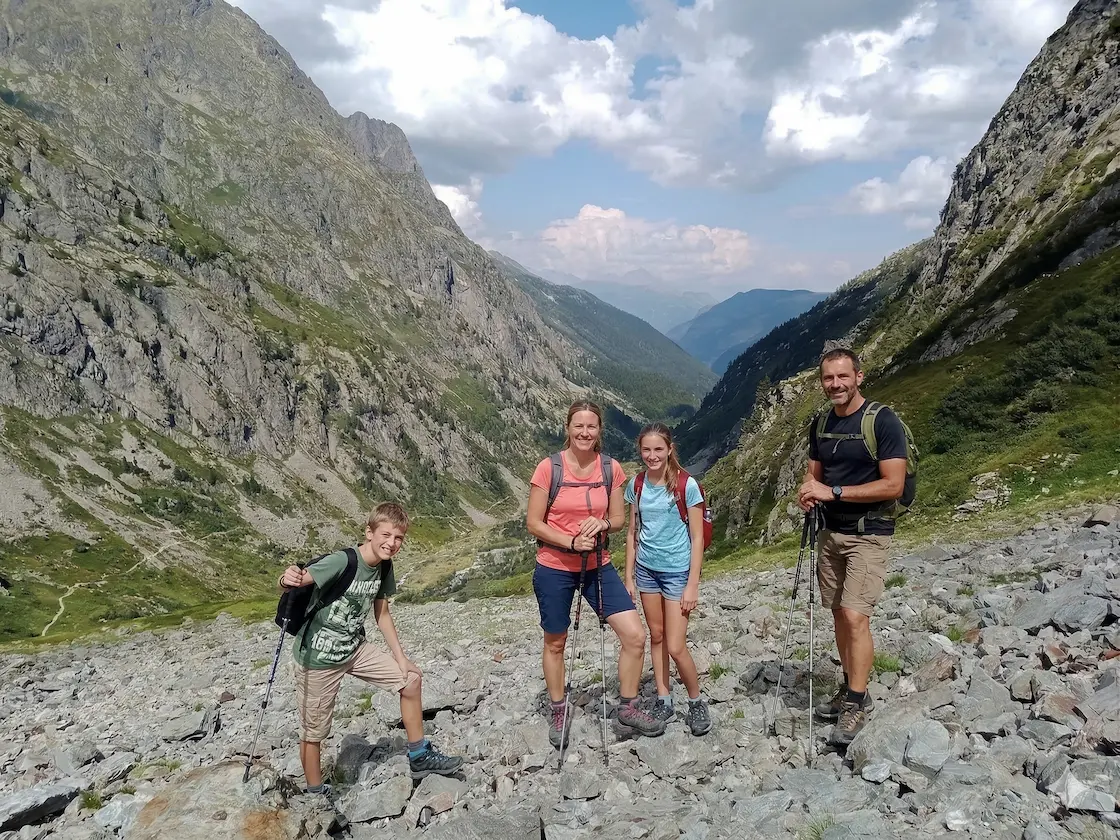
Family hiking in the Vallon de Bérard nature reserve, Chamonix
Hiking the Vallon de Bérard nature reserve, Chamonix

4. Lac Blanc via Flégère

Distance: 8.05 km return from Flégère

Duration: 4h05

Elevation gain: +615 m

Difficulty: Moderate

The most popular day hike in the Chamonix valley, and the one that earns its reputation most fully. The Flégère cable car (from Les Praz, a short bus ride from town; ~€25 return) lifts you to 1,877 m, from where the path climbs 475 m across rocky terrain — including a short section of metal ladders below the lake — to reach Lac Blanc at 2,352 m. In still conditions, the lake reflects the entire Mont Blanc massif with photographic precision. The refuge at the shore does a good lunch and is worth the longer stop. Note that a section of the approach near the top includes fixed metal ladders: fine for confident walkers but worth knowing about in advance. Book the cable car online for July–August; the queue otherwise can be long.
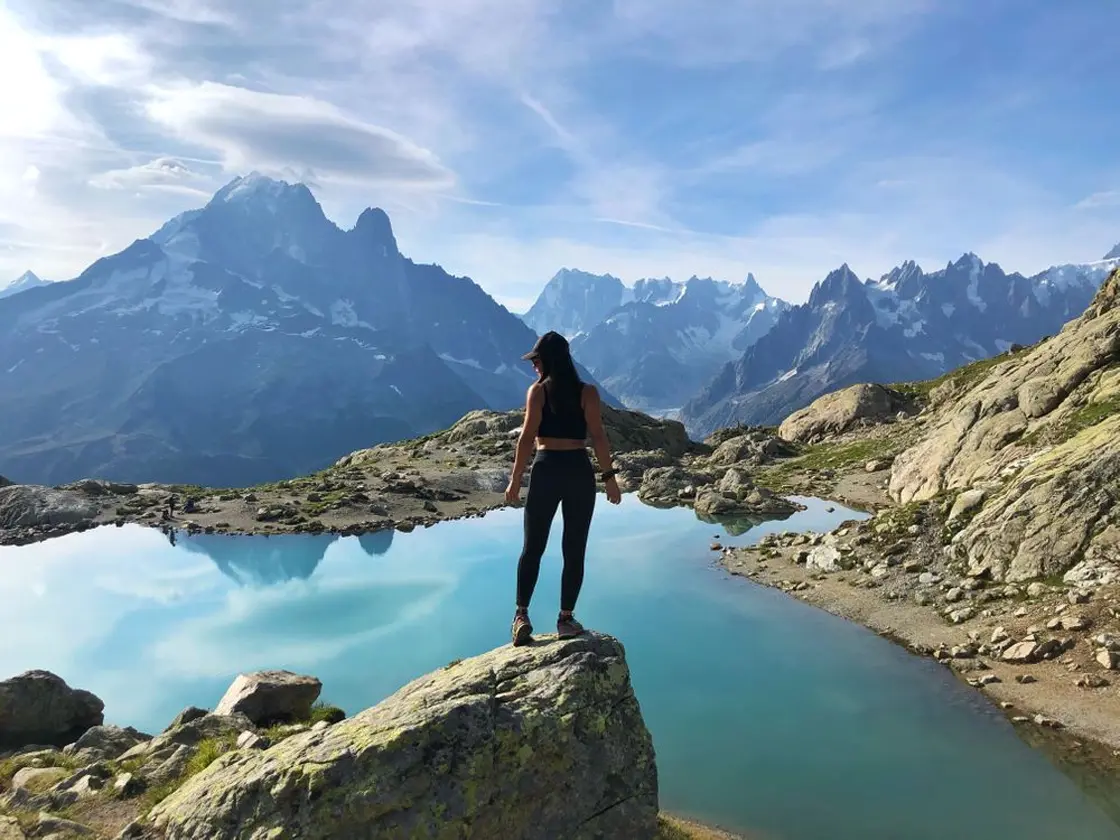
Hiking the Lac Blanc in Chamonix
Hiking the Lac Blanc in Chamonix © clairexplore.com

5. Grand Balcon Sud — Flégère to Planpraz

Distance: ~5.5 km (point-to-point)

Duration: 2h30

Elevation gain: ~345 m from lift top station

Difficulty: Moderate

The Grand Balcon Sud traverses the north flank of the Chamonix valley at around 2,000 m, with uninterrupted views south across to the Mont Blanc massif as the path contours between the Flégère and Planpraz lift stations. Walk it point-to-point from Flégère west to Planpraz — the Chamonix Aiguilles and the glaciers below fill the skyline directly ahead for the entire route. The Flégère cable car from Les Praz handles the ascent, and from the top station the path is wide, well-signed and technically forgiving, with just one short section of fixed metal steps. Descend from Planpraz on the Brévent gondola back into Chamonix town.
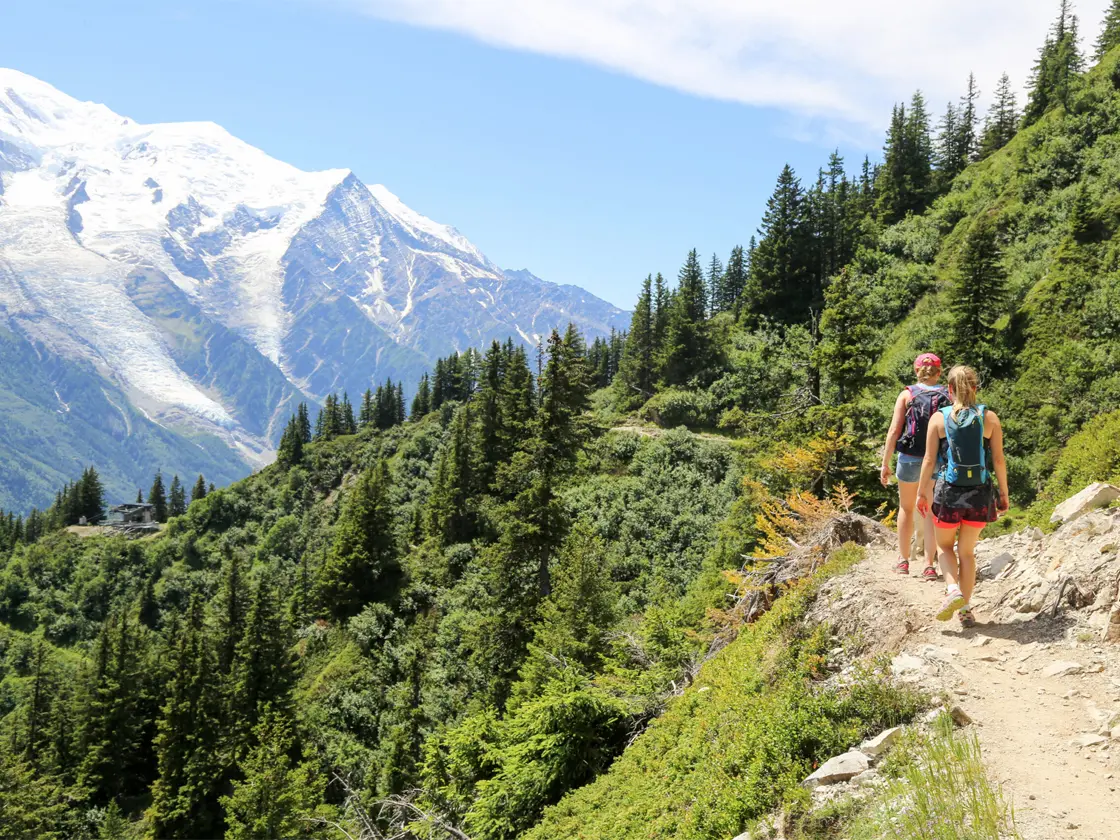
Hiking the Grand Balcon Sud in Chamonix
Hiking the Grand Balcon Sud © chamonix.fr

6. Aiguillette des Posettes & Col de Balme Loop

Distance: ~12 km loop

Duration: 5h on foot

Elevation gain: ~880 m

Difficulty: Moderate–Strenuous

Starting from the hamlet of Le Tour at the upper end of the valley, this loop climbs to the Col de Balme (2,204 m) — the French–Swiss border — before continuing to the summit of Aiguillette des Posettes at 2,201 m, where a full 360° panorama opens up: the Mont Blanc massif to the south, the Trient plateau into Switzerland to the north, and the Glacier du Tour and Refuge Albert 1er below to the east. The Charamillon gondola (~€22 one-way) cuts the ascent by around 600 m if you want to reduce the effort; the on-foot version is fully satisfying but a solid day out. Either way, this is one of the most complete views available in the valley from a hiking trail.
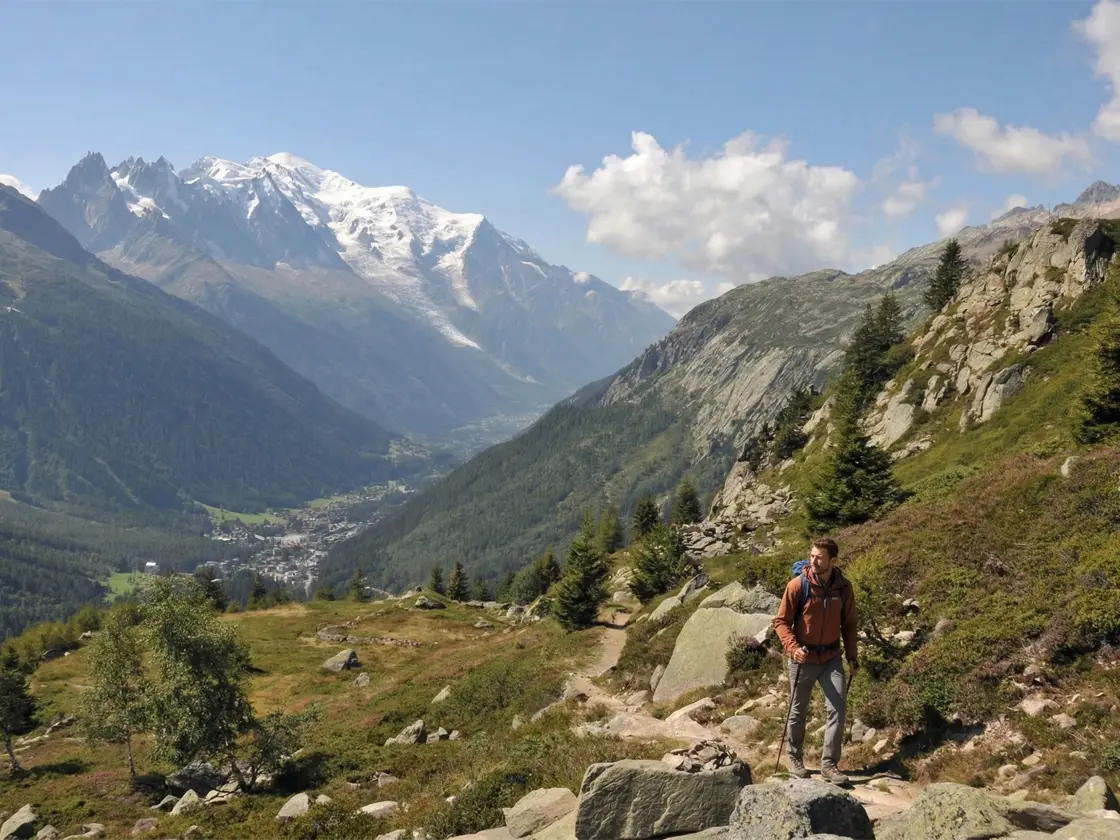
Hiking up to the Aiguillettes des Possettes from Col de Balme in Chamonix
Hiking up to the Aiguillettes des Possettes from Col de Balme

7. Refuge Albert 1er & Glacier du Tour

Distance: 8.3 km

Duration: 4h30

Elevation gain: +750 m

Difficulty: Moderate–Strenuous

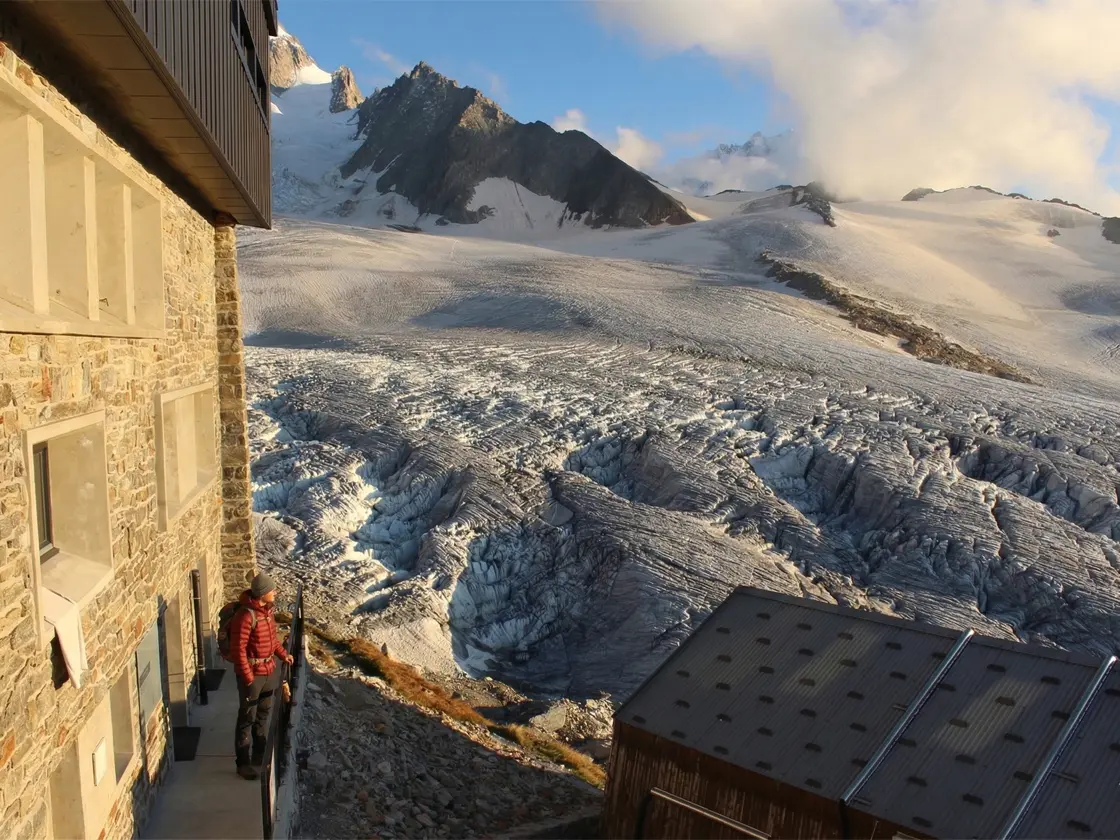
The only CAF refuge in the Chamonix valley reachable without crossing a glacier — a distinction that matters more than it sounds in a massif where most high terrain involves ice. Starting at Le Tour and using the Charamillon gondola plus Autannes chairlift combined (~€27), you climb through high pasture to the refuge on the right moraine of the Glacier du Tour at 2,702 m. The terrace view at the refuge takes in the Aiguille du Tour, Aiguille d’Argentière, and the broad couloir systems above the ice — one of the most impressive high-mountain panoramas accessible to non-mountaineers in the entire massif. Plan to spend time at the top; the 2h30 round trip from the upper lift station is a short walk for what it delivers.
8. Grand Balcon Nord — Montenvers to Plan de l’Aiguille

Distance: 18.5 km (point-to-point)

Duration: 7h15

Elevation gain: +675 m

Difficulty: Strenuous

Part of the Tour du Mont Blanc and the GR TMB, this high traverse tracks the north flank of the Mont Blanc massif at 2,000–2,300 m from Montenvers (Mer de Glace train, 1,913 m) to the Plan de l’Aiguille mid-station on the Aiguille du Midi cable car (2,310 m). Over 18.5 km, the route passes the Refuge du Montenvers, crosses the Chapeau viewpoint above the receding glacier, and delivers sustained close-up views of ice and granite that most day hikers never reach. This is a full day out — start from Montenvers at 9am and you’ll reach Plan de l’Aiguille mid-afternoon, in time to take the cable car down. Recommended approach: train up to Montenvers, walk the Grand Balcon, cable car down from Plan de l’Aiguille.
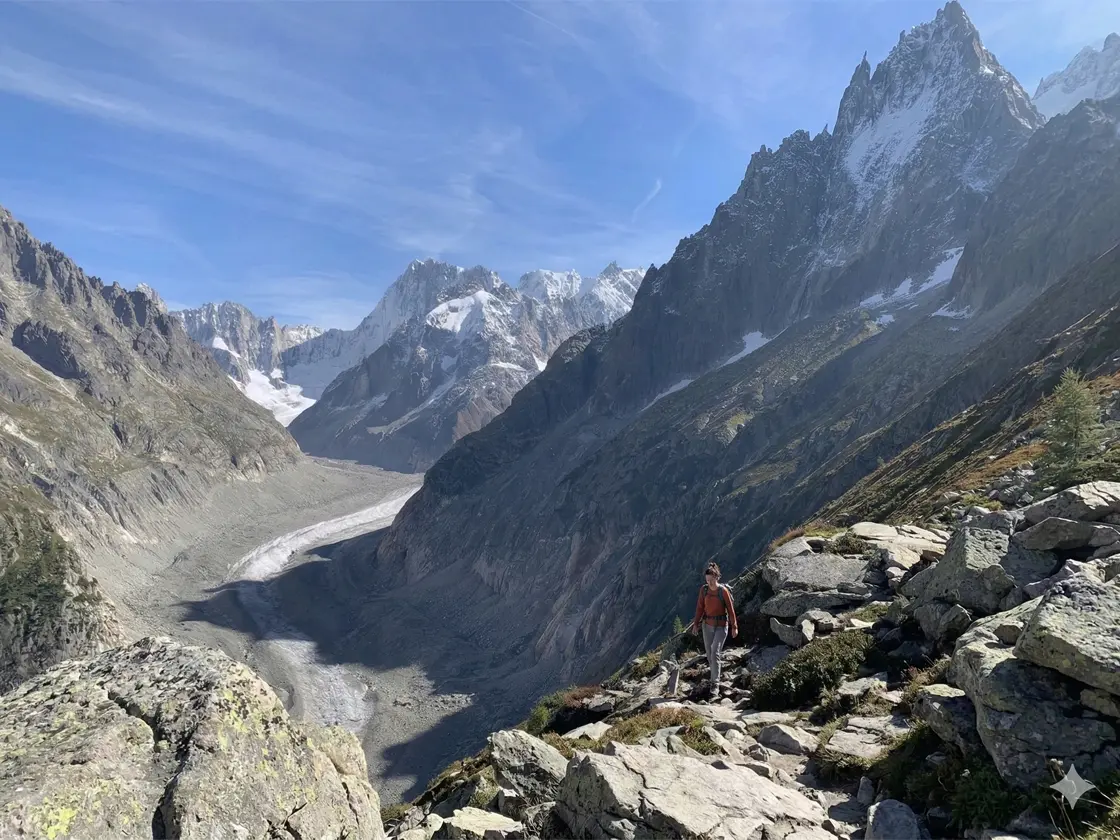
Hiker on the Grand Balcon Nord trail above the Mer de Glace, Chamonix-Mont Blanc
Grand Balcon Nord trail above the Mer de Glace

9. Le Brévent Summit Hike

Distance: ~11 km return

Duration: 5h30 (ascent)

Elevation gain: ~1,400 m

Difficulty: Strenuous

The Brévent cable car is one of Chamonix’s great landmarks — and the summit bar at 2,525 m is famously busy in high season. But hiking to the top from the valley floor is a different proposition entirely: 1,400 m of sustained climbing on a clear path, the final section on loose rock requiring care and decent footwear. The reward is a summit panorama that places Mont Blanc at eye level across the valley — a perspective that feels earned rather than purchased. Take the Planpraz gondola from town to reduce the climb by ~700 m if you want a more moderate approach; the final ridge from Planpraz to the summit adds around 450 m in about 2 hours. Descend by cable car if tired — the Brévent lift runs until early evening in season (~€30 one-way from summit).
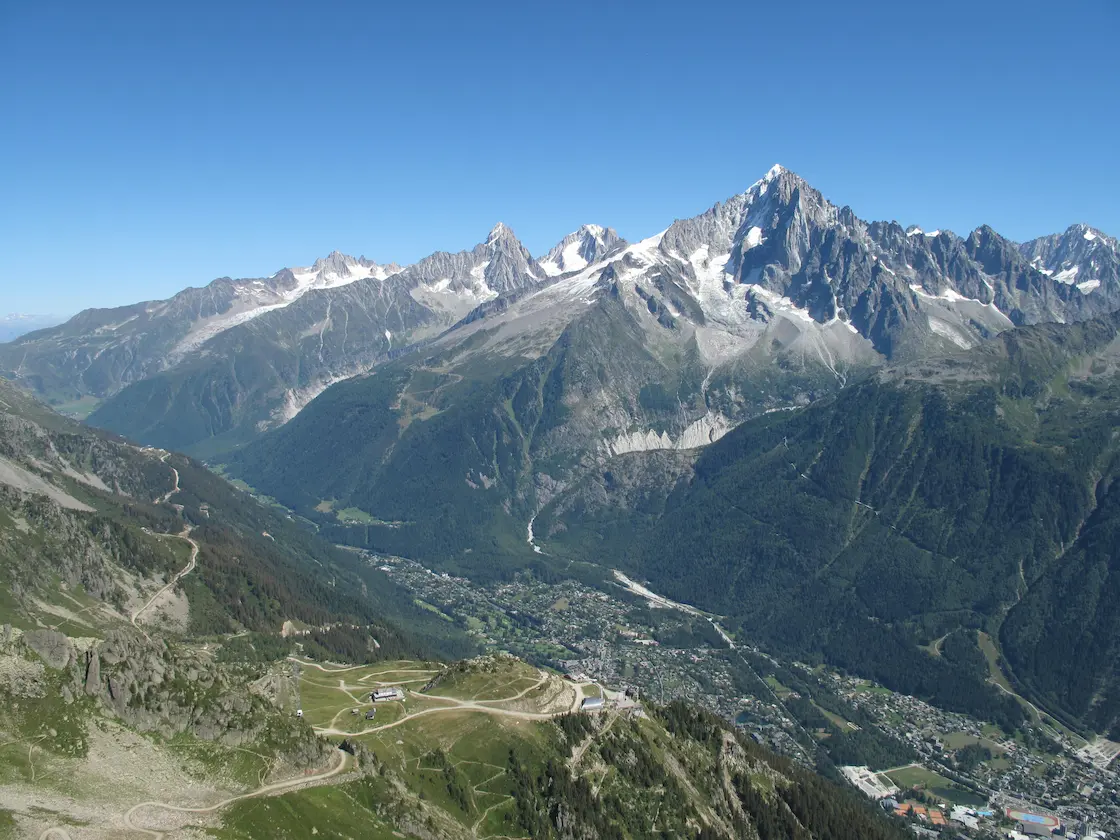
View of Aiguille Verte from Le Brévent in Chamonix
View of Aiguille Verte from Le Brévent © Wikipedia

10. Tour des Aiguilles Rouges (4-Day Circuit)

Distance: ~49 km

Duration: 4 days

Elevation gain: +4,559 m

Difficulty: Expert / Multi-day

The Tour des Aiguilles Rouges is a four-day counter-clockwise circuit starting and finishing at Col des Montets (1,461 m), looping through three nature reserves on 49.4 km with +4,559 m of elevation gain. The stages connect Refuge du Lac Blanc (2,350 m), Refuge de Bellachat (2,166 m) and Refuge de Moëde Anterne (1,993 m) before crossing Col de Salenton (2,526 m) on the final day back to Col des Montets. Expect ibex on the Bellachat stage, a wild passage behind Le Brévent on Stage 3, and the foot of Le Buet, thought to be the first high mountain summit climbed in the Alps, on Stage 4. Book all refuges well in advance for July and August.
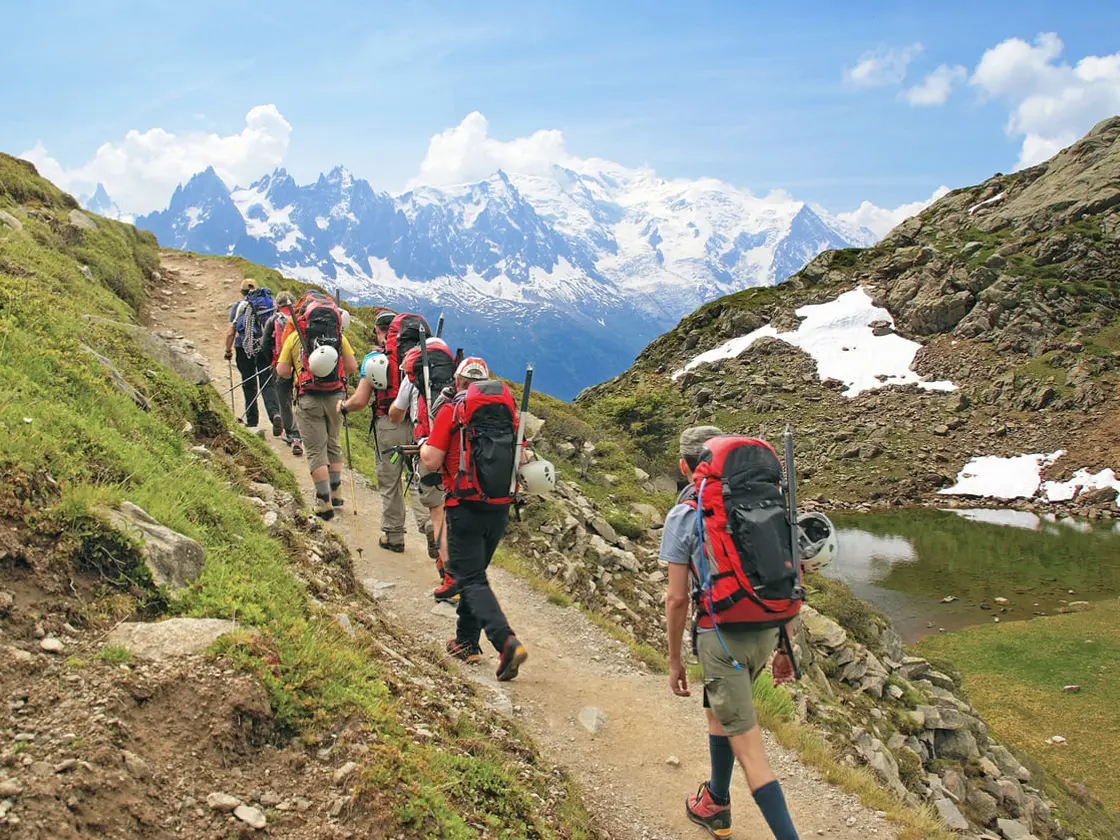
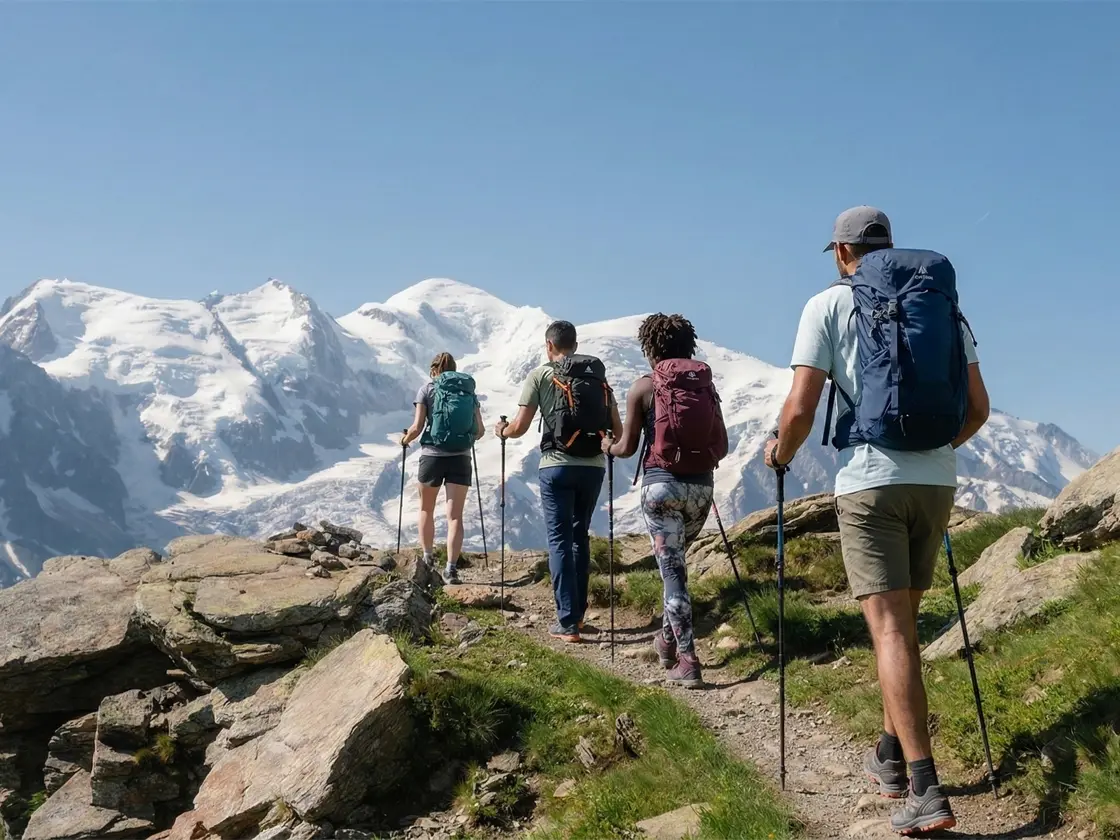
Hiking the Tour des Aiguilles Rouges in Chamonix
Hiking the Tour des Aiguilles Rouges © chamonix.com

Book a Hiking Guide in Chamonix

The Compagnie des Guides de Chamonix — founded in 1821, the oldest mountain guide company in the world — has set the standard for safe mountain travel in the Alps for two centuries. For the Grand Balcon trails, Lac Blanc, and Le Brévent on foot in high summer, you don’t need a guide: the paths are well-marked and the terrain is straightforward. But for any route approaching glacier terrain, for the Aiguille du Midi snow excursions, or for any high-altitude objective in early season before mid-June, a qualified mountain guide (guide de haute montagne) is the sensible call — not a luxury. Explore-Share offers a solid range of guided day hikes from Chamonix covering Lac Blanc, the Grand Balcon, and glacier viewpoints at all ability levels.

Guided Day Hikes from Chamonix

Explore Chamonix’s best trails — Lac Blanc, the Grand Balcon, glacier viewpoints — with a professional mountain guide who knows the conditions, the shortcuts, and the off-trail viewpoints that no guidebook lists. Particularly valuable for first-time visitors, early-season hikes above 2,000 m, and anyone who wants to maximise a single day in the valley. Book in partnership with Explore-Share.

Guided hiking in Chamonix with Explore-Share

When to Hike in Chamonix

The main hiking season runs from mid-June to mid-October, with the high routes (above 2,000 m) fully clear from late June. Unlike the Pyrénées, where weather systems announce themselves from the Atlantic with some warning, Chamonix storms can build in under 30 minutes on an exposed ridge. The standard rule — be off any summit or high pass by 1pm — is not advisory. Follow it.

June opens the season cautiously. The valley floor trails and the Gorges de la Diosaz are accessible from early in the month. Higher trails clear steadily — Lac Blanc is usually snow-free by mid-June, but the approach near the ladders can hold ice later. The Tour des Aiguilles Rouges typically carries snow on high sections until early July. The upside: wildflowers are extraordinary, visibility in settled weather is exceptional, and the trails are almost empty.

July and August are peak season. The cable cars queue from mid-morning; trailhead car parks fill by 9am at weekends. Start early — by 6am for the long routes, 8am at the latest for anything above 2,000 m — to stay ahead of both crowds and afternoon storms. Book the Refuge du Lac Blanc weeks in advance for the 14 July–15 August window. The weather is generally warm and settled in the mornings; treat any afternoon cloud build-up as a signal to descend.

September is the best month for experienced hikers. The crowds drop sharply after 1 September, the weather becomes more settled, the larches above 1,800 m begin turning gold from around the 15th, and all routes remain fully accessible. Book accommodation — refuges have space without advance pressure for the first time since June.

October extends the season for lower valley routes and forest walks. Most cable cars and gondolas close after mid-October; the Brévent lift closes late October, the Flégère in mid-October. High routes above 2,000 m face early snowfall and shortening days from mid-month — plan carefully and check the OHM conditions before setting out.

TECHNICAL HIKING GEAR

For the Grand Balcon Nord, Refuge Albert 1er, Le Brévent on foot, or the Tour des Aiguilles Rouges, you need kit built for genuine alpine conditions — the layering system has to handle 20°C at the valley floor and near-zero with horizontal sleet at 2,500 m, sometimes within hours of each other. Our Hiking Gear Guide for the French Alps covers waterproof shells, mid-layers, and packs — curated specifically for Chamonix terrain, from hut-to-hut circuits to early-season routes where GORE-TEX earns its place.
Technical hiking gear for the French Alps

Accommodation

In Chamonix town (1,035 m): The town centre covers everything from budget hostels to 4-star hotels, with the highest concentration of options within walking distance of the cable car stations and the Montenvers train. The area around Place du Mont Blanc and the main pedestrian streets is the most convenient base. Hotels in Chamonix range from around €80/night in shoulder season to €250+ in peak July–August — book well ahead for any dates around 14 July and 15 August.

In Argentière (1,252 m): Eight kilometres up the valley from Chamonix, Argentière is quieter, less commercial, and better positioned for the upper-valley routes — Aiguillette des Posettes, Glacier du Tour, and Refuge Albert 1er are all closer from here. It’s connected to Chamonix by the Mont Blanc Express train every 30 minutes in summer. Hotels in Argentière offer better value than the town centre and a more authentic village feel.

Mountain refuges: The Refuge du Lac Blanc (2,352 m, CAF-managed, ~€30–35 dortoir/night, half board available) sits at the heart of the most popular day hike in the valley and fills weeks in advance in July–August — book online at the CAF Haute-Savoie website as early as possible. The Refuge de Bellachat (2,152 m) on the Brévent side is quieter and easier to secure at short notice. The Refuge Albert 1er (2,702 m) is the highest and most atmospheric — the view over the Glacier du Tour at dusk, with the Aiguille du Tour above, justifies the effort of getting there and the price of the half board.

Planning Your Hike

Maps

The IGN TOP 25 sheet 3630 OT Chamonix–Mont-Blanc (1:25,000) covers the entire valley and every route on this page. It’s available from the Chamonix tourist office, most outdoor shops in town, or online via the IGN boutique. For digital navigation, the IGN Géoportail app works well in the valley; above 2,000 m, assume mobile signal will be lost. The Office de Haute Montagne (OHM) publishes a free daily conditions bulletin covering all major routes — available online at chamoniarde.com and in person at the OHM office. Reading it takes five minutes and has saved countless trips from poor decisions.

Getting There & Parking

Geneva Airport is the primary gateway — 80 km and approximately 1h15 by car via the A40 motorway. Chamonix Bus runs direct coaches from Geneva Airport to Chamonix town centre, Argentière, and Vallorcine; roughly €35 one-way, multiple departures daily, journey around 1h45 — a straightforward option that avoids parking entirely. By car, exit the A40 at Chamonix-Sud; the valley road north to Le Tour is straightforward.

For parking, the most convenient central option is the Parking du Centre Ville (Grépon) at 100 Place de l’Aiguille du Midi — a large paid facility with 800+ spaces in summer, located at the base of the Aiguille du Midi cable car. It fills early in high season; note the 2m height limit. For wider town access, the designated peripheral P+R car parks offer free shuttle buses into the centre and are the better choice from mid-July onwards when central parking is under pressure. For key trailheads: Le Tour has limited on-street parking — arrive before 9am at weekends in high season; Col des Montets (Vallon de Bérard trailhead) has a designated lay-by.

Getting There Without a Car

Chamonix is one of the most car-independent alpine destinations in France — a genuinely car-free hiking trip is viable here. The Mont Blanc Express narrow-gauge train connects St-Gervais-les-Bains (the main SNCF station, linked to Paris via Bellegarde or Annecy) with Chamonix town, Argentière, and Vallorcine — trains run roughly hourly in summer, journey time from St-Gervais around 45 minutes. The Chamonix Bus network covers all villages in the valley on a regular circuit, serving most cable car bases and key trailheads. For the Col des Montets (Vallon de Bérard): Chamonix Bus runs to Tré-le-Champ and the Col des Montets several times daily in summer. The Montenvers rack railway departs from Chamonix station. From Geneva Airport, the Chamonix Bus direct coach is the standard arrival option for non-drivers.

What to Pack

For any route above 1,500 m, a waterproof jacket and trousers are non-negotiable — the afternoon storms arrive with very little warning and drop temperatures 15°C in minutes. Add a warm mid-layer even in July (single-figure temperatures at 2,000 m are routine after a storm), strong sun protection (UV intensity at altitude is significantly higher than at sea level — don’t underestimate it), trekking poles (particularly useful on the loose moraine and rocky terrain of the higher routes), a minimum of 2 litres of water per person (water sources can be scarce on the south-facing Aiguilles Rouges flanks), a headtorch, and a first aid kit. For routes above 2,200 m before mid-June: microspikes or lightweight crampons. See our Technical Hiking Gear Guide for detailed kit recommendations specific to alpine conditions.

Chamonix Hiking Shops

Rue du Dr Paccard is Chamonix’s main gear street, with several excellent options within a few hundred metres of each other. Key stores for hiking kit and rentals include Snell Sports (104 Rue du Dr Paccard) — one of the valley’s longest-established independents, with roots dating to 1934 and a wide rental operation; Technique Extreme (also at 104 Rue du Dr Paccard) — a large independent stocking Black Diamond, Grivel and Salomon at competitive prices; Arc’teryx (265 Rue du Dr Paccard) — brand store with a ReBIRD repair service; Patagonia (249 Rue du Dr Paccard) — the first Patagonia store to open in Europe, here since 1987; and Salomon (306 Rue du Dr Paccard) — full hiking and trail running range with on-site foot scanning and boot fitting. All are within easy walking distance of the town centre and cable car stations.

Nature Reserve Rules

Three natural reserves cover the majority of the valley’s hiking terrain: the Réserve Naturelle Nationale des Aiguilles Rouges, the Réserve Naturelle du Vallon de Bérard, and the Réserve Naturelle de Carlaveyron. Across all three: no camping outside designated areas, no campfires, no picking plants or disturbing wildlife. Dogs are permitted on a lead in the Aiguilles Rouges Reserve but must stay on marked paths; the Réserve du Vallon de Bérard prohibits dogs entirely. Around 91% of the Chamonix commune falls under some form of nature protection — the rules are enforced and the environment benefits visibly from it.

Tourist Offices

Office de Tourisme de Chamonix-Mont-Blanc: 85 Place du Triangle de l’Amitié, 74400 Chamonix-Mont-Blanc. Open daily in summer. chamonix.com

Office de Haute Montagne (OHM): 190 Place de l’Église, 74400 Chamonix-Mont-Blanc. Open daily in summer. Daily mountain conditions reports — essential before any route above 2,000 m. chamoniarde.com/montagne/conditions-montagne

Frequently Asked Questions

What is the best hike in Chamonix for first-timers?

Lac Blanc via the Flégère cable car is the standout introduction — lift-assisted to reduce the initial climb, well-marked throughout, and the view at the top (a high alpine lake reflecting the entire Mont Blanc massif) delivers immediately. Allow a full day, start early to stay ahead of afternoon storms and cable car queues, and book the Flégère lift online in advance for July–August.

Do I need a guide to hike in Chamonix?

For the main day hikes on this page — Lac Blanc, Grand Balcon Sud, Vallon de Bérard, Posettes — no guide is needed in summer. The paths are well-marked and the IGN 3630 OT map covers the territory clearly. A guide is strongly recommended for any route involving glacier terrain, for any objective above 3,000 m, and for early-season hikes above 2,000 m before mid-June when snowfields are unpredictable. The Compagnie des Guides de Chamonix (founded 1821) is the go-to resource.

When is the best time to hike in Chamonix?

September is the best month for experienced hikers: settled weather, empty trails, golden larches from mid-month, and refuges you can book at short notice. July and August work well but demand early starts to beat afternoon storms and crowds. Avoid high routes (above 2,000 m) before mid-June due to persistent snow. The season extends into October for lower valley routes, but most cable cars close after mid-October.

Can I hike to Lac Blanc without a cable car?

Yes — the full on-foot route from Col des Montets (accessible by bus from Chamonix) covers 9.4 km with 970 m of elevation gain, rated difficult, and takes around 5 hours return. It includes a section of fixed metal ladders below the lake. The cable car-assisted route from Flégère (8.05 km, +615 m, ~4h05) is more accessible and the better option for most visitors. Both routes deliver the same view at the top.

Are the Chamonix hiking trails suitable for children?

The valley floor paths, the Gorges de la Diosaz, and the Montenvers train descent are well-suited to children of all ages. With the cable car assist, Lac Blanc is manageable for fit children aged 10+ — there is a section of metal ladders that requires confidence. The Grand Balcon Sud from a lift top station is also appropriate for active older children. Avoid the strenuous on-foot routes (Le Brévent, Grand Balcon Nord full traverse) with young children.

What gear do I need for hiking in Chamonix?

A waterproof jacket and trousers are essential for any route above 1,500 m — afternoon storms are a daily risk. Add a warm mid-layer even in July, strong sun protection (UV intensity at altitude is high), trekking poles, at least 2 litres of water, a headtorch, and the IGN 3630 OT map. For routes above 2,200 m before mid-June, microspikes are advisable. See the Ultimate France Technical Hiking Gear Guide for full Alpine-specific recommendations.

Please leave a comment below if you need specific advice about hiking in Chamonix — whether you’re planning your first visit to the valley, preparing for the Tour des Aiguilles Rouges, or working out the right routes for hiking with children. We’re happy to help with route planning, seasonal conditions, lift schedules and accommodation.

You May Also Like

Subscribe
Notify of
guest

0 Comments
Newest
Oldest Most Voted
Inline Feedbacks
View all comments
0
Would love your thoughts, please comment.x
()
x