Surfing more isn’t making you better. Here’s why.
You don’t surf five days a week. That’s why trial and error has stopped working — and why every season ends with you at roughly the level you started.
This isn’t a willpower problem. The surfers who got great built their technique on water time most of us will never have. Daily sessions. Years of feedback from people who already knew the moves. Trial and error works when you have that volume — it doesn’t work when you surf once a week with two trips a year in between.
You repeat the same mistakes because no one has named them
When you only surf occasionally, every session is a fresh attempt at the same problems. Same bottom turn timed wrong. Same stalled cutback. Same pop-up that puts your front foot in not-quite-the-right place. You don’t know which mistake to fix first — so you fix none of them, and the years stack up.
The fix is what you do between sessions
The Surfer’s Roadmap gives you work to do between paddles. Self-assessment exercises. Specific cues for each manoeuvre. A sequenced curriculum that names what to focus on, in what order, and what success looks like at each stage. By the time you next paddle out, you’ve got a single focus point — and your sessions stop being random.
What no other online course can give you
Every module includes side-by-side comparison clips: the ideal technique frame by frame, the common mistake next to it, both natural foot and goofy. You watch yourself. You watch the ideal. You see the gap. It’s the closest thing online coaching gets to a coach standing next to you in the water, pausing the wave, and showing you the exact frame where it went wrong.
This doesn’t replace your lessons or your trips — it just makes every one of them count more.
Meet the Coach
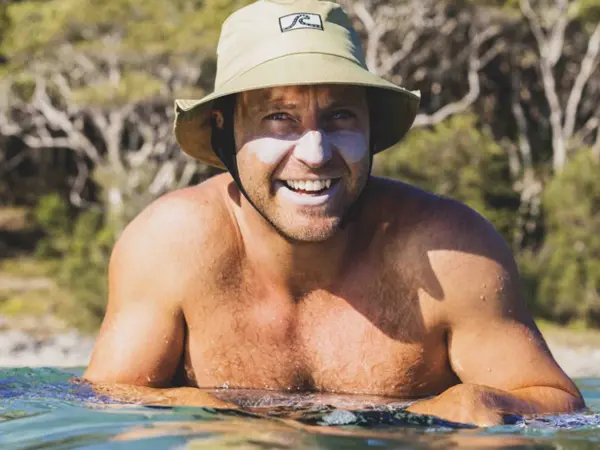
Kale Brock grew up on a flat ocean in South Australia. He barely surfed until he was fifteen, when his brother got a driver’s licence and could finally take him to the coast. Years of inconsistent sessions followed. By his mid-twenties he was stuck at a level he didn’t want to be at, surrounded by surfers who’d grown up in the water and had a decade’s head start.
What changed everything was teaching. When Kale started coaching other surfers, he had to articulate exactly what to do — every cue, every mistake, every reason something worked or didn’t. The act of putting technique into words sharpened his own.
Kale Brock
Today Kale’s an advanced surfer in his late thirties, still working on his own progression and openly committed to keeping it going into his forties, fifties, and sixties. “There shouldn’t be a limit on how good you can get, and there isn’t one. That’s the formula I teach in TSR.”
Outside the surf programme, Kale runs a YouTube channel with over a hundred thousand subscribers, has produced award-nominated documentaries, and authored four books on human health. The Surfer’s Roadmap is the system he built from coaching thousands of surfers through the same plateau he climbed out of himself.
The 3 reasons surfers stop progressing
You’re enthusiastic and you’re not a bad surfer. But, there’s a hidden bar that you just can’t get past. Most surfers who plateau do it for one of three reasons — and all three are fixable.
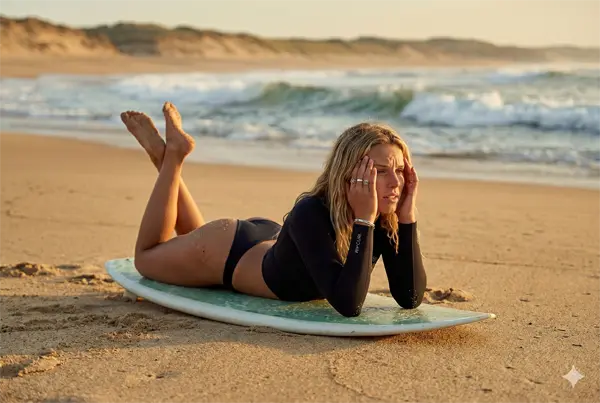
1. You stop trying to improve
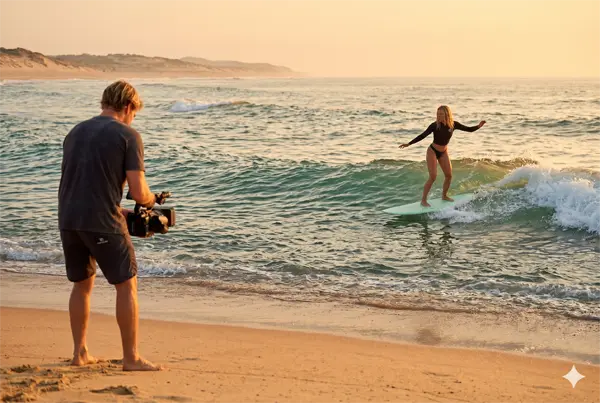
2. You have no outside input
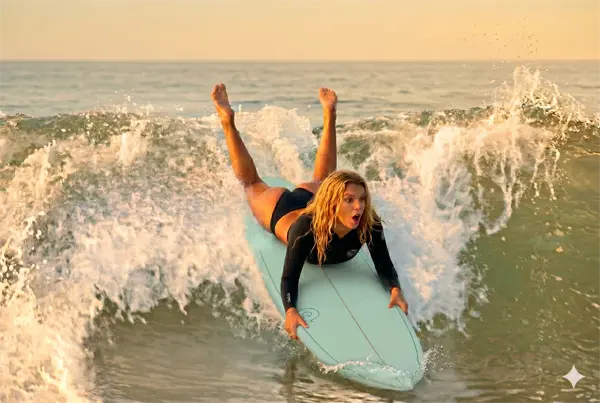
3. You keep making the same mistakes
What surfers say
The Surfer’s Roadmap Courses
Pick the course that matches where you are, or take the full pathway and have all three when you’re ready.
You can surf. You want to surf better.
The Intermediate Surfer’s Roadmap is built for surfers who can stand up, ride a wave, and feel themselves plateauing. Bottom turns, top turns, cutbacks, re-entries, and advanced speed flow — taught with specific cues and side-by-side technique comparison for both natural and goofy foot.
$99 USD · Lifetime access
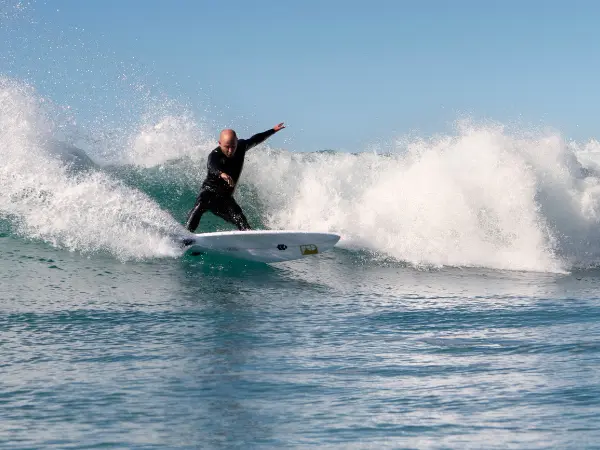
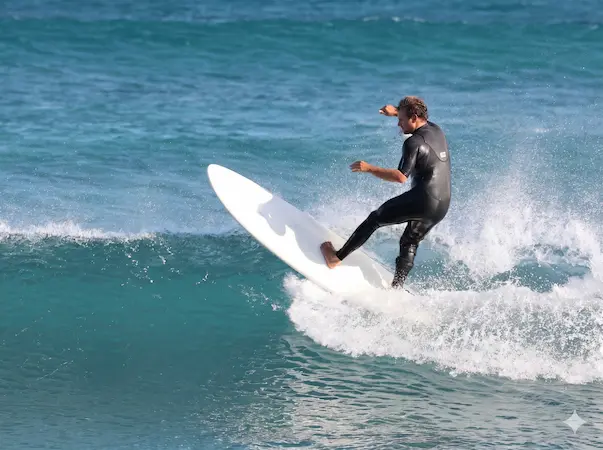
You’ve stood up. Now learn to surf.
Pop-up consistency, paddle technique, positioning, ideal wave selection, and cutting across the face. The foundation everything else builds on.
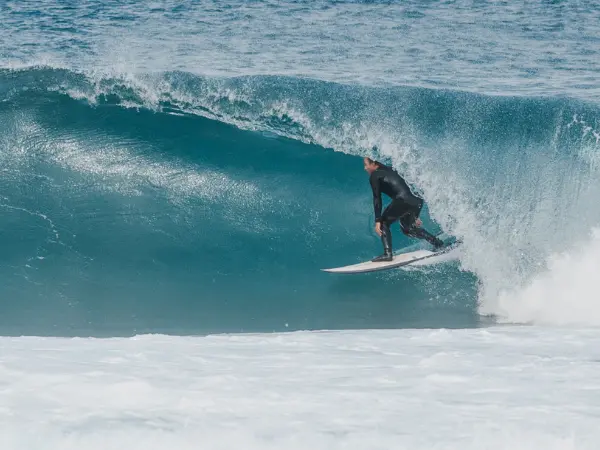
Flow, rotations, airs, barrels.
Five years in the making. The moves most intermediates think are unattainable — tube riding, rotational manoeuvres, aerials.
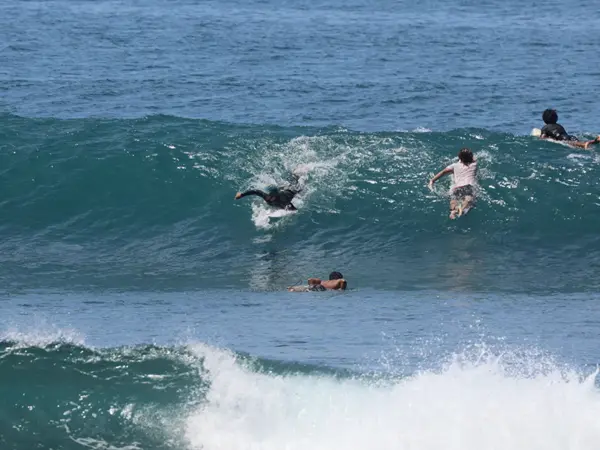
Get a visual on your surfing
Most surfers have no idea what they actually look like on a wave. What feels like a fluid bottom turn often looks like a flat lean. What feels like generating speed often looks like pumping in place. And it’s that gap — between how surfing feels and how it actually looks — that keeps most surfers stuck.
Every module of The Surfer’s Roadmap includes side-by-side technique comparison clips. The ideal frame next to the common mistake, for both natural foot and goofy. You watch yourself surf. You watch the ideal surf. You see the gap. Then you know what to work on.
It’s the closest thing online coaching gets to having a coach pause your session and point at the frame where your turn went wrong. And once you’ve seen yourself accurately, you can’t un-see it — which is when the work of fixing it actually starts.
What you’ll fix
By the time you’ve worked through the Roadmap you’ll have addressed the issues most surfers spend years living with. The pop-up that uses your knees instead of springing both feet under you. The habit of sitting too far back on the shoulder when you should be committing to the peak. The bottom turn timed wrong, the speed generated by pumping rather than reading the wave’s energy, the upper-body twist that doesn’t start from the ankles, the eyes glued to the board instead of looking down the line.
You’ll learn to arch your back properly on the take-off — a small adjustment that, in the words of one r/surfing commenter, “changed everything.” You’ll learn the duck-dive as a real technique, not a flailing approximation, and discover, as another commenter put it, that you can “burn literally half the energy you did before.” You’ll learn to resist the urge to downsize your board too quickly — the single most common mistake intermediates make in the name of looking experienced.
These aren’t abstract concepts. Every module names a specific cue, shows the common mistake, gives you on-land training to bridge the gap between sessions, and provides a way to test what you’ve learned.
Already comfortable on a board?
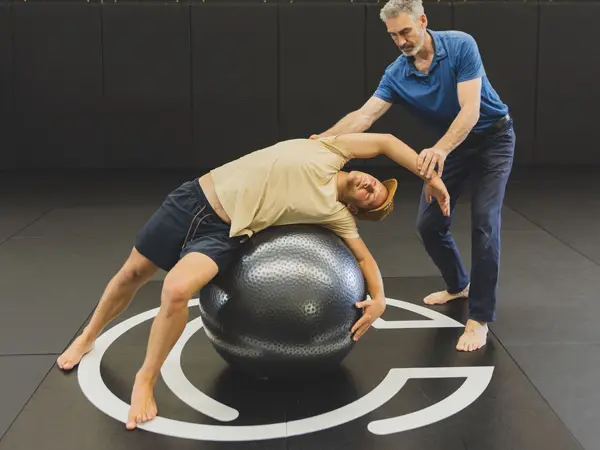
If technique isn’t actually what’s holding you back, the engine that powers it might be. Most surfers limit themselves through paddle endurance, rotation, and the cumulative fatigue of two-hour sessions across consecutive days. The Ultimate Surf Fitness Program — built by Kale alongside CHEK Practitioner Donal Carr after Kale’s own neck injury — addresses the engine, not the technique.
Learn to surf online — your questions answered
Yes, and the surfing community already knows it. On r/surfing, commenters openly recommend online platforms as part of their progression toolkit. A clean, repeatable pop-up isn’t built in the water. It’s built at home, in the hundreds of repetitions you do until your body stops needing to think about the sequence. Online coaching is the natural place to learn this side of surfing, because the cues and on-land routines are exactly the parts an in-person lesson can’t give you. The real question isn’t whether online learning works. It’s which programme suits the way you actually learn.
Especially for you. If you surfed every day, trial and error would eventually get you there. Most readers don’t, and that’s exactly the problem the Roadmap is built to solve. The on-land curriculum, surf-skate routines, and self-assessment work mean every session you do have counts more than it did before.
The visualisation feature. Every module includes side-by-side technique comparison clips, the ideal frame next to the common mistake, natural foot and goofy. You watch yourself, watch the ideal, and see the gap. It’s the closest thing online gets to a coach standing next to you in the water.
YouTube is a library. The Roadmap is a curriculum. The difference is sequence: knowing what to work on, in what order, and what success looks like at each stage. Kale Brock’s own YouTube channel covers a lot of ground, but the structured progression, self-assessment tools, and side-by-side visualisation only exist inside the Roadmap.
No. One r/surfing commenter put it simply: ‘Surfing so much better at 53 than 25.’ Kale himself plans to keep improving into his fifties and sixties. Surf improvement isn’t a function of age, it’s a function of input quality. With the right system you can get better at any age you can paddle out.
The Beginner Roadmap starts from your first wave forward. The Intermediate assumes you can pop up, ride a wave, and want to start linking turns. The Advanced assumes you’re comfortable on green waves and want to learn rotations, airs, and tube riding. Pick the one that matches where you are, or grab the Bundle and have the full pathway when you’re ready for it.
Lifetime access means there’s no pressure. The Roadmap is built in short, focused modules, most under 10 minutes, so you can dip in around a single session rather than committing to a long binge. Come back to the manoeuvre you’re working on right now, not the one you were working on a year ago.
The Surfer’s Roadmap is sold through the Teachable platform, where refund terms are listed at checkout. Teachable courses commonly include a 14-day money-back guarantee — check the checkout page for the specific terms that apply to your course.
Each course is structured into short modules, typically one to ten minutes per video, so you can work through it at your own pace. Typical completion takes a few weeks if you’re using it consistently around your sessions, but the format is designed to fit your rhythm. Because access is lifetime, there’s no time pressure.
Yes. Every technique demonstration includes both natural-foot and goofy-foot versions of the visualisation clip. The programme treats both stances as equal throughout.
No more guesswork
Give your surfing a system and watch yourself improve. New to surfing? See the Beginner Roadmap.