
How to Duck Dive in Surfing
Stop getting washed back. The technique, board choice and timing to get out the back — from your first foamie to powerful beachbreaks.
Master the TechniqueLearning how to duck dive is the difference between spending your session fighting the white water and actually getting out to the line-up. It’s the technique surfers use to push the board under an oncoming wave and slip through it, instead of being dragged back towards the beach.
WHAT IS IT | YOUR BOARD | VS TURTLE ROLL | TECHNIQUE | BY SKILL LEVEL | MISTAKES | LEVEL UP
If you surf France’s Atlantic beachbreaks — Biscarrosse, Hossegor or anywhere along the Landes coast — you’ll know the problem. The waves roll in relentlessly, and a clean duck dive is the only efficient way through them. Get it right and you save your energy for catching waves. Get it wrong and you’ll be exhausted before you ever reach the peak.
The good news: duck diving is a learnable, repeatable movement. It takes time to perfect — even experienced surfers refine it for years — but the mechanics are simple enough to start practising today, even in a swimming pool or flat water. This guide breaks it down step by step, then shows you how to adapt it as you progress from beginner to advanced.
What Is a Duck Dive (and Why It Matters)
A wave is energy moving through water. If you let that energy hit you head-on while you’re paddling out, it pushes you backwards — undoing all the work you just did. A duck dive lets you drop your board and body beneath that energy so the wave passes over the top of you, leaving you free to keep paddling towards the line-up.
You’ll duck dive two kinds of wave. A wave that has already broken (white water) carries its energy forward and downward, so you need to get underneath the turbulence and punch through it. A wave that hasn’t broken yet moves in a circular motion — duck dive at the right moment and that rotation actually helps draw you under and push you out the back. Reading which is which, and timing your dive accordingly, is the skill you’re building.
Can Your Board Be Duck Dived?
Before anything else, be honest about your equipment. Duck diving only works on lower-volume boards you can physically push under the water — a shortboard, a hybrid, or a small fish. Boards with lots of foam float too well to sink, which is exactly why they’re so stable and forgiving to learn on, and exactly why you can’t duck dive them.
If you’re riding a foamie, a mini-mal or a longboard, don’t try to force a duck dive — you’ll just get bounced back. You’ll use the turtle roll instead. As a rough guide, once you’re comfortable on something around 6’6″ or smaller with moderate volume, duck diving becomes the better option.
Duck Dive or Turtle Roll?
The turtle roll (or “eskimo roll”) is the duck dive’s big-board cousin. As the wave approaches, you flip the board upside down, fins pointing at the sky, and hold on tightly underneath with your body weighing it down. The wave washes over the hull, you flip back upright, and you carry on paddling. It’s the right move for any board too buoyant to sink.
Most surfers learn the turtle roll first on bigger boards, then graduate to the duck dive as they move onto smaller equipment. There’s no shame in turtle rolling — using the wrong technique for your board just means a tougher paddle out. Match the method to the equipment under you.
How to Duck Dive: Step by Step
Few things drain a surfer faster than a botched duck dive. Paddle into the impact zone with sloppy technique and the whitewater will keep handing you back to the beach, burning through the energy you need to catch waves when you make it to the lineup. This walkthrough covers the technique end to end — starting with the question most surfers skip (is your board actually small enough to duck dive in the first place?), then the two types of wave you’ll need to handle differently, then the six moves that get you cleanly through the impact zone: paddle hard, start two metres before the wave hits, push the nose down, drive on the tail, draw your body tight to the board, and resurface clean. Five minutes well spent before your next session in head-high surf.
Done well, the whole thing is one fluid movement. Broken down, here’s what’s happening:
- Build speed. Paddle hard and straight at the wave. You can’t duck dive a powerful wave without forward momentum — get into attack mode and commit.
- Time it — about one board-length out. Keep paddling until the wave is roughly a board-length away. Start too early and you’ll float back up into it; too late and the white water rips the board from your hands.
- Grab the rails. Take hold of both rails just below your chest. Gripping here, rather than at the very nose, gives you the leverage to push the front down.
- Sink the nose. Lean your upper body forward over the front of the board and press the nose down and forward with straight arms. The straighter your arms, the deeper the board goes.
- Drive the tail under. Immediately follow with your foot or knee on the tail pad, pushing the back of the board down so the whole board sits parallel to the seabed. Lift your other leg up behind you for extra weight — this is where the “duck” gets its name.
- Hold and let it pass. Bring your body in close to the board and hold steady as the wave rolls over you. Keep the board level — if the nose is still pointing down, the wave can tear it out of your grip.
- Resurface and paddle. Once the wave has passed, point the nose up and let the board’s buoyancy carry you to the surface — it often gives you a little forward push. Don’t rush up too soon, or the wave’s drag will pull you back. Then paddle straight away.
Timing — The Make-or-Break
If there’s one thing that separates a clean duck dive from a flailing one, it’s timing. Dive too early and your board’s buoyancy floats you back up into the lip. Dive too late and you don’t get deep enough before the white water hits. The sweet spot — about a board-length out, with real speed — only comes with repetition. Practise it on smaller, weaker waves before you take it into anything heavy.
Duck Diving by Skill Level
Beginner — Push Through the Foam First
The duck dive isn’t part of your toolkit yet — and that’s fine. On a high-volume beginner board you physically can’t sink it, and you’re usually surfing in waist-deep water anyway. To get through the broken white water, keep the board pointed straight at the wave (perpendicular), then push down on the tail with both hands to lift the nose up and over the foam. Place one hand slightly towards the middle of the board to stop it twisting and flipping back at you. Crucial safety point: if there’s anyone behind you, never let go of your board.
Intermediate — Building the Movement
Now you’re on a board you can sink, the duck dive becomes a matter of timing and commitment. Judge the speed of the wave and trigger the movement at the right moment — a beat too early or too late and you’ll lose ground. Grip the rails firmly and keep your face clear of the deck so the board doesn’t come back into you. If a wave arrives too fast or looks too powerful, it’s okay to bail — but glance behind you first to check no one’s there, then dive deep and hold on. Don’t panic: get under, and you’ll be fine.
Advanced — Reading the Wave
At this stage the duck dive is automatic, and the skill becomes anticipation. Pick the best part of the wave to dive under, and read the set so you’re braced for the bigger, more powerful waves before they reach you. Wrap your arms around the board underwater and hug it to your chest to avoid losing it or getting hurt in heavy surf. One hard-won tip: ditching your board might feel like the easy option, but you’re far more likely to break it — or hit another surfer — by letting it drag behind you than by taking a few seconds of a hold-down with it tucked in close.
Common Mistakes & Safety
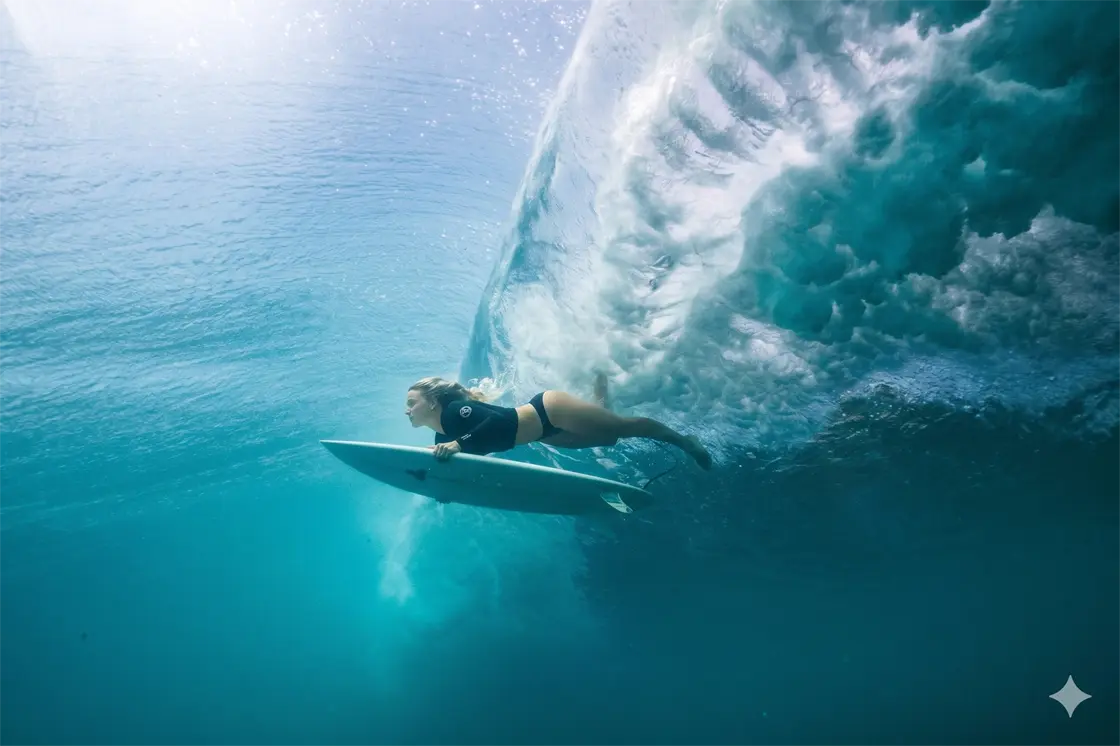
The most common error is not getting deep enough, or popping up too soon — both leave you in the wave’s path and wash you back. Close behind: not enough paddle speed going in, gripping the rails too far back, and keeping the nose angled down instead of levelling the board out under the wave. Almost all of these come good with practice on small waves.
On safety: never ditch your board if there’s a surfer behind you — a loose board on a stretched leash is dangerous. Keep a hand on your equipment, stay aware of who’s around you in the line-up, and on France’s powerful winter beachbreaks, make sure you’re paddle-fit and confident before paddling out into anything heavy. If a wave is genuinely beyond you, don’t be a hero — but bail safely.
Where to Practise in France
France’s south-west coast is one of the best places anywhere to dial in your duck dive, precisely because the beachbreaks give you so many waves to practise on. Start somewhere forgiving: the gentle summer peaks at Biscarrosse or the mellow waves of Arcachon-La Salie are ideal for getting the movement grooved without too much consequence.
As you build confidence, the more powerful peaks at Hossegor and across the wider south-west France coast will test your timing and your nerve — these are exactly the waves where an efficient duck dive earns its keep. Wherever you are, spend a few minutes watching the line-up before you paddle out, and pick your moment.
Level Up Your Surfing
The duck dive is one skill among many — and the surfers who keep improving are the ones who work on technique and fitness between sessions. These two self-paced courses are how to do exactly that.
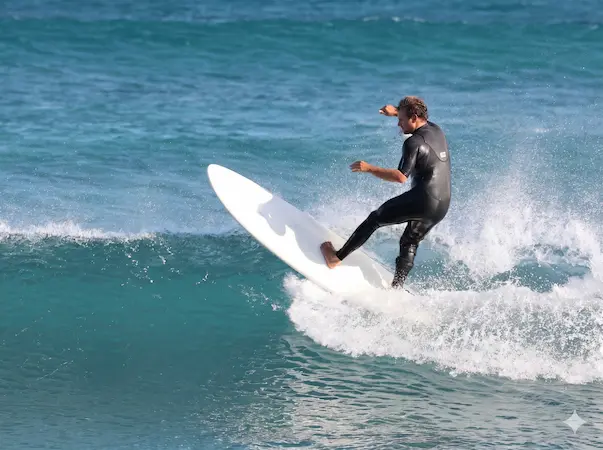
the Surfer’s Roadmap
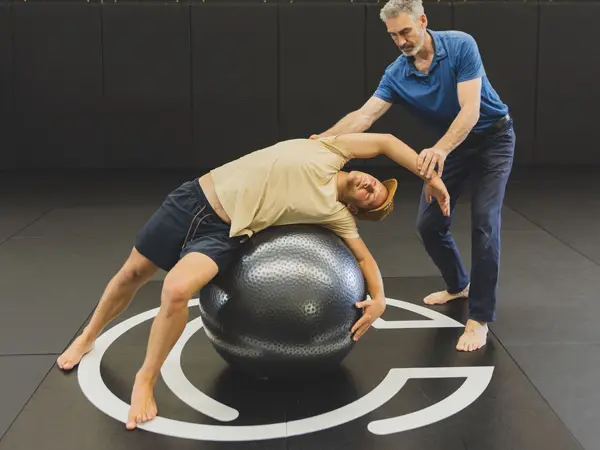
Ultimate Surf Fitness

Duck Diving FAQ
Duck diving works on lower-volume boards you can push underwater — shortboards, hybrids and small fish, roughly 6’6″ and under for most surfers. High-volume foamies, mini-mals and longboards float too well to sink, so you’ll turtle roll those instead.
Match the method to your board. If you can physically push the board underwater, duck dive. If it’s too buoyant to sink (a foamie, mini-mal or longboard), flip it upside down and turtle roll instead. Most surfers turtle roll first, then move to the duck dive as they downsize.
Usually one of three things: you’re not diving deep enough, you’re coming up too soon (before the wave has fully passed), or you didn’t have enough paddle speed going in. Push the board deep and parallel to the seabed, hold until the wave is over you, and resurface last. Practise on small waves first.
Deep enough to get under the wave’s energy — for white water that means sinking the board until it’s roughly parallel to the seabed, below the turbulence. In bigger surf you go deeper. Bring your body down to the board rather than pulling the board up to you, or you won’t get under powerful waves.
Generally no — longboards have far too much volume to push underwater. Use the turtle roll instead: flip the board upside down, hold on underneath, let the wave pass, then flip back up. A few very strong surfers can sink smaller longboards momentarily, but for almost everyone the turtle roll is the answer.
You can grasp the basic movement in a session or two on small waves, but a genuinely reliable duck dive in bigger, more powerful surf takes months to years of practice. It’s a timing skill as much as a strength one — the more waves you practise on, the better it gets. France’s consistent beachbreaks are ideal for putting in the reps.


Got a question about duck diving, or a tip that helped it click for you? Leave a comment below — we read every one and use them to improve our guides.