Île d’Oléron is the biggest French island after Corsica, and one of the best-value active holiday destinations on the Atlantic coast. Thirty kilometres of sand, pine forest and oyster marsh, criss-crossed by cycle paths and ringed by surf beaches, kitesurf spots and sheltered sailing water — all without the crowds (or prices) of its chic little sister, the Île de Ré.
HIGHLIGHTS | ACTIVITIES | BOOK A TRIP | ACCOMMODATION | PRACTICAL INFO
The island hangs off the Charente-Maritime coast, connected to the mainland at Bourcefranc-le-Chapus by a 3 km toll-free bridge. Cross it and the pace drops instantly. The wild west coast takes the full force of the Atlantic — that’s where you’ll surf and kitesurf. The sheltered east coast faces the mainland across calm water, perfect for sea kayaking, sailing and first-timers of every kind.
Locals call it “Oléron la Lumineuse” — for its exceptional sunlight. It’s a fair claim. This corner of France’s Atlantic coast soaks up more sunshine hours than almost anywhere on the west coast, so the season here runs long: surf in autumn, land yacht in winter, cycle in spring, and do everything at once in summer.
Île d’Oléron Highlights

Beaches: Blue-flag sandy beaches run the length of the island, from the wild, dune-backed west coast at Vert Bois and Les Huttes to the huge, gently shelving Grande Plage at Saint-Trojan-les-Bains. Pick your side: Atlantic swell and space to the west, calm shallow water and Fort Boyard views to the east.
Villages and heritage: Saint-Pierre-d’Oléron is the island’s lively capital, and its fishing port at La Cotinière lands some of the best langoustines in France. At the island’s southern gateway, Le Château-d’Oléron pairs a 17th-century citadel with a working oyster port lined with brightly painted artists’ cabanes. At the northern tip, climb the 46 m Chassiron lighthouse for a view over the whole island.
Seafood: This is Marennes-Oléron oyster country, and eating a dozen at a waterside shack is non-negotiable. Try La Cabane de Batifou in Dolus-d’Oléron for oysters and seafood platters straight from the claires, or La Sardinerie on the quay at La Cotinière in Saint-Pierre-d’Oléron for fish landed metres away. Wash it down with a glass of local Pineau des Charentes.
Plan Your Trip
Île d’Oléron Activities
Oléron’s mix of exposed Atlantic coast, sheltered inshore water, forest and marsh packs a lot of playground into one island. So whether you’re chasing waves, wind or bird life, there’s a spot with your name on it. Here’s our guide to the best outdoor activities on the Île d’Oléron:
Surfing
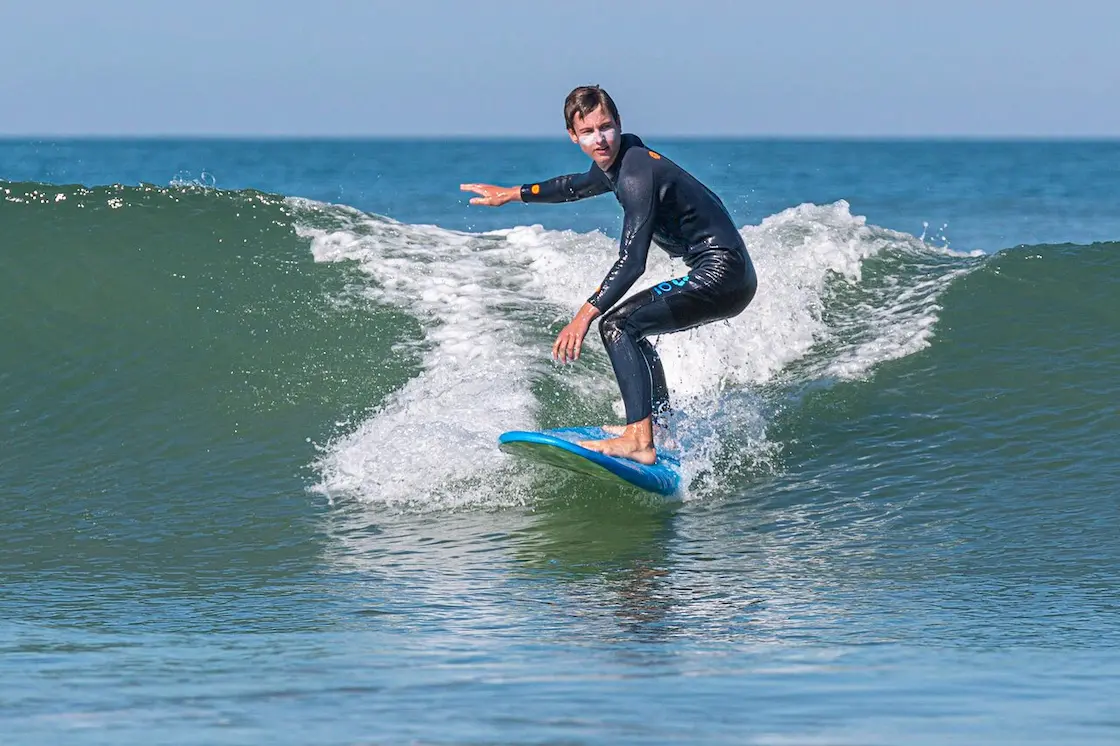
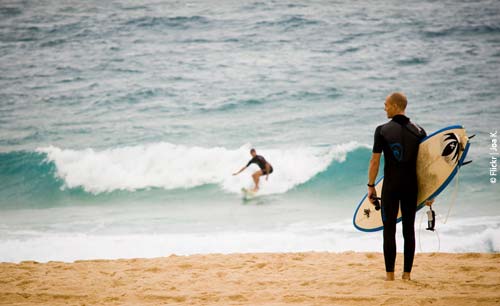
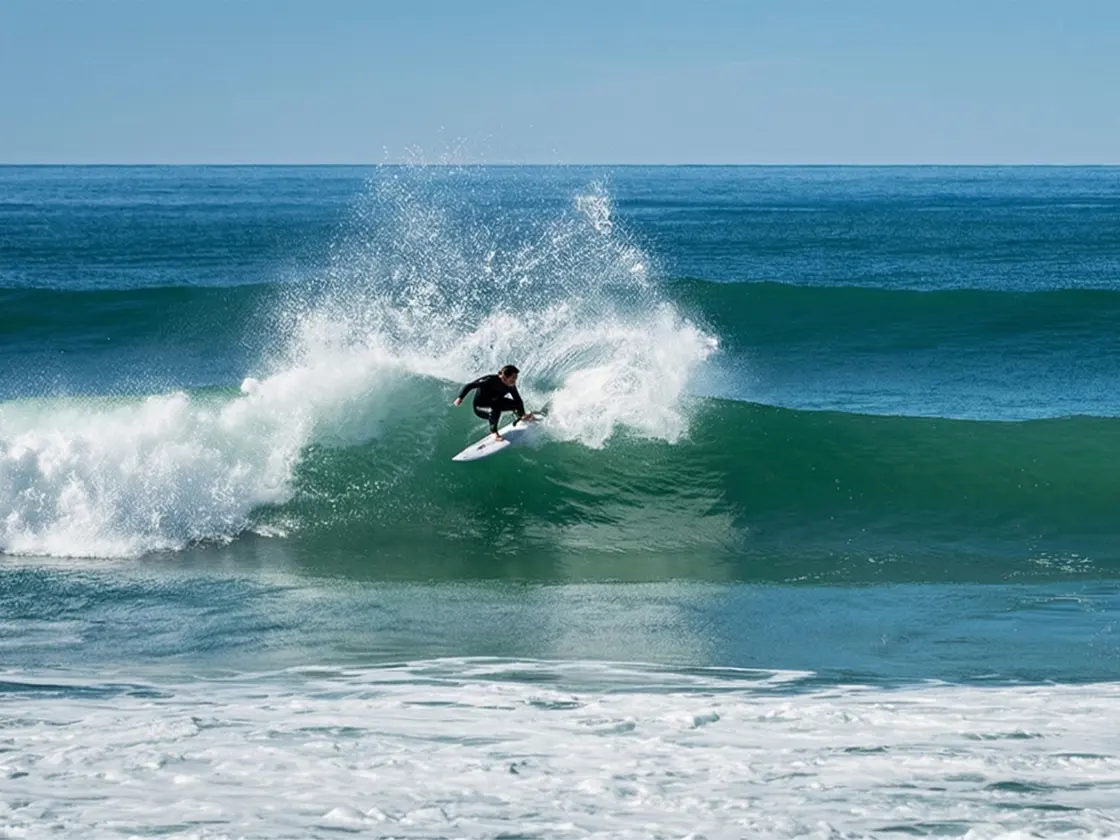
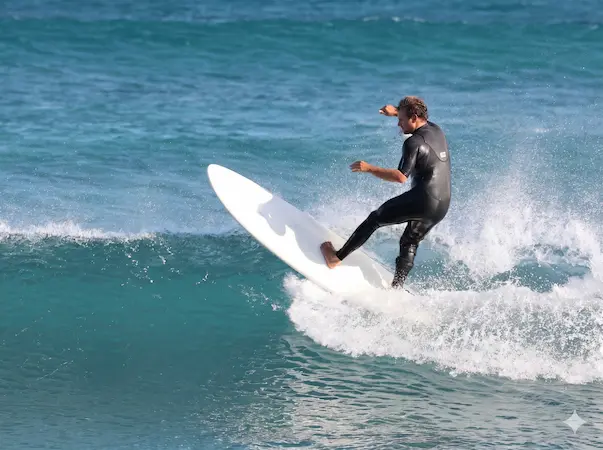
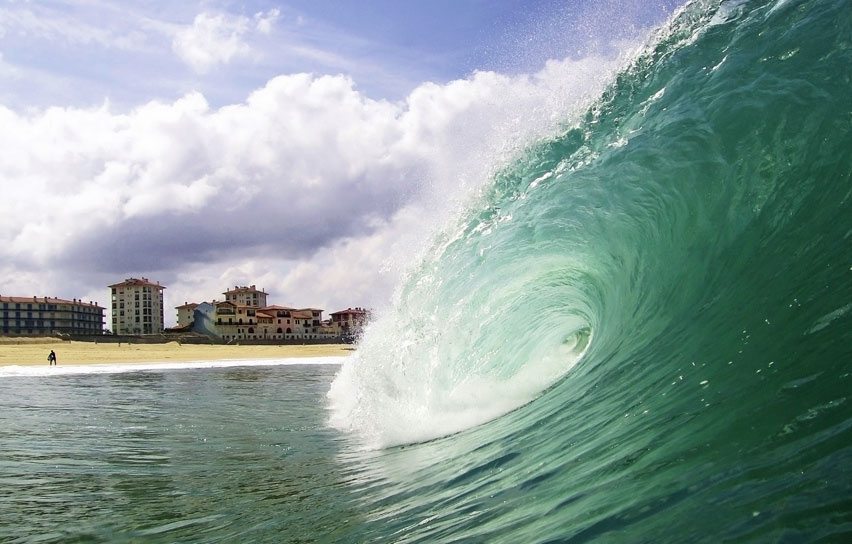
Oléron is the most northerly of France’s proper surf destinations, and its west coast picks up plenty of Atlantic swell. The waves are generally softer and less crowded than the heavyweight breaks further south in south-west France, which makes the island a brilliant place to learn or to log lots of water time.
Vert Bois, on the west coast at Dolus-d’Oléron, is the island’s best-known spot — a classic beachbreak that works best from mid to low tide. Further north, Les Huttes near the Chassiron headland serves up faster, hollower peaks that suit experienced surfers, especially from September to March when the crowds thin out. Beginners should head south to the Grande Plage at Saint-Trojan-les-Bains and Grand-Village-Plage, where long, gentle walls roll in over sand — though keep an eye out for rip currents on bigger days.
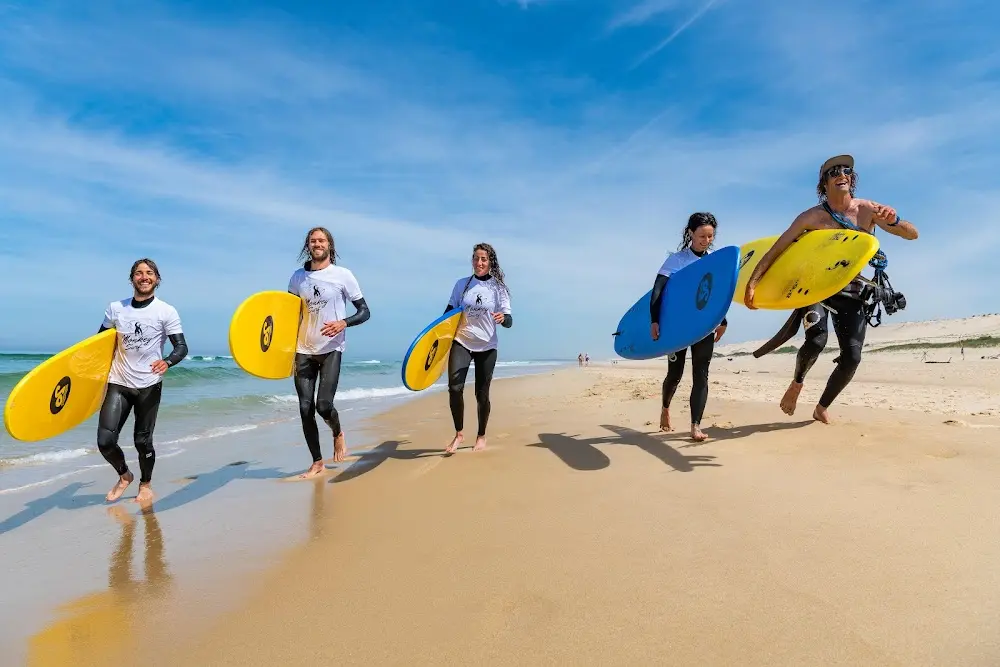
For lessons, Drop’in Surf Academy in Saint-Pierre-d’Oléron runs a clever travelling-school format: local instructors drive you by van to whichever spot has the best conditions that day. You can book a three-hour surf lesson from around €50 per person. Kabana Surf at Grand-Village-Plage also offers lessons and board hire. Never surfed before? Start with our learn to surf guide.
Kitesurfing & Wingfoiling
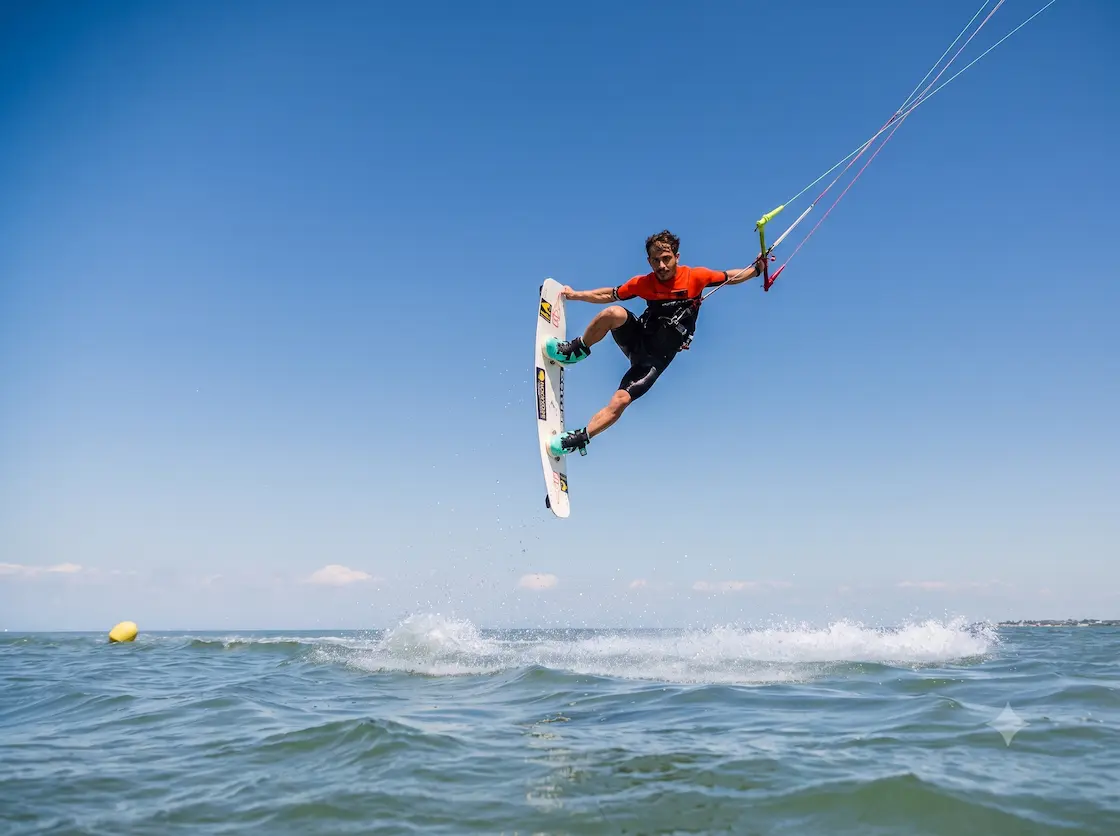
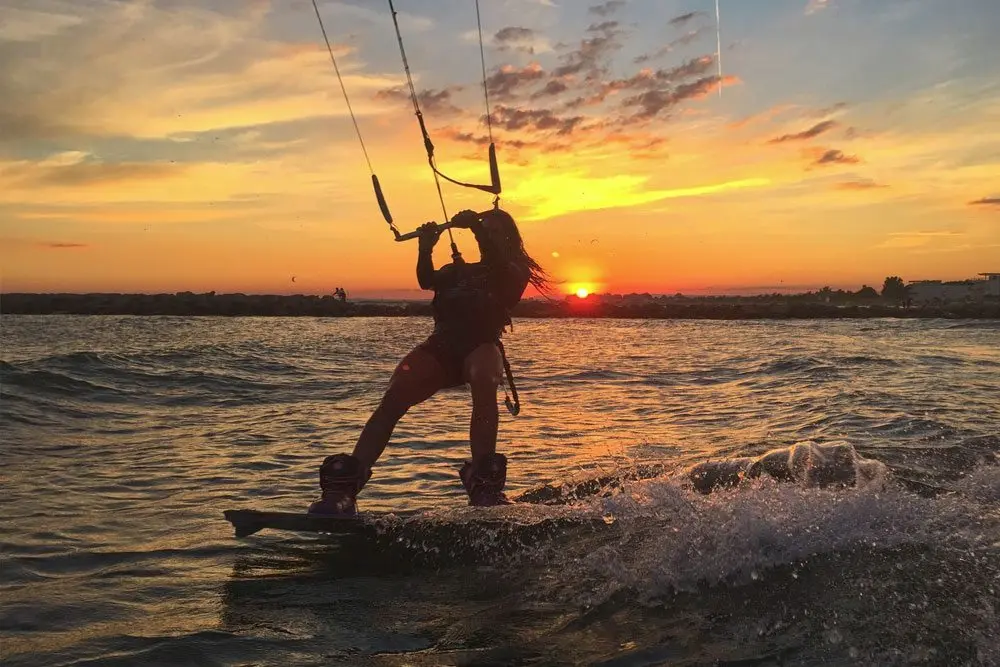
Steady Bay of Biscay winds and kilometres of wide, flat sand make Oléron one of the best kitesurfing destinations on France’s Atlantic coast. The golden rule is simple: the east coast is for learning, the west coast is for sending it.
The flagship spot is the Plage des Huttes at Saint-Denis-d’Oléron — 5 km of exposed, uncrowded beach on the north-west coast with a dedicated kite zone in summer. It works on anything from southerly to north-westerly wind, but watch the rocks and currents around big tides. For learning, the Plage de Plaisance just south of Le Douhet port is ideal: shallow, sheltered from the west-coast swell, and glassy-flat at low tide. Nearby La Gautrelle, north of Boyardville, gives you Fort Boyard as a backdrop while you ride. There are more good spots in the south around Saint-Trojan-les-Bains and Grand-Village-Plage.
Most schools on the island now teach wingfoiling alongside kitesurfing, so it’s easy to try both in one trip. Oléron Kite Surf (OKS) — the island’s original FFVL-accredited kite school, running since 2005 — operates as a roaming school across six spots between Saint-Georges and Saint-Denis, moving each session to wherever the wind is working. If you’re starting from zero, read our beginner’s guide to kitesurfing first.
Cycling
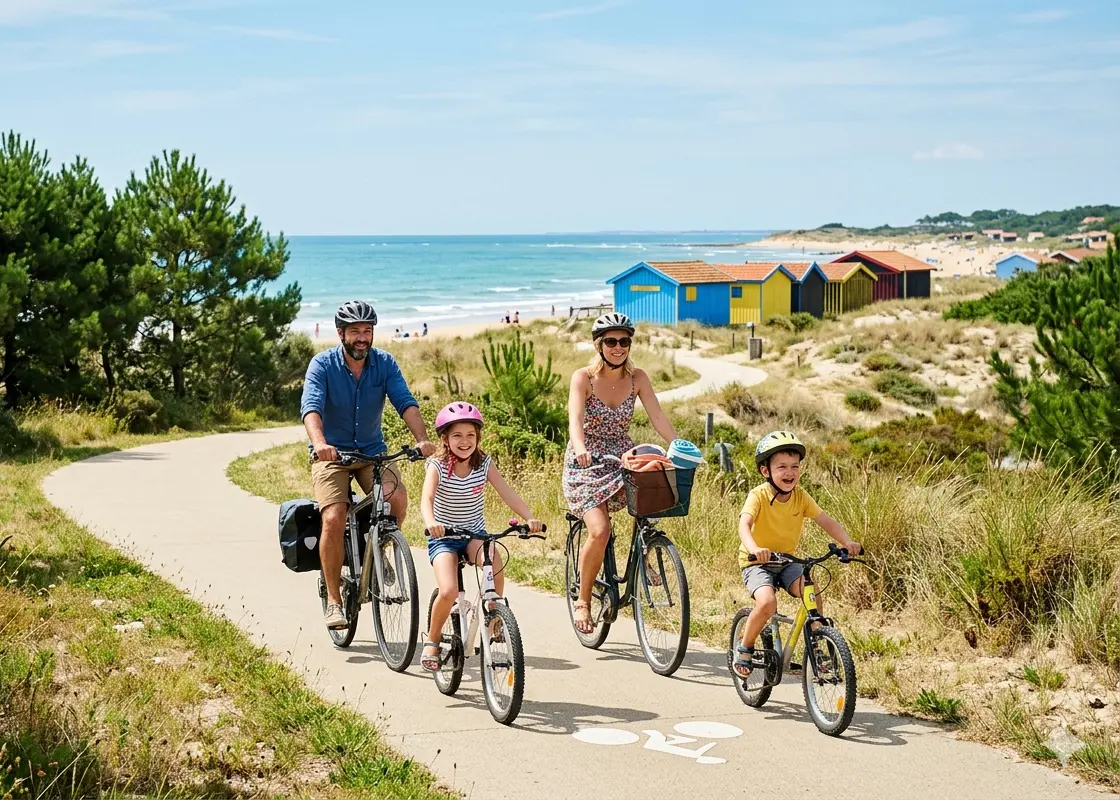
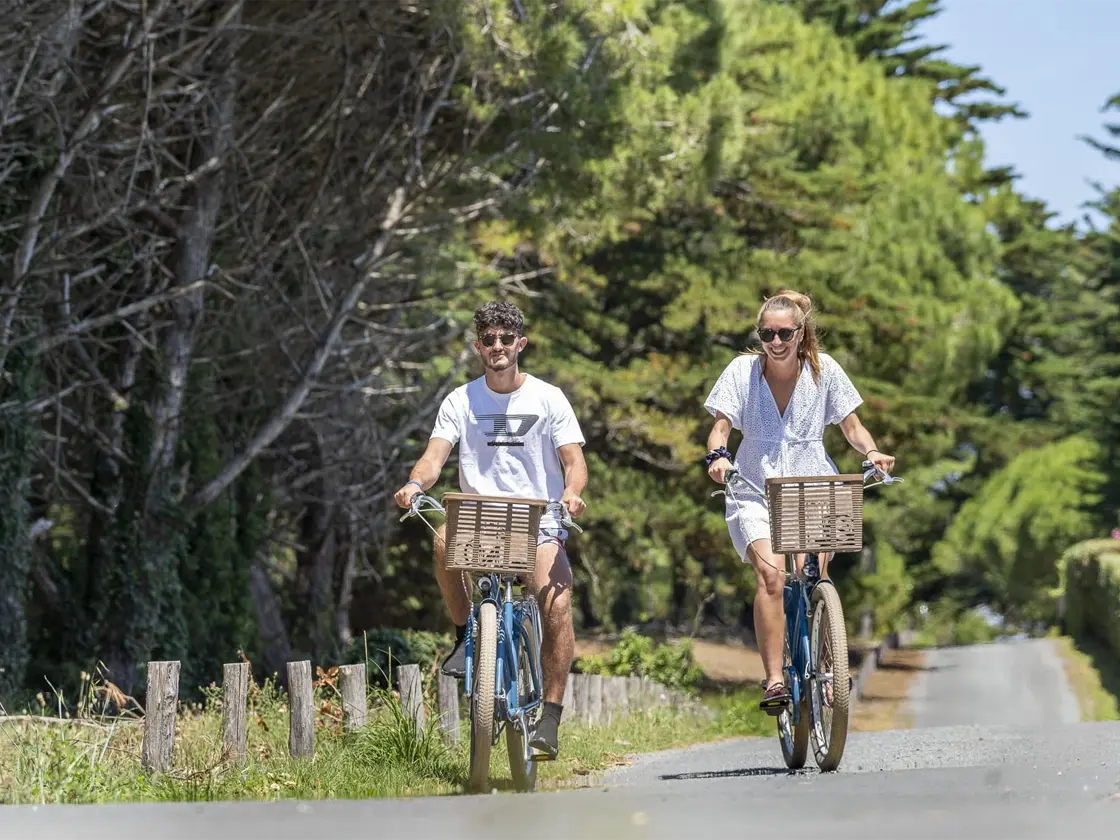
Île d’Oléron is made for cycling. Around 160 km (100 miles) of signposted cycle paths thread between beaches, oyster marshes, vineyards and pine forest — and the whole island is pancake-flat, so everyone in the family can join in. In summer, when beach parking is scarce and traffic crawls, two wheels beat four every time.
Three rides to build a day around: pedal north through the vines to the Chassiron lighthouse at the island’s tip; cruise the shaded Forêt des Saumonards from Boyardville with views out to Fort Boyard; or loop the oyster marshes around Le Château-d’Oléron, stopping at a cabane for a dozen Marennes-Oléron oysters en route. Paths are smooth, flat and well signed, with picnic spots and oyster huts along the way.
Hire is easy. Vélos 17 Loisirs has shops across the island — La Brée-les-Bains, Saint-Pierre, Saint-Denis and Domino — with online booking, click-and-collect and delivery to campsites. Expect to pay around €18–21 for a half-day on a standard adult bike, or about €31 for an e-bike. Tandems, kids’ bikes, trailers and child seats are all available.
Sea Kayaking
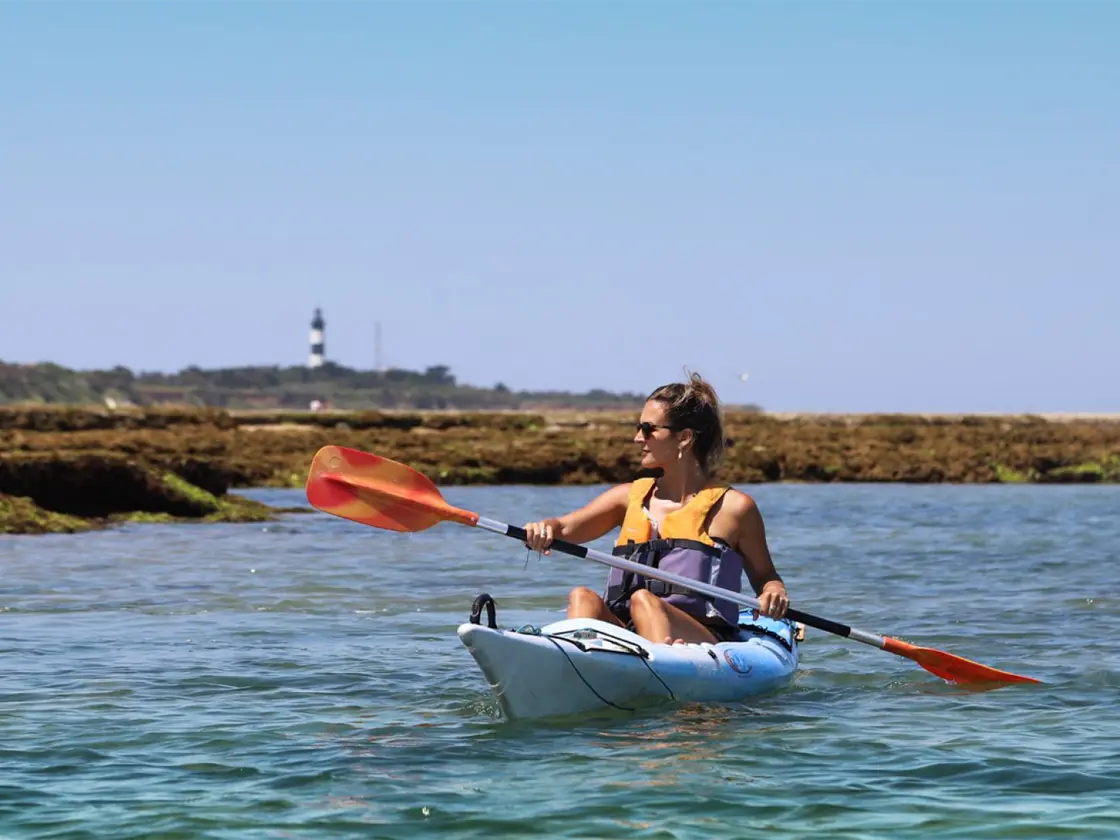
Between the open ocean and the marshes, Oléron is made for paddling. The sheltered east coast is the place to start: calm water, oyster farms to weave through, and channels that wind deep into the salt marsh. Launch at Boyardville or Le Château-d’Oléron and you can paddle scenery that changes every 500 metres.
The wildlife is the headline act. The island’s marshes and the surrounding Moëze-Oléron nature reserve host tens of thousands of migrating birds — herons, egrets, avocets and more — and a kayak gets you closer than any hide. Confident paddlers can strike out along the coast towards Fort Boyard for the classic photo, but check the tides and conditions first: currents in the strait are serious.
Local operators around Boyardville and Saint-Trojan run guided outings of around two hours, taking in the nature reserves, oyster farms and sheltered coves — a great option if you’d rather have someone else read the tides.
Sailing & Boat Trips
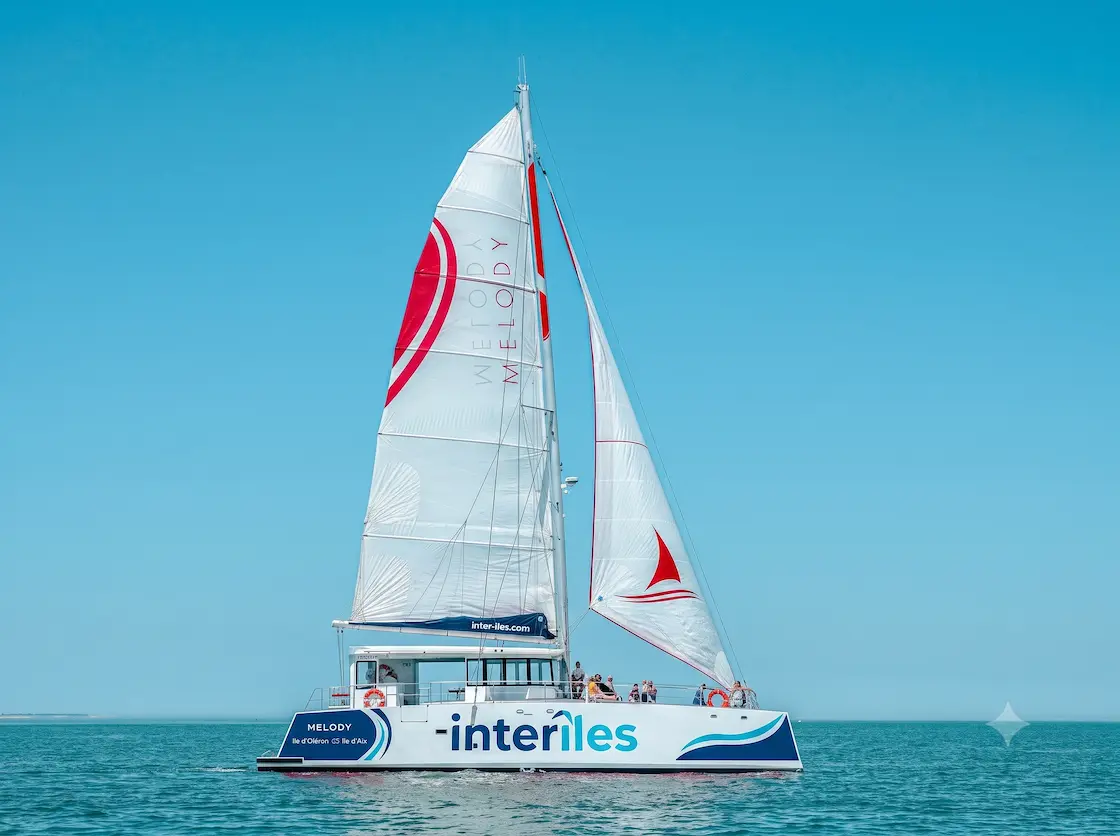
Oléron has salt water in its veins, and its three harbours — Boyardville, Le Douhet and Saint-Denis-d’Oléron — welcome visiting boats as well as day sailors. The east coast, protected by the mainland across the Coureau d’Oléron strait, offers forgiving conditions for beginners, while the exposed western side gives experienced sailors a proper Atlantic workout.
Want to learn? Wind Oléron Club at La Perroche on the south-west coast runs catamaran and dinghy courses for adults and kids, alongside foiling and land yachting. Sailing schools and boat hire operate at ports around the island in season.
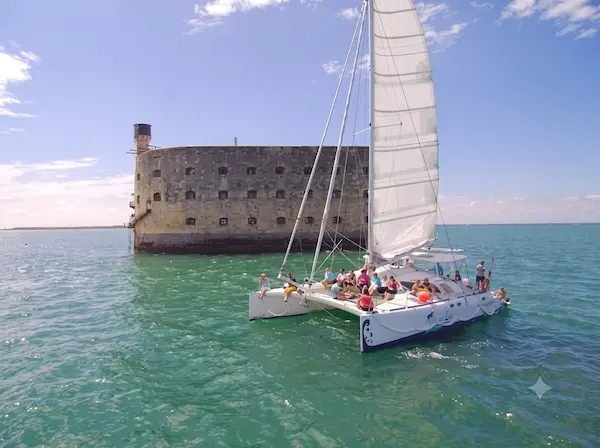
The easiest way onto the water, though, is a boat trip. From Boyardville, Compagnie Interîles runs a two-hour sunset catamaran cruise past Fort Boyard and along the shores of the Île d’Aix — around €35 per person, with the fort silhouetted against the sunset. It’s the best Fort Boyard photo opportunity you’ll get without a drone.
Book a Sailing Trip
Our sailing partners in Boyardville run relaxed trips out to the most famous landmark on this stretch of coast. Feel the boat surge as the engine cuts and the sails fill — it’s the best way to experience these waters.
Sail to Fort Boyard
Board the maxi-catamaran Melody at Boyardville for a 90-minute sail out to the legendary Fort Boyard and along the shores of the Île d’Aix. When conditions allow, the skipper kills the engine — just wind, water and that unmistakable fortress filling your camera frame.
There’s a bar on board, indoor and outdoor lounge areas, and trampoline nets for stretching out in the sun. Around €30 per person, with free cancellation up to 24 hours before departure. Book a sailing trip in partnership with GetYourGuide.
Land Yachting
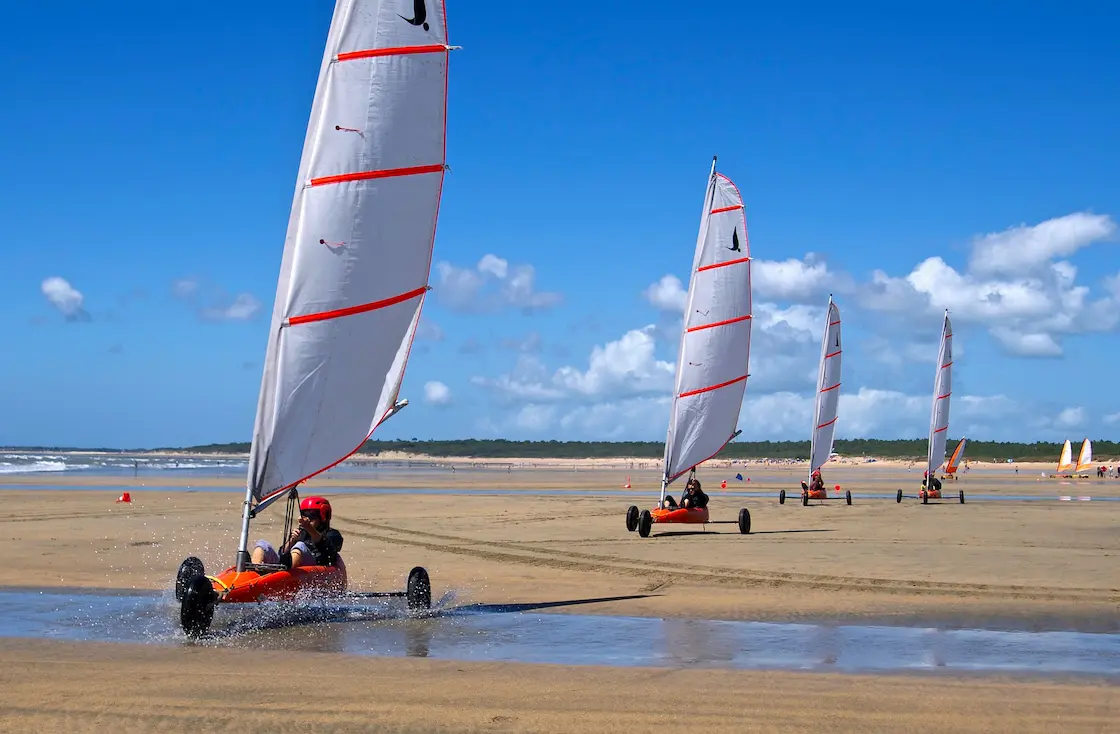
Wide, firm, gently shelving sand plus reliable wind equals one of France’s best land yachting (char à voile) destinations. At low tide the beaches in the south of the island turn into natural racetracks, and a three-wheeled kart with a sail will hit speeds you’d think twice about on a bike — up to 60 km/h, centimetres off the ground.
It’s also one of the most accessible wind sports going: no balance required, quick to learn, and brilliant fun for kids and adults alike. Even better, it’s a year-round activity — autumn and winter, when the wind picks up and the beaches empty, are prime time.
Oléron Char à Voile, running since 1997 at Grand-Village-Plage, offers discovery sessions and courses on a marked beach circuit in summer. Outside high season, sessions move to the vast Maumusson beach — reached via the little tourist train from Saint-Trojan-les-Bains, which is half the adventure in itself.
Surf Lessons with a Local Instructor
Skip the guesswork and learn to surf with instructors who grew up on these waves.
Drop’in Surf Academy’s three-hour travelling lesson starts with a van ride to the best spot on the island for that day’s swell, wind and tide. Board, wetsuit and a state-certified instructor are all included, and groups are capped at eight people.
The session suits complete beginners and improvers alike, with lessons in English or French. Expect to pay around €50 per person.
Reserve now and pay later — cancellation is flexible, so you can book before you know the forecast.
Where to Stay on Île d’Oléron
Oléron does laid-back accommodation brilliantly — think glamping in the pines, chambres d’hôtes in fishing villages and family campsites behind the dunes.
When choosing a base, think about your sport first. Surfers and kitesurfers want the west and north — Saint-Denis, Les Huttes, Vert Bois. Sailors, kayakers and families do better on the calmer east coast around Boyardville. Cyclists can stay anywhere: the path network reaches every corner of the island. Here are some of our favourite places to stay:
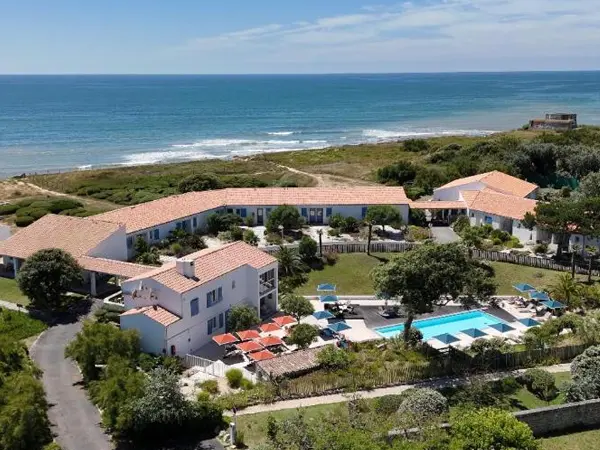
Hôtel Île de Lumière

Camping Signol

Clos des Aigrettes
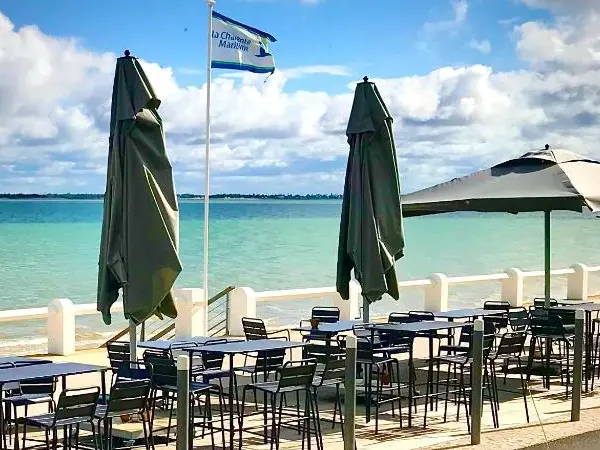
Le Homard Bleu
Find More Accommodation
Use the map below to search hotels, campsites, apartments and villas across the Île d’Oléron.
Practical Info
Getting There
The island is joined to the mainland at Bourcefranc-le-Chapus by a 3 km bridge — and crossing is free, unlike its neighbour the Île de Ré. By road, leave the A10 at Saintes and it’s around 45 minutes to the bridge; La Rochelle, Rochefort and Bordeaux all connect easily. The nearest airport is La Rochelle, about an hour away. By rail, take the TGV to Surgères or the train to Rochefort, then a connecting bus to the island.
Getting Around
In July and August, do yourself a favour and ditch the car. Free summer shuttle buses ferry visitors around the island, and the flat cycle network reaches every town and most beaches. If you do drive, expect congestion near the beaches on summer afternoons.
Parking
Crossing the bridge is free, but beachfront parking isn’t — expect to pay from around €2 per hour at the seafront in season, often with time limits that are keenly enforced. Free parking is usually available on the edges of the towns. Better still, arrive by bike and roll straight to the sand.
Bike Hire
Vélos 17 Loisirs is the island’s biggest rental network, with shops in La Brée-les-Bains, Saint-Pierre, Saint-Denis and Domino. Book online for click-and-collect, or have bikes delivered to your campsite. The range covers everything from beach cruisers and e-bikes to tandems, kids’ bikes and trailers.
Best Time to Visit
Oléron’s microclimate delivers sunshine well beyond high summer. June and September are the sweet spot: warm sea, working surf, open restaurants and empty cycle paths. July and August bring the buzz (and the crowds). For surfers and kitesurfers, autumn is prime — bigger swells, steady winds and beaches to yourself. Land yachting peaks in winter when the wind is up and the tide is out.
Île d’Oléron FAQ
Planning Your Visit
No. The 3 km bridge from Bourcefranc-le-Chapus is completely free to cross, in both directions — unlike the toll bridge to the neighbouring Île de Ré. You will pay for beachfront parking in season, though, so many visitors switch to bikes or the free summer shuttle buses once they arrive.
Absolutely — it’s the best way to get around. The island has around 160 km (100 miles) of signposted cycle paths linking beaches, oyster ports, forest and vineyards, and the terrain is completely flat. Hire shops like Vélos 17 Loisirs offer online booking, click-and-collect and campsite delivery, with e-bikes, tandems and kids’ trailers available.
June and September offer the best balance: warm weather, quieter beaches and everything open. July and August are liveliest but busiest. Surfers and kitesurfers should look at autumn, when swells and winds are more consistent, while land yachting is at its best on the empty winter beaches.
Surf, Kite & Boat Trips
Yes — it’s the most northerly of France’s proper Atlantic surf destinations. Vert Bois is the best-known beachbreak, Les Huttes suits experienced surfers, and the gentle waves at Saint-Trojan and Grand-Village are ideal for beginners. Waves are softer and far less crowded than in Hossegor or Biarritz, and lessons cost around €50 for a three-hour session.
You can’t go inside — the famous fort is a TV set, not a museum — but boat trips from Boyardville circle it up close. A two-hour sunset catamaran cruise past Fort Boyard and the Île d’Aix costs around €35 per person, and kayakers and sailors get great views from the water on calm days.
Head for the sheltered east coast. The Plage de Plaisance, just south of Le Douhet port, has shallow, flat water that’s perfect for first lessons, and La Gautrelle near Boyardville is another good learning spot. Schools like Oléron Kite Surf (OKS) move between spots to match the day’s wind, and most now teach wingfoiling too.
Please leave a comment below if you need specific advice for your trip to the Île d’Oléron, or if you have any recommendations to help us improve this guide. Happy holidays!