
Each winter, around one million skiers travel from the UK to France, yet few consider how many French ski resorts they could reach by train. Most will reach the Alps via flights from Gatwick and Heathrow, landing in Chambéry and Geneva before driving to their destination.
By Daniel Elkan and Robert Thorne
TRAIN OPTIONS | THE RESORTS | FAQS | ABOUT THE AUTHOR
However, thanks to the Channel Tunnel (turning 32 this year), for British skiers, the French Alps are one of the most accessible ski regions in the world by train. After taking the Eurostar from St Pancras to Paris, Lille or Brussels, British skiers have an immense range of options, with daily high-speed and weekly overnight services providing access to the most popular resorts in France (and some hidden gems, too).
We may earn a commission if you book through our links, at no extra cost to you.
Why don’t more Brits take ski holidays by train?
When asked, the two main answers that come up, time and again, are ‘time’ and ‘cost’. Complementing these is a third, unspoken factor: ignorance. Since the dawn of budget air travel to the Alps in the 90s, UK-based skiers have become so used to flying that they don’t even consider the train as an option, or that there are both time- and cost-effective ways to reach the Alps by rail.
Granted, compared to a glance at Skyscanner, train travel takes a little more forward planning than flying. However, with a good ski holiday by rail, the rewards are manifold. Think extra time on the slopes; comfortable travel with great views, opportunities to read, have a tipple, or make new friends; exclusive in-resort deals and discounts; and above all, a carbon footprint almost 80–90% lower than if you’d flown. Altogether, the journey becomes part of the holiday.
Just picture it: arriving in Paris, a vibrant metropolis and the capital of Western art and culture. If you’re so inclined, you can stopover for a few days—take in the museums, jazz bars, and boulangeries—or else, transfer across the city to your Alp-bound station, admiring the beautiful architecture on the way. Either way, in the Gare de Lyon or Gare d’Austerlitz, whether morning, afternoon, or evening, you’ll step aboard a train hassle-free, with as much luggage as you can carry, and perhaps a coffee and pastry in hand. Soon, the vast urban sprawl will become forests, fields and villages; the moon will rise, or the sun will appear; and in a few hours, the first snowy mountains will come into view, promising a holiday to be remembered.
Your ski train options: Eurostar Snow, sleeper or TGV
So, what are your options?
The four best ways to reach the French Alps by train are the indirect Eurostar Snow (providing access to the Tarentaise), the overnight Travelski Night Express (also the Tarentaise), a high-speed TGV (taking you pretty much anywhere—Vanoise, Écrins, even Italy), or a Brussels stopover followed by the direct Brussels-to-Bourg-Saint-Maurice Eurostar.
Eurostar Snow (the old Eurostar ski train)

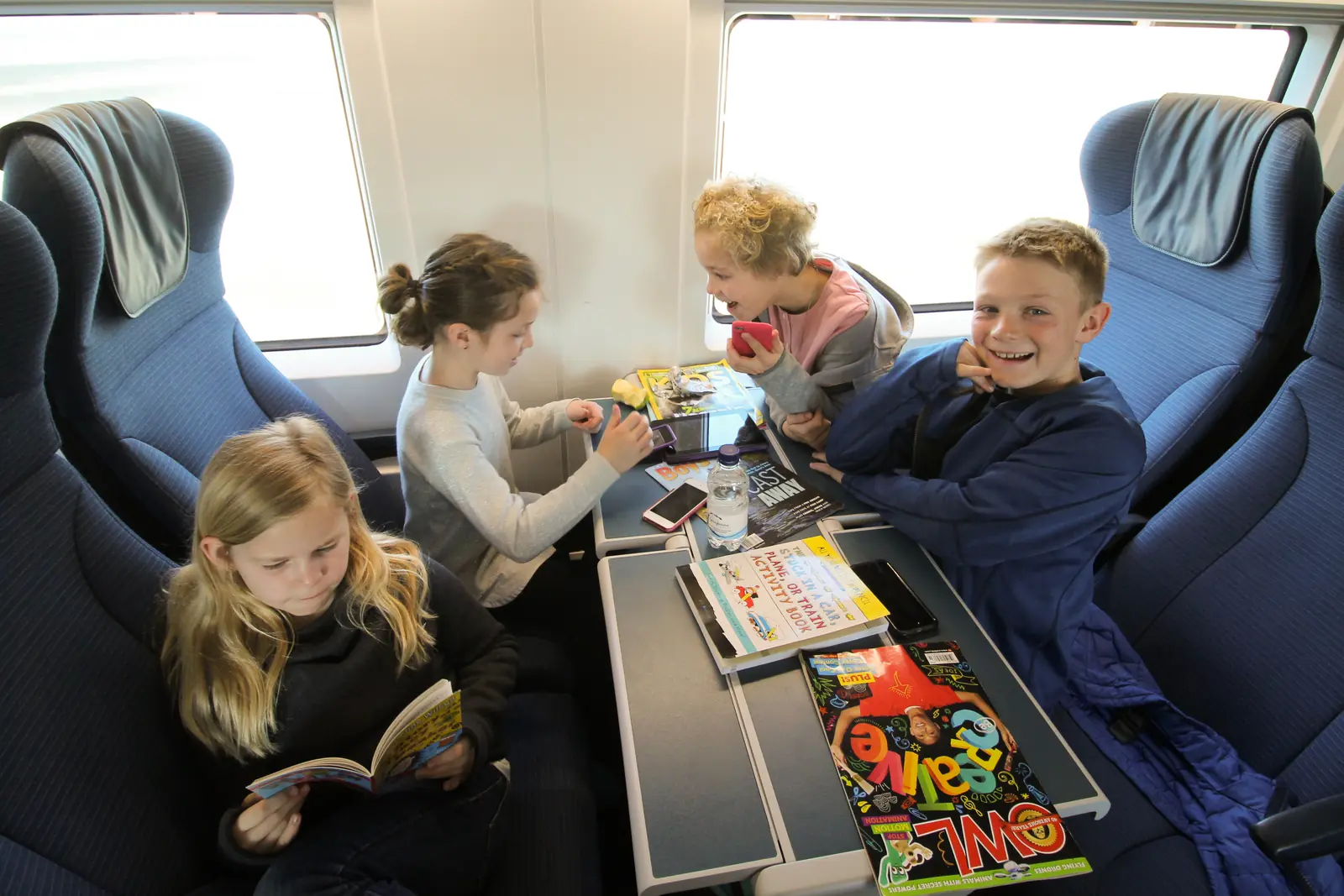
Replacing the much-beloved Eurostar Ski Train, Eurostar Snow runs from St Pancras, with a change of train at Lille on Saturdays in winter, passing through Chambéry, Albertville, Moûtiers, Aime-la-Plagne and Landry, before its final stop at Bourg-Saint-Maurice. Perhaps most convenient of all, if you’re still not sure about which ski resort to choose, a Eurostar Snow ticket allows you to get off at any station en route at no extra cost. The service is aimed squarely at skiers, but there are two annoying things about it this winter: the final outbound departure is 20th February 2027, while a huge chunk of the ski season is still to go. And most return journeys are back on Sundays instead of Saturdays, requiring skiers to source an extra night’s accommodation in the Alps. Book Eurostar Snow on Trainline
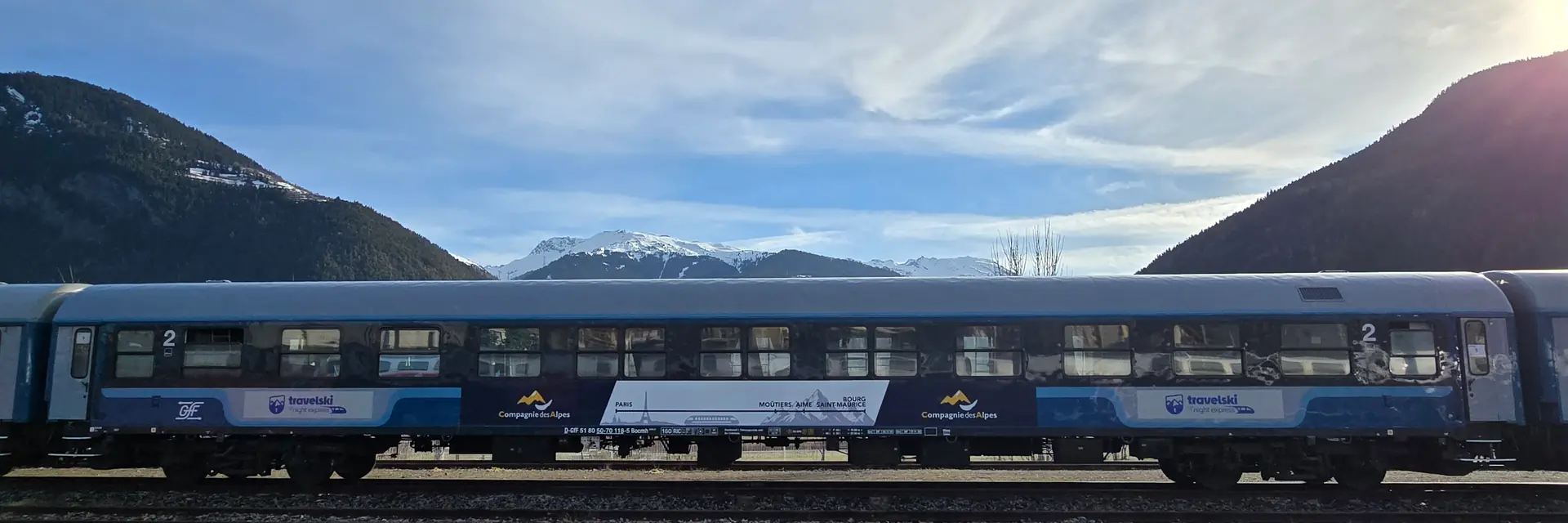
Travelski Night Express (sleeper)
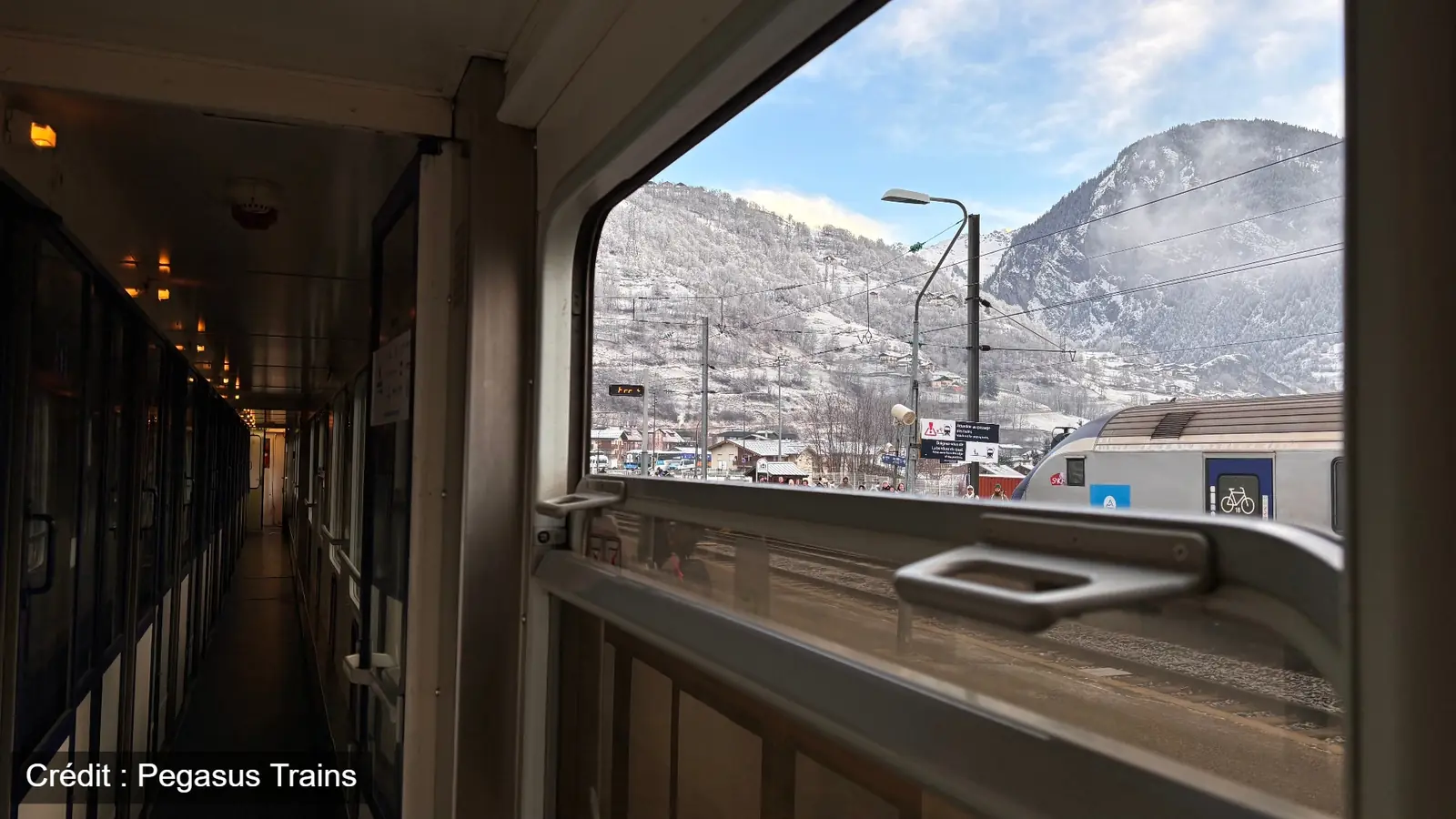
The Travelski Night Express, meanwhile, is a relatively new service, now coming up to its second season. As a sleeper train, its biggest benefit is in giving you two extra days on the slopes. The train departs from Paris Gare d’Austerlitz and from Brussels-Midi on a Friday evening, terminating in Bourg-Saint-Maurice the following morning; it returns on the following Saturday, arriving in Paris or Brussels on the Sunday morning. Fares are impressively low, too, giving you excellent value-for-money that outstrips any budget airline.
TGV via Paris
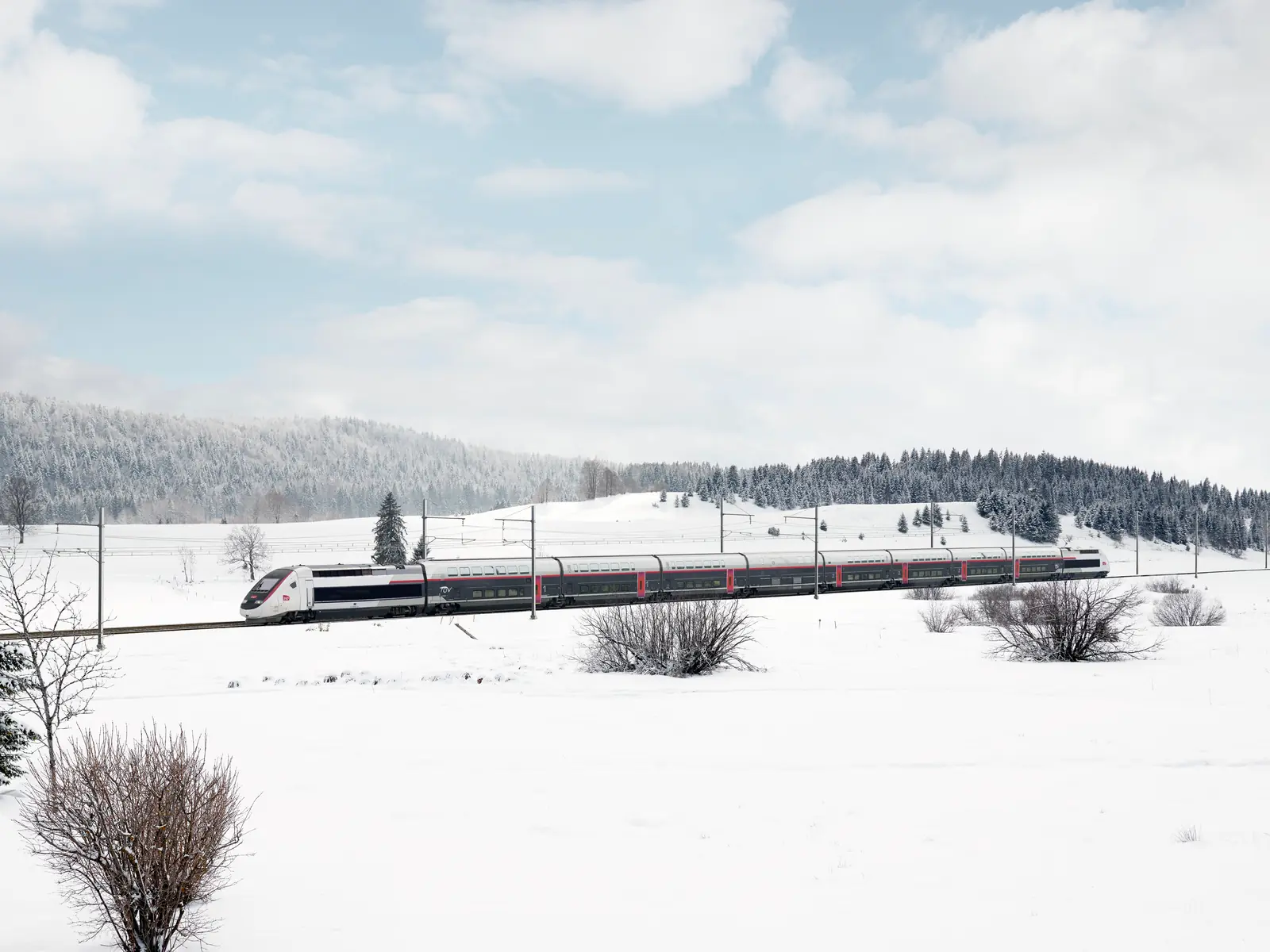
Finally, SNCF’s high-speed TGVs are more than just a French icon: they’re one of the best ways to reach resorts outside the Tarentaise, such as Serre Chevalier and Alpe d’Huez. From Paris Gare de Lyon, the range of ski destinations you can reach in just a few hours is staggering—and, unlike Eurostar Snow or the Travelski Night Express, TGVs operate daily, giving you much greater flexibility. The only slight downside is how far you can book in advance: tickets for TGVs only go on sale between two and four months prior to departure, much later than either of the above options. Check TGV times and fares on Trainline
The ski trains at a glance
| Service | Days (winter 2026/27) | Departs from | Main Alpine stops | Booking |
|---|---|---|---|---|
| Eurostar Snow | Saturdays, 19 Dec 2026 – 20 Feb 2027 (most returns on Sundays) | London St Pancras, change at Lille | Chambéry, Albertville, Moûtiers, Aime-la-Plagne, Landry, Bourg-Saint-Maurice | On sale since July 2026 |
| Eurostar Snow direct from Brussels | Saturdays, 19 Dec 2026 – 3 Apr 2027 | Brussels-Midi (also Amsterdam, Rotterdam, Antwerp) | As above | On sale now |
| Travelski Night Express | Friday nights, 18 Dec 2026 – 26 Mar 2027; returns Saturday nights | Paris Gare d’Austerlitz; separate train from Brussels-Midi (and Amsterdam) | Moûtiers, Aime-la-Plagne, Bourg-Saint-Maurice | On sale since April 2026 |
| TGV | Daily (direct Tarentaise TGVs mostly at weekends) | Paris Gare de Lyon | Tarentaise stations, Grenoble, Modane, Cluses, Saint-Gervais | Travel from 7 Jan 2027 goes on sale 12 Nov 2026 |
Sources: Eurostar, Travelski, SNCF Connect, Snowcarbon. Check times before you book.
To help you decide which service to take and where, we’ve compiled a list of some of the best French resorts to reach by train, with schedules, below.
1. Tignes: high-altitude skiing from Bourg-Saint-Maurice
Nearest station: Bourg-Saint-Maurice (end of the Tarentaise line).
Getting there: Eurostar Snow from London on Saturdays (just under 8 hours); Travelski Night Express from Paris on Friday nights; seasonal TGV and OUIGO trains from Paris Gare de Lyon, mostly at weekends. Check times and fares to Bourg-Saint-Maurice on Trainline
Transfer: Altibus coach from beside the station, or about 40 minutes by taxi.
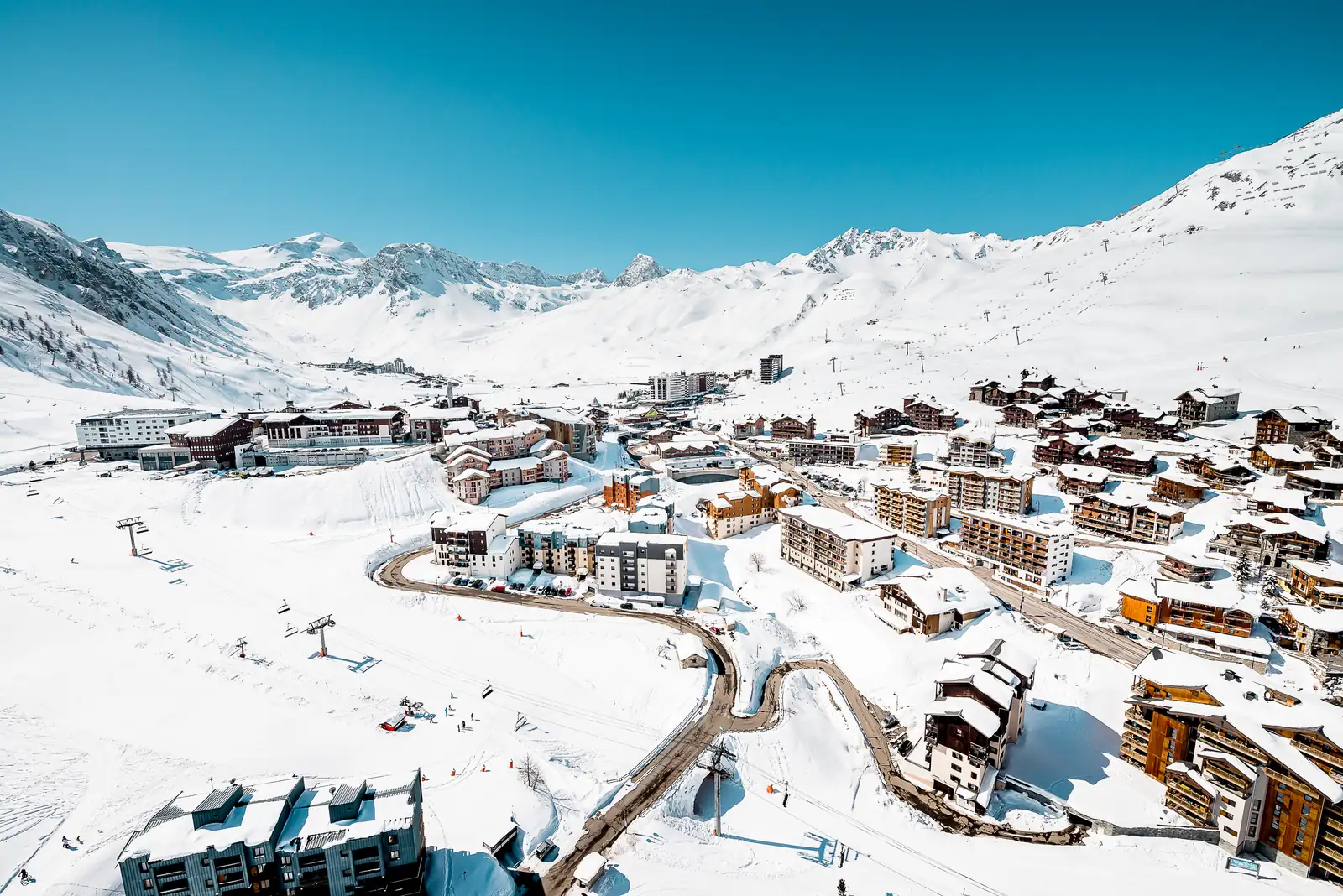
High-altitude Tignes has attracted some of the world’s best skiers since the development of its main village, Tignes Le Lac, in the 1950s. Purpose-built within a vast, snowy bowl, visitors have near 360° access to the slopes, with most accommodation being a five-minute walk from the lifts. With over 300km of above-treeline piste shared with Val d’Isère, plus endless, north-facing off-piste, it’s a resort that caters well to all abilities, with a soft spot for freeriders looking to imitate regular guest Candide Thovex, whether in Le SPOT (a dedicated off-piste area for beginner backcountry) or on Tignes’ 12 ungroomed ‘Naturides’.
The resort comprises five base villages. From closest to farthest from the slopes, these are: (Tignes 2100) Val Claret, Le Lac, and Le Lavachet; (Tignes 1800) Les Boisses; and (Tignes 1500) Les Brévières—the last two of which are your cheapest and quietest options. Each has its unique flavour, and as of 2026, family-oriented Le Lavachet is undergoing a multi-million-euro renovation project. For après-ski, head to Val Claret’s Cocorico, followed by the ‘Golden Triangle’ of Grizzly’s, L’Arobase, and Blue Girl.
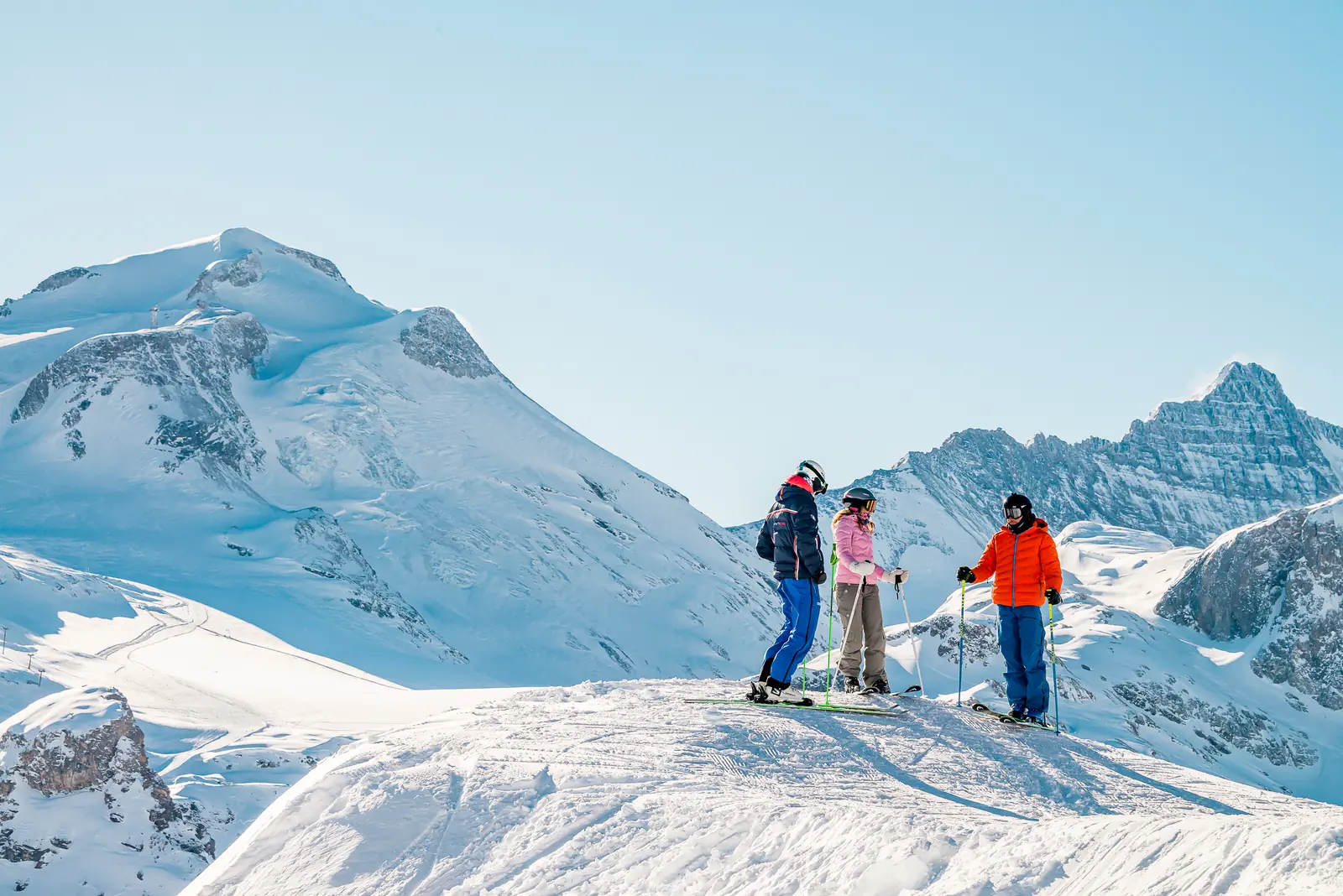
Almost as hardcore as the skiing are Tignes’ non-ski activities. These include ice-diving in the frozen lake, paragliding, and ‘Bun J Ride’ bungee skiing (located beside the Merles chair). More relaxed pursuits, such as yoga and ice-skating, can also be found in-resort. For dining, we recommend the homemade burgers at newly opened Cav’Ô 1800 in Les Boisses, or else (if the budget allows) the Colombian-inspired Bazurto in Val Claret.
Where to stay: Check prices in Tignes →
2. Méribel: the heart of the 3 Vallées
Nearest station: Moûtiers (Tarentaise line).
Getting there: Eurostar Snow from London on Saturdays (about 7 hours); Travelski Night Express from Paris on Friday nights; seasonal TGVs from Paris Gare de Lyon.
Transfer: Altibus coach up the valley (18km), or about 30 minutes by taxi.
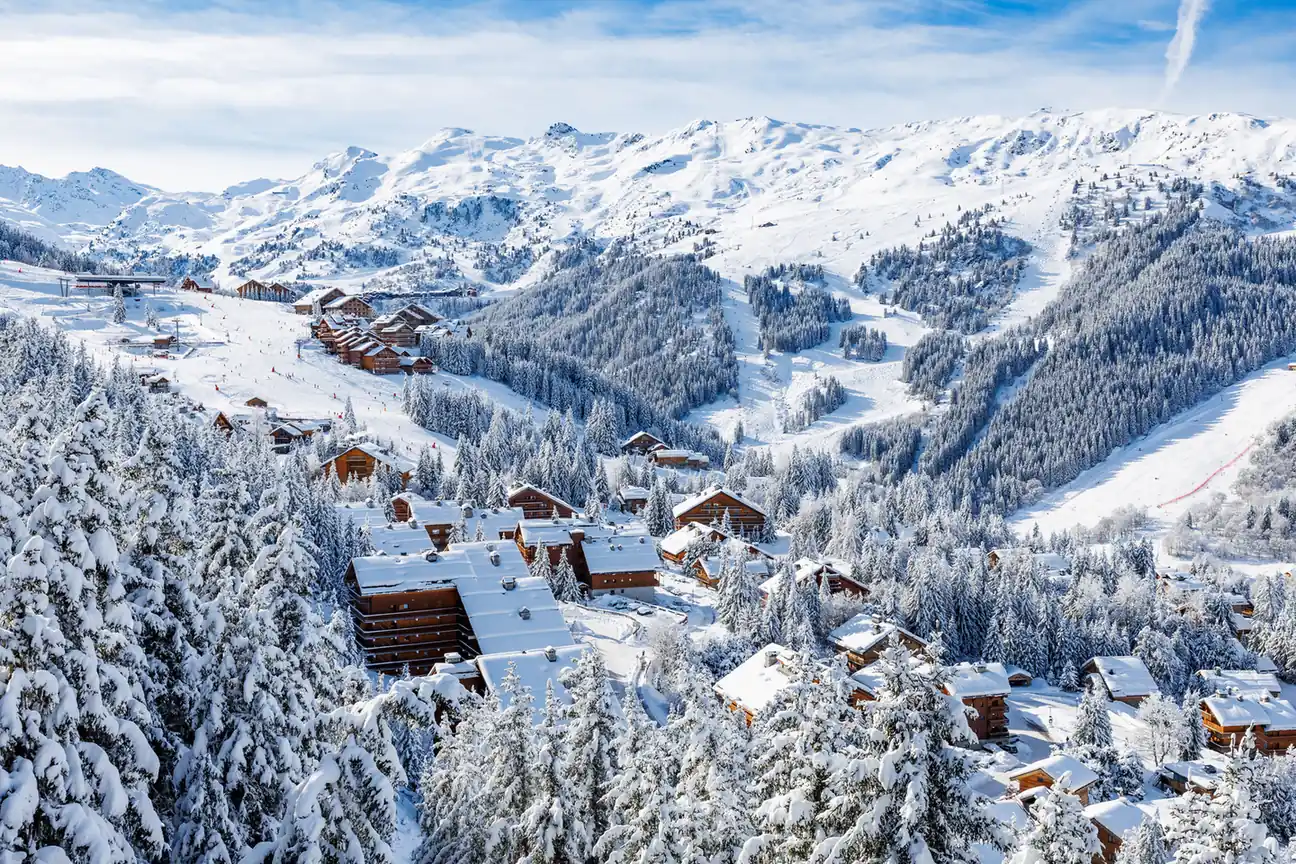
Méribel is one of France’s classic resorts, with skiers taking to its slopes for almost 90 years. It’s easy to see why: the resort ticks all the boxes, with traditional chalet architecture, beautiful forested surroundings, and some of the world’s finest skiing within the immense 3 Vallées Domain. In recent years, it’s also garnered renown for lively après-ski in venues like La Folie Douce, Le Rond Point, and La Taverne.
Yet, owing to its excellent lift system connecting Méribel neighbours, Méribel is so much more than its own reputation. Its central location within the 3 Vallées provides the perfect starting point for expeditions to neighbouring Courchevel (east) and Val Thorens (west). In between, there’s plenty of excellent off-piste too: the Aiguille du Fruit Sector, which ends in the Tuéda Nature Reserve, and the 37° Tournier Couloir being the most popular routes.
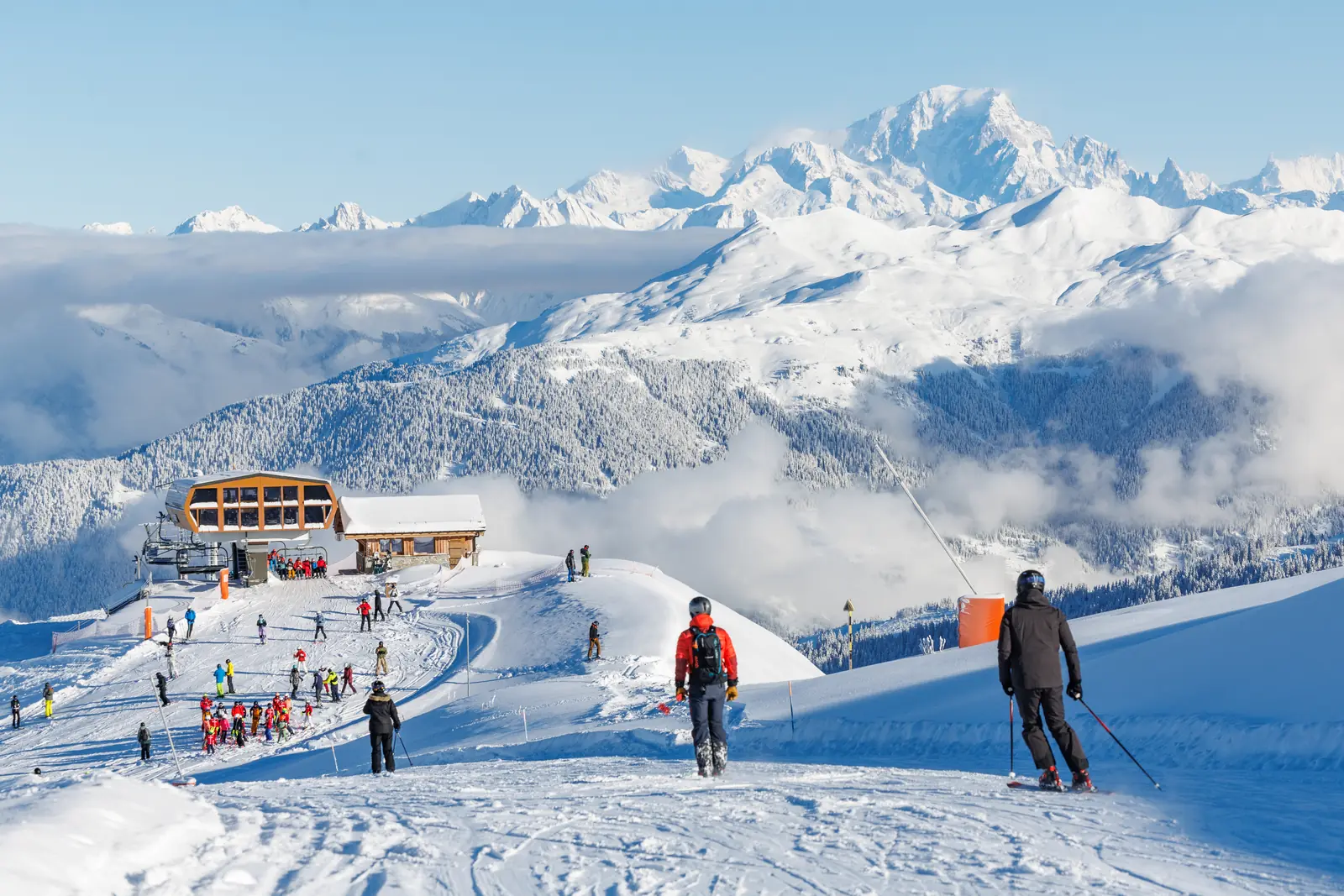
Méribel’s accommodation is devoid of the high-rise developments found in newer resorts. Instead, visitors have a choice of attractive chalets and self-catered apartments, as well as spa hotels such as Le Coucou and the Refuge de la Traye, and the Antarès residence. Given the main town’s lively nightlife, if you’re looking for a quieter stay, consider the up-valley neighbourhood of Méribel-Mottaret.
Although the 3 Vallées’ 600km of piste is undoubtedly Méribel’s highlight, the resort hosts a great range of non-ski activities at its Olympic Village, as well as seasonal events. These include an annual Jazz Festival in January and Sound Clash, a “DJ battle on the streets” in April—so be ready to boogie.
Where to stay: Check prices in Méribel →
3. Sainte Foy: quiet slopes 20 minutes from Bourg-Saint-Maurice
Nearest station: Bourg-Saint-Maurice (end of the Tarentaise line).
Getting there: Eurostar Snow from London on Saturdays; Travelski Night Express from Paris on Friday nights; seasonal TGV and OUIGO trains from Paris Gare de Lyon. Book trains to Bourg-Saint-Maurice on Trainline
Transfer: About 20 minutes by taxi, or Altibus to the valley and the free Sainte Foy shuttle up to the resort.
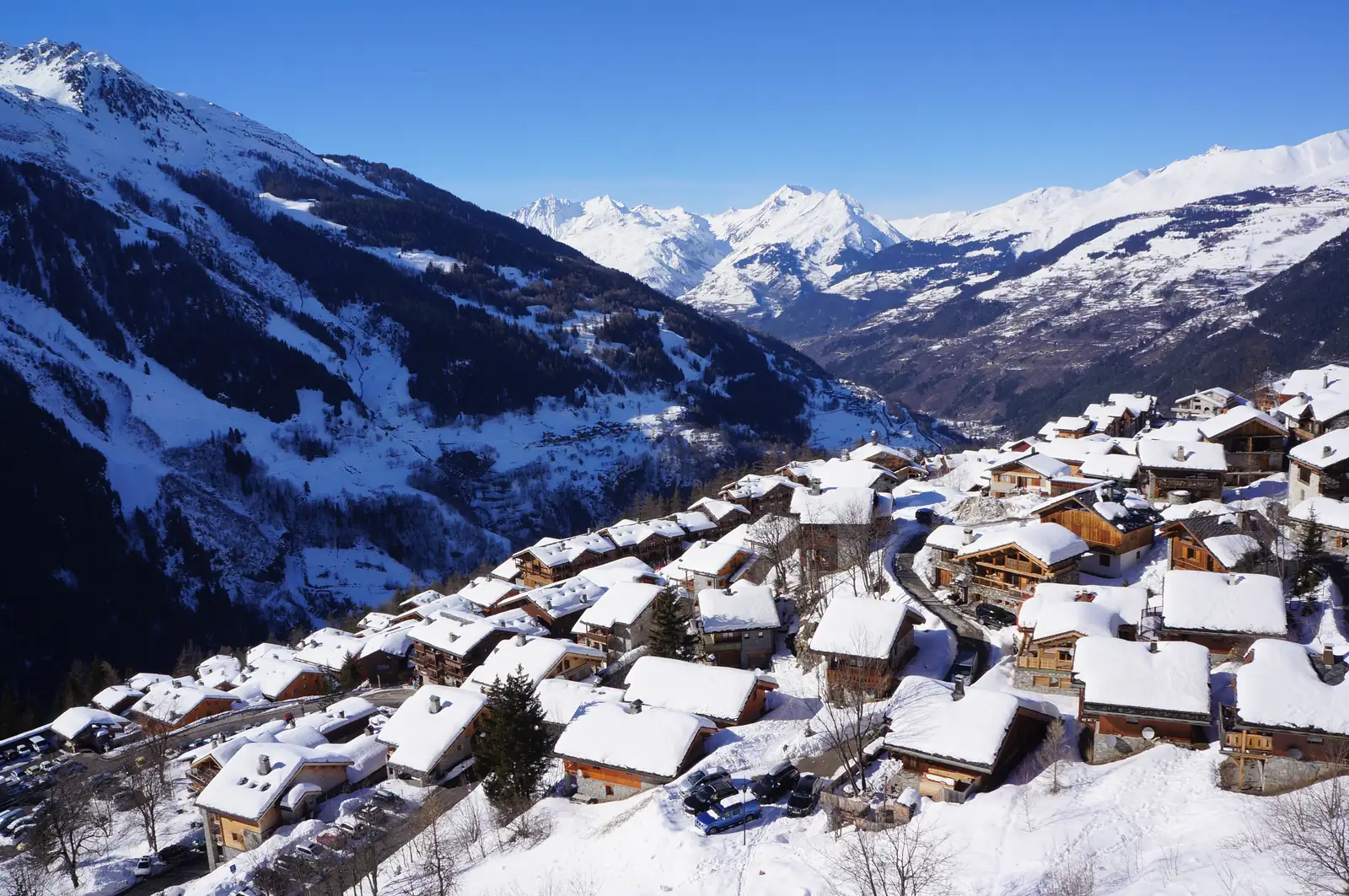
What Sainte Foy lacks in size, it makes up for in quality. As one of the smallest resorts in the Tarentaise, it has managed to remain off most Brits’ radars, despite its proximity to Bourg-Saint-Maurice station (a mere 20-minute taxi ride) and the vast Tignes–Val d’Isère ski area. As a result, its lifts are usually queueless, and its respectable 41km of piste, untouched—not to mention the resort’s abundant off-piste. For children and beginners, Sainte Foy is by far one of the best resorts in the Alps, owing to its two nursery slopes and seven gentle blues.
While the resort village has grown considerably since the 2000s, it’s retained a close-knit, rustic feel, made up mostly of traditional chalets within walking distance of the central Grand Plan chair. On-slope, Les Marquises and Les Brevettes provide local specialities from sunny terraces; off-slope, Le 1580m is a must-visit—a microbrewery and restaurant, specialising in British-style IPAs. As a small resort, Sainte Foy’s nightlife is limited, but you’ll still find some decent après-ski at Lama Llama and Les Moulinettes, and for more accommodation and dining options, satellite villages, including Le Planay and La Masure, are accessible via a free shuttle bus.
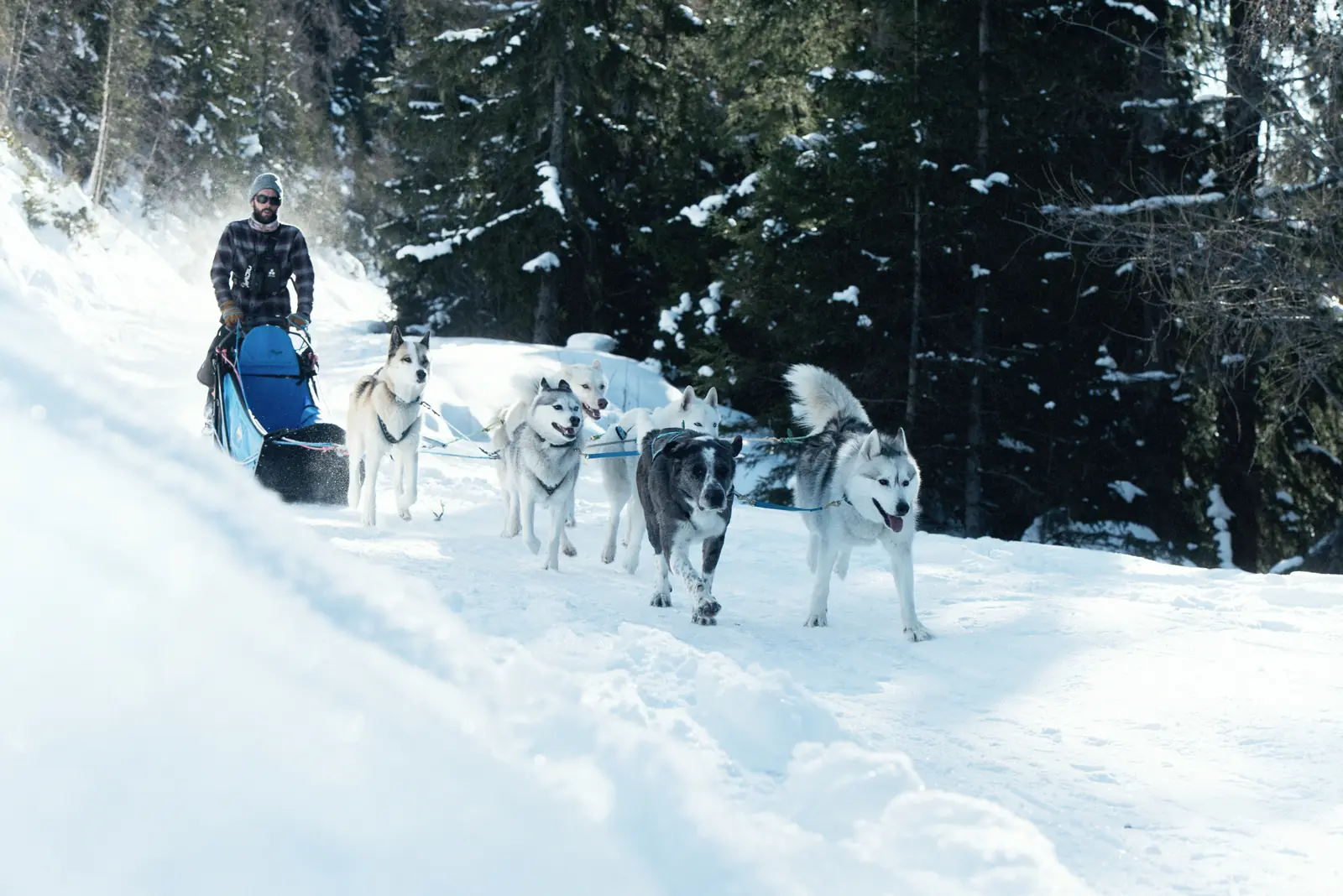
Beyond the slopes, the resort offers a range of family-friendly activities, including beginner lessons in dog-sledding at Tanaka Camp (from ages 3–7), night-time snowshoeing and stargazing tours (offered by Snocool), and Mountain Karting on the snow (for ages 11 and up). Thanks to a few torch-lit slopes, night skiing is also possible for all ages every Thursday evening in winter.
Where to stay: Check prices in Sainte Foy →
4. Peisey-Vallandry: Paradiski’s quiet side
Nearest station: Landry (Tarentaise line).
Getting there: Eurostar Snow stops at Landry on Saturdays (about 7½ hours from London). The Travelski Night Express doesn’t stop at Landry, so get off at Aime-la-Plagne or Bourg-Saint-Maurice instead. Seasonal TGVs serve the Tarentaise line from Paris.
Transfer: About 20 minutes by taxi or Altibus bus from outside Landry station.
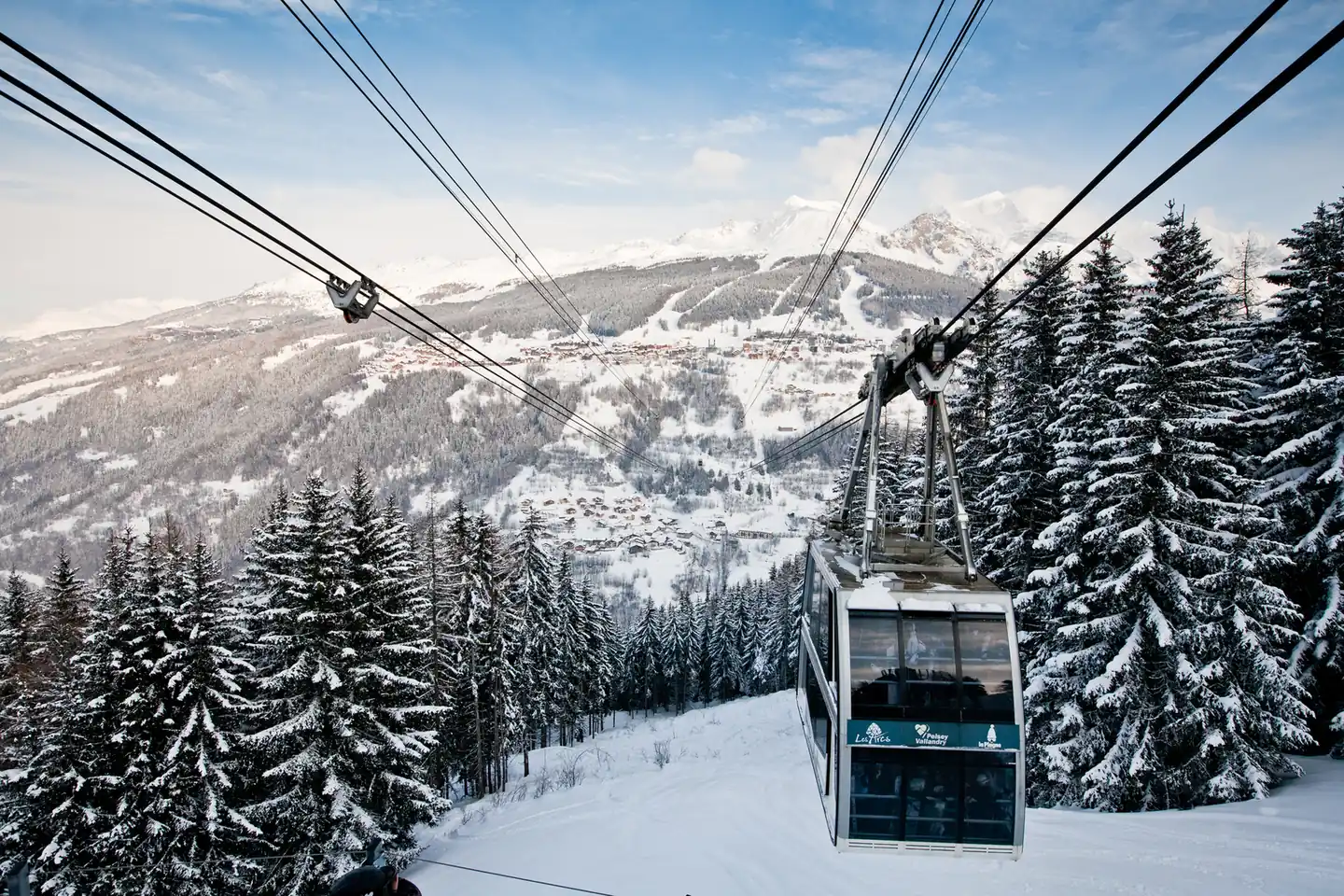
At the heart of the immense Paradiski domain is Peisey-Vallandry, a resort often overshadowed by its more famous neighbours, Les Arcs and La Plagne. However, thanks to its good range of beginner slopes and excellent tree skiing, it’s well worth discovering. Comprising two traditional chalet-style villages, Peisey and Vallandry, the resort is ideal for families looking for a quiet, self-catered ski holiday, while still offering easy access to the busier La Plagne via the iconic Vanoise Express.
Within the larger Vallandry, you’ll find excellent dining options, including L’Adress for hearty mountain fare and Le Rilax for crêpes and galettes, both accessible on skis. The resort’s après-ski also centres around Vallandry, at the Bar du Mont Blanc and Mojo Bar. The older village of Peisey offers a more peaceful atmosphere, with its historic baroque church, while the Comptoir Savoyard deli in Plan-Peisey is renowned for local produce. More adventurous skiers can visit the Chapelle Notre Dame des Vernettes by skiing through the trees beside the Combe draglift before continuing off-piste towards the village.
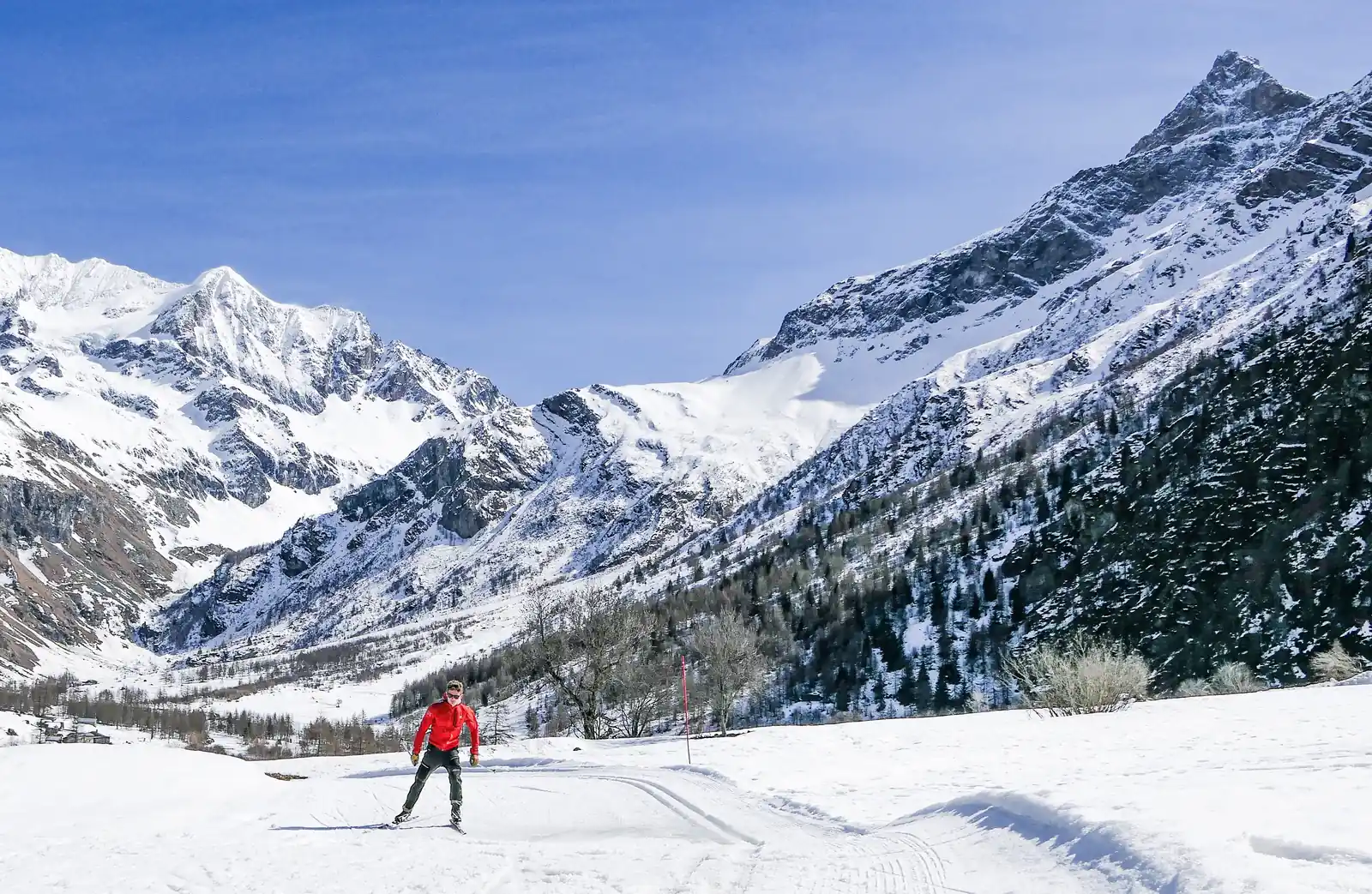
As the home of rising biathlon star and Olympic gold medallist, Éric Perrot, Peisey-Vallandry also enjoys a strong reputation for cross-country skiing. Its recently completed Nordic Centre provides access to over 43km of trails and even features a reindeer for the little ones. In April, it hosts the renowned L’Apple Peak event, combining ski touring and trail running, with races open to anyone fit enough to compete.
Where to stay: Check prices in Peisey-Vallandry →
5. Alpe d’Huez: big-name skiing via Grenoble
Nearest station: Grenoble.
Getting there: Daily TGVs via Paris (or Lille and Lyon), about 6 hours 40 minutes from London. Not served by Eurostar Snow or the Travelski Night Express.
Transfer: Transaltitude coach from beside Grenoble station (pre-book), or about 90 minutes by taxi.
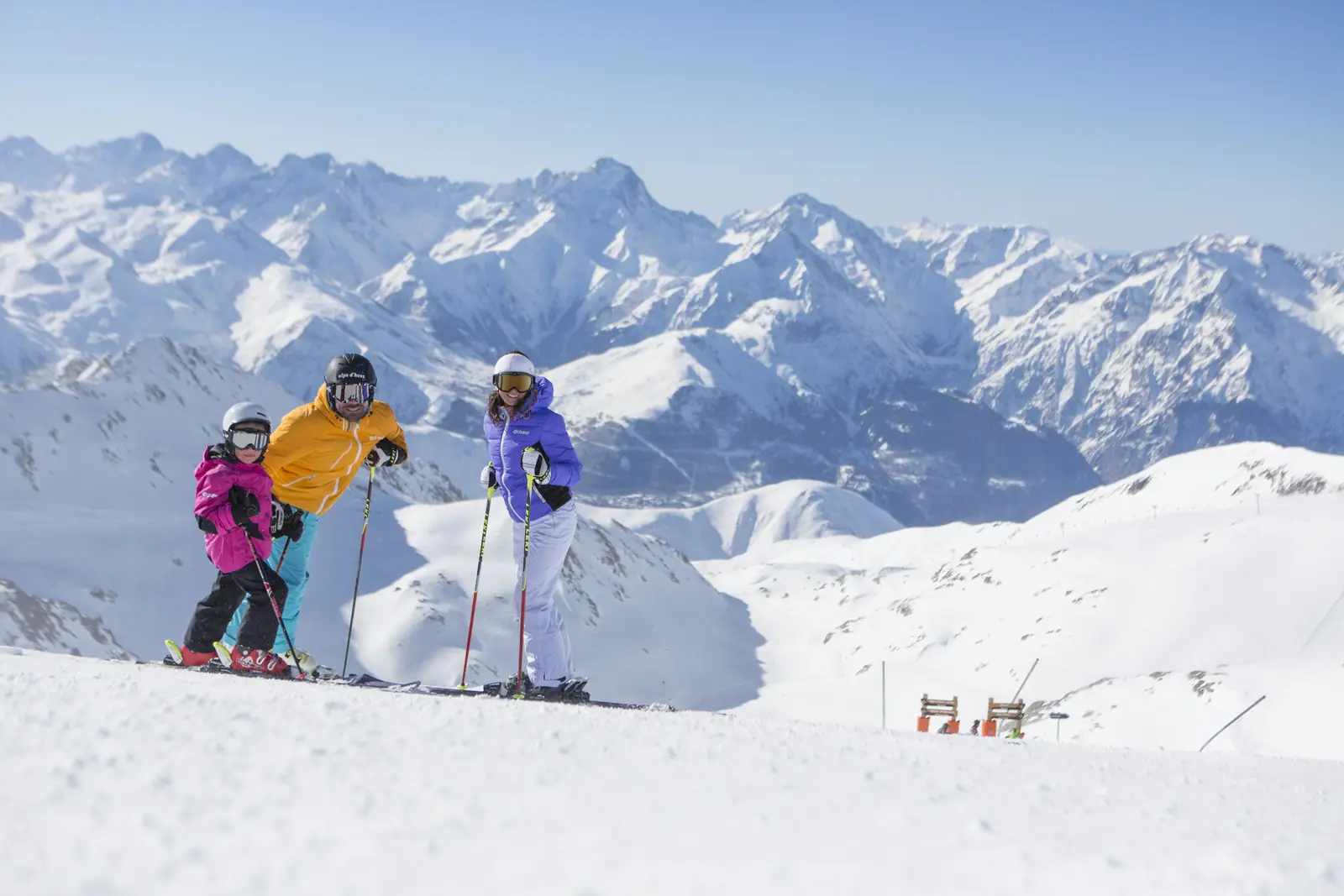
Alpe d’Huez has become one of France’s biggest names in skiing—and with good reason. Its vast ski area, sunny weather, and Tour de France connection have all ensured its high status among French and British skiers alike. With over 250km of piste, encompassing five villages across four sectors, as well as some world-class off-piste down the Combe du Loup and Grand Sablat, it’s truly impossible to exhaust. The resort’s ‘must-ski’ is of course the 16km Sarenne, beginning at the awe-inspiring Sarenne Glacier, which claims to be the longest black run in Europe. The resort’s seasonal, ski-in Ice Cave at 2700m is also worth a visit.
Cementing its reputation, the villages comprising Alpe d’Huez have undergone rapid development. Oz-en-Oisans is the domain’s current focus, as part of the ongoing Altitude 3300 project modernising its lift system. It’s also a budget-friendly (if quieter) alternative to Alpe d’Huez’s titular village. This in itself has plenty to explore, with several neighbourhoods revolving around the busy Avenue des Jeux strip. Despite being mostly purpose-built, Alpe d’Huez has adhered to the traditional chalet-style found in nearby Villard-Reculas, making it as charming as it is modern.
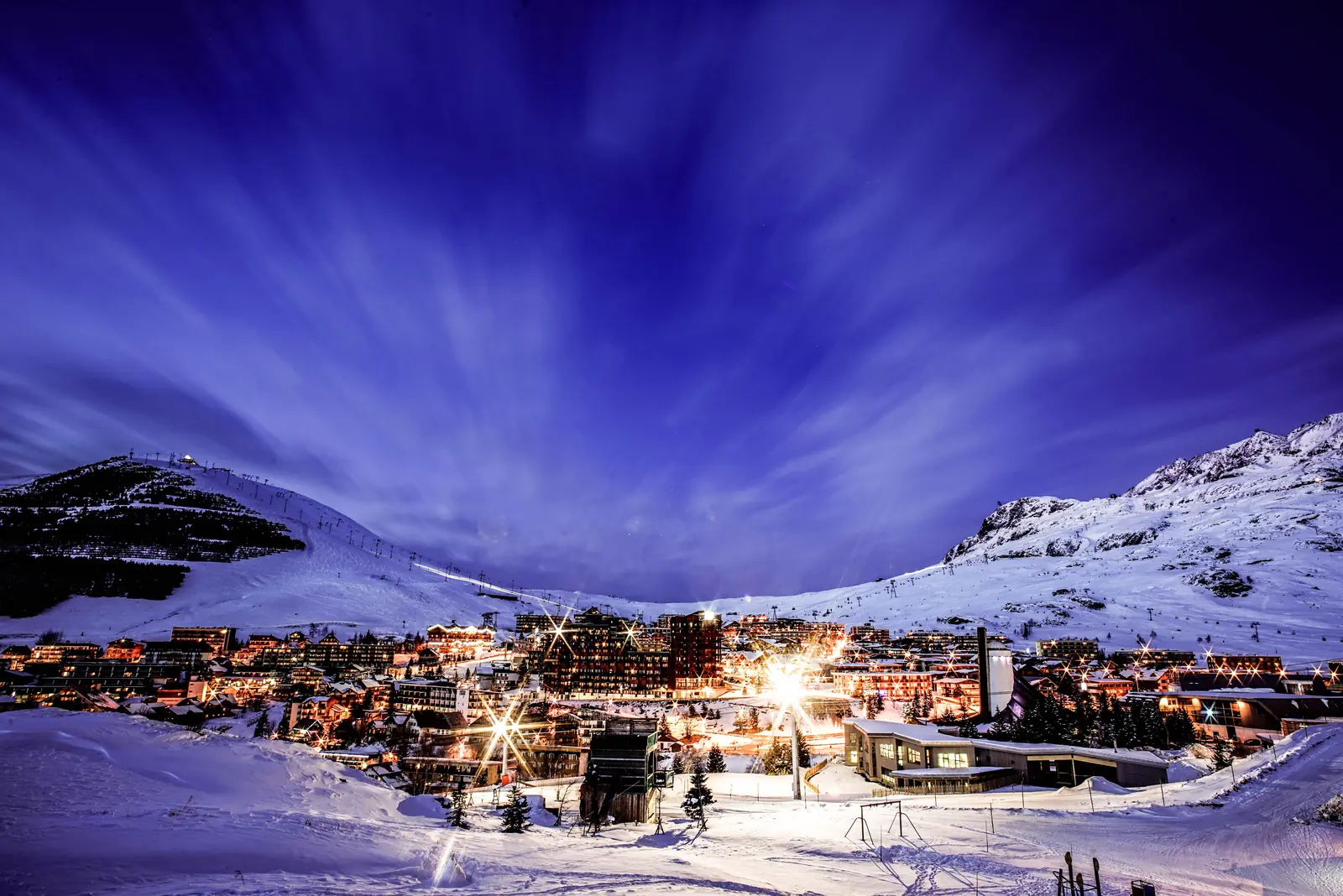
As far as après-ski, the resort is one of the rowdiest on this list—as evidenced by the Folie Douce perched on its slopes. Much of this can be found within the main village, with underground cocktail bars and music venues lining the Rue du Coulet. As for dining, our favourite on-piste is the sunny terrace of Signal 2108, and off, the reblochon lasagne in L’Authentique.
Where to stay: Check prices in Alpe d’Huez →
6. Les Gets: Portes du Soleil charm
Nearest station: Cluses (Arve valley line).
Getting there: Daily via Paris, by TGV to Bellegarde and a regional train to Cluses (about 8 hours 20 minutes from London), plus direct Paris–Cluses TGVs on some Friday and Saturday mornings in season.
Transfer: Altibus from outside the station, or about 25 minutes by taxi. Arriving by rail gets you the free AlpinExpress discount pass.
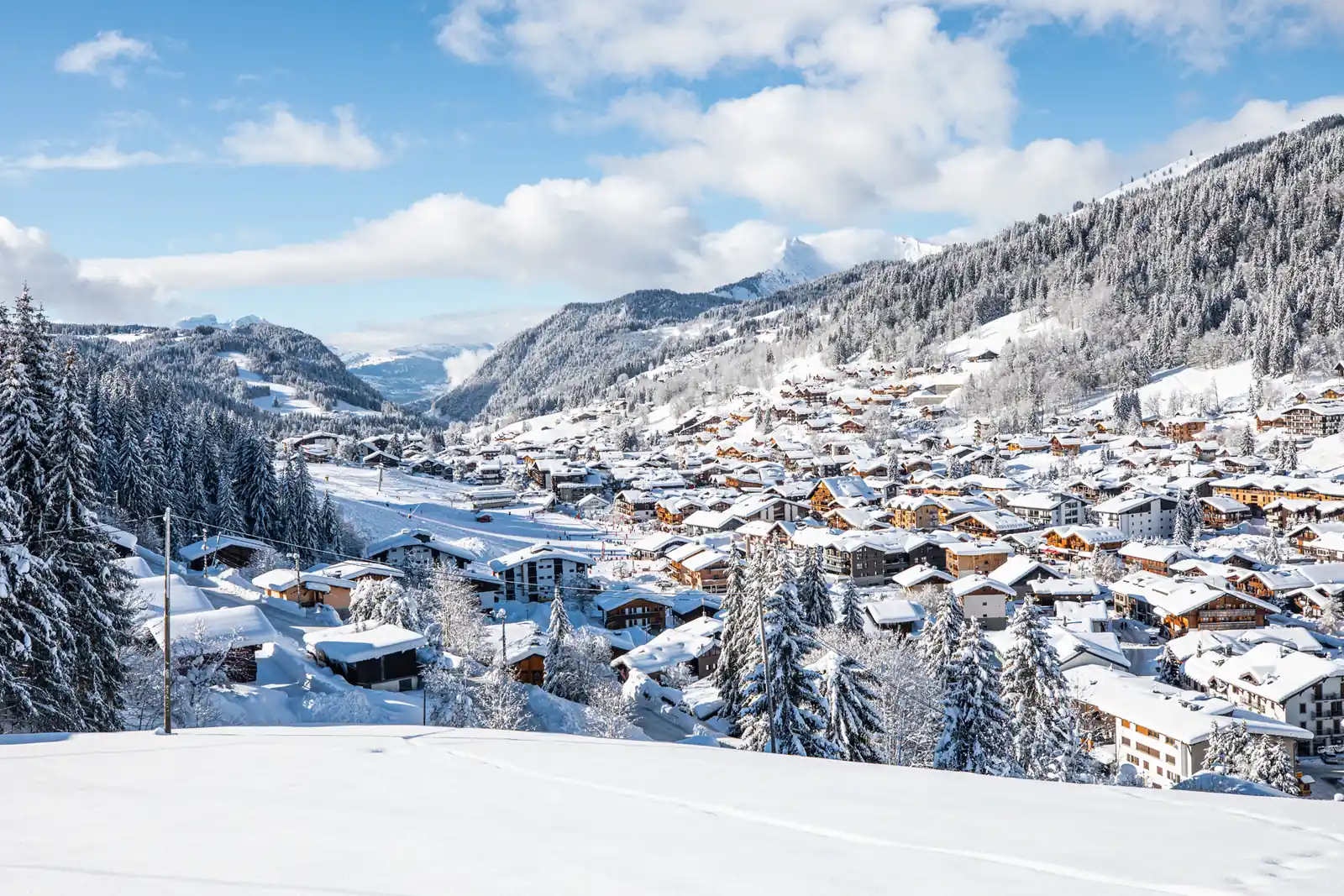
At the edge of the immense Portes du Soleil domain is Les Gets: a charming, heavily forested resort with over 120km of local slopes, plus access to around 480km more across 11 other resorts within the Portes du Soleil pass. While the resort caters well to all ages and abilities, intermediates here are king. From the lifts ascending from its centre, you’ll find a sprawling web of sunny blues and long, swooping reds, while the resort’s Mont Chéry area offers more challenging runs for intermediates looking to advance to expert level.
Centred around a stone church, an ice rink and a 150-year-old merry-go-round, the village has a strongly historic feel. Despite recent expansion, low-rise chalet architecture remains the norm (local tradition forbidding any building from overshadowing the church steeple), while pedestrian-friendly streets have been preserved thanks to a major bypass. Still, modern facilities abound, including Le Chéry Dôme, a collection of Scandi-style heated domes in a snowy meadow, and the state-of-the-art Les Sources du Chéry Spa at the foot of the piste.
Beyond skiing, Les Gets offers an impressive range of activities, from bespoke pottery lessons at the Poterie des Gets and rides on the 4-Season Luge mountain coaster to the quirky Museum of Mechanical Music, home to Picasso’s own mechanical piano, and the Alta Lumina illuminated forest trail. Rail travellers can also benefit from exclusive discounts on said experiences, as well as accommodation, ski rental and restaurants, through Morzine-based organisation Montagne Verte’s AlpinExpress pass.
Where to stay: Check prices in Les Gets →
7. Saint-Gervais: a gondola straight from the station
Nearest station: Saint-Gervais-les-Bains–Le Fayet (end of the Arve valley line).
Getting there: Daily via Paris and Bellegarde (about 8 hours 45 minutes from London), plus direct TGVs from Paris on Fridays to Sundays in season.
Transfer: Le Valléen gondola from beside the station to the town centre in about 5 minutes, then L’Alpin gondola up to the slopes at Le Bettex.
Like many Alpine resorts, Saint-Gervais began life as a wellness retreat for Europe’s aristocracy. However, while most resorts transitioned to commercial skiing in the mid-20th century, Saint-Gervais managed to keep the old and the new, making it as much a world-class ski resort as Haute-Savoie’s health hub. This is thanks to the resort’s iconic hot springs (les thermes), accessed via a state-of-the-art wellness centre in the Parc Thermal. Its delightful, spa town aesthetic pairs well with quiet local slopes (outside the French school holidays) to ensure maximum relaxation. Plus, for a more active ski holiday, the Évasion Mont-Blanc Pass provides access to neighbouring Saint-Nicolas, Les Contamines, and Megève: 445km of slopes.
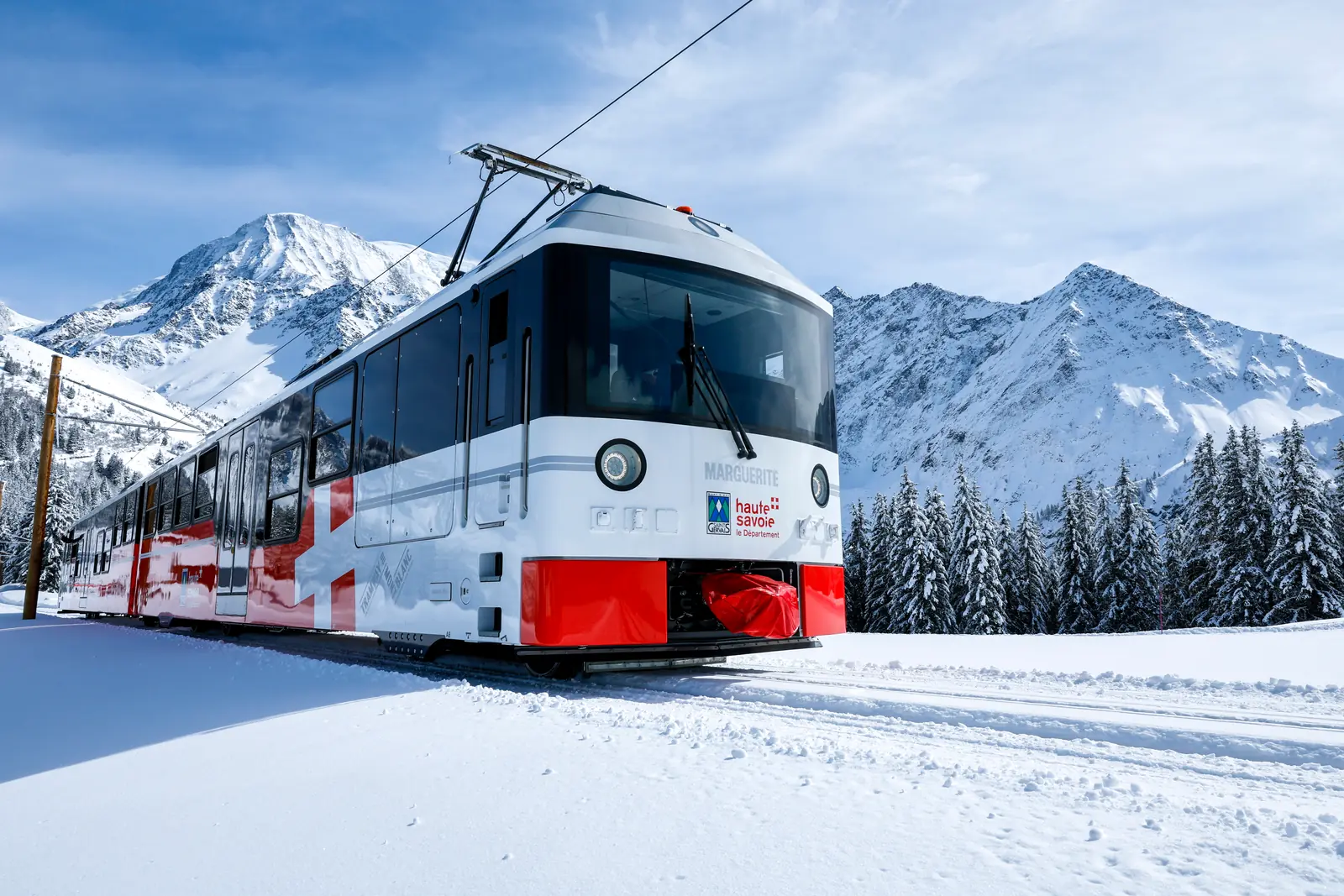
Besides its spas and skiing, Saint-Gervais is also renowned for its views of nearby Mont-Blanc and the historic Mont-Blanc-Tramway (TMB), which runs from the village centre to the massif’s lower slopes—the highest railway line in France. Accommodation ranges from converted farmhouses to five-star suites, while most in-resort dining is deliciously Savoyard (tartiflette, crêpes, fondue, etc.). Ideally located at the foot of the slopes, the newly reopened Relais des Communailles and Sous les Freddy’s are both excellent options for lunch or après-ski.
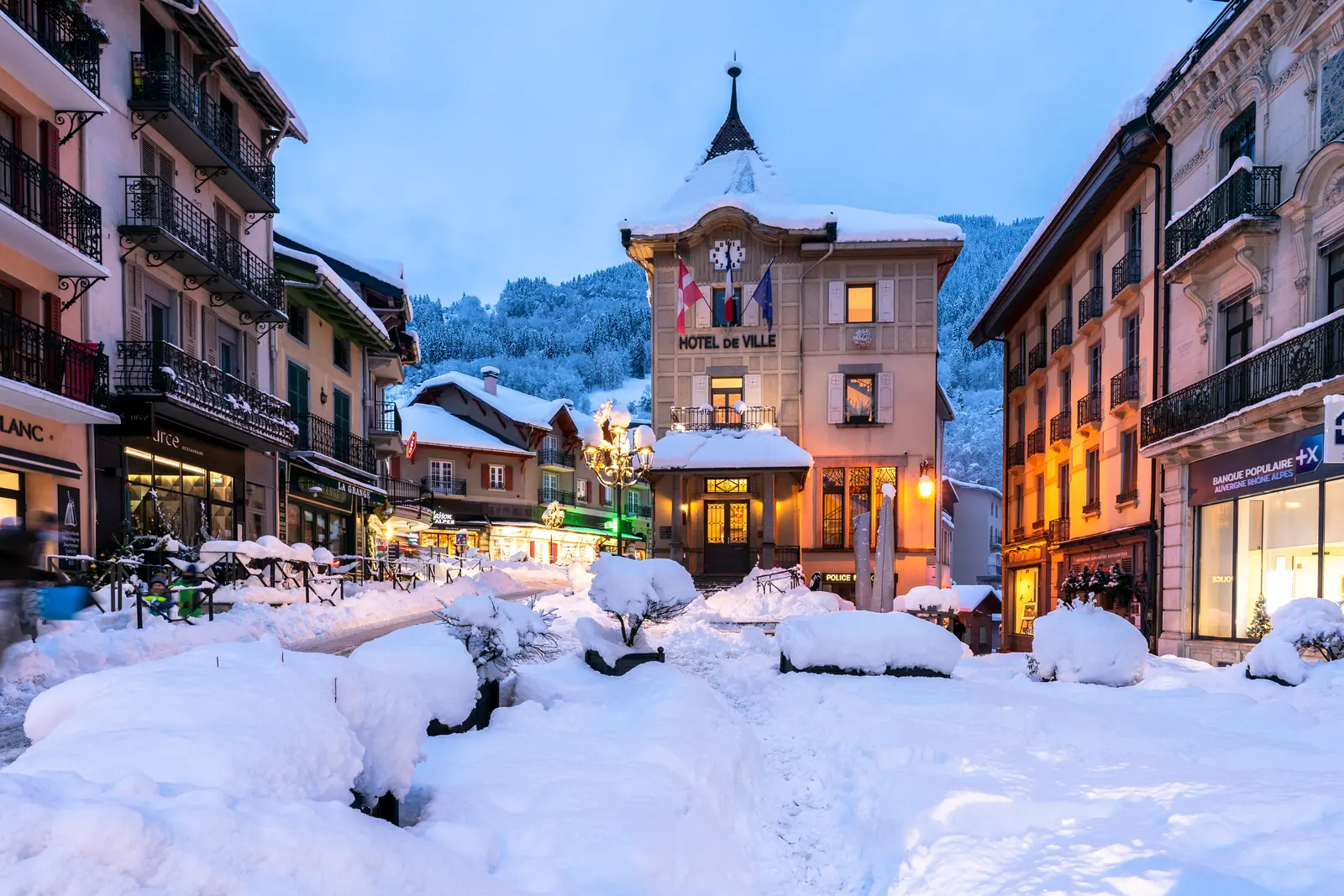
Finally, with the opening of Le Valléen gondola in 2024, Saint-Gervais is now easier to reach by rail than ever before. Like Les Arcs’ funicular, the lift leaves from right beside Saint-Gervais–Le Fayet station, in the Arve Valley, and climbs 1.85km to the town centre in about five minutes, where the L’Alpin gondola continues up to the slopes.
Where to stay: Check prices in Saint-Gervais →
8. Val Cenis: a family resort on the Italian border
Nearest station: Modane (on the Paris–Turin–Milan line).
Getting there: Daily TGVs from Paris Gare de Lyon, about 8 hours from London. Not served by Eurostar Snow or the Travelski Night Express.
Transfer: About 30 minutes by taxi, or the Altibus coach.
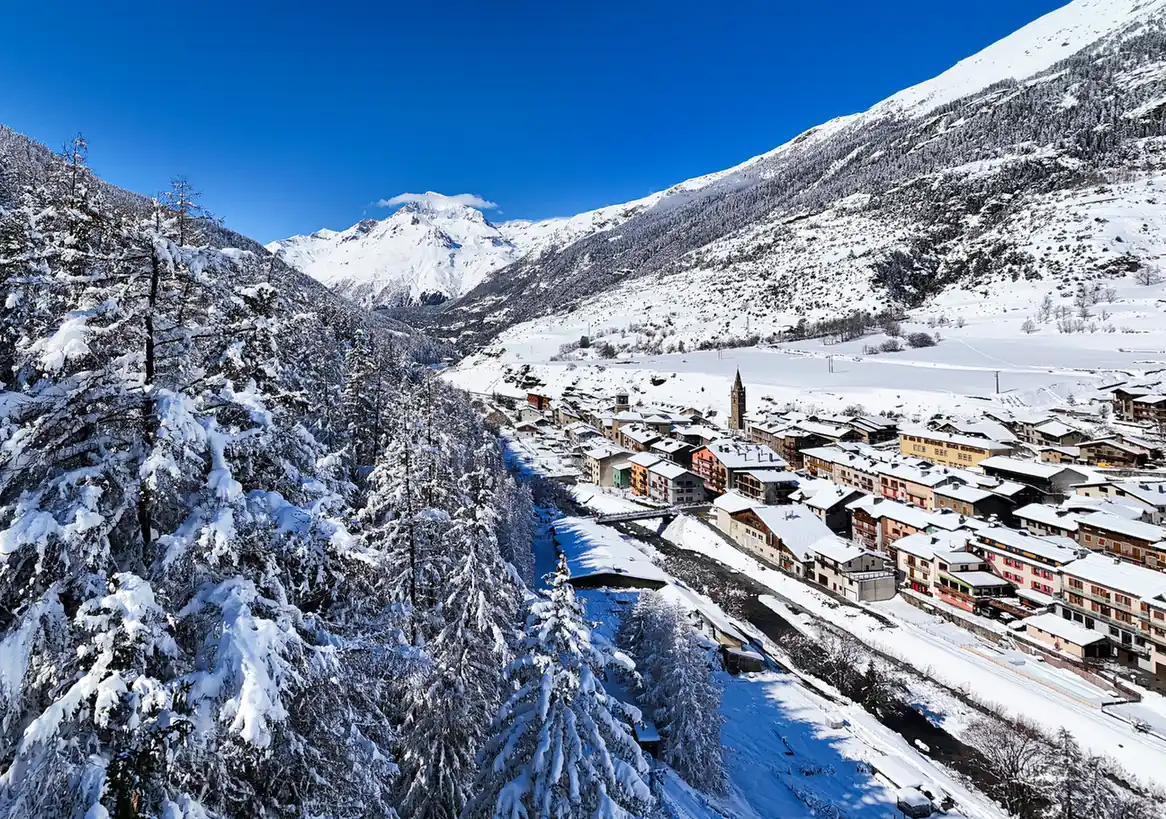
Nestled on the Franco-Italian border on the ancient road to Turin, Val Cenis is a lesser-known, yet fantastic family resort. Its respectable 125km of piste (not shared with any other resort) receives substantial annual snowfall, with an emphasis on reds and blues, as well as Europe’s longest green (the Escargot). Highlights include the almighty view of Lac de Mont-Cenis from the resort’s summit at 2800m, accessed via the Met chair, and the excellent mountain dining found at the historic Relais du Col du Mont Cenis, a rustic roadside inn on the Col.
As a year-round working community, Val Cenis has a strong communal feel. The resort comprises three main base villages: Termignon, cosily clustered around an old church with its own semi-separate piste system; Lanslebourg, the largest village with the most amenities; and finally, Lanslevillard, which has seen substantial development in recent years. Further up the road are more satellite villages, accessible via shuttle bus and worth a day visit for their own unique flavours (Bonneval-sur-Arc for its gorgeous dry-stone architecture and untapped backcountry; Bessans for cross-country skiing).
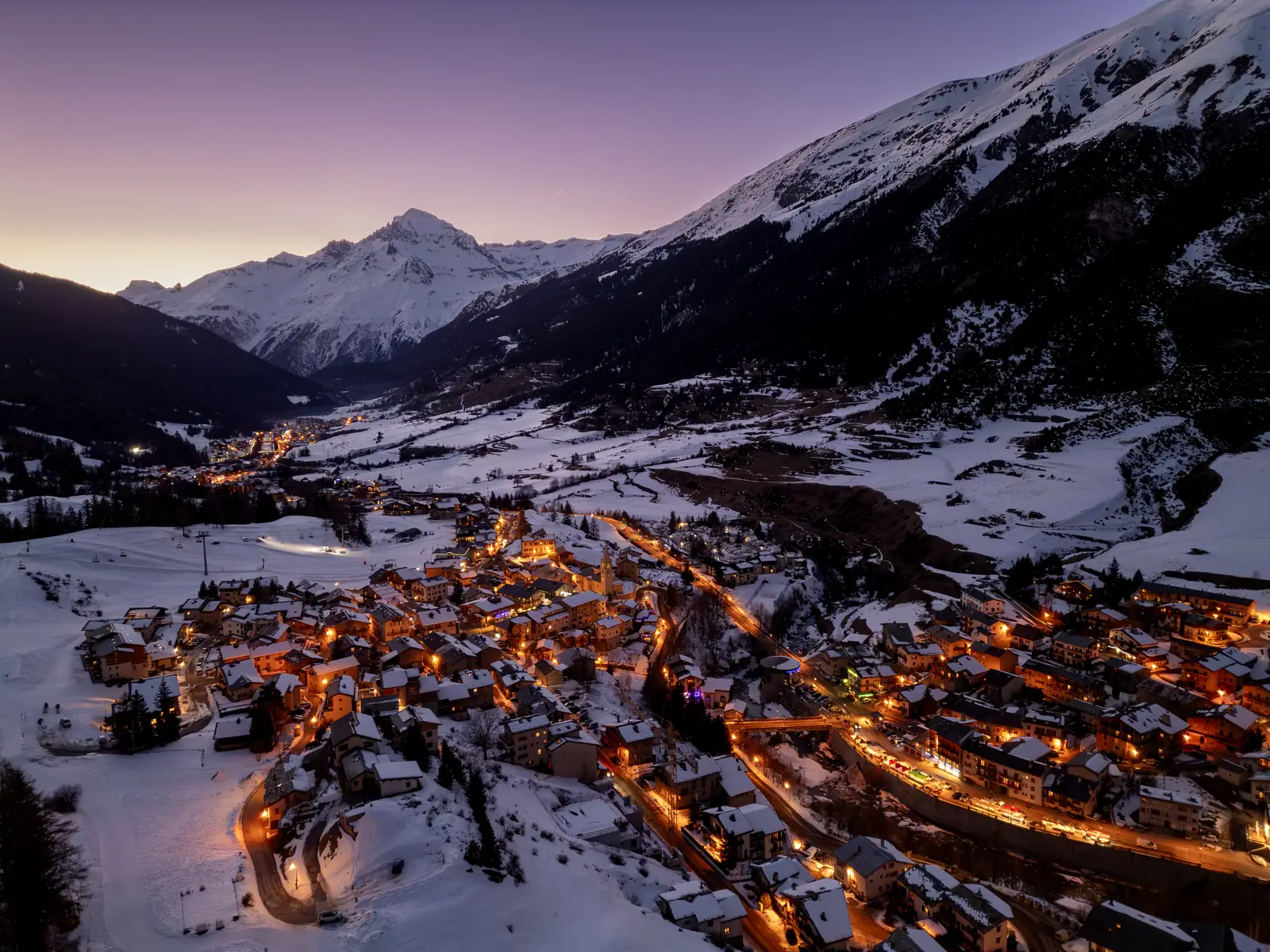
While Val Cenis isn’t well-known for its après-ski, it has some good family-friendly bars, including Le 1480 bowling alley, at the foot of Le Haut gondola, and the occasional gig at the restaurants C2 and Chardon Bleu. Spa treatments, including wellbeing massages, saunas, and Turkish baths, can be found at the Ô des Cimes, while children’s swimming and ice skating are available at the Piscine et Patinoire in Lanslevillard.
Where to stay: Check prices in Val Cenis →
Planning your trip to the French Alps by train
Guides on rail journeys into Europe and the Alps can be found at Snowcarbon (snowcarbon.co.uk), Seat 61 (seat61.com) and Ski Flight Free (skiflightfree.org).
Snowcarbon has created a rail-ski map of France.
French ski resorts by train: FAQs
Yes. Eurostar Snow, which replaced the Eurostar Ski Train, runs from London St Pancras on winter Saturdays, with a change at Lille, to Bourg-Saint-Maurice. You can also take the Eurostar to Paris and continue on a TGV or the overnight Travelski Night Express.
The Tarentaise resorts near the Eurostar Snow and Travelski Night Express stations are the easiest, including Tignes, Méribel, Peisey-Vallandry and Sainte Foy, a 20-minute taxi ride from Bourg-Saint-Maurice. Daily TGVs open up resorts such as Alpe d’Huez, Les Gets, Saint-Gervais and Val Cenis.
After the change at Lille, Eurostar Snow calls at Chambéry, Albertville, Moûtiers, Aime-la-Plagne and Landry before its final stop at Bourg-Saint-Maurice. You can get off at any of these Alpine stations.
Eurostar Snow runs on Saturdays from 19 December 2026, and the final outbound departure is 20 February 2027. Most return journeys are on Sundays rather than Saturdays, so you may need an extra night’s accommodation in the Alps.
Yes. The Travelski Night Express leaves Paris Gare d’Austerlitz and Brussels-Midi on Friday evenings and arrives in Bourg-Saint-Maurice the next morning. It returns the following Saturday and is back in Paris or Brussels on Sunday morning, which gives you two extra days on the slopes.
TGV tickets only go on sale between two and four months before departure, much later than Eurostar Snow or the Travelski Night Express. For winter 2027, SNCF opens sales for travel from 7 January on 12 November 2026.
About the Author
This article was written for Ultimate France by Daniel Elkan, founder of Snowcarbon, with Robert Thorne, a Scotland-based freelance journalist who writes for Snowcarbon.

Snowcarbon
Looking for advice on your next ski holiday? Daniel and the Snowcarbon team can suggest fantastic resorts, superb places to stay and the best train journeys to get there — either booked independently or as part of a package. Visit snowcarbon.co.uk to get in touch.
Visit SnowcarbonHave you skied in France by train, or are you planning your first rail trip to the Alps? Tell us which route you took and how it went in the comments below, and we’ll help with any questions.