Nice is the one city on the French Riviera where the best outdoor activities start at your hotel door. Hike the Sentier du Littoral before breakfast, then kayak under the cliffs of Cap Ferrat after lunch. When winter comes, Isola 2000 is only 1 h 30 away. The city lives, as is said, with one foot in the Mediterranean and the other in the foothills of the Alps.
HIGHLIGHTS | ACTIVITIES | BOOK A TRIP | ACCOMMODATION | PRACTICAL INFO
Culturally, Nice is a little bit French and a little bit Italian, with a Mediterranean spirit all of its own. That’s no accident. The city only became French in 1860; before that it belonged to the Kingdom of Sardinia and the House of Savoy. You still taste it in the socca, the pissaladière and the ravioli in the old town. And the Italian border is only about 30 km away — Menton, the last stop before it, is about 40 minutes by train.
With about 358,000 people, Nice is the largest city on the Côte d’Azur, so it’s the obvious base for an active holiday. Trains run along the coast to Monaco, Antibes and Cannes, and the mountains start behind the last apartment blocks. Since 2021 the city has also been a UNESCO World Heritage Site: “Nice, Winter Resort Town of the Riviera”.
Nice Highlights

The Promenade des Anglais: Nice’s famous seafront runs for almost 7 km around the Baie des Anges, from the Quai des États-Unis to the airport. It began as a simple path in 1824, long before anyone thought of cycle lanes. Today it’s a running track, a skating rink and one of the busiest cycle lanes in France, with around 4,000 bike passes a day. Walk it at sunrise, when it belongs to the joggers.
The Colline du Château: The castle hill rises 92 m straight out of the old town. Climb the steps early, before the heat builds — it’s your first workout of the trip. At the top you’ll also find a waterfall, shady paths and the best free view in Nice. The park opens at 8.30am and closes at 8pm from April to October, or 6pm in winter.
Vieux Nice and the Paillon: The old town is a tangle of lanes between the Cours Saleya and Place Garibaldi. It’s also where you’ll eat most of your meals. Just north of it, the Promenade du Paillon is a green corridor of lawns and fountains, extended in October 2025 to nearly 2 km.
The beaches: Nice’s beaches are pebbles, not sand. Honestly, the beach isn’t much to write home about, but it’s more comfortable to lie on than you’d imagine. Bring beach shoes, because the shelf drops off sharply — take care with young children. The city lists 23 free public beaches, as well as 14 private concessions where you pay for a sunbed, a parasol and a shower.
Plan Your Trip



Outdoor Activities in Nice
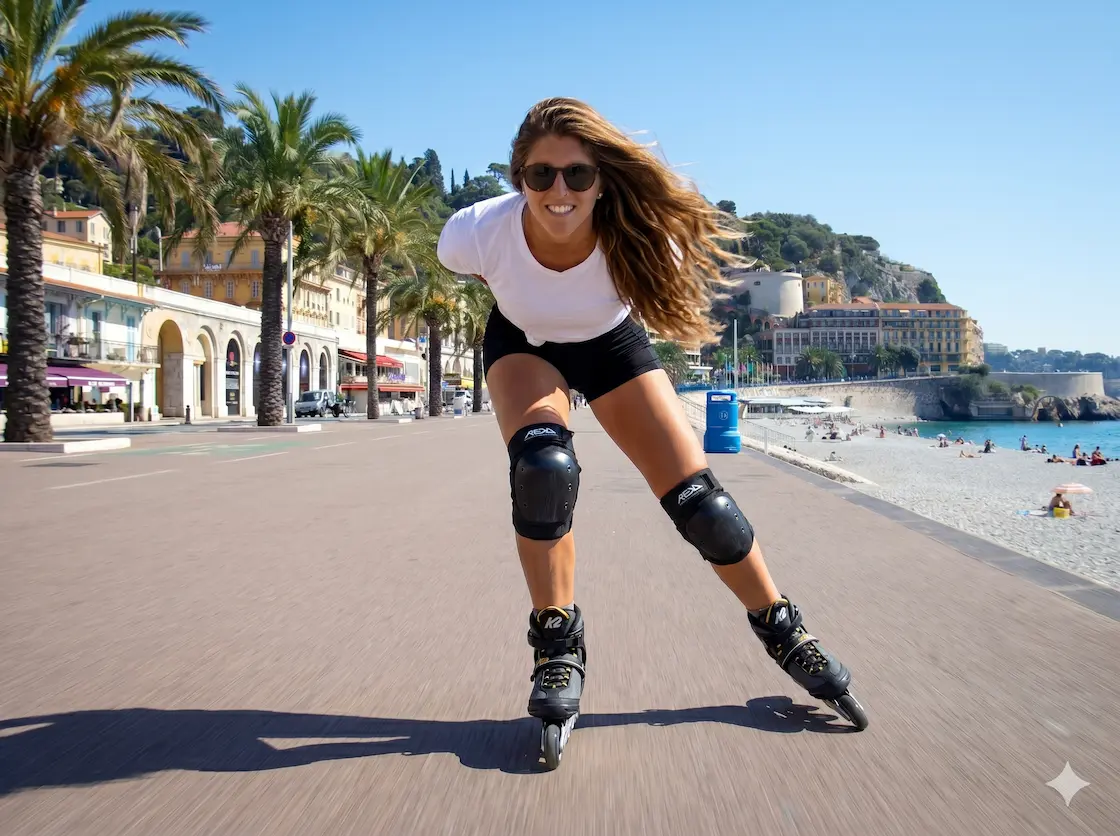
Most cities make you choose between the sea and the mountains. Nice doesn’t. The Maritime Alps rise to 3,143 m at the Cime du Gélas, and the foothills start right behind the city. So you can climb the cols of Paris–Nice, walk coastal paths and paddle into hidden coves. In winter, you can even ski in the morning and still watch the sunset from the Promenade. Here’s our guide to the best outdoor activities in Nice:
Road Cycling & Gravel Riding from Nice
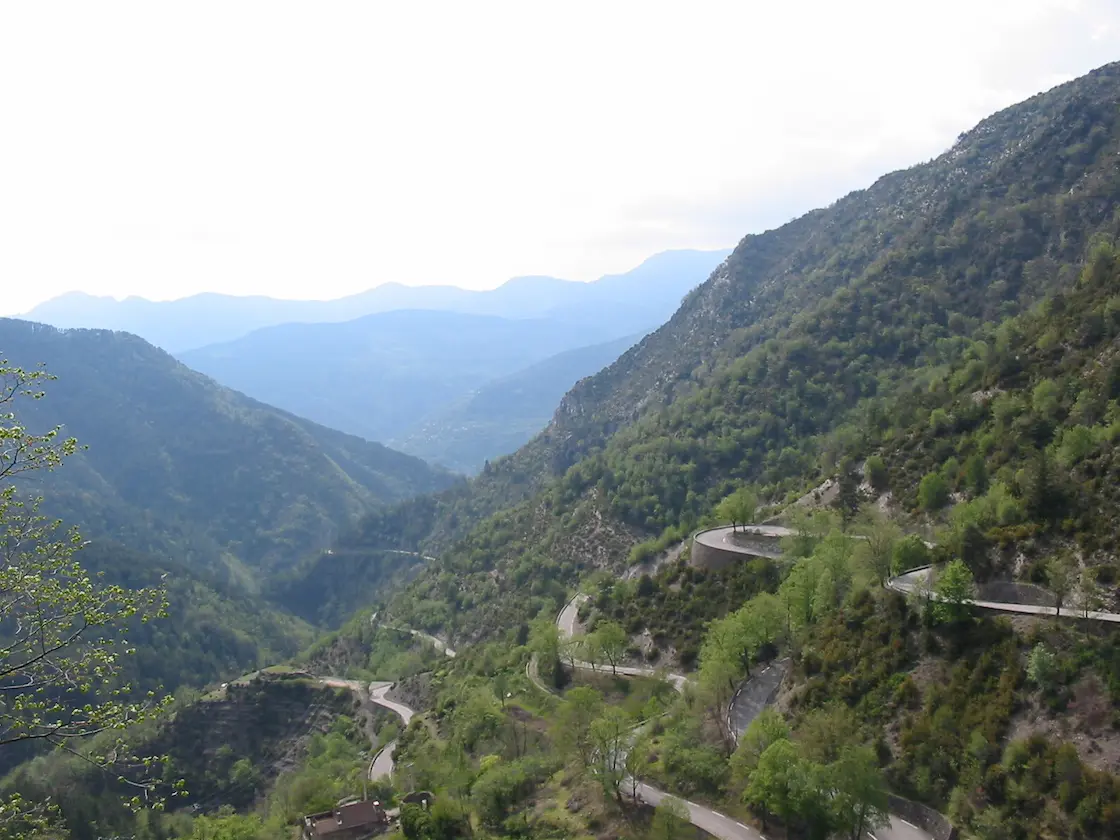
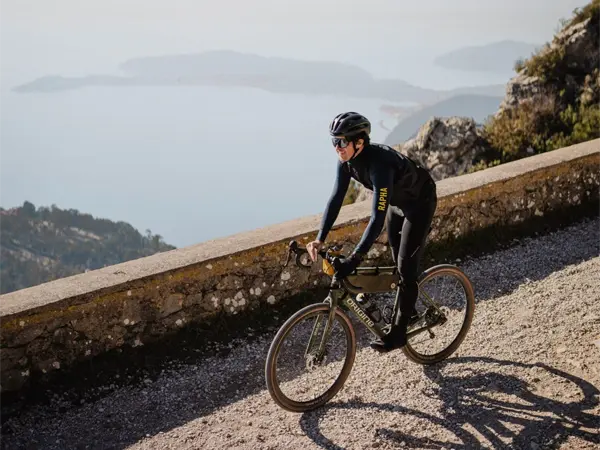
Nice is one of the best road-cycling bases in Europe. Just a few kilometres after you leave the Promenade, the roads ramp up into the hills. The climbs are long and steady, with sea views all the way.
Col d’Èze
The Col d’Èze is the climb you do on day one. It starts in Nice and follows the Grande Corniche for 10 km to the col at 507 m. The average is only 5%, although it touches 8.8% in places. In fact, Paris–Nice used it for its final time trial for decades. After the summit, drop to Èze village or carry on to La Turbie.
Col de la Madone & the Hills Behind Menton
For the full Riviera test, link the Col d’Èze with the Col de la Madone above Menton. From Menton, the Madone climbs 13.5 km at 6.7%, with ramps of 12%, to 925 m. It’s a big day from Nice — our Col de la Madone cycle climb guide has the route. Further inland, the Col de Turini climbs 24.1 km from Sospel to 1,604 m. Meanwhile, the Col de Vence rises 9.8 km at 7% above Vence. See our guide to road cycling in the South of France for more climbs.
Gravel & Mountain Biking
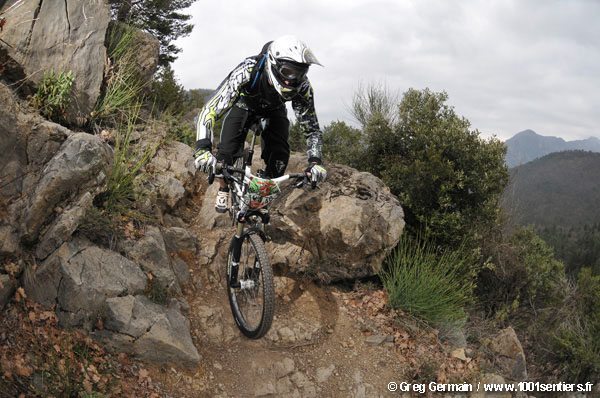
Old mule tracks and forest roads lace the back country behind Nice, and they suit a gravel bike perfectly. For this reason, 57hours runs its guided gravel tour from here (see Book a Trip below). For mountain biking, head for the trails around Sospel, or the dry, dusty enduro trails of the Riviera Borderlands on the Franco-Italian border.
Road Bike Hire in Nice
Café du Cycliste at 16 Quai des Docks in the port is the hub of the local scene. Besides a café and a workshop, this Nice cycling-clothing brand rents carbon road and gravel bikes. It also runs weekend shop rides. Book bikes well ahead.
La Roue Libre on Boulevard de l’Armée des Alpes rents road bikes from €65 a day, gravel bikes from €60 and e-MTBs from €80. In contrast, Roadbike Nice is road-only — Cervélo, Basso, Wilier and Focus — from €70 a day, with 10% off each day from day four. For something simpler, Bike Trip rents city, electric, gravel and road bikes with insurance included.
Prefer a guide and a battery? The Panoramic French Riviera E-Bike Tour spends three to four hours in the hills above the city, from around £47, and it averages 4.9 from 283 reviews.
Hiking & Coastal Paths near Nice
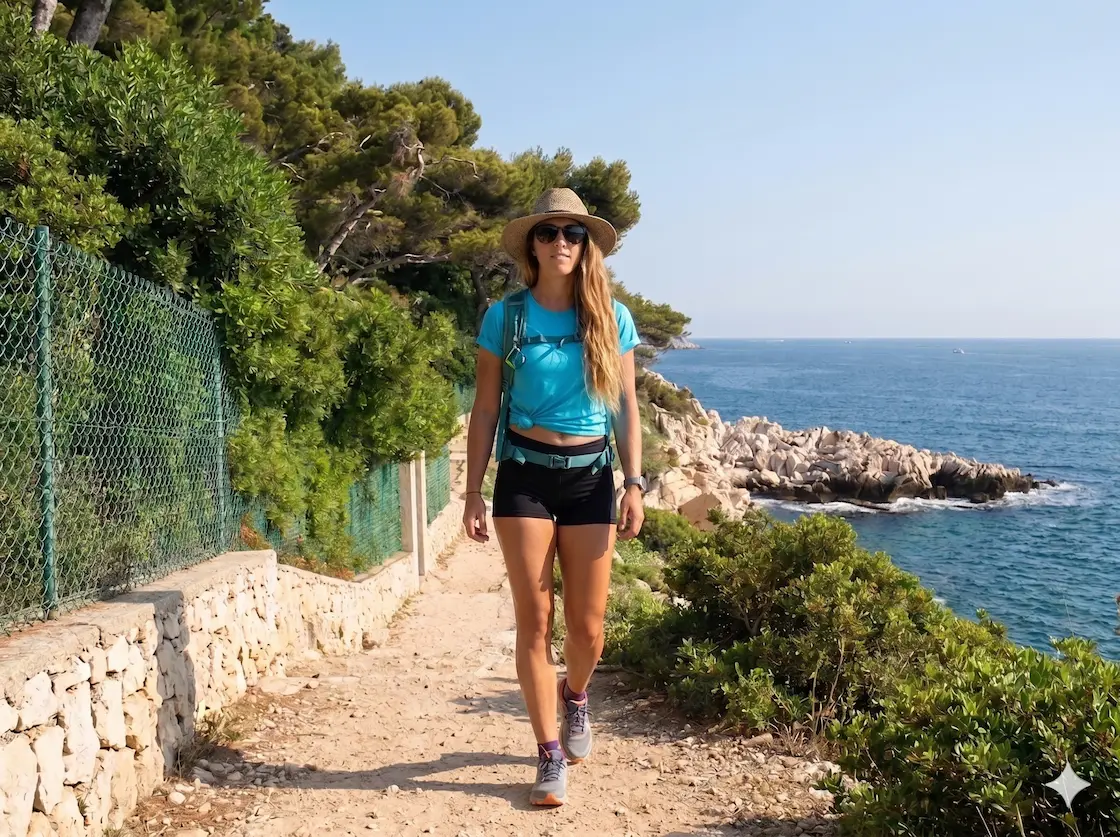
You don’t need a car to go hiking from Nice. In fact, two of the best coastal walks on the Riviera start from the port or a train station. The city also has its own forest park on the headland above the harbour.
Mont Boron & the Cap de Nice
Mont Boron is Nice’s green lung: 57 ha of pine forest on the headland east of the port, with 11 km of waymarked trails. On top, you’ll also find the 16th-century Fort du Mont Alban. Down on the water, the Sentier du Littoral runs 6 km from the port to the Lazaret at Villefranche-sur-Mer. It takes about two hours one way, with plenty of steps. Then take the train back.
Cap Ferrat & the Chemin de Nietzsche
The Tour du Cap Ferrat is the Riviera’s classic coastal walk. It covers roughly 9–10 km and 3.5 hours around the peninsula, past the lighthouse and below the Grand-Hôtel du Cap-Ferrat, before finishing at Plage de Passable. The path is free and open all year, but it closes in rough seas, so check before you go. Our Saint-Jean-Cap-Ferrat hiking guide has the full route.
Then there’s the Chemin de Nietzsche. It climbs 2.1 km and 350 m from the station at Èze-sur-Mer to the perched village of Èze. Allow about an hour and a half. The philosopher stayed here in the winter of 1883–84. Go up in the morning shade, then have lunch in the village. Otherwise, for a flatter coastal walk, try the path around Cap d’Antibes.
Day Hikes in the Mercantour
For proper mountains, drive about 1 h 30 north into the Mercantour National Park. From the Madone de Fenestre, the walk to the Lacs de Prals is 7.5 km return with 660 m of climbing. It’s a perfect first taste of the high country. The Vésubie valley is still rebuilding after Storm Alex in 2020, but the road is open. Nice is also the finish of the GR5, which crosses the Alps from Lake Geneva. For more routes, see our guide to hiking in the South of France.
Sea Kayaking, SUP & Snorkelling

Just east of Nice, the rocky peninsula of Saint-Jean-Cap-Ferrat pokes into calm, clear water between Villefranche-sur-Mer and Beaulieu. As a result, it’s perfect for sea kayaking and stand-up paddleboarding. You paddle along the cliffs and explore secret coves as you go. In July and August the sea averages around 25 °C, so you can jump in whenever you like.
Along this stretch, nature blends with luxury villas and palace hotels such as the Grand-Hôtel du Cap-Ferrat, A Four Seasons Hotel. In your kayak, though, you have the best seat in the house — and the guests on their sun-loungers will look on with envy.
Club de la Mer has been paddling here since 1934. It runs guided sea-kayak and SUP outings from the Aigle Nautique base on Boulevard Franck Pilatte. It doesn’t rent boats, and it only goes out when the wind is under 20 km/h and the waves under 60 cm. So book ahead and stay flexible. For rental or a guided tour around the Cap, Aqua Sport Evasion usually launches from Villefranche, with a Nice departure possible.
Want a bit of everything? The Villefranche-sur-Mer e-bike and paddleboard tour rides you from Nice to Villefranche, then puts you on a board in the bay. It lasts four hours and scores 5.0 from 39 reviews. For snorkelling, a freediving school runs the two-hour sea-scooter snorkel tour at Cap d’Ail.
Scuba Diving & Guided Snorkelling
Le Poséidon on Quai Lunel in the port runs try dives, snorkel trips and courses from age 10. Its boats leave at 9am and 2pm from 6 May until 9 October 2026, except on Sundays. Expect a try dive in Nice to cost roughly €60–75. Later in the year, CIP Nice near the port stays open for winter diving. In July and August, the Mer & Montagne association also runs guided snorkel outings in Villefranche bay.
A note on kitesurfing: Nice’s city beaches are not a kite spot, and the Mistral doesn’t blow here. Instead, the nearest spot is Saint-Laurent-du-Var, next to the airport. It works in easterly and south-easterly winds and suits intermediate and advanced riders only.
Paragliding, Canyoning & Via Ferrata
Tandem Paragliding
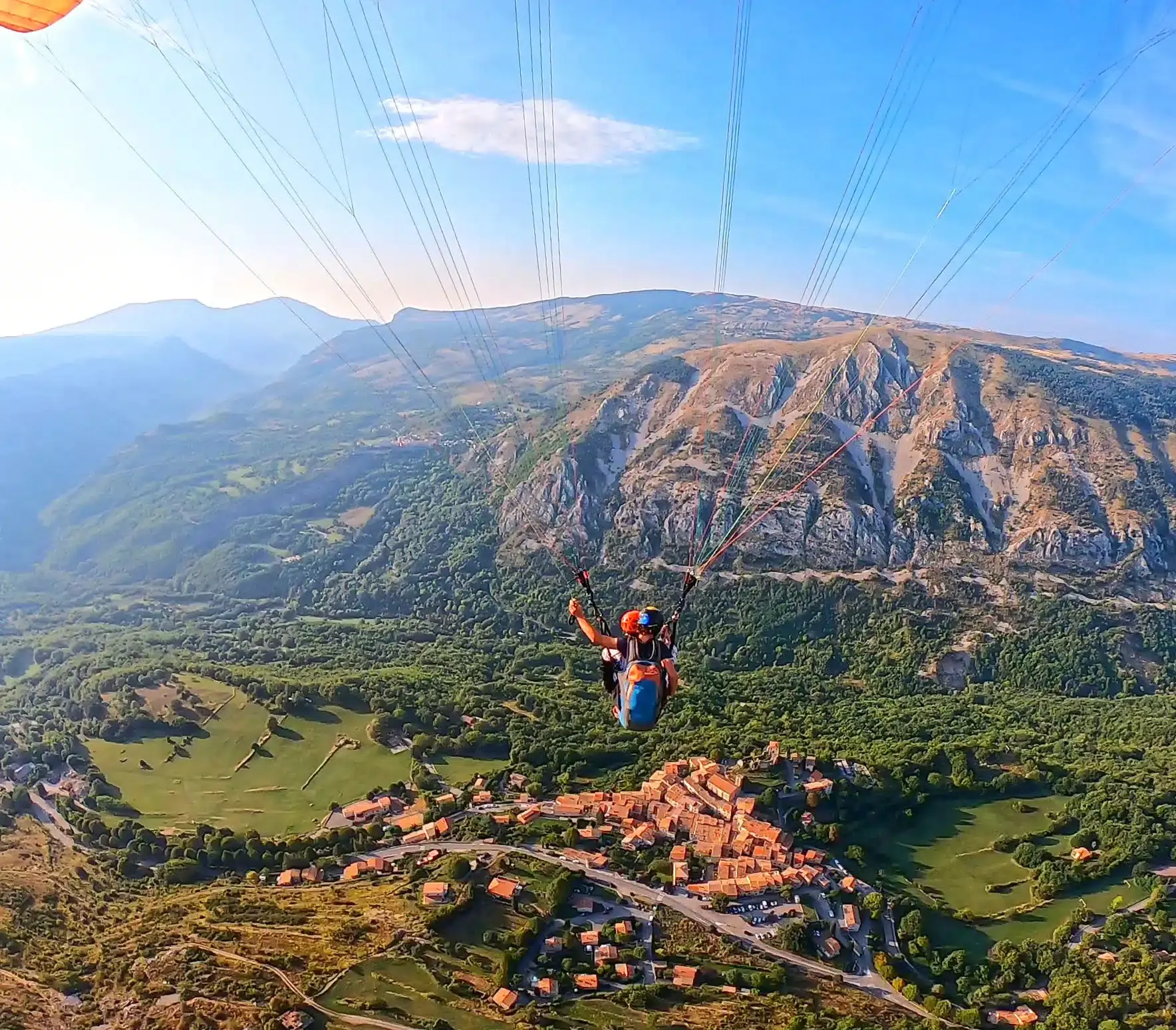
The hills behind Nice make superb tandem paragliding terrain. Nice Parapente flies from three sites. Gréolières launches from 1,800 m, 45 minutes from Nice; Gourdon is at 760 m, 40 minutes away; and Roquebrune-Cap-Martin sits on the coast, 30 minutes east. A 20–30-minute flight costs €140 and a 45-minute to one-hour flight €250. Children can also fly from age five, with a short flight at €100. Down here in the south of France the best time to fly is from October to May, but tandem paragliding is available year-round. Read more about paragliding in the South of France.
Canyoning in the Gorges du Loup
Canyoning season runs from May to September in the Gorges du Loup and the canyons around it, about 45 minutes from Nice. Ailéments guides trips from €55, from age eight. Canyon06 also runs half-day discovery trips from €55 per person, or €400 for a private half-day guide for up to eight people. Our guide to canyoning in the South of France covers the best descents.
Via Ferrata
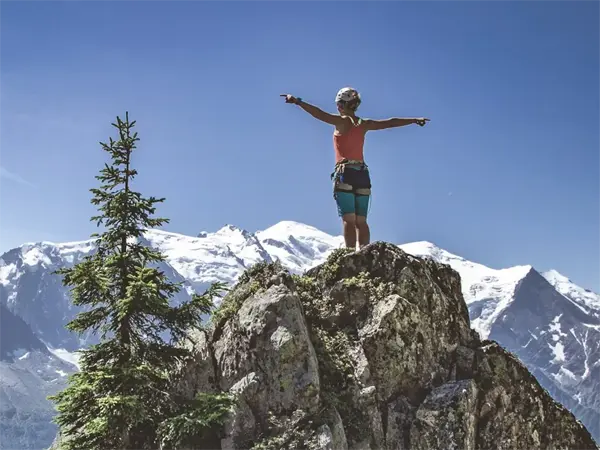
The Alpes-Maritimes’ first via ferrata, the Baus de la Frema at La Colmiane, is about an hour from Nice. It’s 1,600 m of cables and rungs, tops out at 2,246 m and takes around five hours, so treat it as a serious, difficult route. In 2026 it’s open from 23 April until 31 October. For something shorter, the via ferrata de Lantosque in the Vésubie valley takes about 3.5 hours and crosses a 100 m Himalayan bridge. Climbers must be at least 1.40 m tall and 40 kg, and you need to pre-book gear hire. Skip the Peille via ferrata in older guides — it closed in 2017 and hasn’t reopened since. You’ll find more routes in our via ferrata guide.
Rock Climbing near Nice

Nice has two superb limestone crags on its doorstep. The Baou de Saint-Jeannet, 11 km north-west of the centre, has around 375 routes from 3c to 7c across three sectors. Its south-west face also carries 150–200 m multi-pitch routes. The FFME recommends it in winter; in summer, pick the shady faces.
La Turbie, 20 minutes away above Monaco, has more than 400 routes from 3c to 8c on walls up to about 120 m high. New to climbing? Canyon06 guides at La Turbie, Peillon and Saint-Jeannet from €45–50 per person in groups of five or more, or €200 for up to four people. Our guide to rock climbing in the South of France covers every crag.
Skiing from Nice

Where the Alps meet the sea, Nice sits between the blue of the Mediterranean and the white peaks of the Maritime Alps. In all, the Alpes-Maritimes has ten downhill ski resorts with around 460 km of pistes, plus 153 km of cross-country trails. The nearest small slopes are about an hour from the coast, while the big three take 1 h 15 to 1 h 30.
Isola 2000 is the classic day trip: about 1 h 30 from Nice, with 120 km of pistes. It’s due to open for the 2026–27 season on 5 December 2026, and our Isola 2000 ski guide has the details.
Auron has the biggest ski area in the Alpes-Maritimes, with 135 km of pistes. It’s under 1 h 30 from Nice and also opens on 5 December 2026. Valberg, linked with Beuil, is closer than both at 1 h 15, with 90 km of pistes and a provisional opening on 19 December 2026. All dates depend on snow, so check the resort sites (Isola 2000, Auron, Valberg) before you go.
The Ski Bus from Nice
You don’t need a car to ski. Instead, Lignes d’Azur runs regular buses to the resorts at the standard €1.70 fare. Take line 90 to La Colmiane, 91 to Auron or 92 to Isola 2000. Last winter, the faster Bus 100% Neige express also ran from Nice-Vauban to Isola, Auron and La Colmiane for €10 single or €14 return, skis included. You had to book it online by noon the day before, so check Lignes d’Azur for the 2026–27 timetable. For Valberg, take ZOU! line 670 for €2.20.
Easy Day Trips from Nice

Nice is the hub of the Riviera railway, which makes it the best base on the coast if you don’t want to drive. Monaco, Menton, Antibes and Cannes are all within about 40 minutes by train.
Villefranche-sur-Mer and Èze are the closest escapes — a bay for paddling and a perched village for hiking. Antibes adds a coast path and paddleboarding, while Cagnes-sur-Mer suits SUP. Cannes also has wingfoiling at Palm Beach. Further west, the red rocks of the Massif de l’Estérel hide more than 100 km of trails.
Where to Eat & Drink in Nice
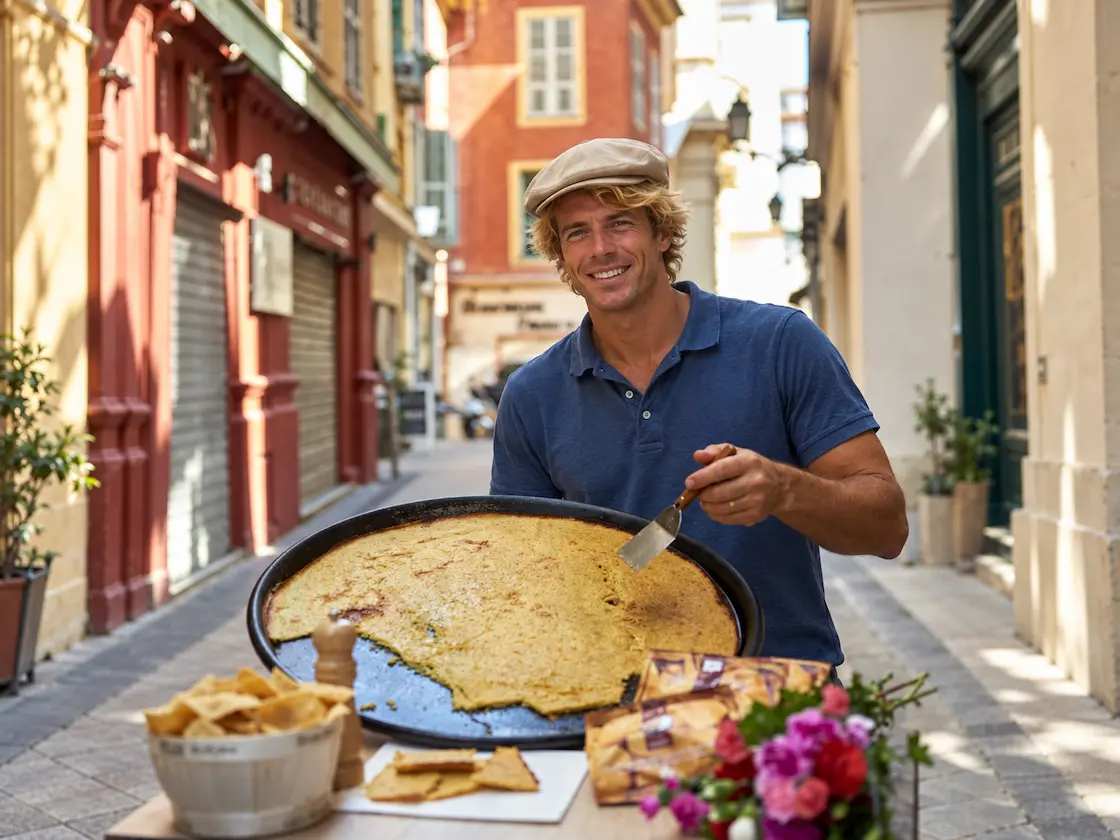
Nice has its own cuisine, cuisine nissarde, and it’s built for hungry people on a budget. Think of dishes such as chickpea socca, onion-and-anchovy pissaladière, stuffed vegetables and pan bagnat. Eat it in the old town, where the best places are small, cheap and busy. Then save one evening for a proper splurge.
Socca & Street Food
Chez Pipo (€) on Rue Bavastro, behind the port, is the socca institution, serving at lunch and again in the evening. In the old town, Chez Thérésa (€) has been baking socca in a wood-fired oven since 1867, and it runs a stall on the Cours Saleya. Afterwards, grab an ice cream at Fenocchio (€) on Place Rossetti, open late.
Markets
The Cours Saleya market is the heart of Vieux Nice. Food stalls trade from 6am to 2.30pm, Tuesday to Sunday, and the flower market runs until 5.30pm from Tuesday to Saturday. On Mondays, the square hosts a big antiques and flea market instead. Locals, however, shop at the Marché de la Libération, the biggest market in Nice, from 6am to 1pm. Skip the Halles de la Gare du Sud food hall that older guides recommend, though — it has closed.
Niçois Restaurants
For cheap, honest Niçois cooking, squeeze into Chez Palmyre (€) on Rue Droite. It’s tiny and old-school, with limited opening hours, so check before you go. Further up the street, Chez Acchiardo (€€) is a family-run, stone-walled room that does a classic salade niçoise. In the mid-range, three old-town bistros hold a Michelin Bib Gourmand: La Merenda, Bistrot d’Antoine and Olive & Artichaut (all €€). La Merenda is tiny and always full, so book. Peixes (€€) in the centre does ceviche and seafood — ideal after a swim.
For a big night, JAN (€€€) near the port holds a Michelin star for chef Jan Hendrik’s South African-inflected Riviera cooking. Flaveur (€€€) on Rue Gubernatis, meanwhile, is the only two-star restaurant in Nice itself. Or book Le Plongeoir (€€€), where the tables sit on an old diving-board rock in the sea, off the coast road towards Mont Boron. You go for the view, and it’s worth it.
Cafés for Cyclists
Café du Cycliste (€–€€) at the port is where Nice’s riders meet before and after a ride, with good coffee and bikes everywhere. Near the main station, HUG Café (€) does specialty coffee and brunch before a train day trip. Brume Coffee (€) on Rue Pairolière pours some of the best coffee in town. However, it often opens late morning, so it’s a post-ride stop rather than a pre-ride one.
Bars & Nightlife
Start with an aperitif at Les Distilleries Idéales (€–€€) on Rue de la Préfecture, a Vieux Nice institution that stays open past midnight. After that, try La Cave du Cours (€€), behind the Saleya, for natural wine and small plates. Beer drinkers, on the other hand, should head for Beer District (€–€€) on Place Philippe Randon in Libération, Nice’s craft-beer bar. And for a loud night, Wayne’s Bar (€) on Rue de la Préfecture is the backpackers’ pub, with live music and dancing on the tables.
Gravel Bike Tour on the French Riviera: From Mountains to the Sea
Ride from the highest paved road in France back to the Mediterranean, with the logistics handled for you.
This five-day gravel tour has four riding days and starts and finishes in Nice. After a transfer into the Mercantour, you loop up to the Cime de la Bonette at 2,802 m. Then you follow the Tinée and Vésubie valleys and the Malagrata gravel track over the Col de Turini. The last day takes you on gravel through perched villages above Nice, back down to the coast for brunch.
Expect up to 236 km and 6,680 m of climbing over four days, with a hardest day of 2,280 m, so you’ll need good fitness. The price also covers a certified local gravel guide, a support van with a mechanic, four nights in mountain inns and boutique hotels, and all your meals.
Groups run from four to twelve riders between May and October. Prices start from US$1,828 per person, twin share, and your guide meets you at Nice station or the airport.
Where to Stay in Nice
Base yourself near the tram, because tram line 2 links the airport, the Promenade, the centre and the port. If you’re bringing a bike, look for the Accueil Vélo label, which means secure, covered bike parking.
Vieux Nice & the Port
Stay in the old town for atmosphere, with the market and the best Niçois food on your doorstep. For example, Palais Saleya (€€–€€€) is a boutique apartment hotel on Rue du Marché with full kitchens and top guest scores. At the foot of the Colline du Château, Hôtel La Pérouse (€€€) is the splurge, looking out over the Baie des Anges. Over by the port, Palais Ségurane (€€) has kitchenettes and excellent reviews, and it puts you close to Café du Cycliste.
Promenade, Carré d’Or & the Centre
This is the most practical area for a first visit. Hôtel de la Fontaine (€€) on Rue de France is our pick for riders, because it holds the Accueil Vélo label and gets strong reviews. On Rue Dalpozzo, Le Windsor (€€) is a quirky art hotel. Hôtel Les Cigales (€€), on the same street, is simpler but also well rated. In the Carré d’Or, the small Nice Garden Hotel (€€) scores highly, while Hôtel Vendôme (€€) on Rue Pastorelli has the Accueil Vélo label. And if money is no object, Hotel Le Negresco (€€€) is the famous five-star palace on the Promenade.
Cimiez & Budget Beds
Up the hill in Cimiez, Hôtel Petit Palais (€€–€€€) is a boutique four-star with some of the best guest scores in the city. The location suits riders, since you’re straight onto the climbs — though there’s also a climb home. On a tight budget, try the hostels Villa Saint Exupéry Beach (€) and HI Nice Les Camélias (€). Both hold the Accueil Vélo label. Treat them as a cheap bed with secure bike parking rather than a boutique stay. For more ideas, see our round-up of the best value hotels in Nice.
Find More Accommodation
Use the map below to search hotels, apartments and guest houses across Nice and the surrounding Riviera.
Practical Info
Getting There
Nice Côte d’Azur airport sits on the western edge of the city. Tram line 2 runs from both terminals to the centre and the port in under 30 minutes, every 7–8 minutes on weekdays. The airport machines sell a dedicated €10 airport return; standard tickets cost €1.70 on a €2 reloadable card or the app. ZOU! Express coaches also leave Terminal 2 for Monaco and Menton (line 80) and Cannes (81). By rail, the Intercités de nuit sleeper from Paris still runs. In town you won’t need a car, so book a hire car only for the mountains. Nice sits at 43.6951° N, 7.2646° E.
Getting Around Without a Car
The coastal TER trains, branded ZOU!, are the easiest way to explore. From Nice-Ville it’s about 25 minutes to Monaco (from about €5), 40 minutes to Menton, 20 minutes to Antibes and around 35 minutes to Cannes. Fares rise with distance, so frequent travellers should buy the ZOU! Malin card (€20 a year, 30% off) or a €20 Pass Journée for a day of unlimited trains. Engineering works occasionally close the line for a day, so check before you travel.
In town, Lignes d’Azur trams and buses cost €1.70 a trip. A €2.50 Ticket Azur also adds a connection onto a ZOU! regional bus to leave the Métropole. Inland, the Nice–Breil–Tende railway into the Roya valley reopened in December 2025. If you’re driving on to Italy via Tende, check the Col de Tende tunnel opening hours first, because it closes for works at times.
Parking
Don’t drive into the centre. Instead, park at one of the Parcazur park-and-ride car parks at the tram hubs, where parking is free with a same-day Lignes d’Azur return. The 1 Aller-Retour ticket (€3.40) covers a day’s parking and your return trip, and the Parcazur Loisirs ticket costs €6. Underground car parks in the centre are secure but pricey. Nice’s low-emission zone doesn’t currently restrict cars: since April 2025 it only applies to heavy goods vehicles, buses and coaches. Still, carry a Crit’Air sticker if you’ll drive through other French cities with low-emission zones.
Bike Hire
Nice has 101 km of cycle routes, and its bike share is now dockless. Lime and Pony e-bikes, rented through their apps, replaced the old Vélo Bleu scheme in February 2024 — they’re fine for hops along the Promenade. For a proper ride, however, hire a road or gravel bike from the shops in our Road Cycling section. ZOU! regional trains and buses also carry bikes free under certain conditions.
Best Time to Visit
For swimming and paddling, go between June and October. The sea averages around 22 °C in June, 25 °C in August and 21 °C in October. Canyoning runs from May until September, and the via ferratas open from late April into the autumn. In our experience, spring and autumn are the best seasons for road cycling and hiking. Winter is climbing season at Saint-Jeannet and prime time for paragliding, while the ski resorts open in early December. July and August are hot, crowded and expensive, so book early.
Nice FAQ
Cycle up the Col d’Èze, hike the coastal paths and kayak around Cap Ferrat. Inland you can also paraglide, canyon and climb, and in winter you can ski at Isola 2000 or Auron.
The nearest small slopes are about an hour away. Valberg takes about 1 h 15, while Isola 2000 and Auron take about 1 h 30. Lignes d’Azur buses run to both for €1.70.
It climbs the Grande Corniche for 10 km at an average of 5%, with a maximum of 8.8%, to 507 m.
Take tram line 2, which reaches the centre and the port in under 30 minutes. The airport machines sell a dedicated €10 return; standard tickets cost €1.70.
No. They’re pebbles and shelve steeply, so beach shoes help. The city has 23 free public beaches and 14 private concessions.
Not on the city beaches. Instead, experienced riders use Saint-Laurent-du-Var, next to the airport, when easterly or south-easterly winds blow.
June to October is best for the sea, while spring and autumn suit cycling and hiking. Winter is the season for climbing, paragliding and skiing.
Please leave a comment below if you need specific advice for your trip to Nice, or if you have any recommendations to help us improve this guide. Happy holidays!